


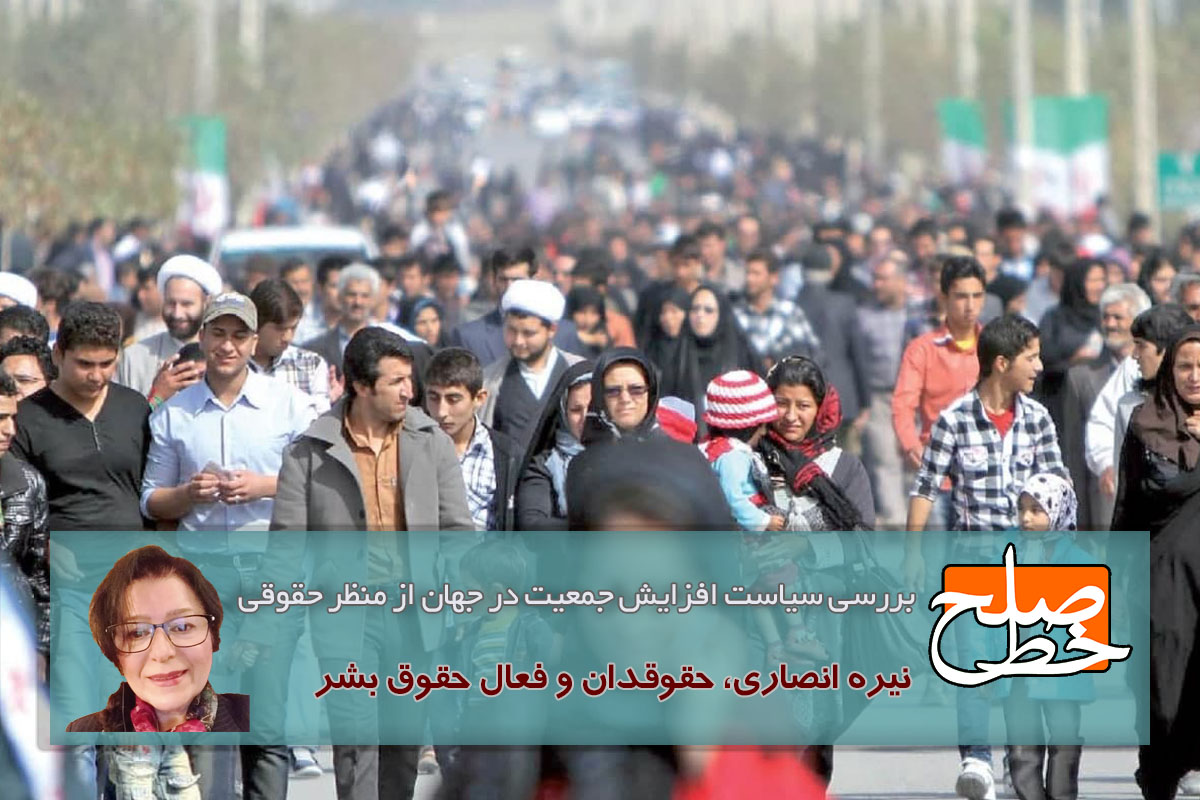
“An Examination of Population Growth Policies in the World from a Legal Perspective” by Nayereh Ansari.
The concept of fertility health has a wide and global application and refers to a series of behaviors whose main goal is to ensure safe sexual relationships. Since these relationships can lead to pregnancy, these instructions and behaviors are called fertility health; therefore, fertility health also includes pre and post-pregnancy. Among them, the term population control is a demographic term. Regardless of the long history that is attributed to demographic theories from the pre-philosophy period and its flourishing in Greece and Athens, many demographers attribute social perspectives on population control to Thomas Malthus (1766). He first published his book in 1798 on the topic of “the imbalance between population and means of subsistence.”
His theory, which was strongly opposed to population growth, had on one hand social factors such as poverty and fear of depletion of human resources, and on the other hand, it linked population growth to natural factors such as sexual desire, marriage, and sexual relationships.
In contrast, there were always those who supported population growth and considered it a prerequisite for development.
Factors influencing population decrease or increase.
Multiple factors affect population decrease or increase; factors such as macro policies by the government, precise planning in this regard, the percentage of youth or elderly in the population, mortality rates, especially child mortality, cultural standards of fathers and mothers, wars and conflicts, raising awareness in society, and important demographic indicators in each period (demographic behavior) have extensive effects on modernization and all related structures. Numerous developments have occurred regarding women’s lives, age of marriage, economic and livelihood issues, and other factors. Despite the diversity of these factors in our country, comprehensive research and necessary measures have not been taken regarding the priorities of policymakers and planners in population control plans.
“Another form of violence against women that has been strongly condemned by international human rights is forced pregnancy; in section “d” of the 1995 Beijing Declaration, a precise definition of violence against women is provided in Article 113: “Violence against women refers to any act of gender-based violence that results in physical, mental, or sexual harm or suffering to women, or may potentially result in such harm; including threats to commit such acts, coercion, and deprivation of freedom, whether in private or public life.”
Beyond these, these international documents regarding women’s rights reflect the special attention of the global women’s community to their own issues. In this regard, documents such as the Convention on the Elimination of All Forms of Discrimination against Women and others, such as the “Beijing Platform for Action,” are considered turning points in the process of promoting women’s rights. The Convention on the Elimination of Discrimination, after its adoption in 1979, has been the main and fundamental subject of global women’s conferences. To implement its provisions and provide necessary measures for its implementation, numerous working groups and sessions were formed at the Beijing conferences (1994) and Beijing +5 (2000, New York). The Beijing Platform for Action, along with its amendments (deletions and additions) at Beijing +5, is currently the main pathway to achieving the goals of the Convention on the Elimination of Discrimination. These documents include theories on defining humanity and its needs, explaining women’s issues and
Of course, there are countries in the world where the population growth rate is negative and their population decreases every year; countries like Russia, Hungary, Maldives, Czech Republic, Croatia, Cuba, Poland, and Estonia. There are also many other countries with negative population growth rates in Europe, which are trying to increase their population by abolishing population control policies in order to avoid an aging population pyramid.
Europe is facing another issue with population transition, and the majority of countries in this union have started to experience a natural decrease. Natural decrease occurs when the number of deaths exceeds the number of live births. In this case, the population begins to decline. Many European countries have been implementing policies to increase their population for a long time in order to protect themselves from the consequences of aging and population decline. France has been using incentives for childbearing for a hundred years, and Germany has made extensive changes to their immigration laws.
The report also mentions the challenges of demographics in 2020, which show that recent changes in migration have had a significant impact on population changes in various regions of Europe. This means that migrant-receiving areas have a higher potential for population growth; however, a high rate of migration can also pose important challenges related to ethnic diversity and cultural integration. The East-West polarization of recent population changes presents a challenge to territorial cohesion. Areas with declining populations are also concentrated in Eastern and Northern Europe, and negative migration is mainly observed in many Eastern European regions, particularly in Estonia, Latvia, Lithuania, Romania, and Bulgaria.
The consequences of demographic changes in Europe can be classified into four main categories. The first category is the aging population, which leads to an increase in healthcare and retirement costs. The second category includes a decrease in workforce and a decline in economic productivity, which negatively affects production-based economies. The third category is the absolute decrease in population, which will destabilize the strategic power of countries in the international arena. The fourth category includes cultural clashes between native residents and immigrants, which can sometimes lead to social unrest, the rise of racist movements, and a decrease in social security. However, with proper policies and considering all the consequences of population growth in society, these issues can be addressed.
Based on this, government support, legal rights, and appropriate infrastructure in terms of health, treatment, economy, etc., as well as ensuring the increase of the population, is essential. This is while the economic issue is more prominent than other incentives in various countries, and this is happening while the Youth Population Law and support for families in Iran do not support families, despite its title.،
This resolution only considers the time from conception to birth and neglects the period after that, while the essence of family is after the birth of a child.
The youth population and support for families plan was approved in the Islamic Consultative Assembly at the end of 1399 (2020) as part of Article 85 of the Constitution and was presented to the Guardian Council for review, which raised detailed criticisms; although it seems that the plan’s flaws are more than what was announced by the Guardian Council.
Different courses of population policy.
In examining this law, we come across the issue of population policy in Iran, laws, regulations, and legal approaches related to it, and the severe fluctuations that have occurred in the field of “population legislation”. It can be said that the jurisprudential system has gone through three different periods in population policy. In the first years after 1357, the population was increasing, and from the mid-1960s to the early 1990s, it was controlled and limited. From the early 1990s until now, there has been a return to distancing from population control methods, resulting in a fluctuation and a return to the population increase. However, any legislation regarding the population that is not in line with the various economic, social, and cultural norms of Iranian society will lead to the abandonment of the law and the intensification of problems and challenges in its implementation. It is certain that the formulation of laws compatible with the birth rate requires foresight in the fields of
Challenges of Iran’s legal system in the issue of population growth.
The most important legal gaps in criminal law and criminology and disorder in the field of policy-making for population laws in the country.
The first challenge and inconsistency in this area is the lack of effectiveness in laws regarding incentives for childbearing. For example, Article 68 of the Public Services Management Law considers a minimum score of 200 points for each child as a health incentive; also, discrimination in providing facilities in a way that the amendment of Article 1 of the 1992 Public Services Management Law encourages government employees to have more children.
It applies to some of the subjects of the Public Services Law, but no incentives are considered for employees who are not covered by the exception of Article 1 of the said law; while discrimination in the target society is considered a violation of human rights in promoting the policy of childbearing.
Predicting the sources of financial supply that have a history prior to this. For example, the Family and Population Regulation Amendment Act of 92 allows the government to extend maternity leave for mothers up to nine months and provide two weeks of incentive leave for husbands, but this law does not obligate the government to increase maternity leave, it is optional; while the law should be “mandatory and imperative” and forcing organizations to agree to maternity leave from six to nine months causes most organizations to only agree to six months and create legal challenges and problems for the remaining three months, which ultimately led to the issuance of a unanimous decision by the Court of Justice on 19, 2, 1394, which obligated executive agencies to provide rights and benefits for the remaining three months based on the decision of the Administrative Court.
Furthermore, Article 64 of the Social Security Law regarding workers’ insurance and the insurance of their wages in relation to maternity leave is also facing deficiencies.
The second challenge is the lack of foresight and thinking about mechanisms to reduce barriers to childbearing in previous regulations and this law, and the focus on financial incentives or the exclusivity of financial incentives in granting loans or increasing the ceiling for bank facilities for more children; while in a stable economic situation in the country, there will be no need to increase the ceiling for these services, but in times of crisis and major economic challenges, loan repayment also faces problems of economic insufficiency and inability, leading to reliance on guarantors, which in turn creates social crises and disrupts relationships between couples. In fact, sociological considerations and the establishment of cultural and legal attachments for this decision have not been taken into account.
The third challenge in Iran’s legal system regarding laws promoting population growth is the disregard for land use and population distribution in Iran. Some provinces are vast but have low population density, such as Semnan and Sistan and Baluchestan. Others, like Tehran and Alborz, face high population density and overcrowding in a limited geographical area. In fact, in situations where migration from cities and villages to major cities leads to an imbalance in population and economic needs for population formation vary significantly. This important issue is not taken into consideration, while the amount of money required for a decent life in Sistan and Baluchestan is drastically different from that in Tehran. However, the amount of loans or facilities provided is the same, which leads to a large number of marriages and childbearing solely for the purpose of obtaining a loan, and couples abandoning their spouse and child after receiving the loan.
Creating financial incentives without monitoring the stability of one’s life goes against the goal of supporting the family and creating a safe and stable society; as this not only leads to divorce, but also provides a breeding ground for committing crimes such as human trafficking. Furthermore, we can see the lack of birth certificates among Iranians in some border areas such as Sistan and Baluchestan, where marriages and childbearing are the only reasons for existence, but the father has not fulfilled his legal obligations such as obtaining a birth certificate, guardianship, and custody of the child.
What laws encourage having children?
I wish instead of passing laws that increase the ceiling of bank facilities, laws that promote social justice, remove production barriers, create business transparency, and strive for legislation to prevent bank corruption and various financial crimes were passed; because the more legal support the economy receives, the less need there is for increasing criminal laws, weak and non-deterrent punishments, which exist in the law against smuggling goods and currency in 1392.
I wish instead of passing laws that increase the ceiling for marriage loans, laws would be passed to combat economic rent and support employment; in this way, it will naturally lead to economic prosperity and increase the desire of young people to start families; while some laws, due to their inconsistency with moral principles, legislative structures and social norms, are not only ineffective in preventing disorder, but also accelerate social harm and violations.
We address certain provisions of this resolution that act as accelerators of social harms and offenses. In the field of criminology, many legal critics do not consider laws to be deterrents of offenses, but rather some are considered enablers and accelerators of social harms and offenses.
Some parts of this resolution, such as articles 38, 4, and 50-54, are in conflict with higher laws and regulations. These articles are also inconsistent with the general policies of the system, principles 57 and 75 of the Constitution, paragraph 1-5 of the general health policies (issued by Ayatollah Khamenei), paragraph 43-2 of the sixth development plan policies, and paragraph “a” of article 72 of the fifth five-year development plan law, as well as the third and fourth major strategies of the country’s cultural engineering plan.
Beyond this, the first and most important issue that scientific groups in the country have addressed is the issue of abortion. The Therapeutic Abortion Law of 2005, despite all its flaws, has some strengths that have been lost in this law, and the Population Increase Law is aimed at eliminating the same law of therapeutic abortion.
In fact, it can be said that this law has removed the nature of therapeutic abortion and deemed it permissible and licensable with the approval of two jurists and one judge. In Islamic law and in the issue of issuing fatwas by jurists, it is clear that issuing a ruling or fatwa is dependent on correctly identifying the subject. If the subject is not clear to a religious jurist, how can they issue a fatwa in such a specialized matter? If the medical science reports “scientifically” that the fetus and mother are at risk, but the jurist is against therapeutic abortion, according to the recent decision, permission for therapeutic abortion will not be granted and this decision will result in a significant increase in disabled births in the country..
This law, titled “Support for the Birth Population of Disabled Infants and Severe Disabilities,” increases the damages to the economy, society, culture, and environment and will not only fail to create potential for the country’s soft power, but also increase the country’s human costs.
Limiting the scope of therapeutic abortions to cases less than the indication and the list of diseases that have been eligible for therapeutic abortion since 2005 has led to an increase in the number of criminal abortions of disabled fetuses in contaminated centers and clinics by criminal and delinquent individuals. This is especially concerning when the fetus has a disability or a serious and life-threatening illness that poses a significant risk to itself, the mother, and society, and is considered a clear justification for abortion according to Islamic jurisprudence. However, the Abortion Council, which is provided for in the law and its permits are not solely dedicated to therapeutic abortion, is severely limited and ambiguous in terms of the criteria for issuing permits.
Illegal abortions are the responsibility of the doctor and there is no supervision over them. This can cause anticipated harm to the mother, as it occurs in unsanitary conditions and can lead to permanent infertility and other injuries. It also provides the grounds for other crimes such as extortion, violation of public health by producing infectious hospital waste, and can lead to crimes such as murder, honor killings, divorce, domestic violence, and family breakdown.
“Keligui in law and its consequences.”
In clause 2 of article 71 of this law, the Inspection Organization and security institutions are obligated to identify non-compliant devices and executive institutions in implementing this law. The term “security institutions” in this clause has not been specified and there is ambiguity in its application; it is also unclear on what basis other supervisory institutions and other specific authorities have not been committed to fulfilling this duty?
Failure to comply with legal writing in the provisions of this law.
Grammatical issues as a form of legal writing in terms of linguistic and lexical consequences in legislation: In the field of law, we do not have something called “public complaints” while in this law, the legal nature of some words is confused. “Public reports” means that people are aware of a crime and report it to the prosecutor, but a complaint can only be filed by the victim of the crime who has personally suffered from it, not by someone who is simply informed of a crime against another person.
Contradiction of materials in this law with economic laws.
Regarding the budget expenses for 1400, the commitments that have been placed on the institutions, as well as the interference of some non-governmental institutions in the inherent and legal jurisdiction of government agencies, are signs of negligence towards laws and job descriptions of these agencies. In addition, these non-governmental agencies, which have taken on responsibilities without coordination and without seeking the opinion of their legal department, may not have the necessary cooperation.
Prohibition of providing free and non-free contraceptive methods.
Limiting the violation of the independence of mothers and creating a platform for violence against women through the use of forced fertility tools is a violation of the rights of the fetus that arises from forced pregnancy; in fact, a woman who has experienced sexual violence does not have the ability to prevent a forced pregnancy by her attacker.
Since the first time it was recognized as a crime against humanity in the Beijing Declaration (1993), forced pregnancy not only leads to demographic imbalances in society or genocide, but also causes oppression and injustice against women. Sexual violence, whether in times of peace or war, is considered a crime in many countries and we have seen cases of forced pregnancy in the International Criminal Court.
“In this resolution, only a quantitative increase in population is considered without taking into account the mechanisms and comprehensive legal provisions for the future of the children. It is attempted to only deal with the aging population, while incomplete resolutions have a negative impact on the quality of life for newborns, families, and society in the years after birth.”
In addition to this proposed plan, which is incapable of creating soft power and defense, it will increase legal, economic, and social problems…
Solutions/Strategies.
In order to reform the overall population policy system, we must pay attention to the principles and legal foundations of public policy, including population policy. Regarding these principles and legal foundations, we must first consider the necessity of legislation in line with the social norms of the Iranian people and a comprehensive understanding of the various dimensions of this issue in order to reform this legislation and related laws and regulations.
Fetal anomaly screening.
Our society is educated and aware, and women in our society are mostly educated. Therefore, the elimination of prenatal screening causes fear of having a disabled child, harm to social and mental security, and fear of social stigma as a result of having a disabled or unwanted child.
Many men and women do not have a desire for having children and do not have a desire to use tools and physical means to prevent pregnancy, and they consider temporary or permanent sterilization to be appropriate. The possibility of a satisfactory and voluntary surgical procedure such as vasectomy and tubal ligation for both women and men is essentially eliminated, entering the privacy of families, which is considered to be harmful to the mental security of society and creates a constant concern for couples and disrupts the peace of the family unit.
The Ministry of Science’s obligation to build dormitories for native students who are married.
Creating obligations for executive bodies that conflict with social norms and development priorities is against the principles of legislation. Building married dormitories for native students should not be included in the responsibilities of the Ministry of Science.
Lack of definition and explanation of concepts.
Concepts such as appropriate marriage, easy wedding, and healthy lifestyle do not have clear and fixed meanings. Iranian society is a dynamic and vibrant community, and these concepts and generalizations lead to harsh interpretations by judges and cause a lack of clear understanding.
Beyond these matters, the right to education of children, the right to happiness, the right to play, the right to benefit from natural talents, the right to housing, education and upbringing, healthcare, security, freedom, marriage, investment, employment, personal development and growth, protection against domestic and external violence, and various other crimes and threats against the family are not addressed in this resolution; therefore, from the very beginning, the title of the resolution does not match its content.
This decision goes against social norms.
In this resolution, we witness the dominance of the hierarchical perspective; in a way that in the priority of employment, it is stated that the priority is with married men with children, and then with married men without children, and in the employment of women, it is similar to men, stating that the priority is with women with children, and then with married women without children, and it does not specifically mention single women; while if this law extends its support to single women, it will lead to the employment of women and increase their social and economic capabilities, which in turn increases their chances of marriage and having children.
In fact, it can be said that this decision is superficial and simplistic; because it overlooks the potential of single women in marriage and childbearing. For example, a middle-aged woman with several children is given priority in employment, but a single woman with more potential for marriage and childbearing is not given the desired support.
Beyond this, laws in Iran should not be in conflict with Islamic law based on the Constitution (Principles 1 and 4), which have so far emphasized the prohibition of harm to others, the prohibition of forced labor, the respect for the sanctity of women, the respect for the legitimate freedom of women, and the prevention of creating difficulty and hardship. Therefore, it is necessary to review the fundamental weaknesses of this legislation in preventing the problem of violence against women or to revise it.
It is necessary to harmonize laws with the public interests of the country.
The combination of children and elderly population should be considered in Iran, taking into account the population distribution, which means regionalization of the population through legal support.
Criminalization instead of decriminalization.
In this resolution, there are incredible incentives and fantastical rewards for having a third, fourth, and fifth child. In provinces with vast lands, it is not a special task to allocate desert land to people, but how will this land be allocated in cities like Tehran? Therefore, both the incentives and punishments are unbelievable.
The outcome/result of words.
Based on what was previously mentioned, this decision has aspects of criminality and causes concern for the increase of illegal abortions, harm to the mother, fake marriages for obtaining bank loans, and human trafficking. It also paves the way for an increase in hospital pollution and, according to legal analysis, is incompatible with the principles and foundations of legislation in terms of content and even in terms of law writing or drafting.
More than this, the Supreme Council of Population is an innovative institution in this law that overlaps with many other supreme and provincial councils in terms of authority. The essence of this resolution is essentially plagued by structural and legal problems on one hand, and conflicts of duties and competencies with other organizations and contradictions with the budget lines of other agencies on the other hand.
 Created By: Nayereh Ansari
 December 22, 2021
Tags
Increase in production Maternity equipment Monthly Peace Line Magazine Niré Ansari peace line Peace Line 128 Youth plan of the population