


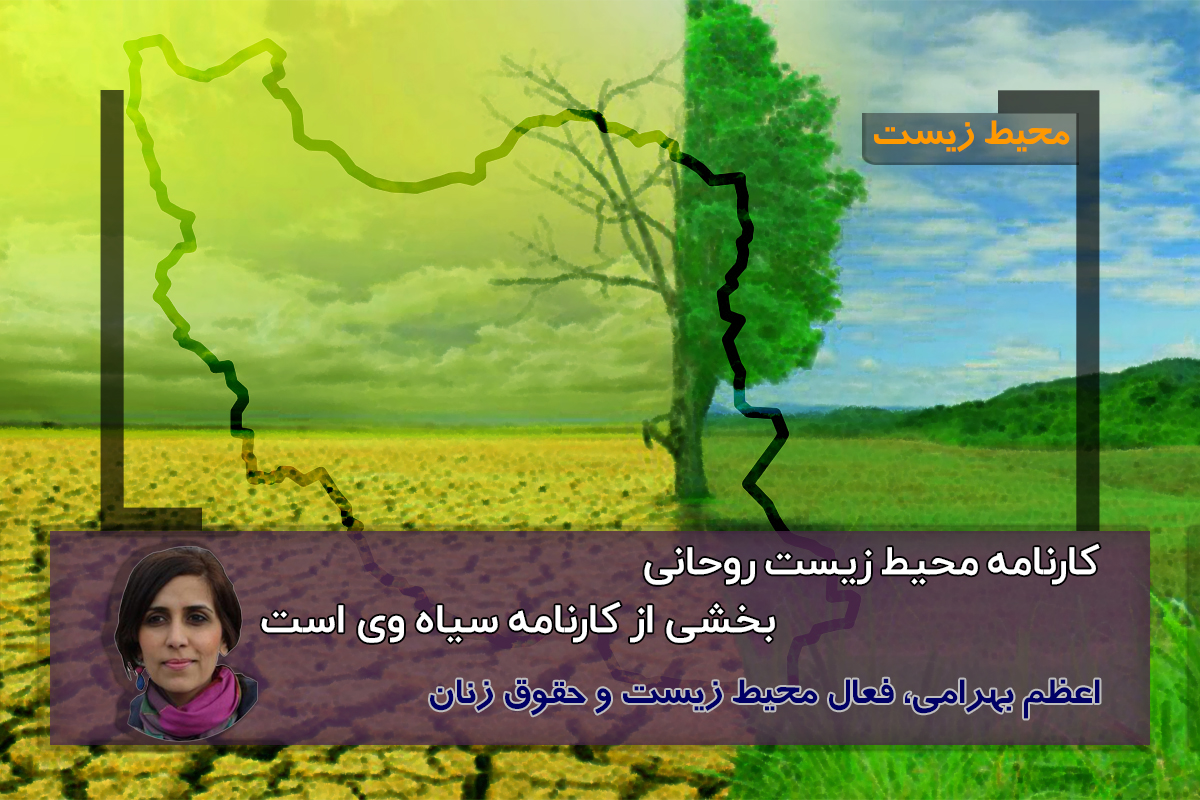
The environmental record is part of his black record/ Azam Bahrami
Although the path that the Rouhani government has taken regarding national resources, as well as the selection of managers and its policies for protecting natural capital, is in fact a continuation of the overall approach of the Islamic Republic government towards natural resources, it also has its own unique characteristics. Perhaps writing about the environmental record of the Rouhani government is not just a short paragraph, but a note. In the only government that called itself the most environmentally friendly government, farmers were beaten, activists and researchers in various fields were subjected to hours of torture and illegal imprisonment, and a wildlife researcher was killed in prison in the most unbelievable and unaware manner by security forces.
At a time when half of the world was amazed at the cleanliness of the air in mega-cities like Delhi and Beijing, Iranian citizens were breathing in toxic fumes from diesel for consecutive days even in small towns. Meanwhile, the Minister of Oil was praised by his Environmental Organization. The story of burnt wetlands and forests, survivors of floods and earthquakes
Selecting Ministers and Officials
The Rouhani government was a complete collection of technocrats whose overall focus was on the development of cement and steel. They pursued projects that lacked principles of justice and were only widening the gaps of social discrimination and climate injustice, as they were constantly hindered by sanctions and mafia interference.
Many of these ministers and heads of institutions and organizations even deviated from the limited and weak laws for environmental protection. These managers, such as Zanganeh, Ardakaniyan, Kalantari, Ebtakar, and others, have been in positions of power for years and it can be said that a large part of Iran’s current situation is the result of their instrumental approach to natural resources and their definition of its link to development.
Regarding Zanganeh as the Minister of Oil, there are important points to mention. These include the lack of responsibility of this ministry towards the pollution caused by the industries associated with it in various parts of Iran. There are also serious problems in the wetlands
Responsibility is being institutionalized.
But two other important issues were also institutionalized in the field of behavior and etiquette of management and responsibility in the Rouhani government, and gained more power. A subject that could be said to have been present in all areas, but was more evident in the environmental sector.
Ministers, governors, and officials turned into reporters and journalists. You have encountered a large number of managers in various fields and organizations who themselves reported the most complete destruction of the environment, forest fires, encroachment on mountains and beaches, and even violations of laws in the hunting and trafficking of wood. As a result, the final product was nothing but normalizing the situation and silencing the voices of protesters, whose words were now heard from the mouths of officials. The best example of this was the governors of Khuzestan and Golestan during the devastating floods, both of whom were later promoted.
At higher levels, we can also mention the Minister of Energy or the Minister of Agriculture Jihad. A perfect example
 Created By: Azam Bahrami
 April 21, 2021
Tags
"Rouhani Government's Human Rights Record" Azam Bahrami Environment Monthly Peace Line Magazine Natural capital Number 120 peace line State and human rights