


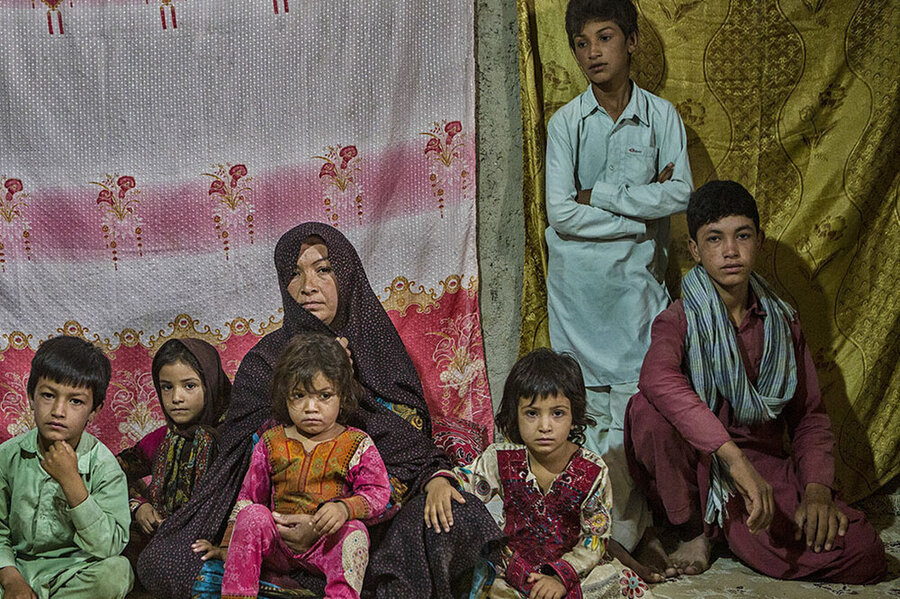
“Why is the bill granting citizenship to the children of Iranian mothers married to foreign men not being implemented?”/Ameneh Abiyar

Abstract of the article topic:
This article briefly discusses the issue of denying citizenship to children born to Iranian women and foreign men, which has been examined and analyzed through a legal critique of the political, cultural, and historical roots of the problem throughout contemporary history using an incomplete induction, analogy, and statistical analysis.
1. Introduction:
Entering into the discussion and subject of issuing birth certificates and citizenship to the children of Iranian mothers who have married foreign men without examining the cultural, religious, political, historical, and legal reasons behind it is a flawed and incomplete discussion. Therefore, it is necessary to not only examine the reasons and roots of this issue, but also briefly research it using common scientific methods such as incomplete induction, occasional analogy, and statistical analysis.
The incompleteness of incomplete induction is due to the fact that the general subject of research is not absolute and complete, as various and conflicting statistics have been reported for the 96% Afghan immigrant community (compared to all immigrants in Iran). The conflicting statistics are also due to the incorrect treatment of the host country towards immigrants, which leads to their lack of cooperation and provision of accurate information as a reaction to the host country’s discriminatory and hostile policies. However, the main causes and factors behind these different statistics are the domestic and foreign policies of the host country, which will
2- Income:
Since the topic of our discussion requires the use of specific terms and vocabulary in the article, we will first define the concepts of “citizenship”, “foreigner”, “subject”, “nationality”, and “primary, acquired, and dual citizenship” in general terms.
“Citizenship” is defined as the political and spiritual connection between a person and a state (country) with which they interact. “Foreigner” refers to someone who may be a subject of another state, but does not have a political or spiritual connection with the host state. “Subject” is the singular form of “nationality” and “nationality” is the plural form, including those who have this political connection.
Considering that international law considers the basis of citizenship to be either “jus sanguinis” (right of blood) or “jus soli” (right of soil and territory), those who acquire citizenship through these two principles are considered to have “primary citizenship”. Those who acquire
The main issue is the lack of granting citizenship (birth certificate) to the children born from the marriage of Iranian mothers with foreign men.
3-1- Despite the fact that according to Article 976 of the Civil Code, residing and being born in Iranian territory is considered a basis for granting citizenship, Iran has not granted this right to foreigners (non-citizens) in most cases, especially Afghan immigrants. It has strongly and firmly opposed and resisted the issue of citizenship, even though laws that have been passed later due to international pressure have not been free from these problems and obstacles. This issue will be discussed and addressed in the relevant section.
3-2- According to the Family Protection Law, passed in 1991, Articles 49 and 51, granting citizenship is subject to obtaining government permission (approved by the Council of Ministers), which is usually a lengthy legal process. If a couple approaches the government after a legal marriage that has not been registered, they will face charges of illegal marriage and will be sentenced to 5 years in prison. If they approach the government before marriage, they will have to go through the
4- Critique of the Law on Amending the Law on Determining Citizenship.
This law also includes the following problems and obstacles for Afghan children to obtain citizenship:
A. In general, the previous law has given a fundamental and prominent role to security forces in the process of amending the law.
B. Setting a time limit for appealing the rejection of a citizenship request by the provincial authorities and determining the authority to handle the appeal and review it by the same rejecting source, which is not legal because such cases that involve fear and the possibility of violating rights should be handled in multiple stages and this has not been done in this law. (Article 7 of the Executive Regulations of the Amended Law)
C. Both the law and its executive regulations are silent about the rights of foreign fathers married to Iranian women, contrary to international customs and laws that recognize the importance of citizenship for individuals in the international community (The Hague Convention of 1930).
D. The main problem for most children born from marriages between Iranian women and foreign men is the lack of official registration due to the
5- What are the reasons and roots of the confrontational and systematic conflicts in Iran and the lack of granting citizenship, especially to Afghans?
6- Then, income.
Real Statistics of Afghan Migrants
Real statistics of migrants for the following reasons:
A: Inaccurate reporting of legal bases and manipulation of their statistics for political purposes
B: Failure to disclose statistics of some migrants due to fear of punitive measures
C: Concealment of their statistics by some migrants for cultural reasons
D: Omission of statistics of some migrants due to the type and method of data collection by the statistical center
E: Repetition of some migrants’ statistics in different or similar categories in the statistical forms of the statistical center
F: Multiple parallel agencies collecting statistics with different variables (more than 4 reporting agencies)
External sources of statistics:
According to the published report of the United Nations, the number of Afghan migrants in Iran is 2,990,676, of which nearly 773,000 have returned to Afghanistan due to the poor political and economic situation in the Islamic Republic of Iran.
Since accurate statistics are not available for the aforementioned reasons, taking into
Sources:
– Dehkhoda Dictionary – Dehkhoda
– Iranian Civil Code – Imami – Relevant Articles
– Nasiri, Mohammad – Private International Law – Tehran – Agah Publications – Vol. 9 – 1381
– Book 2, Volume 2 of the Civil Code approved in 1313 – Articles 976-991
– Family Protection Law approved in 2012 – Articles 49 and 51
– International Covenant on Civil and Political Rights
– Declaration of the Rights of the Child approved in 1959
– Convention on the Rights of the Child
– International Covenant on Economic, Social and Cultural Rights
– Convention on the Elimination of All Forms of Discrimination against Women (1979)
– Law on Determining the Nationality of Children Born to Iranian Women and Foreign Men approved on 6/2/1385
– Law Amending the Law on the Nationality of Children Born to Iranian Women and Foreign Men approved
 Created By: Ameneh Abiyar
 July 22, 2020
Tags
Afghan immigrants Ameneh Abyar Children without birth certificates Citizenship Granting Iranian citizenship to children born from marriages between Iranian women and foreign men. Monthly Peace Line Magazine Number 111 peace line Refugee Refugees Rights of immigrants Rights of refugees Wandering stranger