


The human rights situation in Rouhani’s government during one week.

From an international perspective, the Islamic Republic is still enjoying the achievement of President Hassan Rouhani’s so-called “moderate” status and also one of the five seats on the subcommittee of the United Nations Economic and Social Council, including the Commission on the Status of Women. However, inside Iran, everyday life is characterized by detention, torture, and systematic harassment and persecution of minorities, as well as rushed executions.
Roya Nobakht, a British-Iranian citizen residing in Stoke-on-Trent, England, was sentenced to 20 years in prison on May 30th for a Facebook comment she made. Her comment simply stated that Iran is “very Islamic.” According to the news agency Hrana, she was among eight others who had made similar comments on Facebook and were collectively sentenced to 128 years in prison. Their charges included “acting against national security, insulting sacred beliefs and society, and collusion against the system.”
Also, on May 30, the arrest of four men (Behnam Tafazzoli Nasab, Afshin Zamanati, Reza Tajareh, and Davoud Afruz) for “Facebook activities” in Dehdasht city was reported by the Hrana News Agency. Three social media users (Saleh Tamouli, Hamza Zargani, and Adel Sedouni) from Ahvaz, after two months of severe torture, were sentenced to three years in prison on charges of managing Facebook pages. Facebook, Twitter, and recently Instagram are heavily filtered in Iran.
According to the report of the Baromand Foundation, Gholamreza Keshvari was executed on the morning of June 1st under the title “God’s Warrior” for providing approximately 500 dollars in assistance to a television station of the opposition.
This process is such that an average of 17 people are executed in Iran every week. This number is equivalent to the executions in 2010 after the protests of 2009, during the “far from moderate” government of Ahmadinejad.
With the reminder of the savage attack on the prisoners of ward 350 in Evin prison in April 2014, which was widely reported and despite international outrage, the news agency HRANA reports that prisoners in Bandar Abbas and Zahedan prisons were also attacked by prison guards on May 25th and 28th. The prisoners were brutally beaten and some were left in the scorching sun without access to water or toilets.
Among the prisons in Iran, Bandar Abbas prison has the most unsuitable conditions. 3800 prisoners are crammed into a place suitable for only 400 people, making it difficult to access toilets and water.
This news agency also reported on May 31st that 70 security forces raided Ward 10 of Rajaei Shahr prison, where 100 Sunni political prisoners are being held. The security forces threw the Sunni prisoners’ religious books at them, insulting their religion, and destroyed and confiscated their valuable belongings.
In Iran, a predominantly Shia country, the Sunni minority religious group is systematically harassed and persecuted. According to court documents, many of these prisoners have been sentenced to execution. Currently, there is no information available about the fate and whereabouts of 10 Sunni men who were arrested by intelligence forces during a Sunni religious celebration in mid-April.
Only in the past week, four Baha’i citizens (three in Mashhad and one in Semnan) were arrested. Baha’is have been subjected to harassment and persecution since the February 1979 revolution, according to one of the government’s policies. In the first decade of the revolution, 200 of them were executed and hundreds more were tortured to renounce their beliefs and accept Islam. Tens of thousands of them have lost their jobs, retirement benefits, places of business, right to education, and right to hold religious gatherings, and the crimes committed against them by other citizens are never punished; according to Islamic laws, Baha’is are not considered citizens.
The arrest of Saeed Shirzad, a children’s rights activist, was also reported on June 3rd in Tabriz. He will join a large number of other political prisoners, including human rights lawyers, activists, journalists, bloggers, and religious minorities.
According to information received from sources inside Iran on June 3rd, the condition of Ayatollah Boroujerdi has worsened. The opposing cleric, who has been imprisoned for the past eight years and continuously subjected to torture and denied medical treatment, is only being punished for speaking out against political violence in the name of Islam.
The authorities are still suffering from serious medical conditions in Boroujerd, including acute heart disease, Parkinson’s, eye, lung and respiratory disorders, which have mainly been caused by years of torture. His new psychological torture includes surveillance through a camera in all situations, even in the bathroom. This mistreatment has caused him deep sorrow. According to this source, Boroujerd has said that if he writes a letter to human rights organizations and tells them that he is under treatment and in good health, these behaviors will stop.
Despite a request for reconsideration by five human rights experts of the United Nations to the government of Iran on April 10, for urgent provision of medical care to imprisoned blogger Mohammad Pourshajari and other prisoners, both are in critical physical condition.
Zeynab Jalalian, a political prisoner who suffers from severe eye disease due to torture, had her medical treatment rejected by the prosecutor’s office on June 1st.
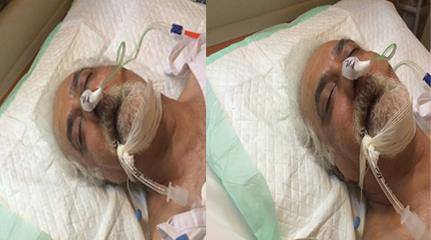
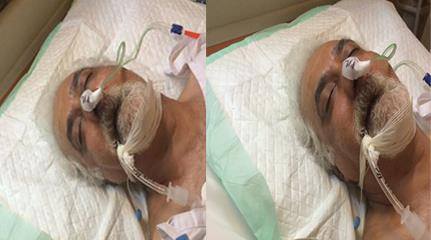
Mashallah Ha’iri, a 59-year-old prisoner who has been serving a 15-year sentence for participating in the 2009 protests, is currently in Rajai Shahr prison. Due to lack of access to medical treatment for his cardiovascular disease, he fell into a coma on June 5th. According to reports, he was transferred to a hospital outside of the prison, but it is still unclear if he is receiving proper treatment or if his photo in the hospital was only released for media coverage. Ha’iri’s daughter has also been arrested multiple times for requesting medical treatment for her father.
The Islamic Republic continues to engage in the silent massacre of political prisoners through well-planned and prolonged torture, including denial of medication and medical treatment; killing prisoners without an official execution. This process has not changed with the arrival of the new government and some prisoners say it has even worsened with the coming of Rouhani.
It seems that the only difference is that prisoners are transferred to a hospital outside of the prison, their photo is taken, and then they are returned to prison without receiving any treatment. This scenario has been arranged to appease human rights organizations. This deception was also carried out in the case of the well-known labor activist, Reza Shahabi. He had a desperate need for spinal surgery due to injuries sustained during interrogations. Immediately after the visit of Catherine Ashton, the EU’s foreign policy chief, Shahabi was transferred to a hospital outside of prison and his photo was published in the media and social networks. But without any treatment, he was returned to prison that same night.
Recently, on June 2nd, a prisoner named Shahabi was transferred from Evin prison to Rajai Shahr prison along with six other prisoners. The conditions in Rajai Shahr prison are much worse than Evin. Usually, prisoners with severe medical conditions are not transferred to hospitals outside of prison. This is a warning bell of how the international community still refers to Rouhani as a “moderate,” despite evidence showing the opposite; although it may be wrong to solely blame the president of Iran…
 Created By: Saied Shirzad
 June 23, 2014
Tags
Monthly magazine number 38