


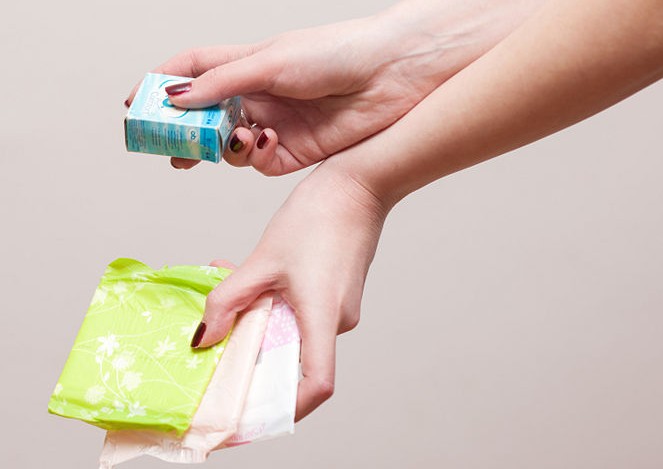
تهOn the occasion of World Menstrual Hygiene Day, we name her Aida with full eyebrows.
This year, for the first time, the name “World Menstrual Hygiene Day” was designated. By naming a day with this name, two goals can be pursued; One: Emphasizing the importance of mental and physical health issues, Two: Diminishing or eliminating the taboo associated with menstruation throughout history.
Menstruation, period, menstrual cycle, or menstruation, is the flow of blood from the lining of the uterus. It occurs from early adolescence, during puberty, to menopause. The duration of menstruation usually lasts for a few days, typically 3-5 days, but can also vary between 2-8 days. Each menstrual cycle lasts an average of 28 days.
Talking about female body and the biological factors related to female sexual organs has always been a sensitive issue, not only in traditional and patriarchal societies like Iran, but perhaps it can be considered as a red line with varying degrees of importance in all societies around the world. In our society, female shame is intensified by traditional thinking and societal oppression, and even the denial of women’s rights is not uncommon.
Many girls are unaware of menstruation before they experience it. It comes to them in a dream, during childhood games, at school, in the park, or at any time and place. Fear of making mistakes, fear of punishment, surprise, or fear of the unknown are reactions that occur in response to this lack of knowledge.
In traditional and religious society of Iran, due to the dominant patriarchal culture, families, schools, and the community refrain from providing direct and explicit education to their daughters. This lack of awareness not only affects women in society, but also deprives men from accessing education without bias and discrimination. This deprivation of education for children and adolescents can have irreparable psychological and physical consequences. Perhaps one of the factors contributing to the silence or tolerance of sexual abuse in childhood is the lack of proper education and the taboo of discussing sexual organs.
After the start of menstruation, most mothers tend to give brief explanations and often emphasize hiding this matter from the eyes of male family members and others, rather than answering the questions that girls have in their minds. This act of hiding and coloring taboos becomes so important that it turns into a feminine secret. Hiding sanitary pads and feminine purchases, hiding period pains, mood swings, and irritability of PMS even from the closest male family members, feeling sick and different, which can sometimes lead to frustration, using black plastic bags for collecting garbage and for Muslim women in traditional-religious families, fasting during menstruation in the month of Ramadan, to deny femininity and give in to the red lines of male dominance.
Denying the natural existence of women, considering them inferior and impure during menstruation has a historical and religious root. According to various religions, women are impure during this period, banished from the divine realm and sacred places. From the belief that demons reside in their bodies to washing with cow urine, it is the result of discrimination against femininity. From refraining from kissing and caressing to labeling them as impure, it is nothing but the product of male-dominated religious thinking.
Instead, the recommendations that should be mentioned are less likely to be put into practice. Exercising, having a proper diet, avoiding sugar and fatty foods, eating vegetables, following hygiene practices, wearing cotton underwear, changing sanitary pads or tampons frequently, etc. These are things that can be heard from a father, a mother, or a teacher. Conversations that not only remove shame but also help with their health.
Another issue that must be considered is the topic of physical hygiene. It should not be forgotten that maintaining hygiene has costs for individuals and families, which can be difficult for low-income families to cover. The problems caused by neglecting hygiene and the fear of contracting these problems or diseases takes a toll on the mental and physical well-being of many low-income women on a monthly basis. This issue can even lead to the exclusion of women from the workforce or public spaces.
Women who are unable to afford the necessary hygiene products are forced to use them minimally, which can also harm their health. If lack of economic means truly prevents them from obtaining their first menstrual hygiene products, what solution can be considered?
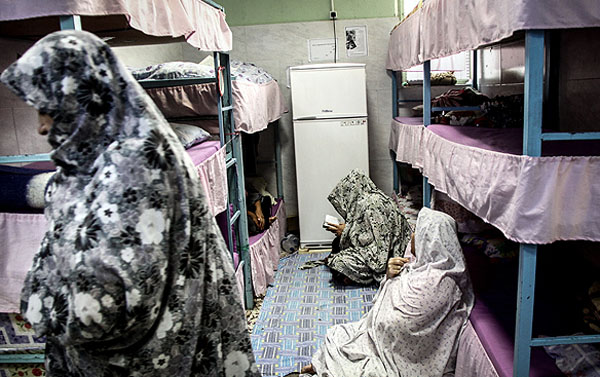
Of course, the issue of hygiene during menstruation is not only limited to low-income women. Even imprisoned women are faced with this problem as a major challenge. These issues have occurred in various forms for incarcerated women at different times.
In the memories of female prisoners in the 1960s, we read:
During a period in 1960 in Evin prison, the prison guards refrained from giving hygiene products to female prisoners by saying “you are also extra”. The prisoners were forced to tear their limited clothing into pieces and use them as hygiene products.
Or: “In the year 60, at the age of 19, during my arrest at the Nazi Abad Committee in Tehran, I was beaten and hit with a soldier’s baton on my genitals, causing bleeding and leaving me in agony. I felt a part of me shattered and went up to the sky. My body was burning and my underwear was soaked in blood. I went to the cell door and banged on it. A guard came forward and I asked him for a bandage. I still remember his expression, screaming and yelling at my request, I called out to the guard, Haji…” (2)
These problems are not limited to past decades and have also arisen in recent years in different forms for incarcerated women. According to one of the female inmates, the prison guards are no longer men and the first thing they provide us with is a hygiene kit. However, there are hygiene issues. The inability to maintain hygiene in the prison environment is one of the major problems for women, especially during menstruation.
And according to another prisoner: Sometimes the stress and high level of nervous pressure is so much that it delays your menstruation for months, and this is also difficult in prison conditions. I have experienced a three-month delay in menstruation in prison.
Perhaps one of the best descriptions of the difficult conditions for maintaining women’s hygiene in prison is the note of Ms. Naeimeh Dostdar, a former journalist and political prisoner.
“The greatest minimal experience was in prison; a place where none of the minimum necessities exist. I shared a cell with three other people, in a space of three meters long and 180 centimeters wide. The minimum things there were a toothbrush, soap, and a towel. There were also three blankets for the newcomers, but I didn’t receive one. I shared my blanket with my cellmates. There, I truly experienced the meaning of minimal; minimal air, minimal sleep, minimal food, minimal clothing, minimal space, and minimal hope. Wearing shorts was the tragic point of our lives as three female prisoners. We had to think about how to wash them, what to wash them with, where to hang them, how to dry them, how to sit while they were being washed and dried, how to use our only covering, the tent, and in the middle of it all, if one of us got her period, we had to beg the prison guard to bring us a
Planning to wash the shorts should be done with great care; because at any moment they could call you for interrogation; so you had to be on your toes…
Solving the problems of low-income women, imprisoned women, etc. in relation to menstrual health requires addressing and eliminating taboos. If talking about this issue becomes a natural thing, then in the next step, we can think of solutions to solve this problem or organized protests to address these issues. However, due to societal restrictions and patriarchal norms, most women refrain from expressing their needs and problems, which contributes to the persistence of women’s issues and the intensification of discrimination. Perhaps the first step should be taken by families, by not denying femininity and eliminating female shame.
For further study, refer to the rules and regulations of the religious beliefs of Islam, Zoroastrianism, and Judaism.
2- Women in the prisons of the 1960s of the Islamic Republic “Memories of Mina Zarin”, the website of Solidarity with Women’s Struggles in Iran.
At least, the blog of Naimeh Doustar “Ghazal” was created on 16 Ordibehesht month of 1391.
 Created By: Aida Abroufarakh
 June 23, 2014
Tags
Monthly magazine number 38