


اجتماعیEradicating poverty and unemployment is the key to achieving social security.
Although the distance of 1700 kilometers between Sistan and Baluchestan may seem far from the center, it is likely that the perspective of the “centralists” distorts the reality of life for the people of this region and reduces the 1700 to a meaningless number.
The center of residents who, with the capture of their soldiers as hostages, are preoccupied with margins and, by remaining silent in the face of the main causes that have led to these hostage-taking, are in a way passively colluding with the ruling power.
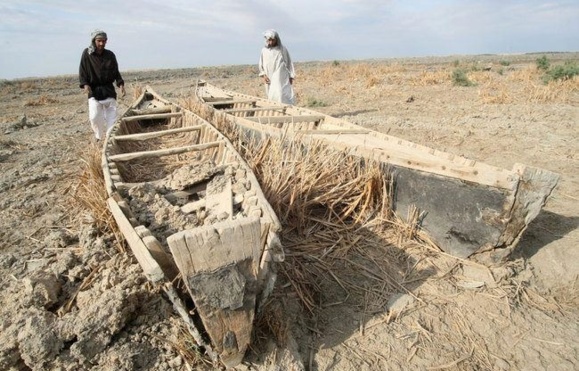
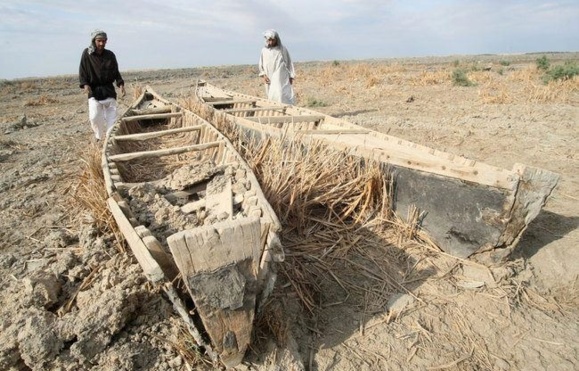
It is impossible to talk about terrorist groups in Sistan and not mention the extremely high unemployment rate in this province. Nothing was said about the main transit route for drug trafficking, and there was no mention of the 16-year drought in this province (since 1998) and the drying up of the Hamoun Lake, which according to Halimeh Ali, one of the representatives of the Sistan and Baluchestan Parliament, is responsible for 80% of the jobs and livelihoods of the people.
Unemployment, poverty, and economic mobility in the province.
In the absence of independent and transparent statistical sources with specific criteria, it may be difficult to talk about unemployment and poverty statistics. While official statistics have announced the unemployment rate in this province to be 31.5% in 2006 and 36.7% in 2010, some experts believe that the actual rate is around 35 to 40%. (1) Hossein Ali Shahriari, one of the representatives of Sistan and Baluchestan in the parliament, also considers the official statistics to be inaccurate and in an interview with the local website Zahedan Press, he believes that the actual unemployment rate in this province is more than 50%.
This is while Hojat al-Islam Hassan Khodari, the Friday Imam of Zahak, believes that more than 90% of the people in this province are below the poverty line and more than 50% of them are covered by support institutions.
In relation to the discussion of unemployment and poverty in Sistan and Baluchestan province, two points must be considered: Firstly, the very low level of industrialization in the province, and secondly, the high population of rural communities in this province, whose fate has been strongly linked to the Hamoun wetlands and recent years’ droughts.
While Sistan and Baluchestan, with 10% of the country’s area, is considered the largest province in the country and 4% of the country’s population reside in this province, its share of gross domestic product is only 1% and even worse, only 0.86% of industrial units are present in this province.
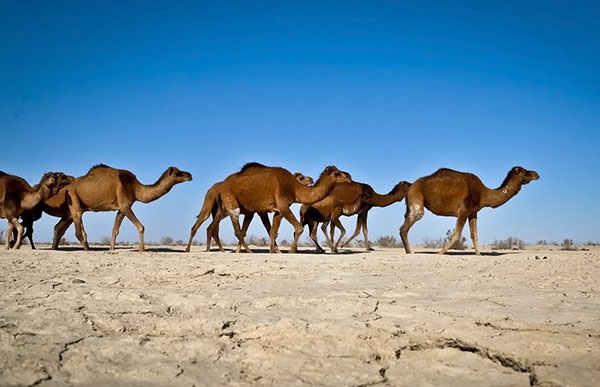
On the other hand, Sistan and Baluchestan, unlike most parts of the country, has a rural population of over 50% whose lives are heavily dependent on agriculture and animal husbandry. Due to recent droughts and neglect by officials, the livestock in this region has suffered greatly and according to the head of the relief committee in Zehak county, in an interview with Mehr news agency, the number of households dependent on this institution has increased in recent years.
Furthermore, with the drying up of the Hirmand River and as a result, the Hamoun wetlands, a large portion of the population has been affected and if we pay attention to the statements of Haleh Ali, a representative of the parliament in an interview with Baloch Press, who said that 80% of the people in this region rely on this wetland, then perhaps the depth of the tragedy will become more apparent.
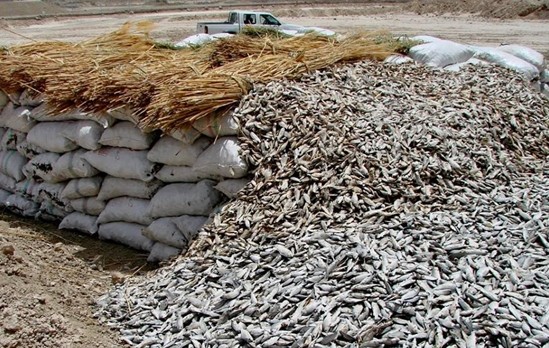
The drying up of Hamoun Lake has resulted in the unemployment of 3,000 fishermen and 3,000 hunters in this region, and the invasion of sandstorms has practically made agriculture impossible.
According to the director of livestock affairs of the Agricultural Jihad Organization, in an interview with IRNA, during the consecutive droughts in recent years, livestock units in this province have decreased by 30 percent.
On the other hand, increasing national and religious pressures have greatly affected the business environment in the province. Reza Hossein, an expert on Balochistan issues, says: “Discrimination prevents Baloch people from being employed in government offices and being accepted in universities. Baloch citizens are not given the same opportunities and permissions for buying and selling in the free market, leaving them marginalized. This discrimination has infiltrated almost every aspect of life and there is no case where people can enjoy the same rights as others.”
The current situation has had two simultaneous effects on the workforce composition in the region: on one hand, the Baloch workforce has preferred to remain unemployed due to migration to Arab countries in the region and working under harsh and inhumane conditions (3), and on the other hand, the unprecedented growth of fake and non-productive jobs has paved the way for the recruitment of workforce in the drug sector.
Pishang Riggi, the representative of the people of Khash, Nasrat Abad, and Mirjaveh in the parliament, in an interview with Payesh Press, says: “Baloch youth, in order to earn a monthly income of 100 or 200 thousand tomans, carry weapons and engage in false occupations such as smuggling goods and other illegal activities. As a result, their names are added to the list of criminals and they have no way back; whereas if the government provides the necessary conditions for their employment with minimum wages, this problem will be solved on its own.”
It is clear that due to high income and high domestic demand, a large portion of this workforce has been specifically attracted to drug trafficking, and these conditions have resulted in a situation where, according to unofficial statistics, Sistan and Baluchestan, along with Hormozgan, have become the largest hubs for drug traffickers.
Sistan and Baluchestan, poverty, unemployment, and government policies.
The economic policies of past governments have led to the accumulation of numerous problems in Sistan and Baluchestan. From drought to the decline of livestock and agriculture in the region, to the migration of labor to Arab countries, and the proliferation of false businesses, including drug trafficking; Therefore, examining the economic policies of a new government for only one year may not reveal the root causes of the region’s problems, and the best course of action may be to review and evaluate the plans that have been presented by the government to address the issues in Sistan and Baluchestan.
According to the report by ILNA, Nahavandian, the head of Hassan Rouhani’s office, described part of the government’s plan to address the serious situation in Sistan and Baluchestan province during a meeting on development and investment in the province held in April of this year. Nahavandian stated, “Today, the government has taken measures to remove obstacles for investors and the private sector has also taken on its responsibilities with capability.” He expressed hope that the result of these efforts would be the pride of Iran, job creation, participation in the global economic competition, and the demonstration of the capabilities of the beloved Islam in advancing the material and spiritual well-being of society.
He said in another part of his speech, “According to the government’s decision, the National Development Fund is ready to provide facilities and resources to private sector investors in this province with special discounts for less developed provinces.” He also mentioned the lack of economic infrastructure, but the solution remained unspoken.
Now we need to examine the connection between these statements and the performance of previous governments.
The emphasis on the development of the private sector (alongside the view of reducing the role of government) and the silence towards the vital responsibilities of the government towards its citizens is not in line with the goal stated by the Nahavandians, according to the policy he presents.
If agriculture in this region has reached the point of complete destruction, one of the reasons is the lack of large government investments for mechanized irrigation (according to experts, up to 92% of water used in traditional irrigation is wasted) and the absence of strict government laws and regulations to prevent the division of agricultural land.
On the other hand, in a province with this level of economic infrastructure growth, it is not profitable for any private investment to invest in mother industries that have long-term returns.
If we place these alongside the necessity of improving public health (which essentially lacks economic benefits in a large portion of it), it becomes more evident how the policies of government downsizing relate to the sustainable development of underprivileged regions.
It seems that a thin thread connects the positions of governments towards Sistan: lack of a comprehensive and comprehensive plan to solve the root causes of social problems in the region, which is essentially not possible without a comprehensive and comprehensive plan, and a security-oriented approach to the problems that have been created by the same situation.
It is also obvious that for a government that strongly continues the policies of downsizing the government, talking about solving the drought problem – which requires a comprehensive government intervention – is not a practical plan to solve the problem, but rather turns into slogans that previous governments have also repeated.
If the government wants to solve the root causes of problems, including preventing the entry of labor into the field of drug transit, it must be able to address long-term issues such as unemployment, poverty, drought, and lack of universal and accessible healthcare through a comprehensive plan. By creating suitable economic infrastructure, the groundwork for human development in the region will not be provided.
“Only in the shadow of comprehensive and sustainable development can the cycle of false occupations – such as smuggling – being thrown out of work, and otherwise ignoring social problems and neglecting the foundations, lead to a situation that has now become a reality.”
The alarm of unemployment has sounded in Sistan and Baluchestan, ISNA News Agency, July 12, 2014.
2- Shahrī, Ma’sumeh, Hāmun, which dried up the breaths, also fell to the number, Bahār News, 2 August 2013
3- Kakarsh, Mohsen, Balochistan, the land of deprivation, Radio Zamaneh, 27 Farvardin 1391 (April 16, 2012)
 Created By: Admin
 July 24, 2014
Tags
Issue number 39