


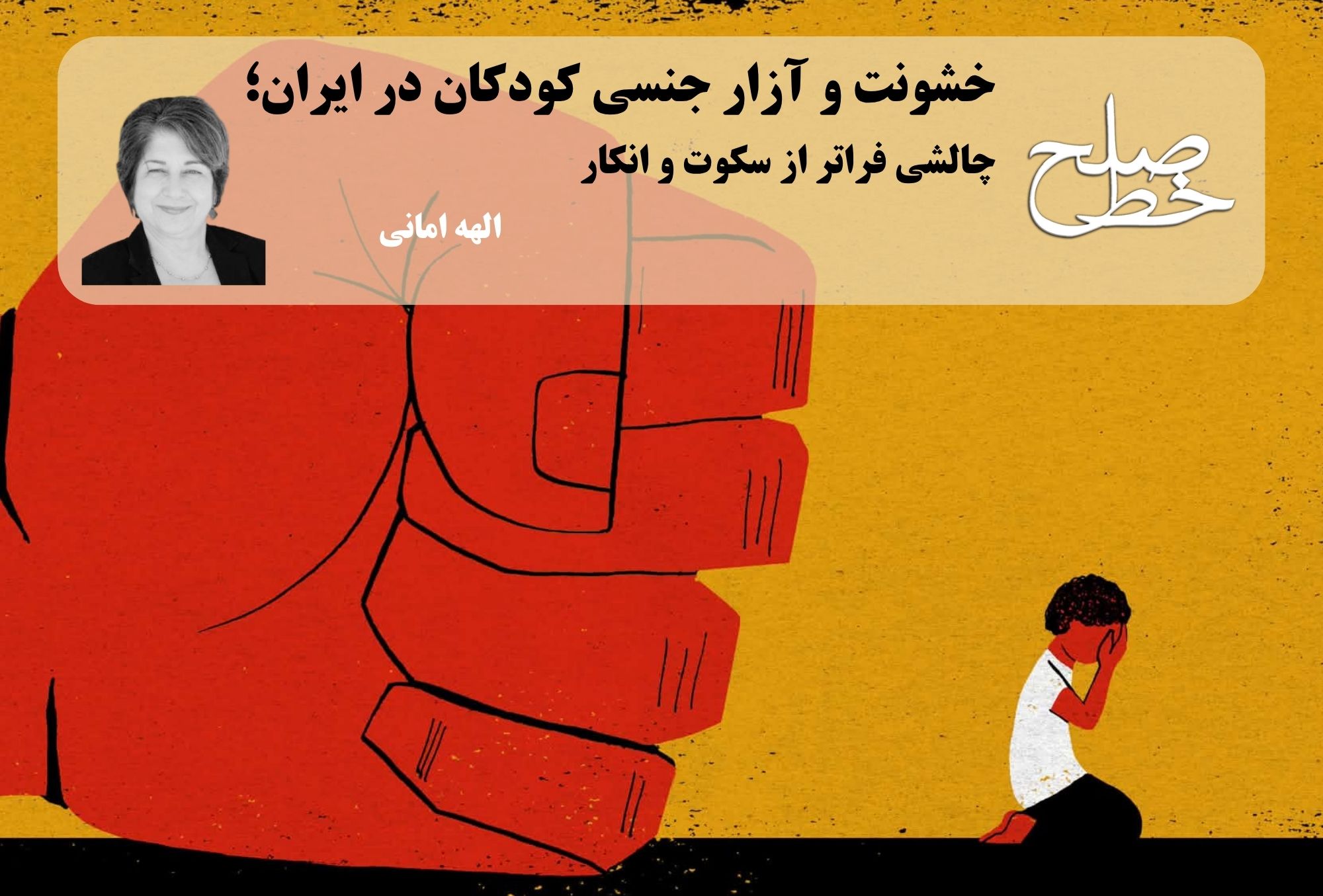
Sexual Violence and Abuse of Children in Iran: A Challenge Beyond Silence and Denial / Elahe Amani
“We owe our children, the most vulnerable citizens in any society, a life free from violence and fear.” — Nelson Mandela
A review of the performance of the Society for the Protection of the Rights of the Child in 1404 and the fact that child sexual abuse ranks at the top of the issues in cases referred to the Society’s legal unit reveals one of the most serious challenges in the field of children’s rights in Iran; a phenomenon that is neither new nor unprecedented, but rather a sign of a growing and deeply troubling trend.
These cases encompass a range of sexual abuse and violence perpetrated by family members and others, as well as cases of exploitation, harassment and abuse in various settings, sexual threats and assault, and harassment and abuse in cyberspace.
Sexual violence is any act, action, or threat of an act that is sexual in nature and occurs without the consent of the victim. Sexual violence includes rape, sexual abuse and harassment, exploitation, and forced prostitution. Any sexual act involving a child (any person under the age of 18) is considered sexual violence, and such an act has devastating effects on the development and mental and physical health of the child involved. In general, any physical, emotional, or psychological harm, sexual abuse or exploitation, and failure by others to attend to the basic needs of persons under the age of eighteen is considered child abuse.
Over the course of more than 47 years, the Islamic Republic of Iran, by imposing a regressive and reactionary discourse on the concepts of gender and sexual behavior, has subjected the bodies, clothing, and sexual behavior of women and girls in particular to intense state surveillance, control, and punishment, and has also faced their courageous resistance. Nevertheless, despite its extensive and misogynistic surveillance and control over matters of sex and gender, this state has refused to establish a robust system to protect children from sexual violence and abuse. This contradiction is noteworthy: a state that claims to possess a religious and moral mission to regulate sexual behavior appears far less committed, in terms of transparency, prevention, accountability, and access to justice, to ensuring the sexual safety of the most vulnerable group in society—children.
Sexual harassment, abuse, and violence against children in Iran and around the world constitute only one aspect of violence against children on which the international community places emphasis. Violence against children encompasses physical and psychological violence, violent punishment, child marriage, circumcision or genital mutilation of children, child labor, child trafficking, harm to children in wars and armed conflicts, the arrest, imprisonment, abuse, and execution of children, deprivation of education, deprivation of birth registration and lack of identity documents, deprivation of family care and support, and other cases.
The reality is that, despite international conventions and protective and preventive laws, violence against children exists in every country in the world, although its prevalence and forms vary significantly from one country to another.
However, the rate at which cases of violence are reported, the possibility of disclosing them without victim-blaming, the existence of protective laws, and access to justice are factors that place different countries in different categories.
Sexual violence and abuse of children constitute a multilayered violation of their human rights. Child sexual abuse is not merely a criminal offense; rather, it simultaneously violates the child’s right to safety and physical and psychological integrity, human dignity, health, development, and protection from violence and exploitation. Therefore, the state’s response should not be limited merely to punishing the perpetrator, but must also include prevention, identification, support, treatment, and compensation.
Another aspect is the gap between the law and its implementation. At the legal level, mechanisms have been created to combat child abuse; however, the Islamic Republic must be held accountable for the gap between the existence of laws and their effective implementation.
According to a report by Shargh, the “Law on the Protection of Children and Adolescents,” which was adopted in 2020 (1399), provides mechanisms for identifying situations of risk, reporting cases of child abuse, and protective intervention. Nevertheless, the practical implementation of these protections continues to face gaps, and in many cases, child victims of sexual violence do not have access to immediate and specialized services.
Passing a law alone is not enough. The state is obligated to provide practical mechanisms and accountable institutions for its implementation, allocate the necessary budget, plan specialized training, and launch comprehensive campaigns to encourage reporting.
Moreover, one of the most important aspects of examining sexual violence and abuse of children is that the path to seeking justice for a child must not depend on the family’s economic means and resources to access the police, forensic medicine, a lawyer, or the courts. If poverty, fear of social stigma, lack of legal counsel, or family pressure prevents a complaint from being filed, this in practice amounts to a violation of the right to equal access to justice.
The judicial process of accessing justice must also not itself become a source of “secondary harm.” Repeated interrogations, confrontation with the accused, questions inappropriate to the child’s age, or requiring the child to repeatedly recount the experience of violence can victimize the child again. Therefore, child-centered proceedings, specialized and confidential interviews, reducing the number of interviews, and continuous psychological support are requirements of a fair, child-centered system so that children who have experienced sexual violence and abuse are not once again subjected to emotional and psychological violence.
Children must, in accordance with their age and abilities, have the opportunity to express their experiences and opinions in processes concerning them. This is particularly important because in many cases, especially in countries of the Global South, including Iran, adults decide on behalf of the child whether or not the violence should be reported. Moreover, in cases where sexual violence and abuse are perpetrated by relatives and family members, many details are covered up. The reality is that children often depend for access to the police, doctors, social workers, and courts on the very adults who may themselves be the perpetrators of the violence, accomplices to the perpetrator, or concerned about family reputation and the social consequences of disclosure. Therefore, saying that “the child must report” is not sufficient from a children’s rights perspective. The state must create independent, safe, and protected channels for reporting violence against children.
The reality is that even where governmental or non-governmental institutions exist and are free to operate, not all children have equal access to these support institutions. Children with disabilities, child laborers, migrant children, children without identity documents and residency papers, and children living in care centers for children without guardians or in orphanages have more limited access to the support provided by these centers. This issue can be analyzed within the framework of the principle of non-discrimination and an intersectional approach.
Furthermore, education and prevention aimed at reducing cases of sexual violence and abuse are part of children’s rights. The absence of age-appropriate education about bodily boundaries, unwanted touching, recognizing abusive behavior, and how to seek help can expose children to sexual harm. From a children’s rights perspective, preventive education must not be confused with placing responsibility on the child. The primary responsibility for creating a safe environment rests with adults and state institutions.
Over the past two decades, greater attention has been paid to cyberspace, which can facilitate cyber violence and the sexual exploitation of children. Sexual threats, blackmail using private images, and the deception of children online demonstrate that the child protection system must also confront new forms of violence. Some believe that restricting children’s access to phones can help prevent violence and abuse against children online, but taking a child’s phone away as a family response can also restrict the child’s right to communicate and ability to seek help. A human rights-based approach should focus on safety, support, and holding the perpetrator of violence accountable, rather than punishing or blaming the child.
Alongside the prevalence of child sexual abuse, it must also be recognized that transforming an experience of violence and abuse into a “case that can be pursued” is beyond the capacity of a child who has been subjected to violence and abuse.
It is clear that the absence of a report does not necessarily mean the absence of violence and abuse. On the contrary, silence can be the product of fear, dependency, social stigma, the absence of a safe reporting mechanism, and distrust of the judicial system.
From this perspective, the statistics of the Society for the Protection of the Rights of the Child should not be regarded as representing the actual prevalence of sexual violence and abuse of children, but rather as the “tip of the iceberg” of sexual violence against children: what has been recorded is the portion of violence that has managed to pass through familial, social, institutional, and judicial barriers and reach the reporting stage. The gap between Iran’s legal obligations and the practical implementation of children’s rights can and must be examined.
The KidsRights Index, which covers 194 countries, ranks countries in 2026 based on five areas:
- The right to life
- The right to health
- The right to education
- The right to protection
- An enabling environment for the realization of children’s rights
This index relies to a large extent on United Nations data and assesses the extent to which countries implement the United Nations Convention on the Rights of the Child.
The 2026 index is particularly significant under current conditions because it reports a global trend of regression in children’s rights, including an increase in sexual violence against children in connection with wars, military conflicts, and armed violence against children.
The contradiction between extensive regulation and surveillance of the gender and sexual behavior of women and girls and the weakness or inadequacy of mechanisms to protect children from sexual violence and abuse is particularly significant. New UNICEF data, updated in June 2026, further highlight this contradiction. According to these data, 650 million girls and women worldwide today—one in every five women and girls—experienced sexual violence during childhood. Of these, more than 370 million experienced rape or sexual assault during childhood.
Among boys and men, an estimated 410 to 530 million—approximately one in seven—were also victims of sexual violence during childhood.
If the state has the capacity to monitor, control, and punish sexual behavior, why is this same capacity not employed to the same extent to prevent sexual violence against children, enable safe reporting, punish perpetrators, support victims, and produce transparent and reliable data on such violence?
The extensive regulation and control of sexual behavior in Iran stands in clear contrast to the limited degree of transparency, visibility, and documented effectiveness of mechanisms for preventing and responding to sexual violence against children.
Sexual violence against children is an enormous and global human rights crisis affecting hundreds of millions of people, yet it continues to be reported and measured at levels far below its actual prevalence.
The ultimate measure of a society’s commitment to morality is not the severity with which it controls the bodies, clothing, and sexual behavior of women and girls, but rather its ability to protect the most vulnerable children from violence and abuse. Such protection cannot be achieved through laws and punishment alone; it requires continuous and comprehensive public education, comprehensive prevention programs, and the courage to break the silence surrounding sexual violence and abuse of children. A society that fails to educate its citizens, empower children, and protect them from abuse cannot claim to defend morality.
 Created By: Elahe Amani
 August 23, 2026
Tags
Children's rights Elahe Amani Sexual abuse of children Social stigma