


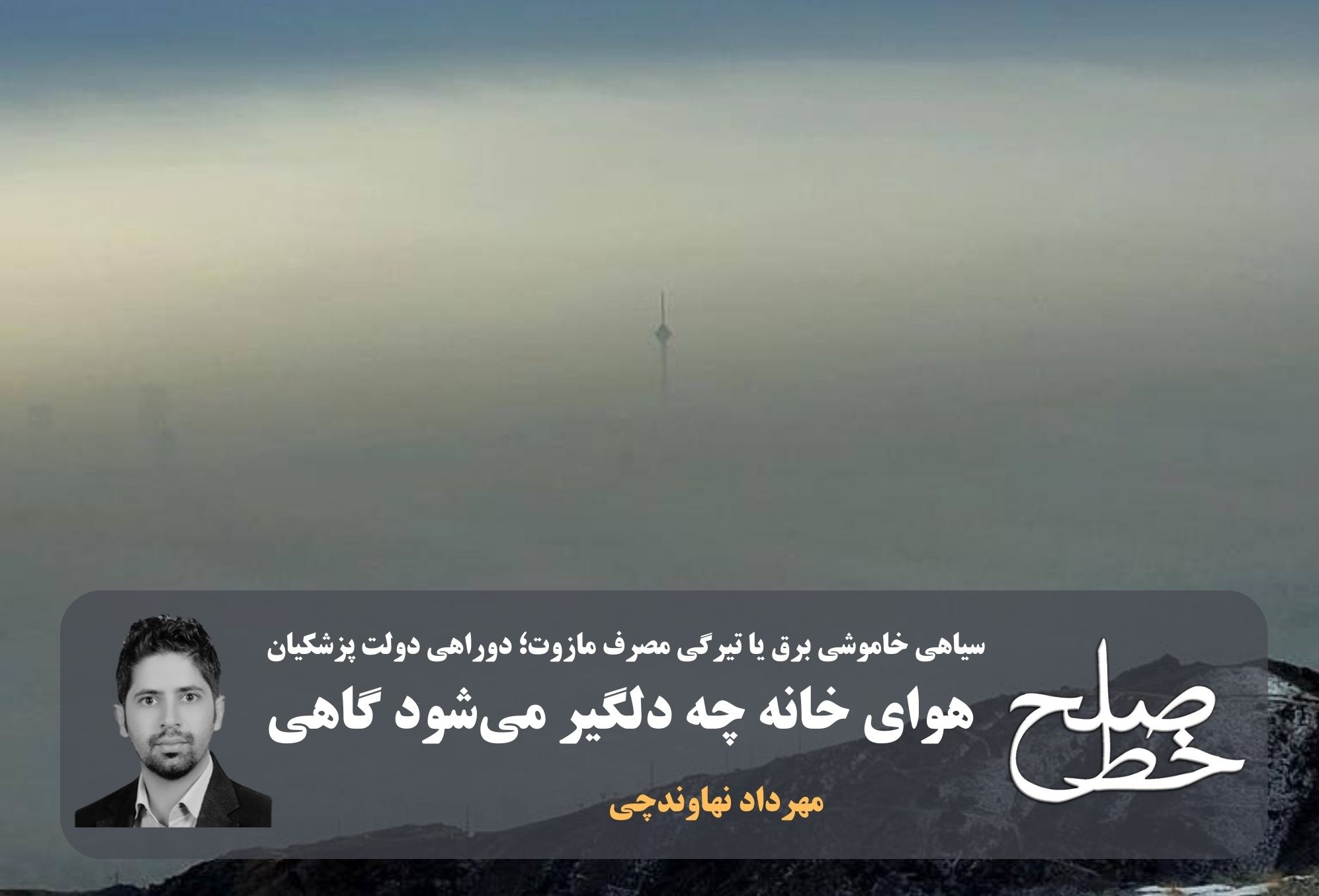
The Atmosphere at Home Becomes Somber at Times/ Mehrdad Nahavandchi
A City with a Dark and Gloomy Sky
When we think about the pollution caused by power plants, the first image that comes to mind is often the tall chimneys releasing smoke that darkens the sky. However, the negative environmental impacts of power plants are not limited to air pollution. Generating massive amounts of energy inevitably depletes resources, releases ash and other pollutants into the air, disrupts river flows, and causes numerous other consequences, all of which significantly affect the biosphere.
The emission of gaseous pollutants from the chimneys of thermal power plants using fossil fuels is a major contributor to the pollution these facilities produce. The byproducts of fossil fuel combustion include carbon oxides, fly ash, sulfur oxides, nitrogen oxides, and gases produced by incomplete combustion, all of which are toxic, hazardous, and sometimes carcinogenic. Ensuring that power plants fully utilize natural gas is crucial. However, evidence suggests that under the current circumstances in the country, with energy supply imbalances, the full utilization of natural gas is not feasible, forcing some power plants to rely on mazut fuel.
The Darkness of Power Outages or the Gloom of Mazut Consumption
It seems that authorities at Tavanir (Iran’s electricity company) prefer mazut consumption over power outages. Officials in this field argue that using mazut in power plants is not cost-effective. Consuming mazut increases equipment corrosion and raises issues such as transportation and unloading, which are both problematic and expensive. Thus, the issue of mazut fuel in power plants is a national concern that requires high-level decision-making to ensure the full provision of natural gas for all the country’s power plants. Such decisions could save lives miles away from decision-making rooms, such as the lives of students in the villages of Rouyan and Kordabad, just a few kilometers from the Shaheed Mofatteh Power Plant in Kaboudar Ahang, Hamedan.
Both Mazut Burning and Power Outages
Experts attribute air pollution to aging vehicles, low-quality fuel, and the burning of mazut in power plants, all of which have been addressed under the Clean Air Act. Implementing these solutions, however, requires determination and courage, as some measures can cause challenges for the public and industries. The Fourteenth Government, at least on the surface, initially succeeded in taking action. According to a Cabinet resolution, mazut consumption was banned in three power plants: Shazand (Arak), Montazeri (Isfahan), and Montazer Qaem (Karaj). However, this positive news lasted only 20 days. Although mazut burning stopped in three provinces, pollution levels did not significantly decrease. Electricity outages in parts of the country, accompanied by scheduled power outage announcements citing energy imbalances, angered the public. Subsequently, mazut was once again supplied to power plants. Environmental officials announced that mazut burning in all three previously mentioned plants had resumed by order of a high-level council. This time, reformists and environmental celebrities remained silent. Surprisingly, it was revealed that alongside mazut burning, electricity would also be cut in some areas of the country.
The Atmosphere at Home Becomes Somber at Times
According to the Ministry of Health, five people in Iran die every hour due to air pollution, amounting to 50,000 annually. This is an annual average calculated over all hours of the year. The numbers differ between spring and summer, when thermal inversions are less of an issue, and December, January, and February, when inversions peak. During these months, the figures must be multiplied several times. Conclusion: If possible, escape Tehran and other large cities and polluted areas during these three months. There is no better short-term solution.
Air quality monitoring stations in the final days of December of the current year reported that air quality in Tehran was on the verge of being “very unhealthy,” with an index around 207, making Tehran the most polluted city in the world. When, on a holiday with minimal traffic, air quality worsens from “unhealthy” to “very unhealthy”; when switching temporarily from mazut to diesel does not reduce air pollution; when expanding the metro network does not decrease pollution; and when even rain fails to alleviate the problem, it indicates a complex, multidimensional issue tied to governance and development models. Yet this matter has not been fully understood nationwide.
Is There a Solution?
Resolving the air pollution crisis in the short term is impossible, as it stems from flawed developmental perspectives over past decades. Solutions for reducing pollution include decommissioning outdated vehicles, expanding public transportation, improving fuel quality, and controlling industrial emissions. Temporary measures such as traffic restrictions cannot effectively manage pollution. Mazut burning cannot address energy imbalances, and in Tehran, mobile sources account for 58% of air pollution.
To combat air pollution in Iran, the approach to development must shift toward sustainability and environmental protection. This involves investing in renewable energy, enhancing public transportation, promoting electric vehicles, enforcing strict industrial standards, raising public awareness, encouraging community participation, designing green cities, improving infrastructure, financing green projects, and providing incentives for adopting clean technologies. Air pollution is a complex and multidimensional issue that requires inter-agency collaboration and public involvement.
The President has turned his personal behavior into a request for the public and a national campaign. In a short video, he asked people to lower the temperature in their living or working spaces by two degrees to help the government supply energy to all Iranians. Over a longer period, it remains to be seen whether his administration will break tradition by making and implementing bold decisions to end mazut burning and address the air pollution in Iran’s major cities—or if it will continue to rely on campaigns like this.
 By: Mehrdad Nahavandchi
 December 21, 2024
Tags
8 Peace Treaty 1648 Air pollution Electricity cut Electricity overload Gas valve Major cities Masoud Pazhakian Mehrdad Nahavandchi National Unity Government peace line ماهنامه خط صلح