


The origins of homosexuality throughout history / Sina Kiani
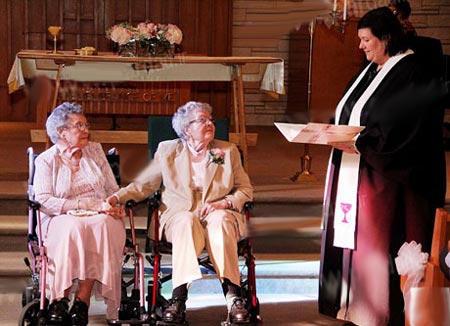
Sexual orientation is a term used to describe the sexual and emotional behavior of individuals. The intensity, frequency, and preference for a specific gender determine a person’s sexual orientation. Sexual orientation is not something that is transmitted from one person to another through social interactions or relationships with family, culture, or individuals. It develops with the individual from birth. Homosexuality or same-sex attraction are derogatory and strongly condemned terms that are sometimes used as insults in Iranian society today….
In Iran, people who identify as a different gender are called “homosexuals” in order to evoke negative connotations such as “gamblers,” “child molesters,” or “pigeon fanciers.” In such an environment, the general public does not differentiate between “pedophilia” and “homosexuality” due to traditional and religious prejudices. The society and family’s degrading attitudes towards sexual minorities, the dominance of traditional, religious, and historical teachings, their suppression by the government, the paradoxes arising from beliefs and feelings of guilt, the fear of being labeled and social judgments, force many sexual minorities to hide and deny their sexual identity, leading them to isolation, depression, mental breakdown, and ultimately suicide. This is while experts or media are unable to write or speak about this inclination due to various security and cultural reasons.
“Bisexuality is a sexual orientation that has existed in all living beings since the beginning of human existence, with a relatively defined proportion. Among them, it has always had a significant impact on human life, making it sometimes sweet and sometimes dangerous. Its existence has been both acknowledged and denied by those in positions of power.”
But the documents attest that this tendency has been present in various places throughout history and has sometimes played a prominent role. The important point here is that homosexuals were never seen as a threat to the rest of society, but were always subject to the intolerance of their time.
During the Middle Ages, the inquisition system of the churches introduced Satan as a homosexual. They considered women as witches and representatives of Satan, and burned them. Fascists also did not consider homosexuals worthy of existence and systematically harassed them along with communists, socialists, trade unionists, intellectuals, Jews or gypsies and disabled people, arresting them and sending them to prison. Sexual minorities had to appear with a triangle on their face after being arrested to be humiliated. In Portugal, homosexuals were burned alive and the Spanish conquerors in America made them prey for wild dogs. The Aztecs and Incas punished same-sex attraction with death.
In those days, the norm of social life was based on three aspects: men, women, and children, and the permission for life was granted through reproduction. Stepping outside of this rule was condemned and resulted in silence and destruction.
Was this not a historical Holocaust for sexual minorities? How many homosexuals were sent to the death camps? Ten thousand, twenty thousand? No one knows…
In modern times, exile, expulsion, and persecution of minorities have been a common practice among different political regimes.
The oldest documents related to homosexuality date back to ancient Greece. “Sappho” was the name of a poet from the island of Lesbos in ancient Greece who depicted romantic relationships between women in her poems. According to historical documents, the term “lesbian” was also used to refer to homosexual women during this time. Plato also considered the love between men to be the highest form of love and saw sexual relationships with women only for the purpose of procreation. The romantic relationships between men, which once played an important and visible role in Greek civilization and literature, became demonized and prohibited due to the influence of anti-homosexual Christian prejudices in Roman laws and the changing moral values.
Among the rivers, among the Sumerian Mubdans, there is a temple called “Galahas” where Assyrians and some Mubdans have seen free relationships with Egyptian temples. Homosexuality has existed in China since the beginning of its history, and according to documents, almost all emperors in the Han dynasty had a male sexual partner. Throughout Japanese history, all shoguns have had a male lover, and this tradition was one of the pillars of the samurai tradition. There are also reports of homosexuality in Africa. In the “Gaspels”, which are among the earliest Christian texts, Jesus is silent about homosexuality; this is surprising, as the love between men was common in the Greek communities in Palestine, where Jesus preached.
In the palaces of the sultans and caliphs of Islam, including Sultan Abdul Hamid of the Ottoman Empire, who considered himself the embodiment of justice in the Islamic world, there were more than a thousand beautiful concubines and male slaves.
Although homosexuality was punishable by execution during the Achaemenid and Sassanid periods, some researchers have concluded that there were homosexual communities in Iran before Zoroastrianism. Herodotus also reported on the practices of the Achaemenids; the existence of male homosexual relationships was also seen during the Parthian and Sassanid periods.
Jeanette writes: “Homosexuality was seen in many public places, from courts and religious schools to taverns, military camps, coffeehouses, caravanserais, bathhouses, and brothels. Even until the mid-17th century, the “house of men” was considered a legal place and was required to pay taxes to the government.”
Sisterhood and partnership (in the form of marriage) among women has been a common practice in Iran. Having long-term emotional relationships was important. Same-sex couples would exchange gifts and travel to sacred places together, and sometimes spend the night with each other. Women would usually make a pact with each other on the last days of the year and gain special privileges over men. Sexual relationships between men were also common during the Ghaznavid era, one of the most famous of which is the love of Sultan Mahmud Ghaznavi for his Turk slave, Ayaz. Nizami Aruzi writes about this love, “The love of Sultan Mahmud for Ayaz is famous and well-known. They say that he was very handsome, with a beautiful green complexion, well-proportioned body, graceful movements, and wise and slow. Sultan Mahmud was a pious and devout man, and with his love for Ayaz, he never deviated from the path of righteousness
Saadi also has stories of his own witness in his book “Golestan”: “In the fervor of youth, as it happens and you know, I had a close and intimate relationship with a witness, by the decree that he had the right (pure in character and beautiful as the full moon).”
”
His sad eyes didn’t have all this sickness.
His stubbornness had no limits, he was never caught.
Yousefi was there, but he had no buyers.
I was the first one to buy it.
I was the cause of the market’s warmth.
“Yousef” Vahshi Bafqi is also a witness to his land, the same witness to the son whom Vahshi loved and burned in the fire of his passion. Vahshi adds:
”
Oh son, how much I see you seeking the approval of others.
Happy and intoxicated, I see your jug…

Some other Iranian poets, such as Hafez and Jami, also have poems with “homosexual themes”. “Nazer and Manzoor” by Vahshi Bafqi and “Mehr and Moshtari” by Mohammad Asar Tabrizi are romantic poems that describe homosexual relationships. References to homosexuality can be seen abundantly in books and literature of Iran, including “Saluk al-Muluk”, “Maruj al-Dhahab”, “Tarikh al-Wuzara”, “Sahah al-Fars”, “Divan-e-Sa’adi”, “Tarikh-e-Bayhaqi”, “Risaleh-e-Delgosha”, “Kimiyaye Sa’adat” and “Masnavi”. Examples of this can be seen in the Qabusnameh, where a father advises his son: “Do not limit your desires to only women or only young men. You may enjoy both without causing enmity with
In addition, major images also exist among the remaining inscriptions of ancient Greece, Egypt, China, and Iran, which testify to the existence of this tendency in history.
Today, a significant portion of scientific and educational institutions (as well as legal and social systems) recognize homosexuality as one of the three major sexual orientations. These three categories are: heterosexual, homosexual, and bisexual. Alongside these three major groups, there is a fourth category and a small percentage of individuals who are asexual or lack a sexual orientation.
In countries where homosexuals cannot have civil unions (get married) or are punished, there are many problems for these individuals. One of these problems is that in these countries, the minority of homosexuals are subjected to humiliation, abuse, and exploitation without limits; to the extent that the individual becomes hopeless in finding their true partner. Multiple relationships and consecutive failed relationships lead to depression for the individual. There is no place for mutual respect and finding a partner of the same kind.
The dominance of homophobia.
In the contemporary world, same-sex tendencies are no longer considered as diseases or sexual deviations. According to statistics, 4 to 7 percent of the human population consists of homosexuals.
The World Health Organization removed homosexuality from its list of mental disorders in the 1990s. This decision was made in May 1990 and as a result, this day is designated as the International Day Against Homophobia.
Despite all this, sexual minorities in twelve countries around the world, such as Iran and Saudi Arabia, are facing the threat of death. They face legal barriers in eighty countries, including India, Malaysia, Lebanon, and Algeria, and in other areas, such as Brazil, they live under the shadow of intimidation and harassment.
Becoming sunny.
Homosexuals in Western countries have been able to obtain a part of their human and legal rights. But until a few decades ago, in these same societies, there was strong opposition to sexual minorities.
American homosexuals only came out and protested against the suppression of demonstrations after the police raid on the Stonewall Inn in 1969 and resistance against security forces, which led to the exposure or “coming out” of their sexual identity.
Resistance of sexual minorities in New York became a model for German homosexuals to come to the streets on the anniversary of this attack and establish the tradition of the “Christopher Street Day” parade. In Germany, homosexuality has been accepted for years. They have their own cafes and hangouts. They can rent a shared home and live together. They are not hindered in their careers and their marriages are recognized.
The mayor of Berlin, Klaus Wowereit, or former German Foreign Minister Guido Westerwelle, are both homosexual and live with their male partners.
Until 20 years ago, homosexuality was considered a crime in Russia. But despite the legalization of homosexuality in Russia in 1994, many acts of violence and murders in this country are still motivated by hatred towards homosexuality.
Denmark was also the first country to recognize civil unions for same-sex couples in 1989. Norway, Sweden, and Iceland followed shortly after. The bill for same-sex marriage with all its legal and rights aspects was passed for the first time in the Netherlands in 2001.
Same-sex marriage has also been legalized in 16 states in America. Washington, Maryland, and Maine joined the states where same-sex marriage is legal after a referendum in November 2012.
The American Psychiatric Association was the first organization to remove homosexuality from the list of mental disorders in 1973. Following this, the American Psychological Association also removed it in 1975, and finally the World Health Organization removed it from the list of mental disorders in 1992.
For further study, please refer to:
Shamisa, Cyrus, and Shahed are familiar with Persian literature.
2- Dr. Keynes, Alfred, Articles.
3- Klein, Fritz, Articles.
4- Herodotus, Book One.
5- Avari, Zhanat, Sexual Politics in Iran Today and Intellectuals and New Sexual Norms.
6- Cheraq Magazine.
 Created By: Admin
 October 24, 2014
Tags
Monthly Magazine Number 42