


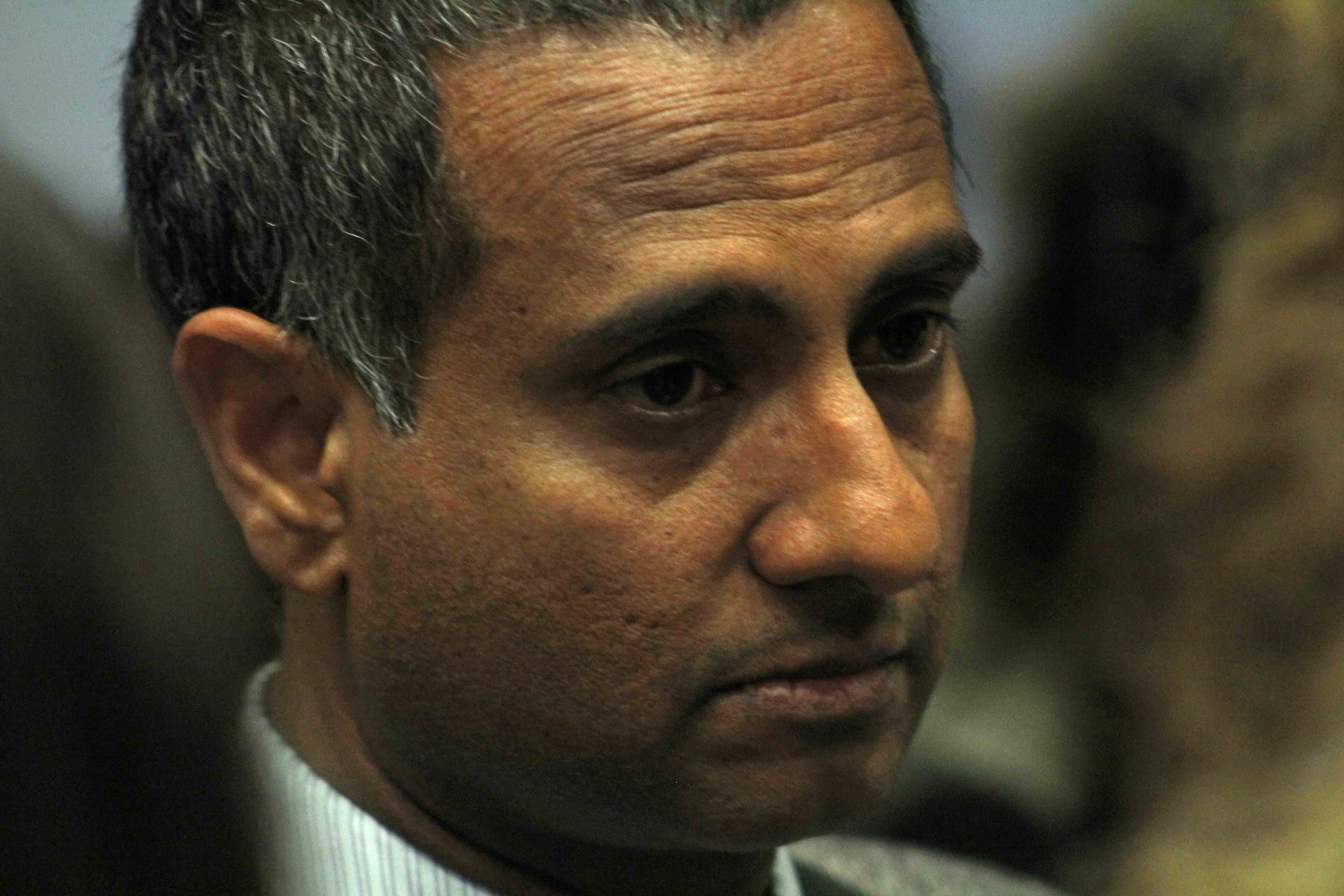
Ahmad Shahid: I have asked Mr. Rouhani to invite me to Iran.
Ahmad Shahid, former Minister of Foreign Affairs of the Maldives, was selected on June 11, 2011 (21 Khordad 1390) by the United Nations Human Rights Council as the fourth Special Rapporteur on Iran.
Andres Aguilar was the first special rapporteur of the United Nations Human Rights Council to investigate human rights violations in Iran. He was appointed to this position by the council’s president in October 1984. However, due to the lack of cooperation from the Islamic Republic of Iran and the impossibility of carrying out his mission, he eventually resigned from his position. After him, Reynaldo Galindo Pohl was selected as the second special rapporteur in December 1986. Despite obtaining permission to travel to Iran, Mr. Galindo Pohl also resigned due to the lack of cooperation from the Iranian government and their desire to replace him. Maurice Danby Copithorne then became the third special rapporteur to replace him. After 7 years, his mission ended without the necessary vote on the resolution on human rights violations in Iran in the Human Rights Council.
A rapporteur is appointed by the United Nations Human Rights Council to investigate the human rights situation in a country or region where the human rights situation is deemed severe, and their mission will be renewed annually; except for the rapporteur for occupied territories, who will have a special rapporteur until the end of the occupation.
Ahmad Shahid, whose mission has been extended for the third consecutive year by the United Nations Human Rights Council with 26 votes in favor and 2 against, for the current year, due to the impossibility of traveling to Iran, has traveled to some areas of the world over the past three years to meet with Iranians who have witnessed human rights violations in their country. Mr. Shahid met with him in the month of Mordad during his trip to Toronto in the province of Ontario, Canada, and conducted an exclusive interview with him for the monthly magazine “Khat-e-Solh”.
Mr. Shahid believes that human rights violations in Iran are being carried out systematically. He hopes that with the change of government in Iran, he will be able to travel to our country.
Mr. Shahid, as the first question; what is a violation of human rights and how do you assess its difference in Iran compared to other countries?
In any case, according to international human rights laws, there are principles and standards that, if a government does not adhere to, it violates the rights of its citizens. It must be said that when a government does not support its citizens and does not consider their human dignity, such incidents occur. Of course, human rights violations exist in many countries, but the difference in Iran compared to many other parts of the world is that the Iranian government systematically violates the rights of its citizens, and this is known by all people in Iran.
As a special reporter for the United Nations, besides preparing periodic reports, what other capabilities do you possess?
I can actually take action in four ways.
One of the possibilities that I have is to write a letter to the Iranian government regarding individuals who claim that their legal rights have been violated in Iran. In this letter, I inform the Iranian government that such claims have been made against them and I also ask if these claims are true or not. If they are true, you must take the necessary actions (which I will mention).
However, the Iranian government, based on its history, can easily reject such claims…

a.
Of course, he can deny it and he does, but at the same time, they realize that I and the United Nations are also aware of such events and because of our awareness, more people will talk about such sensitive issues.
The second action that I can take is to request for intervention and review of urgent cases and files. For example, for individuals who have received a death sentence or those who have a critical health or medical condition.
My third option is to have a presence in the media and read statements in front of journalists and inform the global minds about events happening in Iran. (I usually do this when we do not have the opportunity for direct communication with the Iranian government, meaning we cannot implement options 1 or 2.)
“And the fourth and final possibility is traveling to Iran.”
Where did your trip to Iran take you?
I wrote a letter to Mr. Rouhani expressing my desire to collaborate with him and requested that after officially taking office, he invites me to Iran. I am currently waiting for his response.
And what if your trip is still opposed?
If the Islamic Republic still opposes my trip to Iran, I will travel to different countries (like this meeting) because I need to talk to Iranian communities; I also talk to the media and keep the world informed about the problems in Iran.
In your opinion, how influential have the reports you have prepared so far been?
It is difficult to estimate how much impact it has had; for example, giving a score from 1 to 10 is problematic. But I think, when the Iranian government realizes that all countries are talking about the situation in Iran, the issue becomes sensitive for them and they back down to some extent. The effectiveness also depends on how much attention other countries pay to my talks about Iran.
When you look back at the past, you see that Iran has regressed when the world cried out about its issues. For example, the case of Ms. Ashrafi, which of course goes back a little before I started working, or some of the executions that were cancelled due to international community protests, and also the case of Father Youssef Nadarkhani, which Iran also backed down on due to protests. Well, if we don’t take action in such cases, we won’t be effective. But if we attract the world’s attention, countries usually – except for North Korea – back down because they don’t want to be isolated by the international community.
Now that you have mentioned the issue of prisoners sentenced to death, let me ask why many victims of human rights violations and executions have not been mentioned in your reports; for example, the four Arab citizens of Ahvaz named Abdulreza Amirkhanafereh, Ghazi Abbasi, Abdulamir Majdami, and Shahab Abbasi, whose sentences were confirmed by the Supreme Court of the country last Thursday, have not been mentioned in your report? Also, there are many other individuals who have been sentenced to death and their names have not been mentioned not only in your reports, but also in many media outlets.
It is also worth mentioning here the execution of Mr. Hossein Khazari, a political activist, in Urmia in December 2010. Unfortunately, despite efforts…
Some human rights defenders, even after being executed, were actually subjected to a news boycott. Of course, this incident, as I mentioned, is related to the past and about two and a half years ago.
There are likely cases that no one has talked about and the reason is that accurate and sufficient information about them has not been revealed. However, I have talked a lot about the Ahwazis who have been sentenced to death. Maybe their names have not been mentioned in my reports, but I have addressed them in all of my recent speeches at the United Nations and there have been discussions on this matter and the representative of the Iranian government was also responsive. Perhaps if there was enough information, more effective actions could have been taken.
Iranian citizens, human rights defenders, and groups, how can they contact or collaborate with you? Do you have any assistants for this matter that you can introduce to the Iranian community?
The best way to communicate with me is through my website, where you can find my email address and phone number. This way, you can directly contact my office, although I am not always present there. There are other people who can assist you. Additionally, you can also reach me through the University of Essex, where I teach.
I also have only one assistant in the United Nations named “Navid Ahmad” through whom I can communicate and also a few people working on research for me in two universities outside of Iran. Additionally, there are some independent reporters who voluntarily send reports to me.
Thank you for the opportunity you have given us to be a part of the monthly magazine “Khat-e-Solh”.
Conversation between Simin Rouzgar and Siavash Bahman.
 Simin Rouzgard
 June 7, 2024