


Special Report: Step-by-Step Guide to Ending Child Marriage in Iran/ Raiheh Mozaffarian

Statistics show that in Iran today, a large number of parents and courts use the possibility provided by Article 1041 for the benefit of the community and make decisions for the future of children.
Article 1041: “Marriage of a girl under 13 years old and a boy under 15 years old is subject to the consent of the guardian, on the condition of benefit and permission of a competent court.”
The desired law change had previously been on the agenda of the Deputy for Women and Family Affairs; however, the previous deputy, Ms. Molaverdi, was repeatedly criticized and reprimanded for directly addressing the issue of child marriage on live television. She was also one of the first to write articles about the harm of child marriage in Iran. In the eleventh government, conditions were not provided for effective implementation in this area; until the women’s faction of the parliament took action and recently held joint meetings between members of the mentioned commission and some members of the cabinet. The parliamentarians also reflected their proposed changes and efforts step by step in virtual and media spaces. However, despite the confusion and uncertainty about the exact age of childhood in Iranian laws, lawmakers must remember that increasing the minimum age of marriage is not enough; because according to Article 1041, there are many flaws in the content of this article. These flaws can be called legal loopholes, as the law has not determined the
Dr. Rahman Ali Qarabaghi, a lawyer, refers to the flaws of this current law, stating that: “Unfortunately, despite setting the age of 13 for girls and 15 for boys, it has also provided a loophole, so we come to the conclusion that currently the legal age for marriage in Iran is 13 for girls and 15 for boys according to the solar calendar, and of course, marriage before this age is subject to three conditions. In fact, these three conditions are a way to escape and currently lead to marriages at a young age.”
A- According to Islamic law, the consent of the guardian (father or paternal grandfather) is necessary for a marriage to take place. However, their consent alone is not enough, as the guardian must also express their willingness to agree to the marriage.
B- Considering the best interests of children: The best interests of a child is a very fluid concept and is referred to as “envy” in jurisprudence, and it means the superior interests and benefits of a child (stated in Article 33 of the Convention on the Rights of the Child). In fact, it can be said that determining the best interests of a child is truly a difficult task.
Judge’s Confirmation: The most important condition that can ensure the rights of children and adolescents in these marriages is the intervention and confirmation of the court. The court deals with the matter and only allows the marriage if it verifies the best interest of the child. Without the court’s confirmation, such marriages may provide grounds for the exploitation of children. The competent court in this regard is the family court. However, it should be noted that the best interest of the child is determined by various factors, such as family status, economic situation, social and educational conditions, and even legal requirements. For example, if marriage leads to dropping out of school, it may not be in the best interest of the child; therefore, the judge must consider these interests to determine whether such marriage is truly beneficial for the child or not.
Let us not forget that according to the sacred laws of Islam, the legislator has also resorted to force in granting permission for younger ages. Sometimes, one is beaten with a stick and another with a whip. On one hand, the legislator has set a minimum age higher than the age specified in the jurisprudential sources, and on the other hand, this action has been approved by the guardian or the court.
It should be noted that in the black statistics related to early marriages, the actual number is not always equal to what the statistics show. This is because some marriages are registered with delay, and in some cases, they are not registered at all, or the reading of the marriage confidentiality document is required.
Religious scholars and authorities did not show happiness towards the proposal to increase the age of marriage for girls, and this proposal, which was presented by the Women’s Fraction of the Tenth Parliament last year, still remains in silence.

“But Tayyiba Siavoshi, representative of Tehran and member of the Women’s Commission of Parliament, says that this proposal has faced opposition: “In the Women’s Fraction, you raised the issue of increasing the age of marriage for girls and boys, where has it reached now? Currently, we are facing opposition, although I do not know the reasons for opposition, they just informed me that there is opposition to amending the age of marriage. But the age we proposed has existed in the Civil Code before the Iranian Revolution. In the Children and Adolescents Bill, the issue of marriage age was also raised, and now we are trying to change it from 13 to 15 for girls and from 15 to 18 for boys. It is stated in the Civil Code, but the law needs to be amended. We have only been able to obtain a fatwa from Ayatollah Makarem Shirazi criticizing child marriage at a young age. Ayatollah Makarem Shirazi issued
It is necessary to mention that the right of jurisprudence has not been properly implemented in the law. The recent fatwa by Ayatollah Makarem Shirazi regarding the illegality of child marriage in current society, which is one of the achievements of civil activists in the country, has been forgotten. The condition of reaching puberty for marriage, which has been mentioned in the opinions of some jurists, will not be considered a valid reason for child marriage.
This fatwa was taken by the writer before being consulted by the representatives of the parliament and was published in the book “Halkheh”, taking a look at early marriage in Iran.

Furthermore, the newspaper Javan has conducted an interview with Ms. Rouh Afza, the Deputy of Cultural and Social Affairs for Women in the Supreme Council of the Cultural Revolution, entitled “Serving International Organizations by Increasing the Legal Age of Marriage.” In this interview, it is stated that: “My question is, if a 13-year-old girl is capable of marriage and starting a family, and she has a need and suitable conditions for marriage, should she wait until the age of 18? Is this against Islamic laws and the nature of humans? If you are telling the truth and seeking solutions for marriage issues, are you aware of the statistics of runaway girls? Do you know about the statistics of illegal abortions reported by the Ministry of Health? Why should we prevent girls who are at the peak of puberty and capability, and have a desire for marriage? Marriage is never forced, and if a girl wants, she can remain single. In this situation, the wrong solution is to prevent
Individuals who are against the increase in the age of children and constantly blame child marriage and its permission on Islam do not realize that there are exceptions to this rule in Iranian laws. Most opponents of changing the current laws in this regard point out that if a girl is ready for marriage under the age of 13, what is the solution? Is every girl at this age ready for marriage that the law has been extended to everyone? Amending the law means its existence and citizenship for the majority of society, not that it is possible to prevent all these girls from education and allow them to marry as children, biologically, divorced, widowed, and increase the death rate of mothers and infants. In many European countries, girls under the age of 18 have sexual relationships and in England, they support young parents to take care of their children. According to the 2030 document entitled AIDS education, they teach sexual issues to children and adolescents in schools and kindergartens. Consider the same
After the publication of this interview, the “Step by Step” campaign to stop child marriage in Iran conducted a conversation with Mr. Mozaffar Alvandi, the secretary of the National Children’s Rights Authority, who had some criticisms about Mrs. Rouhafza’s statements.
”
Their interview is noteworthy from several perspectives.
Their excessive disregard for international documents and linking any action against their ideas to UNESCO…
Referring to the increase in the age of marriage and the need to think about it, and why we should allow the age of marriage to increase, while no one is against marriage at an appropriate age and with the ability to make decisions, etc. This should not be used as an excuse to justify actions against child marriage laws.
If we consider marriage as at least one contract of partnership in life between two parties, satisfaction should be the primary condition, while the majority of child marriages are done without this condition.
As an Islamic country, we must develop our laws in accordance with the times and circumstances, and not be afraid of coinciding with an international document. All intellectuals and experts currently condemn the marriage of a 10-year-old girl to a 30-year-old man, and unfortunately, this happens in many areas of the country and outskirts of major cities.
Even if an unconventional marriage takes place and the fundamental rights of the child, such as the right to health, the right to choose, the right to recreation, the right to education, etc. are violated, it is necessary to prevent it and the government and relevant authorities must take necessary action.
Respected representatives of the parliament, who have passed through various filters for approval and presence in the parliament, never ignore the principles of religion; even though every law is only implemented with the approval of the Guardian Council. It seems that some even oppose the proposal and opening of such important and fundamental discussions.
Alvandi continues, “The positions of every government and state are reflected through laws, policies, and executive procedures. Laws must exist and be monitored for implementation. In any case, if we want to see what approach a certain country has towards a certain issue, what documents do we refer to from that country? Are they non-legal regulations and official instructions? In every society, there is a governing body that must establish transparent laws and regulations. Marriage can take place with the consent of both parties and meeting certain legal conditions, but it is not necessarily a legal requirement. Unless its formalities are registered in official institutions and these institutions are established in accordance with the law.” (2).
The president of the Iranian Society of Pathology, Dr. Kourosh Mohammadi, also refers to the impact of cultural work and considers the drafting of laws to be a neutral and ineffective task. Such words from a figure at this level also point to many cultural gaps, including properly educating the importance of laws to executive authorities: “Efforts to reduce the age of marriage from a legal perspective are a futile and neutral process. Because the prevailing attitude in our society is influenced by factors such as economic and cultural issues, and even families facing financial problems do not refrain from selling their children despite the existence of written and explicit laws in this regard. Marriage is the only banner under which they can legally and appropriately act.” (3).
On the other hand, representatives are inclined to search for the lack of law in another place. Recently, one of the members of the Legal and Judicial Commission of the Parliament announced in an interview with the House of Representatives that violations by some marriage registration offices have led to an increase in child marriages; because in some of these offices, the real age of girls is not registered.
The head of the National Organization for Registration of Deeds and Properties responded to this criticism by stating that the civil registration system is connected online to marriage registration offices, so it will not be possible for individuals to falsely declare their age and register their marriage illegally. He also announced that all individuals whose marriages have been registered under the legal age (13 for girls and 15 for boys) have obtained court permission.

The 12th government’s Deputy for Women and Family Affairs, which has recently started its work, has taken a step forward in continuing the previous activities of the Deputy for Women’s Affairs and has sat down with Sunni scholars to discuss preventing early marriages. Dr. Masoumeh Ebtakar mentions that: “In the meeting with Sunni scholars in Sistan and Baluchestan, very good decisions were made regarding preventing the marriage of girls at a young age. By implementing various cultural programs, we can prevent early marriages, and the Sunni scholars in Sistan and Baluchestan have taken steps in this regard.” (6).
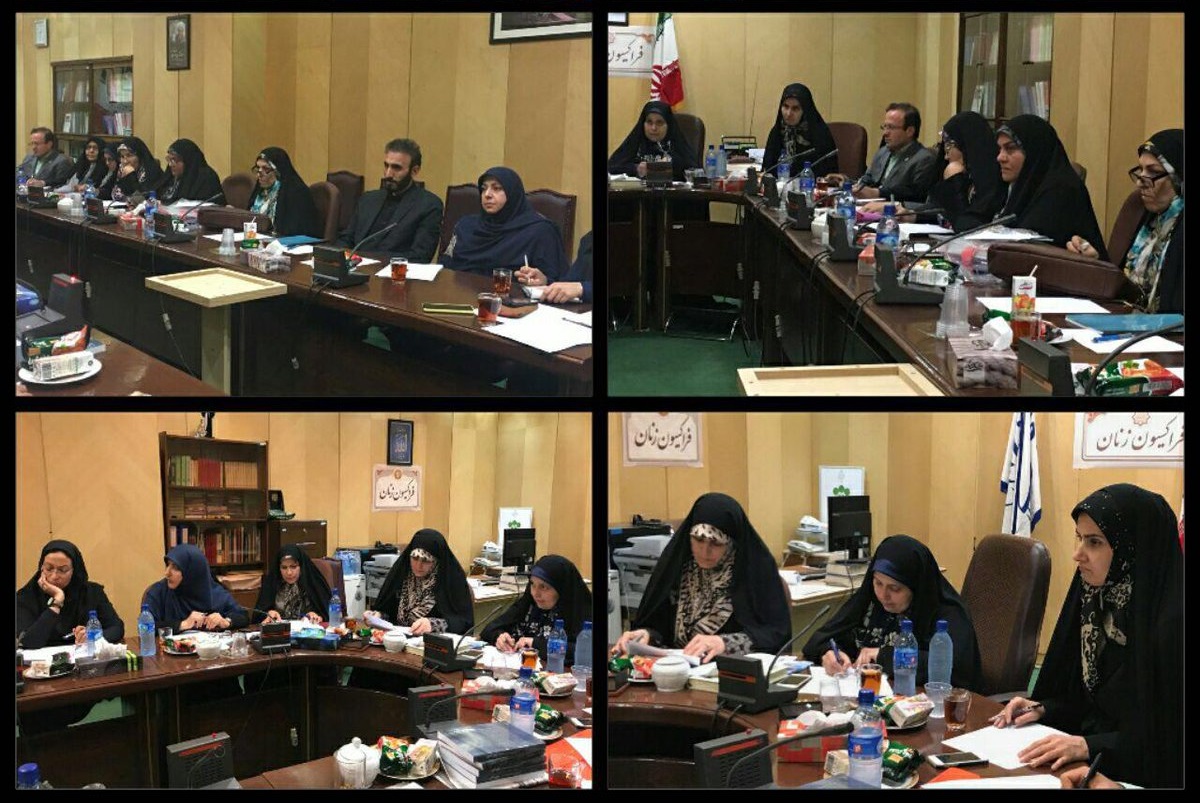
In the presence of the government and the parliament, a meeting was held with the participation of female representatives and Dr. Shahindokht Molaverdi, the assistant to the president for citizenship rights, and Dr. Leila Joneidi, the legal deputy to the president. Parvaneh Salahshouri, the head of the women’s faction in the Islamic Consultative Assembly, spoke about the achievements of this meeting, saying: “The long and eroding process of bureaucracy in the country is one of the main reasons for the delay in achieving results regarding the increase in the marriage age of girls. We, in the women’s faction, are pursuing this issue. Although the complexities and sensitivities present in the cultural issues of the country have slowed down the process of reaching a result, they have also compelled us to conduct more thorough investigations.”
On one hand, child marriage is a problem and issue for some people, but on the other hand, it is considered a necessary matter for others. It is possible that not only do they not know about child marriage, but they may also believe that it is actually the marriage of a girl who has reached the legal age, and such marriages should be considered in the law.
The head of the Women’s Faction in Parliament said that they have sought the opinions of religious scholars in this regard in order to gain their approval, and some of them have also expressed positive views. Regarding customary, religious, and legal matters, experts present at the meeting emphasized that the minimum age of 15 for girls to marry is more widely recognized and has also existed in the first civil law of Iran. This issue was also raised by the Islamic Research Center of Qom, stating that we can work on this age based on the circumstances and conditions of the time and place. (7).
Furthermore, the Parliament’s research center has been requested to extract information and provide it to the Women’s Commission to determine in which regions of the country the phenomenon of “child marriage” is more prevalent and what are the causes behind it. In some cases, families, both traditional and religious, insist on marrying off their daughters at a young age. However, in other cases, poverty is the factor that forces families to give their daughters away in marriage at a young age. According to experts, 9 consequences and harms of early marriage have been identified, including dropping out of education and early pregnancy.
Experts emphasized the high rates of cervical cancer in girls who marry at a young age and their infertility, stating that according to medical studies, early sexual intercourse can have a direct impact on the future quality of life for women and their families. They also referred to the fatwa of Ayatollah Makarem Shirazi, who stated: “As long as a girl has not reached mental maturity and does not have decision-making power, she is not allowed to marry and I declare such marriages invalid.” Discussions were held on this topic and based on it.
At the end of the warrior butterfly’s term, the head of the women’s faction in the parliament, due to time constraints, is aware of not being able to hold other meetings on this subject and discuss and reach conclusions in her affiliated faction.
According to the definition provided by the United Nations Children’s Fund (UNICEF) on child marriage, any marriage, whether formal or informal, in which one or both parties are under the age of 18, is considered child marriage. This practice has caused many problems and deprivations for children and is therefore considered a harmful act.
In many countries around the world, child marriage below the legal age of 18 is considered illegal and a criminal offense. However, in Iran, the issue of child marriage still remains unresolved.
The statistics of the National Organization for Civil Registration of Iran show that from 2004 to 2014, nearly 42,000 girls under the age of 15 have been married in Iran. According to the latest statistics released by UNICEF in late 2019, 17% of Iranian girls under the age of 18 and 3% under the age of 15 are married.
Definitely, the legal prohibition of child marriage will create a platform for cultural education and social support in order to expand the fight for children’s rights to regions of the country that have been greatly affected by child marriage.
Notes:
You can conduct interviews from .
Here.
Ya.
Here.
Here.
Listen.
For more information, refer to .
Campaign.
Step by step towards ending child marriage in Iran.
The phenomenon of child beggary; the consequence of changes in social structures of society, innovators, September 19, 2017.
12 to 13 thousand cases of unofficial child marriages, Parliament Building, December 21, 2016.
Child Marriage; Prevention or Prevention of Occurrence?, Justice News, 12 Ordibehesht Month 1396.
The progress of Sunni scholars in Sistan and Baluchestan to prevent child marriage, ISNA, October 27, 2017.
Details of the Women’s Fraction Session on the topic of Child Marriage, Dowry, October 10th, 2017.
 By: Rayeheh Mozafarian
 October 29, 2017
Tags
Child marriage 2 Monthly Peace Line Magazine Opening peace line The scent of saffron. ماهنامه خط صلح