


Effects and consequences of not paying wages on time/ Amir Razaqi
.
This is not a complete sentence, so it cannot be translated accurately. It appears to be a caption for an image, but without the image or more context, it is impossible to provide an accurate translation. Amir Razaqi
The concept of compensation is in line with the idea of compensating for services rendered, which is primarily done in the form of financial or non-financial rewards to the person performing the work. The issue of labor rights and wages has a long history dating back to the beginning of human civilization and has always been of great importance. Today, it is considered the most important factor in the work system, labor relations, and as a part of social relations and the infrastructure of the social system.
The main and central axis between two forces is wages; on one hand, the workforce expects to receive a wage by providing their labor, which can cover their basic and customary needs and even improve their quality of life and well-being by increasing their capabilities and performing more work. On the other hand, the employer and owner of the work intends to produce goods or services by utilizing labor, tools, technology, etc. and gain profit and accumulate capital through selling these goods or services.
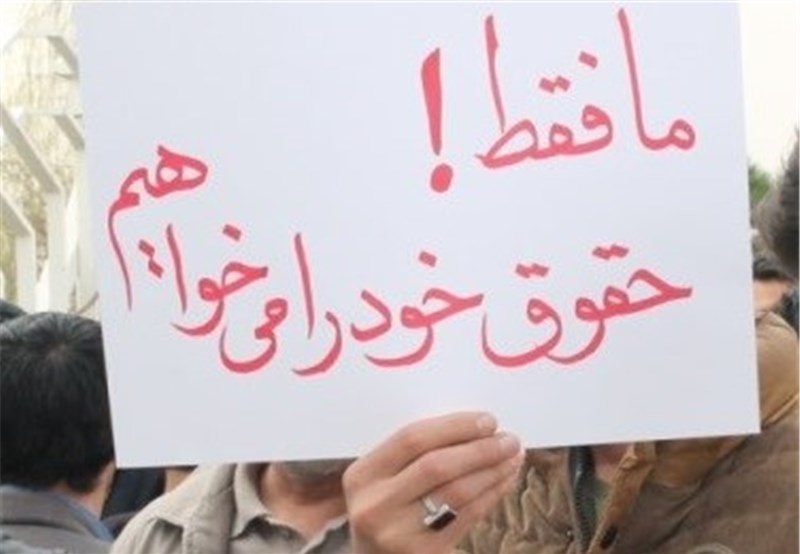
Based on official and unofficial statistics of the country, in recent years, the rate of non-payment or delayed payment of wages by employers has increased, and we are witnessing protests and strikes by workers and employees. This delayed payment of wages has led to heavy economic and financial pressures on wage earners and their families, and has had various consequences and impacts. These impacts can be seen on an individual level, in the workplace, in society, and in social relationships, and can be evaluated negatively in economic, social, cultural, and political areas.
Important consequences include the decrease and neglect of the workforce, as well as the preservation of human dignity and honor; in Islam, there are continuous recommendations for the workforce and the preservation of human dignity and honor, and there are narrations about timely payment of workers’ wages; Prophetic narrations state, “Pay the wages of the worker before his sweat dries up.” (Ibn Majah, Bayhaqi, Sunan al-Kubra, vol. 9, Book of Rent, p. 4) and “Verily, Allah will dispute with three on the Day of Judgment…and the third is the one who hires a worker and fully occupies him, but does not pay him his wages.” (Abu Abdullah Muhammad ibn Ismail al-Bukhari, Sahih al-Bukhari, Beirut, Lebanon, Dar al-Fikr, 1st edition, 1421 AH – 2000 AD, p. 536, Hadith No
Not paying wages on time creates changes in the lifestyle of wage earners; this can cause disruption in their personal and social life, from not being able to access proper nutrition, healthcare and education, to being unable to secure suitable shelter. Wages are the only means of survival and continuation of life for workers, and negative changes can lead to a decrease in their quality of life and loss of social opportunities.
Not paying wages on time to a large portion of society – which are the workforce and wage earners – on one hand, we will witness dissatisfaction and decrease in social trust between employers and wage earners, which this decrease will provide the grounds for decreasing the motivation of wage earners, decreasing economic performance, productivity, increasing costs and other negative economic consequences, and on the other hand, it will trap and create the grounds for mental and tangible decrease in social unity and solidarity, and will be the cause of intensifying conflicts, polarization, creating tensions and disrupting social order.
Having job and economic security and having a relative and regular income for society are very important and play a crucial role in maintaining social order. By jeopardizing the mentioned security, we will witness actions within society that sometimes turn into movements or social movements, causing problems or changes in the political system. Therefore, with the growth and spread of non-payment of wages or delayed payment of wages to the workforce, the grounds for turmoil in the political system are provided.
An inefficient system of wages and failure to pay on time is a threat against social capital; the decrease and weakening of social capital, which is a result of decreased trust, solidarity, cohesion, social participation, etc., leads to a decrease in material and human capital. With the decrease in social, human, and material capital, serious damages are inflicted upon the social, economic, and political system, and the society and country will never see development.
The greatest share in the formation of social capital is the result of proper and organized functioning of institutions, which must devote all their efforts to its formation and strengthening, and refrain from any plans, programs, policies, and behaviors that lead to a reduction in social capital.
What should be mentioned at the end of this article is that considering the importance of the work system, wages, and its widespread effects and consequences, it is necessary for all economic institutions (industrial, production, etc.), both government and non-government, to pay special and necessary attention to the wage system and timely payment of wages to wage earners, and for the government to also pay attention and necessary supervision at a macro level and in enforcing laws.
 By: Amir Razaghi
 December 29, 2017
Tags
Amir Razaqi Disabled rights Monthly Peace Line Magazine peace line Workers