


Islamic human rights or human rights construction, an impossible matter / Qahraman Qanbari
There is no Farsi text provided to translate. Please provide the text to be translated.
Qahraman Ghanbari
Islamic Human Rights or Indigenous Human Rights, is not a matter specific to the era of the Islamic Republic of Iran. Even in non-Islamic countries such as China and Singapore, it is declared that the Universal Declaration of Human Rights is not based on our culture and traditions, and we must have faith in and practice human rights that are derived from our traditions, culture, and history. The important point in Islamic Human Rights is that human rights are not a religious matter. It must be emphasized that human rights cannot be attributed to Islam or any other religion. For example, cutting off the hands of thieves, flogging those who drink alcohol, executing and stoning homosexuals, or killing those who convert from Islam to another religion, and dozens of other cases that result in murder and torture under Islamic laws, are in conflict with universal human rights principles. The philosophy of human rights is that people should be protected from institutions that carry out executions and torture, not that by inventing the term “indigenous human
The second joke is that the term “Islamic human rights” is inherently discriminatory and contradictory to the philosophy of “human rights.” Firstly, Iran has non-Muslim minorities who have been living in Iran even before the emergence of Islam, and this labeling based on Islamic values excludes them from the circle of Iran. Secondly, the Islam mentioned here is the Twelver Shia Islam, so Sunnis, Sufis, Ahl-e Haq, and other non-Shia sects are excluded from this inclusivity. Thirdly, while human rights may be a concept of enlightenment, ultimately it is desired to have legal and enforceable measures. Here, we are faced with the issue that not all Shia are of the same mindset, and many of them do not believe in the implementation of religious laws. But if Islamic human rights were to be based on religious laws, without cutting off hands, stoning, and execution, it would lose its existential philosophy. Ultimately, there are many secular Iranians or those
But what is the reason for this creation?
The clergy class has material and social benefits that are manifested in their share of the Imam, helping the seminary, khums, zakat, marriage and divorce sermons, and endowments. Their words have always been influential due to their sphere of influence, and even when their power was limited, rulers would handle them with caution to avoid provoking their enmity. Currently, the government is monopolized by the clergy class, and they reap double financial benefits from the current conditions, and fundamentally, no one will interfere with their class interests. In the past, when Mirza Hassan Rashdieh decided to establish a new style of school for ordinary children for the first time in Iran, even though there were people in the Qajar court who supported him, the people, incited by the clergy, repeatedly attacked his newly established school and beat him and his students. They even set the school on fire and twice attempted to take Mirza Hassan’s life, resulting in him being injured
Due to the fact that Iran is a country with a majority of Muslims, we are mostly faced with this way of thinking that in order to make modernity easier against tradition, it is necessary to use an Islamic prefix or suffix so that the new matter does not face the sensitivity and anger of the clergy or religious people. For example, we are currently facing a phenomenon called “Islamic feminism” or in a period of time, the freedom fighters considered the third Imam of Shiites, Imam Hussein, as their model of freedom. These ideas have emerged because Islam in its more than a thousand years of rule has not wanted or been able to implement these matters. In fact, it is the people’s need to find their desires within tradition and now they want to find it in moral values. In general, the invention and creation of the title of Islamic human rights is a sign of fear of tradition from new matters. Change is always difficult and anxiety-provoking. Tradition, although it may be accompanied
In Iran and most countries in the region, there is a deep enmity towards the West and its achievements, which is not limited to just the clergy. This type of deep-seated hatred towards the West, accompanied by a high dose of conspiracy theories, unites diverse political spectrums – which not only have no intellectual connection, but are often opposed to each other. These spectrums often use fallacies to discredit and deny “human rights” by claiming that it is a Western concept and a Western conspiracy to dominate the country. In this type of fallacy, for example, the American president may say something related or unrelated to human rights and we generalize his words, which are just a part, to the whole West and the concept of human rights, which is essentially a progressive idea and has no connection to a specific government, and come to the conclusion that if human rights are not respected in the West in a certain case, then the whole concept of human rights is a Western
Sometimes, in the West, a mixture of tolerance and moral relativism has led to the illusion that moral principles and behaviors should be judged based on the culture, religion, and traditions of the country or ethnicity in which they are practiced, and that there cannot be a universal standard for all countries, ethnicities, and religions. However, for example, the Universal Declaration of Human Rights is not about relativism, but about ensuring the minimum necessary for human life. Furthermore, many criticize that even with the use of relativism, the Holocaust can be justified; whatever the case may be, anti-Semitism was also a part of the culture, tradition, and religion of the perpetrators of the Holocaust. This means that perhaps beating, mutilation, execution, and stoning can also be seen as a normal process and can be justified by religion and tradition. But the reality is that not all of our habits and behaviors are respectable or justifiable. Our distinguishing feature as humans is that we learn from our past
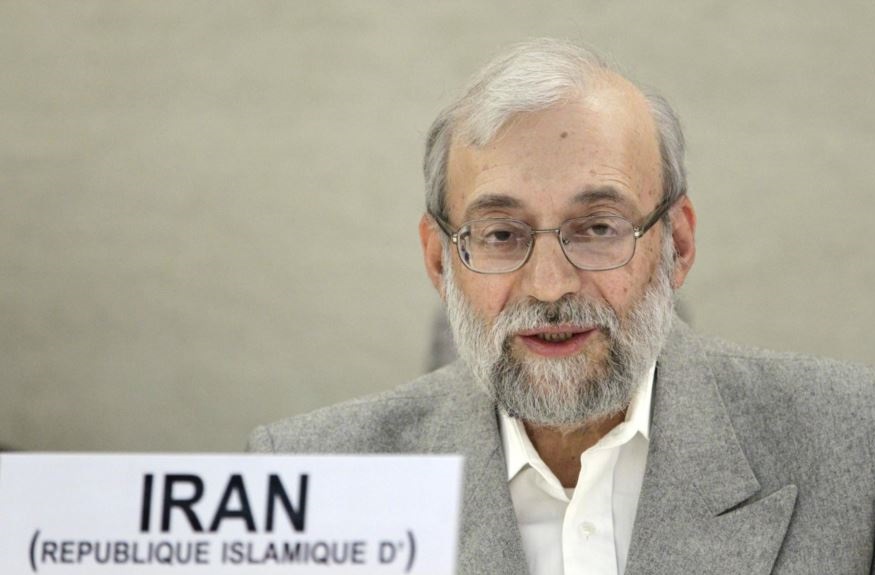
In countries that suffer from dictatorship and lack of freedom of expression, any idea is perceived as a foreign conspiracy to overthrow the existing dictatorship and tyranny. These types of countries often isolate their people from the rest of the world through strict censorship. It is understandable that dictatorial rulers see anything with global value as a threat to their continued rule, and they certainly invent and create principles of human rights to ensure their continued power. These so-called human rights include killing, execution, torture, and unlawful imprisonment of prisoners for their thoughts, which are considered normal and even desirable. These human rights are even more ridiculous and laughable than universal human rights. In the Islamic Republic of Iran, this type of “human rights” is the invention of Mohammad Javad Larijani.
In conclusion, it must be emphasized once again that it is true that human rights have Western origins, and sometimes opponents claim that these human rights have more Christian and Jewish background and are not suitable for Islamic countries. But this claim, which tries to incite the feelings of Muslims and turn them against universal human rights principles, is pure falsehood. Even Christian clergy, when they had the necessary power, did not spare Muslim clergy, and the issue of secularization of human rights was primarily for dealing with the domination and injustice of Christian clergy. But the more important point is that the issue of human rights is not seeking revenge against the clergy and religion, but only seeking to clarify and universalize human rights principles. In fact, a religious person in a society that has given a positive voice to this secularization, practically has more freedom to act according to their religious principles than in a country where religion is governed by religious principles; because these religious principles may change depending on the interests of the rulers. In
 Created By: Ghahraman Ghanbari
 January 24, 2018
Tags
Indigenous rights to human rights Islamic human rights Monthly Peace Line Magazine peace line Qahraman Ganbari