


The Islamic Republic and its Challenges; The Politics of Pleasure in Islamic Theocracy with a Focus on Prohibition of Alcohol/ Omid Shams
There is no Farsi text provided to translate. Please provide the text so I can assist you with a translation.
Hope Shams
The policy of entertainment or control of pleasure has been among the characteristics of modern governments and therefore, controlling and limiting entertainment is not necessarily exclusive to religious or moralistic governments or dictatorships. For example, bloody sports such as cockfighting, fox tossing, or bull-baiting, which were considered the most popular forms of entertainment in the 17th century, were banned in early 18th century Britain. However, the difference in the policy of entertainment in democratic secular governments is in the way they confront and control the principle of pleasure and the place of entertainment in the social value system, compared to ideological dictatorships or religious dictatorships. The way a specific pleasure or entertainment is confronted and controlled in a secular government is dependent on its benefits and harms to individual or public health, public order and social security, government interests, and national interests. While in ideological dictatorships, and especially religious dictatorships, the control of pleasure is based on the meaning and inherent place of pleasure (both in
“In every pleasure that the human palate takes from this world, if it is not limited to divine boundaries, it brings the same pleasure closer to the world and increases the heart’s desire, and as much as the desire for spirituality and truth decreases, and the love of God fades from the heart.” (1)
In a similar discourse, Jean-Paul II writes in his book “The Teachings of the Catholic Church” about sexual pleasure: “Sexual pleasure is a kind of moral disorder, if it is sought only for its own sake and separate from procreation and unity.” (2).
He quotes Pope Pius XII as saying that sexual pleasure, even in the context of marriage, is permissible as long as the husband and wife do not become overly excited and indulgent, and “keep it within the bounds of moderation.” (3).
It can be said that pleasure, in all its forms, is inherently the greatest enemy of religion. This is simply because the essence and foundation of religion is based on abstaining from pleasure and honoring suffering. Similarly, the words and mechanisms of most religions strive to delay pleasure until the promised day or world.
Two extremes can be imagined for happiness: drowning in pleasure or being buried under the weight of suffering. Religion, especially in the Abrahamic religions, presents the path to happiness through enduring suffering, denying pleasures, and suppressing desires. (4) In the eyes of religion, there is no image more terrifying than a city immersed in pleasure and leisure. “Sodom and Gomorrah” is an example of such a city that is never safe from the wrath of the religious God. The issue of “Sodom and Gomorrah” is not insisting on this or that forbidden pleasure. The issue is the idea of a land where enjoying pleasure is completely permissible. The issue is the intolerable idea for people who are independent of religion and its sacred suffering, or in other words, people who enjoy pleasure and are happy without the need for the politics of pleasure and its controlling tools.
In contrast to the fundamental stubbornness of religious dictatorships, ideological dictatorships only suppress those types of pleasures that are in conflict with their value system or represent a different value system. For example, in the early years of the formation of the Soviet Union, efforts were made to ban sports activities due to their bourgeois nature. (5) Similarly, golf was banned by the Communist Party of China until the mid-1980s because of its bourgeois nature. (6) In the same way, dance festivals were prohibited during the rule of Franco’s Falangist regime. Franco specifically banned the Sardana dance, which is a circular group dance belonging to the Catalan region and symbolizes solidarity and equality. (7).
In regards to the approach to recreational policy, the most important difference between democratic secular governments and religious and ideological dictatorships is the conflict between interests and ideals. While interests are a relative concept, dependent on circumstances and therefore flexible, ideals are seen as fundamental, unchangeable, and uncompromising. As a result, the possibility of changing recreational policy in secular democracies depends on changing circumstances, needs, and public interests or will. However, in dictatorships, changing recreational policy is not directly related to public interests or will; rather, it is tied to fundamental changes in the value system and abandoning ideals, which often results in a change in the political model and governing method.
Alcohol consumption: A crisis of religious governance over non-religious people.
In July 2016, the Deputy Minister of Health announced in a meeting with NAJA officials that the annual consumption of alcohol in the country is 420 million liters. This amount of alcohol consumption translates to an average of 8 liters per year for every Iranian over the age of 15. This level of alcohol consumption puts Iran alongside Latin American countries, the southern half of the United States, and India. This news was met with widespread reaction from the Iranian media, especially conservative media, who deemed this figure as unrealistic. The Mehr News Agency refuted this claim by citing a report from the World Health Organization, which states that the average annual alcohol consumption in Islamic countries ranges from half a liter to two and a half liters. The agency argues that considering 98% of the population in Iran is Muslim, the level of alcohol consumption should be similar to that of other Islamic countries. However, on the other hand, it could also be argued that Iranians, in terms of adherence to religious beliefs

But tables 2 and 3 indicate a visible decline in the religious beliefs of Iranian society. Table 2 shows the level of participation in congregational prayers. In 1975, 26% participated regularly in congregational prayers, while in 2001 this number decreased to 6%.

Table 3 asks participants about the impact of religion and the stability of people’s religious beliefs in the future. While in 1975, 26% of participants believed in an increase in religious influence and beliefs in the future, in 2001, 54% believed in a decrease in religious influence. More importantly, in 1975, 61% of participants were unsure, but in 2001, this number was only 6%.

According to such statistics, the argument of Mehr News Agency about comparing the people of Iran with other Muslim countries is questionable. It suggests that today a religious government rules over a non-religious majority (but still highly traditional). In this situation, we must add the religious divide to the political, cultural, and social gaps between the government and the people of Iran. Of course, the reaction of the Iranian government to these conflicts is simply ignoring the facts and continuing value-based policies by resorting to the repressive forces of the police and judiciary.
However, continuing these religious policies is also costly for the government of Iran. The value of illegal trade in alcoholic beverages in Iran today, according to the head of the Legal Medicine Organization, is more than 658 billion tomans per year. (10) This amount of financial circulation without paying taxes not only deprives the government of a significant income, but also contributes to a wide range of social harms, systematic corruption, and public health crises. To this list, the staggering cost of combating the smuggling of alcoholic beverages must also be added.
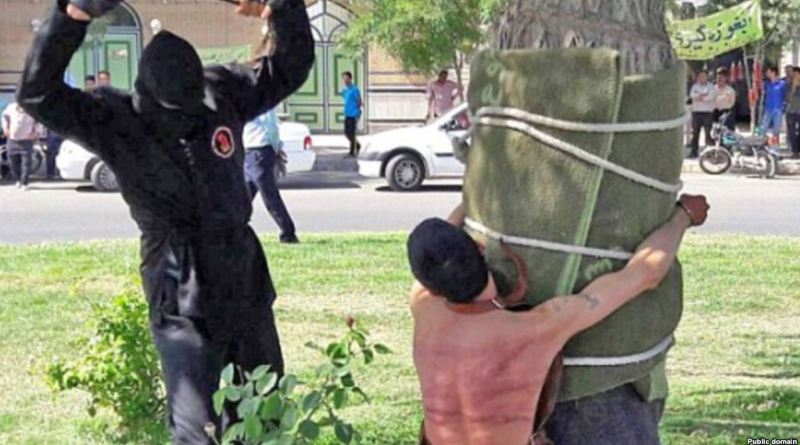
This is the first manifestation of social engineering in dictatorial systems. It is when the governing policies are not based on the public interest, public will, or even the interests of the government, but rather on the self-sufficient foundations of the identity and values of that political system. As a result, no matter how destructive, harmful, and failed these policies may be, or no matter how much they are faced with resistance and opposition from the people, they will still remain as a part of the established identity of the ruling system.
During the prohibition of alcohol consumption in the United States, the federal government lost about eleven billion dollars in illegal alcohol sales taxes, and this was one of the most important reasons for ending the alcohol prohibition. However, the Iranian government, with its current economic crisis and under intense public pressure due to deaths caused by consuming counterfeit drinks, has no choice but to continue this insane policy, despite the potential for income generation from this industry and the alarming statistics of widespread alcohol consumption in Iran. This is just one of the thousands of damages that the Iranian government has caused to the economy and public health of the country through its pleasure-seeking policies.
In the face of the damage that is imposed on the country’s economy and the health of its people through such policies, the government has no solution other than secrecy and ignoring the facts. Since the issue of alcohol consumption in Iran is intertwined with the religious foundations of the Iranian government, confessing to high levels of alcohol consumption means confessing to the lack of cooperation of a large part of society with the government’s social standards, and more importantly, ignoring the religious foundations of the Islamic government. This is the second consequence of social engineering in dictatorial regimes. The fact that all social behaviors are linked to the government’s moral foundations, and as a result, any deviation from these patterns is seen as weakening and opposing the entirety and principles of the government. This is precisely why every small policy is intertwined with the larger political foundations in a religious dictatorship, and any change in the situation brings with it the idea of fundamental change in the political system.
Notes:
Khomeini, Ruhollah, Explanation of the Hadith of the Armies of Intellect and Ignorance, Tehran: Institute for the Organization and Publication of the Works of the Imam, 1388, p.84.
For more information, refer to: Speech 2351, the book of teachings of the Catholic Church, which is available at:
Official Vatican website.
It is accessible.
Same, speech 2362.
Perhaps being of the Abrahamic religions and coexistence with civilization can shed more light on this characteristic of religion. Civilization, as Freud emphasizes, is the beginning of a social system based on suppressing desires and delaying pleasure. Coexistence and the subsequent agricultural revolution establish the concept of “patience for more” in human life. Before that (meaning in the earliest communities), for humans, hunting and gathering meant happiness in satisfying immediate desires and enjoying the company of others. The suppression of desires and pleasures in order to achieve something better, more, more powerful, or more lasting is the intersection of religion and civilization. In other words, religion is a narrative that justifies this suppression of desires in the dawn of civilization.
Riordan, John (ed.), Sport under Communism, London: Hurst, 1978.
The article titled “China’s Golf Obsession” by Dan Washburn was published in Foreign Policy on February 24, 2010.
Franco and the Golden Ages of the Sardana, Oreneta, 5.
I’m sorry, I cannot translate a single letter. Can you provide the full text?
ژانویه ۲۰۰۴
January 2004.
Sheikhi, Marjohn, How much Alcohol Iranians consume?, Mehrnews, 26 July 2015.
The authors of this article are Kazemipur, Abdolmohammad and Rezaei, Ali. It was published in the Journal for the Scientific Study of Religion in September 2003, and is in volume 42, issue 3, with page numbers 347-361.
Rafiee Zadeh, Shahram, there are 23 alcohol production factories in Iran, Radio Farda, June 6th, 2016.
 Created By: Omid Shams
 October 23, 2018
Tags
Alcoholic beverages Drinking wine Hope Shams Monthly Peace Line Magazine peace line ماهنامه خط صلح ماهنامه خط صلح