


“Beyond the fresh wound/ Fariborz Raeis Dana”
This is not a complete sentence, so it cannot be translated accurately. Please provide the full sentence for an accurate translation.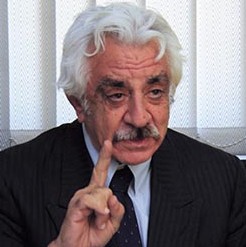
Fereydoon Raeis Dana
Whipping those who are perceived as powerful and controlling in their society has been a common practice in their centralized or decentralized national and local systems since ancient times. This is a punitive action. I can hardly find this method being used in any part of the world today, from underdeveloped countries to highly developed ones, with various religious and secular systems and ideologies, except in Iran and a few other countries with Islamic governments (including Saudi Arabia) and in some quasi-Islamic militant groups dominating certain parts of the Middle East (such as ISIS).
Whipping in these countries and groups, which the most advanced of them in terms of economy and social is Iran, is a legal or religious tool, or both, for punishing those who have violated some of the religious and legal orders. This punishment, along with imprisonment for various periods, deprivation, hanging, amputation of body parts, especially hands and feet, stoning, execution by hanging or firing squad, is established. Many studies that I have read or conducted myself have shown me that this punishment is fundamentally based on taking revenge on the assumed criminal; although in current laws it is referred to as a tool for teaching a lesson (especially when it takes place in public) and for preventing the commission of crimes and their spread in order to protect the rights of the people. But this punishment is mostly a tool for taking revenge on someone who has undermined the approved and emphasized balances of power, both in terms of its roots and history and in terms of its insignificant impact on preventing crimes. But which
Whipping those who have consumed alcohol, engaged in illicit relationships, or similar acts disrupts the social and moral order that the rulers (and the hierarchical levels of religious, judicial, and security authorities) not only approve of, but also consider necessary to maintain their power and desired social order. However, although the rulers may claim to follow moral, religious, and traditional values in their approval (or disapproval), in practice they are military rulers whose main purpose is class-based: some work, suffer, and create value, while others hold power and acquire those values. As long as both groups stay within the framework of order and boundaries set for them, this system continues to function smoothly. However, in this system, there is a significant inequality in opportunities, where the privileged have direct and indirect access to economic, political, and social resources, while the masses of deprived individuals do not have the same opportunities for material, welfare, sexual, and service-related benefits, whether openly or covertly and legitimately
However, when we come out of these crimes, we reach crimes that not only lack moral aspects, but also involve embezzlement or rebellion against the order of power and obedience. It is clear that in this case, the use of fresh tools is necessary to force acceptance of the class system and the hierarchy of power and servitude. In the words of Mohammad Mokhtari, the night watchman in the Roman order, the watchman must guide the whip in the hand of the spear to a place where it can be well grazed and then be placed under the master’s knife.
In the contemporary world of capitalism in Iran, where the capitalist system is inefficient, rent-seeking, corrupt, highly discriminatory and unjust, relying on a patriarchal culture and social relationships, and characterized by a focus on power and a hypocritical morality, all the old tools of oppression are aided by new tools to support the sacred laws, to protect the conscience and dignity of the existing capitalist order and social domination, and to support hypocritical policies. Fresh blood and stoning in the face of imprisonment and execution…
The repeated use of the brutal punishment of lashing under the guise of established and civil laws in recent years against workers, students, youth, and artists (whether carried out or suspended) is not just a sign of the government’s own harshness, but also of the possible but ineffective tools in the current capitalist system. These tools are still being used because the economic power scene, political ideology, and sacred faces still require them. As the rulers and judges have shown so far, they have a track record of preserving a system that benefits the fewest number of people in power and leaves millions of poor and unemployed behind.
Just as they are a mixture of nostalgia and modern greed, their tools for intimidation and silencing also consist of a combination of old and new tools. Therefore, such governments are only considered as regimes of oppression to a certain extent. Even the privileges granted to certain parts of society (such as women, referred to as political criminals) in terms of the law, are accompanied by other explicit and hidden threats, derived from past and present experiences and through outdated and new methods. Society is managed by traditional and religious institutions alongside advanced security apparatuses – which is necessary for maintaining the conflicting foundations of this society. Therefore, it is natural for tools of suppression and subjugation to have a dual purpose.
The widespread use of whips in society, particularly in bringing fresh bodies to the workers who were extracting gold and eating empty bread, is not a coincidence or a matter of taste. Just as the gold mine in Takab and the company that was exploiting it had not been accidentally exploited. A combination of nationalist economic power, clericalism, and bureaucraticism has so deeply ingrained the desire for wealth in its heart that it enters into action with complete violence and tools to suffocate any disruption in its exploitation: fresh bodies and prisons for workers protesting their miserable conditions in the gold mines, prisons for proud artists who have taken independent artistic action to present their free art, fresh bodies and prisons for the deprived who want to celebrate their graduation on the path of freedom and not return to slavery, and young people who want to be a little happier…
 By: Freiborz Raeesdana
 June 22, 2016
Tags
Faryabraz Raeis Dana Fresh Gold Monthly Peace Line Magazine peace line The dignity of human beings. The gold mine of Agh Dareh Whip Workers ماهنامه خط صلح