


Corruption in Iranian football and its connection and impact on political development / Keyvan Soltani
This caption is not in Farsi, it is in English. It says “attachment”.
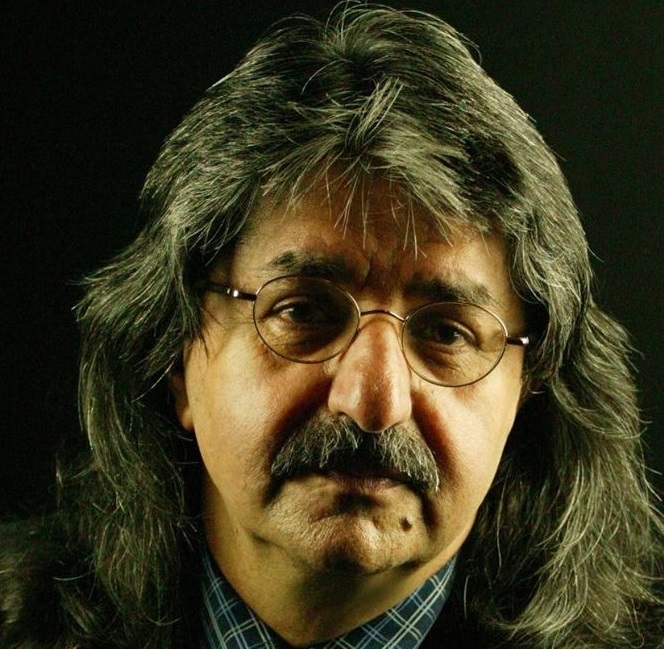
Kian Soltani
Corruption in Iranian football is not a new topic and it does not spare anyone’s reputation. Generally, the dimensions of corruption in football can only be understood through a comprehensive discussion about corruption, the systems in which it thrives and grows, and the management of this corruption, which arises from a totalitarian and patriarchal government that is inherently undemocratic. Corruption in Iranian football began with the efforts of government officials to control it. In the 1990s, when the government gained power through the Basij and the support of football fans, they took control of it. Mohammad Khakpour, a player on the Iranian national football team in the 1998 World Cup in France, describes the government’s decisions to deal with football in an interview with the magazine Noand as follows: “I feel that in those years, something happened in football and the country that it was decided to control football… The day we beat Australia, all the people of the country came out everywhere and had a
Barry, if the Iranian government behaved like a spoiled child with football until that time, now a team of retired commanders and sometimes their own ideological followers have emerged to not only control popular teams like Persepolis and Esteghlal (Taj) through the Revolutionary Guards, but also all teams in the so-called Premier League, under the leadership of the Guards. In this regard, teams like Tractor Sazi, which are considered “dangerous” due to their popularity among Azerbaijani-speaking fans, have been seized through the transfer of a percentage of their ownership by an institution affiliated with the Revolutionary Guards. In the final step, by appointing Mehdi Taj as the head of the Football Federation – who has a history of membership in the Guards – they have eased their concerns about the potential opposition of millions of football fans.
The plan for privatizing this industry, particularly football, was based on a new interpretation of Article 44 of the Constitution. Article 44 clearly stated that the public sector, which included all major industries, mother industries, foreign trade, large mines, banking, insurance, energy supply, radio and television, postal and telegraph services, aviation, shipping, roads and railways, etc., was to be publicly owned and under the control of the government. However, in July 2006, Ayatollah Khamenei, the leader of the Islamic Republic, approved the proposed package of the Expediency Council, which was under the influence of Hashemi Rafsanjani and the so-called “development agents”, as a new interpretation of Article 44. The basis for this was that the government ordered that up to 80% of the shares of state-owned sectors be transferred to the private sector. Based on this, the transfer of factories, resources, mines, and major economic sectors
Currently, dealing with privatization in both conventional and unconventional worlds is diverse. In Europe and North America, where “welfare states” have been in charge, public services and the industries that fall within the scope of these services were part of the government sector and were subject to specific regulations for increasing tariffs and costs of public services by relevant commissions. They also considered special supervisory institutions for the welfare and health of society. However, in such societies with a dominant neoliberal tendency after the polarization of the world, welfare states have lost their significance and various governments want to hand over public service provision to the private sector as far as their power allows, in order to free themselves from regulations and special supervision, which they see as hindering their profitability.
But progressive movements, from non-yellow labor unions to transformational parties and social groups, such as the Occupy movement and the so-called 99 percent, are determined to highlight and prioritize the achievements of labor and hard work in past decades in the face of anti-globalization. They are trying to prevent governments, which are often referred to as “the people’s choice,” from handing over public services – which will inevitably lead to increased privatization and exorbitant prices for public services, as well as water, electricity, and gas. Since most of the time, price indices in the market and economy are based on these energy and other basic food products, this price increase inevitably leads to an increase in the prices of other raw materials consumed by the people. This is why privatization is not an ideal solution for the masses.
In neighboring countries, non-elected and authoritarian governments, which do not even have the concern of the people’s vote in determining the fate, the government sector acts as the guardian of the privileges of basic industries or mother industries, in fact, by having the “right to rule” over the people’s property, it acts as a determining factor in the “Asian despotism”.
In Iran, since the time of Hashemi Rafsanjani’s government, there has been a great deal of looting of resources and facilities, and the transfer of many underground resources and affiliated companies to government-related rent-seekers under the guise of privatization. This special code of confiscation has become desirable for public property. The result of this shining principle of “Islamic economy” is that properties have ended up in the hands of the Revolutionary Guards and the relatives of the ruling elite. In addition, the customs rents, which in all countries, including Asian, European and American countries, are under the control of the central government, are in the hands of the ruling elite in Iran.
But apart from the fact that this privatization does not necessarily have any miraculous effects and can lead to corruption, given the history of such games, security circles close to government officials, with legal justifications, take control of assets that are traditionally under the government’s control and use them to optimize public services and serve the people, they take hold of these industries and public properties.
The transfer of the two teams, Esteghlal and Persepolis, at the end of the 1990s, became an annex to the Ministry of Mansions, which were to be in the hands of the government. These two teams have been subject to the same “new reading of Article 44” in recent years; however, Iranian football, due to its television broadcast monopoly by the state-owned IRIB, is not initially income-generating and does not give these two teams, who attract the majority of Iranian football fans (or TV viewers), their fair share. Other methods of income generation are also almost non-competitive. In short, when football is not income-generating, the usual rent-seekers, such as institutions affiliated with the Revolutionary Guards or “Aghazadehs”, do not move forward and the Football Federation, which seems to be responsible for this transfer, cannot hand over this transfer without the permission of the leaders of the system, except within
On the contrary, the Islamic Republic has been trying for two decades to turn football into a tool for its feared security organization through planning and intrusive monitoring. In addition to suppressing protest reactions, it also uses its current power for cyberbullying and cyber suppression. This power of the cyber army has such a wide reach that it has provoked a reaction from American leaders!
This is not a complete sentence and cannot be translated accurately. Please provide the full text for an accurate translation.
Fernanda Lima – Host of the 2014 World Cup Draw – Photo by Getty Images
In 2014, the Iranian national team returned to the World Cup in Brazil after 8 years. The World Cup, organized by FIFA in terms of length and width, alongside the billions of dollars that go to this organization and make it infamous, also becomes an exceptional attraction for over a billion viewers. The FIFA draw ceremony also provides an opportunity for income and once again attracts many enthusiasts, which is broadcasted on television. In the midst of such a flashy ceremony, it becomes troublesome for an anti-women government that has issues with portraying women as human beings. It is natural that the lack of broadcasting this ceremony leads to public dissatisfaction and the government officials were eager to prevent any potential protests. So, instead of introducing censorship on women’s bodies, they used their own moral issues and their rise in society as the reason for not broadcasting the ceremony, causing widespread protests from the youth who were excited to watch the World Cup draw. As a result, just a few days before the ceremony, tens
Among those who were discussing this issue, given the speed of action and the similarity of approaches, especially the large volume of attacks, and also the disregard for the principle of censorship, some believed that the footprint of the cyber army of the Islamic Republic of Iran could be seen in organizing this cyber bullying. Usually, investigators of incidents pay attention to existing interests and those who are involved in the situation; in this case, the Islamic Republic and its propaganda machine were forgotten as the main culprit.
This blind and unjust anger, with the direction it has been given, displays its destructive power in the face of the imaginary enemy that it has created. In the cyber attack that took place a few days before, it targeted the pages of Lionel Messi, the star and captain of the Argentine national football team – which was placed in the same group as the Iranian national team according to the draw – on social media. Later, with the attack on the social media pages of the referee of the Argentina-Iran match and the pages of FIFA and officials of the FIFA refereeing department, there was no doubt left for anyone that firstly, this self-proclaimed cyber army does not act on its own, and secondly, the Islamic Republic uses this trial and error to deal with various actors in the social scene.
“For the latest example, it is enough to mention the attack of Persepolis football team’s fans on the social media pages of two national team players (Mehdi Taremi and Ramin Rezaeian) who joined the Turkish team Rizespor this season. Within two weeks, they were forced to leave Turkey and one of them was brought back to the team, while the Persepolis coach had no place for the other player! This is reminiscent of the past regime when the authorities prevented a player from leaving the country, as in the case of Parviz Ghelichkhani and Jalal Talebi, who were offered a considerable amount of money by a Turkish team, but were opposed by Mohammad Reza Pahlavi. Parviz Ghelichkhani, the legend of Iranian football, has spoken about this incident in interviews. At that time, in addition to the Shah’s struggles with his constitutional duties, the Football Federation and several team officials were
This cyber force may be in the experimental stage, but as a new phenomenon, it appears to be a dangerous current in the stormy and chaotic environment. This phenomenon, which is going through its formative stages in the laboratories of Iran’s security forces, will only be known in the future how it will be utilized as a force.
“متن راست چین”
“Right-aligned text”
A picture of the leaders of the two teams Tractor Sazi Tabriz and Esteghlal Tehran.
Now that we are talking about the phenomenon of leaders, we should take a look at the importance, role, power, and authority of this phenomenon. The importance of leaders is enough to mention, when Ali Fathollahzadeh was the CEO of Esteghlal, and the unpleasant slogans from the stands in the previous season had caused problems for his team, during the season break, he first extended or terminated the contracts of the leaders, and then focused on buying new players. Apart from being able to determine which coach or player to support or not, leaders sometimes have an impact on the organization and tactics of their assistants and players. In other words, the football fan who presents himself as a supporter, no longer shouts slogans based on his current emotions! In the 1990s, when the devastating war between Iran and Iraq continued every day and its casualties and problems affected not only football fans but also their families, not only did the football fan shout anti-war slogans, but he
They receive their rights from the club, have identification cards, and their security background is verified by the security department of the federation, which is a subsidiary of the Ministry of Intelligence.
Another important and noteworthy issue is the gendering of football in the Islamic Republic. Female football spectators are required to sit at home and if they want, they are only allowed to cheer for their team there. Football teams do not allocate a budget or generally care about them! This is while, for example, in Canada, the women’s football team is more successful than its men’s team. The Canadian women’s football team not only won a bronze medal in the Rio Olympics by defeating Brazil, but also has significantly more fans than its men’s team. Because they exist, they are recognized, they have dignity, they are free and powerful individuals, and no one can eliminate them.
Football spectators, who are prone to violence and hooliganism, which is equivalent to foreign hooliganism, have been a problem in many countries, but in the segregated football of Iran, it is used as a justification for segregation and not allowing women to enter stadiums. Even populist politicians like Ahmadinejad
Some also argue for the necessity of “preserving the respect for families”, as it seems that the environment of stadiums is not very safe and suitable for families, so the ban on women entering stadiums is justified. Even a compassionate and popular football player like Ali Karimi talks about the need to change the atmosphere of stadiums so that families can attend. If at least part of this football hooliganism is a product of its management, it is only justified in its essence for the policies of the Islamic Republic’s separation. In the case of the broadcast of the lottery ceremony, the announcement that “we are not allowed to broadcast the ceremony due to the dress of the female presenter” by the reporter and its repetition by the TV presenter was not a pure lie; the misogyny was in the mind of the men.
It should be noted that this policy inherently creates problems in political development and the process of democratic society. We cannot achieve political and social development, or even commit to it, when half of the society is excluded from this development process. The issue for women is not just lack of employment in equal fields with men, but also their limited or blocked involvement in various areas of power.
There is no Farsi text provided to translate. Please provide the text to be translated.
The women’s football team of Malavan, despite its merits, was dissolved – Photo by a fan.
Women not only face restrictions in entering stadiums, but women’s sports are also regulated with little credibility and budget compared to men’s sports in the minds of officials. Even the suspension of the women’s football team of Malavan received less attention than the interference of Ayatollah Hadid, the Friday prayer leader of Mashhad, in changing the name of the reputable club Abu Moslem. Or the fact that teams like Persepolis, Esteghlal, and Tractor Sazi, as old teams that receive billions of tomans from the government or government-affiliated institutions, do not have a women’s football team, or if they do, it is not given proper attention. This issue is also true for other sports.
In the corrupt world of Iranian football, corruption is not only prevalent but also rampant. However, as the late Nasser Hejazi once said, when asked about corruption in football on the “90” program, he fearlessly stated: “They always say our football is impure! We should see if our own place is clean before talking about the impurity of football. This is a very important discussion, and that’s all I wanted to say…”.
The simple interpretation of Hajazian’s response to Ferdowsipour was that he did not see the corruption in society, only focusing on corruption in football, is a simple diversion!
Explanation:
The article discusses the government’s involvement in the football mafia in the Islamic Republic of Iran and presents a more comprehensive analysis in issue 109 of Arash magazine. It covers various aspects of the football mafia to avoid repetition and interested readers can access it through.
This link.
Refer back to that.
 Created By: Keyvan Soltani
 August 23, 2016
Tags
Corruption in football Independence Iran Football Federation Kian Soltani Monthly magazine issue number 64 Monthly Peace Line Magazine Persepolis Political development