


Saber in Baluchistan; “Land of Unpunished Crimes” and “Service with Consideration”/ Reza Alijani
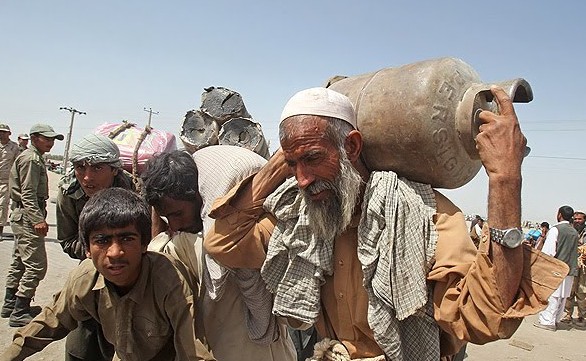
Iran is a land of “unpunished crimes” and “service with disregard”. In deprived areas, however, these two characteristics are even more pronounced. In Kurdistan, Baluchistan, and other regions, there are numerous examples and instances of these tragic issues.
Minority areas (ethnic and religious minorities, such as Kurds, Baloch, Arabs, Sunnis, etc.) are usually under double oppression; oppression that is inflicted upon all the people of this land by the rulers and owners of wealth and power, and a specific oppression towards that land, that ethnic group, and that religion; because of their ethnicity and religion, and because of their remoteness and peripheral location in relation to the center of the country.
A part of this dual oppression is shown in a more severe and brutal treatment of dissidents and protesters towards their own national and local situation. Usually, security measures and judicial rulings against them are harsher and more severe, and have intensified in recent months; executions based on forced confessions and torture.
If the name of Baluchistan was a reminder of this repeated oppression for me in the past years, in recent years the name of my dear friend Shafiq, Hadi Saber, quickly brings back memories and tightens the pulse of my emotions.
Hadi wanted no crime to go unpunished. Therefore, as a responsible human being and a conscious and sensitive activist, he rose up in the form of a national-religious activist to fulfill his human and national duties in the face of oppression, suppression, and discrimination, and ultimately sacrificed his life for this cause. But in the face of oppression, he not only thought about the oppressors, but also reflected on the weaknesses and shortcomings of those who were oppressed and fought against oppression. He was a critic and a unifier, and a catalyst for solving problems and breaking deadlocks.
He saw a weakness in the fighters’ lack of organization and lack of attention to their surroundings; just as thinking about freedom without justice and development; just as merely thinking and talking without action; just as individualism without unity and collective effort…
Based on this, he went to Sistan and Baluchestan, just as he had previously gone to Khuzestan and Masjed Soleiman.
In Balochistan, however, he focused on empowering the highly suitable local environment for entrepreneurship (as well as banking; to address and solve a native obstacle).
He considered empowering “human” as a fundamental agent of “change”; a change that he dedicated his life and soul to. A change that he knew was the foundation of “existence” and saw him as the companion of all the seekers on this path. And he was like that, and he did just that.
“And in this way, among others, he placed capable individuals against tyranny and discrimination so that they would not let crime go unpunished. It was only through this path that he thought of punishing crimes, not by representing the oppressed, but by standing and fighting against criminals proactively.”
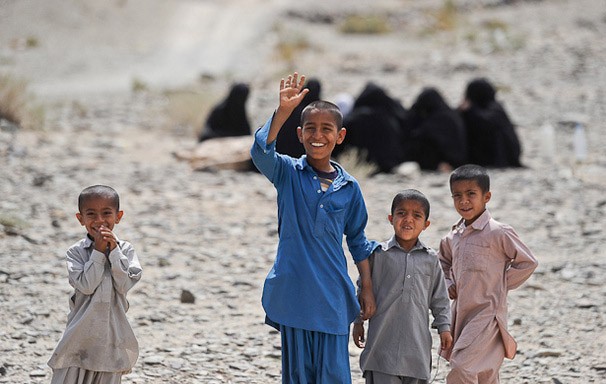
But this land, and especially these regions, have always been a land of “service with consideration”. One day, Mawlana Abdul Hamid said to someone that many people vote for Balochistan in elections because they have consideration for it, but the national-religious groups pay attention to us without any consideration. Hadi was an example of the highest level of service without consideration.
He was like Talaghani, who narrates from the days of his anger from Tehran, that he considered himself indebted and indebted to the people, not their creditor. Shah Hosseini repeatedly said that Talaghani had told him in those days that we had given many promises and promises to the people; we owe the people. Hadi was also like this. For this reason, wherever he saw a place of service and determined, he was ready and prepared; a line breaker and in the front line. And at the end of his life, he saw the Baloch and Balochistan as one of these main lines and front lines.
He also saw capacities in all “humans”, in all “deprived areas”, and in all “platforms” and “unexplored areas” such as charitable and service organizations, quietly and unpretentiously, that remained unseen by the eyes of other intellectuals and political activists.
He had this kind of “character” and lived according to it, Hadi had a selfless service, he did not look at ethnic and religious minorities as a voting bank, just as he did not consider his political background (whether in the fronts or in prisons) as a capital of “uniqueness” and personal trade, and did not use attention to religion and morality and “character” as a tool for showing off and self-promotion.
Hadi never prayed on any bed to have time for other things; unfortunately and bitterly, it must be said that these are common coins in the realm of politics and public sphere in Iran, both among the ruling government and its opponents; a common disease that has affected all of us and must be independently explored and investigated.
Hadi, in the project that he pursued in Zahedan, also found inner elevation. He faced surrounding problems, especially in the areas of cultural issues and gender discrimination, which deepened his strategic view for “change makers” (as he called them): we need constant criticism and evaluation; we need to empower ourselves; there are thousands of paths not taken, thousands of unfinished tasks, and thousands of potential opportunities ahead of us; and there are thousands of people waiting, as companions on the diverse and extensive journey of “change”.
By: Reza Alijani July 24, 2014
Tags
Issue number 39