


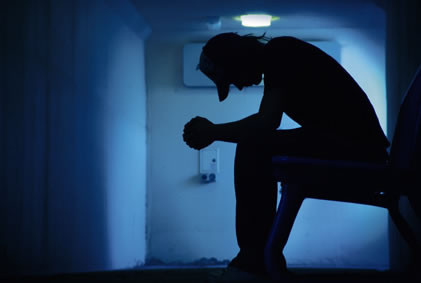
Mental Health of Homosexuals in Iran / Houdad Talouei
According to a report published by Gallup Institute in 2013, between 1.7% to 10% of the population in different states of America identify as homosexual, bisexual, or transgender. (1) The conclusion drawn is that on average, around 3.5% of the American population is homosexual. However, active researchers in this field express that the percentage of individuals who are inclined towards same-sex relationships is higher than this reported statistic, but a small percentage are willing to identify themselves as homosexual. In Iran, according to statistics published by the Research Office of the Islamic Consultative Assembly, 17.5% of high school students identify as homosexual. (2) It is worth mentioning that the purpose of publishing this statistic was ultimately to support the discussion of temporary marriage in order to prevent the spread of what they call “moral corruption”!
If we consider the population of Iran to be 77 million people and the percentage of homosexuality to be between 3.5% to 17.5%, it would mean that between 2.7 million and 13.4 million people in Iran are homosexual.
Despite such statistics, the right to life, which is the most important right of every human being according to the Universal Declaration of Human Rights, is denied to homosexuals and according to the law, individuals who are rational and mature and engage in consensual same-sex relationships are subject to the death penalty.
In such circumstances, we intend to examine the mental health status of homosexuals in Iran here.
Ali, a 32-year-old Iranian homosexual, remembers being under the care of psychiatrists since the age of 15 and being prescribed various medications, including those used to treat schizophrenia and bipolar disorder. He has always had a difficult relationship with his father and has been humiliated and abused by him. Despite all the hardships he has faced, he continued his education and has now obtained a Bachelor’s degree, but he feels deeply frustrated and hopeless. Hootan, a 40-year-old homosexual, has been accepted into medical school but has never attended. He suffers from various conflicts and considers loneliness to be his biggest problem. He has visited various psychiatrists, but each time he has been told that they are unable to help him. This is while his mental pressures sometimes become so severe that he becomes hopeless about continuing his life. Mohammad Reza, a 26-year-old homosexual, ended his own life after years of suffering and serious conflicts with his family, while also struggling with serious conflicts about
As a result of scientific research, homosexuality was removed from the list of disorders and recognized as a natural sexual orientation since around 1980. It is said that although homosexuality is not a disorder, negative societal pressures and interactions with homosexuals can lead to mental health issues among these individuals. Therefore, it is necessary to identify the source of psychological pressures on homosexuals in Iranian society with the hope of finding effective solutions to alleviate these pressures and ensure the mental well-being of these individuals in society.
Internal conflicts and phobias have developed.
Given the negative attitude of society towards homosexuality, the insults and inappropriate words used to describe homosexuals, as well as the mockery and harassment of homosexuals in various ways, children who seek society’s approval internalize these irrational social attitudes and speech and adopt opposing and even hostile positions towards homosexuality, which is referred to as homophobia. As a result, individuals who grow up in such societies, like Iran, are themselves affected by homophobia, and this issue leads to serious internal conflicts for them. No one wants to be so hated by the society they live in. On the one hand, they have a desire to establish emotional relationships with people of the same sex, but on the other hand, this type of relationship is not only unacceptable to society, but also to their own internal beliefs. As a result, they either suppress their feelings or decide to allow their desires to manifest to the point where they may even rebel against society in various ways. However, in any case, the negative feelings they have internal
Distant relationships with father and other family members
Some homosexual individuals may have had behaviors during childhood that were not acceptable to their surroundings, especially their fathers. When parents become parents, regardless of their child’s abilities or qualities, they create an image of their child in their mind based on their own desires and social standards, which is referred to as the “ideal child”. The more differences there are between the real child and the ideal child, the more parents unconsciously feel disappointed and unsuccessful towards their children. When a father sees that his son does not have similar behaviors to other boys, he may unintentionally or unknowingly show unfriendly behaviors towards him, which gradually leads to a cold relationship between them. Others may mock or even bully that boy because of his behaviors. Confronting these unfriendly behaviors from others causes a lot of discomfort and psychological pressure on the individual. They constantly ask themselves why they have to be humiliated and disrespected, and their self-esteem will be greatly damaged.

Feeling of guilt
In Iranian society, which is traditionally religious, religious teachings are imposed strictly on children. Religious individuals believe that homosexuality is an unforgivable sin and its punishment is death. These beliefs may cause a homosexual individual to turn away from religion or come to the conclusion that others’ interpretations of religion may be wrong and interpret religious texts themselves in order to not see themselves as a sinful person. However, in any case, they will always have a conscious or unconscious feeling of guilt because religious teachings are strongly ingrained in them during childhood.
The perpetual fear of society and government.
Given the anti-homosexual laws in Iran and the openness of government officials to arrest and harass homosexuals, as well as violent actions by families when a person’s homosexuality is revealed, and the ostracism and discriminatory behavior of society, all contribute to a person experiencing chronic fear. This constant fear puts immense psychological pressure on the individual and gradually wears them down. Even during sleep, a person may have nightmares, to the point where they may eventually develop a fear of sleeping.
Specialists
Despite the fact that homosexuality has not been considered a disorder in many parts of the world for years, there are still psychiatrists, psychologists, and doctors in Iran who lack sufficient knowledge on the subject and cause irreparable harm to their homosexual patients. There have been reported cases where psychiatrists have attempted to treat homosexuality through “shock therapy” or by prescribing medications used to treat depression, schizophrenia, or bipolar disorder. In one instance, a doctor even told their patient to rely on God for treatment. This is in direct contradiction to the duty of informed specialists to educate their patients on the naturalness of their sexual orientation, based on international scientific research, and to guide them in resolving internal conflicts and planning their lives in accordance with their sexual orientation. Considering that homosexuality is not a disorder and research has shown that there is no way to change one’s sexual orientation, it is harmful for uninformed specialists to insist that a homosexual person must change their sexual orientation and subject them to ineffective and damaging treatments without
Therefore, in Iran, in addition to the possibility of experiencing internal homophobia and unresolved conflicts regarding their sexual orientation, homosexuals may suffer from the consequences of having non-intimate relationships with their fathers and family members, feeling guilty, constantly anxious, and ultimately becoming victims of unaware specialists. As a result of these psychological pressures, homosexuals may experience major depression, lack of motivation, extreme pessimism, suicidal tendencies, and even psychosomatic illnesses such as digestive and heart diseases. Thus, a significant portion of society, who could contribute to the growth and progress in various fields of science, economy, art, and sports, are struggling with fundamental psychological and physical disorders. Considering that Iran is currently one of the countries where citizens of different sexual orientations face numerous psychological pressures, it can be imagined that homosexuals are in an intolerable psychological situation.
The progress of a society requires different parts of it to have mental health. Is there any clear prospect for achieving this goal given the current conditions in Iran? If the government does not take any steps in this direction and even acts against it, what responsibilities does the society have and what actions can it take?
Sources:
1- Jigids, Gary and Newport, Frank, New Estimate of the Homosexual Population in America, Williams Legal Institute, February 2013.
Why should temporary marriage centers be established in Iran? BBC Persian, 21 June 2014
 Created By: Houdad Tolouei
 October 24, 2014
Tags
Monthly Magazine Number 42