


The concept of asylum from the perspective of human rights/ Amin Mohammadi Rad
This is a caption
This is a caption
Amin Mohammadi Rad
Migration refers to the movement of people from one place to another for the purpose of living, leaving their homeland and settling in another place, as well as traveling. It can be said that migration lasts for a lifetime. Humans have always migrated for two main reasons: first, to escape unfavorable conditions and circumstances that they have faced in their current place of living, such as natural disasters, food shortages, illness, poverty, unemployment, insecurity, war, etc. And second, to find better living conditions and opportunities in the destination of migration, such as better living standards, employment, security, prosperity, education, etc.
The concept of “refugee” refers to a method of migration in which the conditions and factors in the person’s country and place of origin are so unbearable, intolerable, threatening, and dangerous that the person is forced to leave their place of residence in order to preserve their life and continue living. Since this type of migration is often characterized by features such as being compulsory, imposed, involuntary, and uncoordinated, the refugee is in dire need of legal, judicial, social, and economic support, attention, and assistance in the destination country or intermediary countries.
A century has passed since the first global initiative to recognize the concept of “refugee” and develop the foundations of “refugee rights”. In this historical transition, these concepts have gradually evolved from a limited, regional, and specific form to a global, universal, and general concept.
With such an approach and with the aim of ensuring and guaranteeing equal rights and freedoms for all human beings, the General Assembly of the United Nations adopted the “Universal Declaration of Human Rights” on December 10, 1948. The Universal Declaration of Human Rights, as a common standard and achievement of all nations and member states, explicitly declares that learning, education, and promotion of the rights and freedoms outlined in the declaration is a collective responsibility and applies to every human being and member of the human society. The Universal Declaration of Human Rights consists of thirty articles and reflects the United Nations’ perspective on the fundamental civil, cultural, economic, political, and social rights of human beings.
Based on the Universal Declaration of Human Rights, the United Nations General Assembly adopted two international covenants (the International Covenant on Economic, Social and Cultural Rights and the International Covenant on Civil and Political Rights) in 1966, which can be considered as the result of years of activity and negotiation among member states of the United Nations and the basis of international human rights. With the adoption and implementation of these two international covenants, governments are obligated to respect the rights of their citizens and also the rights of foreigners (including refugees).
In this article, an attempt has been made to provide an overview of the concepts of “refugee”, the foundations of “right to asylum” and “refugee status” in the present era through the lens of international law and international documents.
International Rights and Refugees
One year after the establishment of the United Nations, the General Assembly of the United Nations adopted a resolution to establish the “International Refugee Organization”. During its four years of operation, the International Refugee Organization was able to repatriate many individuals who had migrated to other countries due to the consequences of war. In 1950, with the end of the International Refugee Organization, the “United Nations High Commissioner for Refugees” was established to address new situations that had arisen.
In 1951, the “Convention relating to the Status of Refugees” was adopted, which can undoubtedly be considered the main source of refugees’ rights within the framework of international law. In this convention, while providing a definition of a refugee, principles such as the principle of non-discrimination in religious freedom, the right to form associations and organizations, free access to courts, freedom of movement, immunity from reciprocal actions by governments, immunity from actions against the citizens of their country of origin even when the individual insists on maintaining their original citizenship, and immunity from paying legal fees have been emphasized. The convention also recommends that the personal status of a refugee should be based on the laws and regulations of their country of residence. Furthermore, protection against expulsion and return to the country of origin and emphasis on not punishing refugees for their unauthorized or illegal entry or residence are among the provisions of this convention.
In 1967, the Additional Protocol to the Convention relating to the Status of Refugees was adopted by the United Nations. Also in 1967, the United Nations General Assembly adopted the “Declaration on Territorial Asylum”. According to this declaration, the responsibility of granting asylum to individuals seeking it falls on the international community and its representative (the United Nations), and any individual whose life, body, liberty, or freedom is at risk due to the violation of the principles of the Universal Declaration of Human Rights has the right to seek asylum.
Right of asylum
There is disagreement about the foundation and origin of the right to asylum. Some have derived human rights and the right to asylum from “natural rights”, “non-contractual” and “non-forfeitable”, meaning that humans, as human beings, are entitled to this right and it cannot be dissolved, revoked, or taken back.
Some others consider the origin of these rights as “human contracts” and in other words, they classify these rights as “subjective rights” or “imperative rights” which can be revoked and granted over time and in different circumstances.
The right to asylum is considered one of the fundamental and essential human rights in the Universal Declaration of Human Rights.
Article 14 of the Universal Declaration of Human Rights states the following regarding the right to asylum:
”
1- In the face of torture, persecution, and harassment, every person has the right to seek asylum and be granted asylum in other countries.
2- In cases where pursuit is truly based on public and non-political crimes or actions that are contrary to the goals, principles, and purposes of the United Nations, this right cannot be invoked.”
It is worth mentioning that the second clause of this article outlines conditions under which the possibility of seeking asylum will not exist. These conditions include committing general and non-political crimes, or acting against the purposes and principles of the United Nations (as stated in the UN Charter, the most important of which is the maintenance of international peace and security).
Furthermore, Article 13 of this declaration acknowledges:
”
1- Every person has the right to freely travel and choose their place of residence within any country.
2- Every person has the right to leave any country, including their own, or return to their own country.
The first clause of this article grants individuals the right to freedom of movement and travel from one point to another, especially when the individual feels in danger; in the second clause, the creation of any prohibition or restriction for individuals in terms of leaving or returning to their country of origin is prohibited by governments.
Persecution or pursuit is one of the most important conditions for receiving asylum. In simple terms, persecution is an organized action by the government or government institutions to inspect and pursue the thoughts and beliefs of individuals in society and to force their imposed thoughts on them. Based on this principle, persecution includes any violation of individual’s fundamental rights such as the right to life, security, dignity, or any form of discrimination based on race, gender, ethnicity, religion, language, or any prohibition or restriction on membership in political, social, or religious groups.
Refugee status
The main characteristic of refugee status in relation to migration is its non-voluntary, non-voluntary and forced nature; in a way that a set of restrictions and abuses puts the lives and financial security of individuals at such risk that it imposes leaving and fleeing their homeland upon them.
Although all declarations, conventions, and regulations related to determining the status of refugees strive to eliminate existing ambiguities and provide clearer definitions of the status of refugees and their rights; in general, the responsibility for determining the status of refugees still largely falls on governments. In other words, international laws and regulations do not give refugees the right to force governments to grant them asylum; although they can use the available legal facilities to prove their refugee status.
Currently, despite a significant increase in the number of refugees, host countries have imposed more restrictions and stricter laws in the process of accepting them, in order to exercise their sovereignty. This includes the creation of a new status called “asylum seeker”, which includes individuals whose request for refugee status has not yet been approved by the host country. In these circumstances, these individuals will not have access to even the most basic rights outlined in the Universal Declaration of Human Rights and other international laws as “refugees”.
In other words, governments are free to refrain from implementing any convention or regulation that is not in line with their national interests. The respect for the rights of states and their sovereignty is guaranteed in most international laws. For example, in the 1951 Convention, states are allowed to reserve the right to not apply certain provisions – Article 1 on the definition of a refugee, Article 3 on non-discrimination in the implementation of the convention, Article 4 on freedom of religion, the first paragraph of Article 16 on access to courts, Article 33 on the expulsion of refugees, and Articles 36 to 46 – in all cases where the provisions of the convention conflict with their national security, they can reserve their right or impose conditions for themselves.
As per the 1951 Convention and 1967 Protocol, governments are primarily responsible for protecting refugees and the provisions of these conventions and protocols only apply to member countries. One of the major problems in protecting the rights of refugees is the non-acceptance of these conventions and protocols by some governments, such as Pakistan, Malaysia, Thailand, and Jordan, who have also accommodated a large population of refugees.
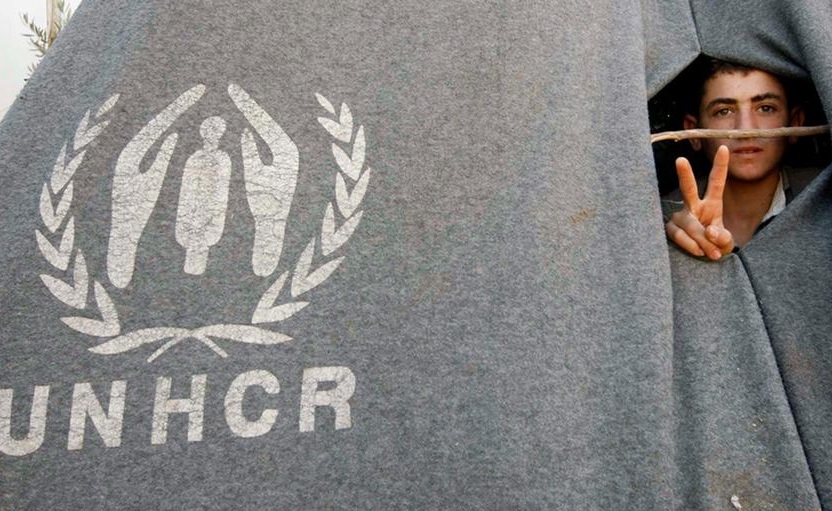
The United Nations High Commissioner for Refugees (UNHCR) defines the term refugee as follows:
A person who meets the criteria of the United Nations High Commissioner for Refugees can be placed under the protection of the United Nations, which is enforced by the UN High Commissioner for Refugees, regardless of whether they live in a country that has ratified the 1951 Convention or not.
Therefore, it can be said that the host government, even if it is not a party to the 1951 Convention, will still be committed to respecting the rights of refugees under the 1951 Convention.
By: Amin Mohammadirad September 29, 2015
Tags
Amin Mohammadirad Asylum Convention relating to the Status of Refugees Monthly magazine number 53 Monthly Peace Line Magazine Refugee The concept of asylum.