


People’s rule of religion or religious rule of people? / Daniel Mohammadzadeh
This is a caption
This is a caption
Daniel Mohammadzadeh
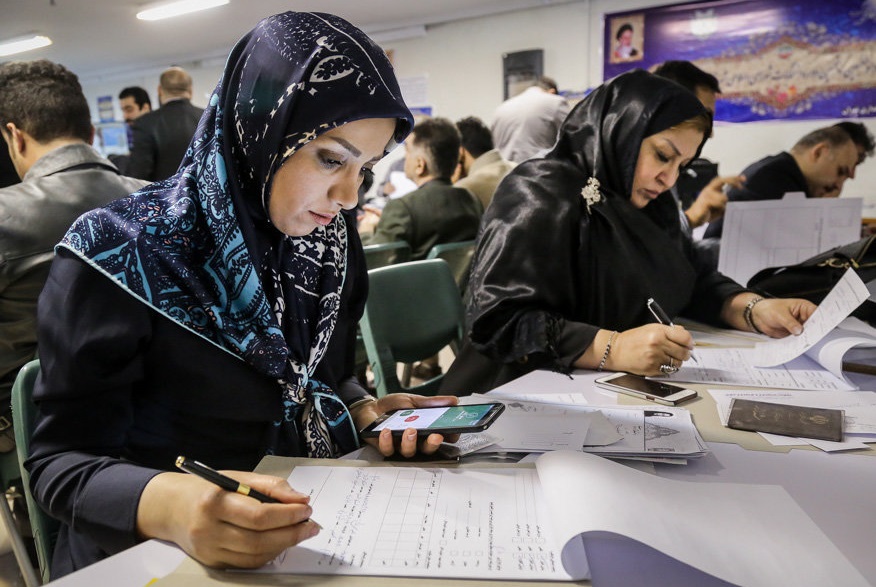
The fifth round of elections for Islamic city and village councils will be held simultaneously with the twelfth round of presidential elections in Iran on 19 May 2017. Although decades of political and religious negotiations have not yet resulted in women’s participation in presidential elections, since the formation of the reformist government, women in the country have made intelligent, meaningful and purposeful efforts to change the discourse of religious patriarchy and give power to the people.
In Iran, the rate of women’s participation in elections is higher than that of men. This means that, in comparison to men, a higher percentage of women vote in elections. However, despite the fact that women vote more than men, due to a series of structural discriminations against women, their presence in all levels of decision-making and political management is less than their population share. Despite the fact that Iranian women are considered to have a higher percentage and number of educated and professional women compared to other countries in the region and societies with a majority of Muslims, unfortunately, the percentage of women representatives in the parliament, councils, and high levels of political management in Iran is still very low. In all years after the revolution, only six women have been present in the Assembly of Experts and the level of deputy president and ministry. Among all representatives in all post-revolutionary parliaments, only three percent have been women. Women in current city and village councils also make up only three percent of
City and village councils are an unparalleled opportunity in the constitution to strengthen the presence of women in management positions. As a result of the implementation of the City and Village Councils Act during the reform period, a large number of women and men who previously had no influence in urban and rural management were able to establish their participation in the smallest institution of people’s rule in the country by being present in city and village councils. The formation of these councils also provided a great opportunity for women to enter other civic activities and have a more prominent presence in society. This presence also created a platform for the growth of women’s capabilities in various cultural, political, social, and economic fields. Many women who were elected in the first and second rounds of council elections later became council presidents, members of the council’s executive board, mayors, and high-ranking managers in municipalities. By establishing grassroots organizations, they also had a significant impact on the growth of voluntary activities among the people in their own cities and villages. Therefore
In the past election, twelve thousand women registered for the council elections, of which six thousand voted, meaning 50% of the women who registered voted. In fact, the council elections significantly increased the rate of women’s presence in managerial positions. In this period, approximately 17 thousand women registered for the council elections, and if, for example, only half of this number voted, we will witness the presence of almost eight thousand female managers in urban and rural areas, which creates a great opportunity for women to participate in managerial positions in a short period of time.
The increasing demand for female representatives has two main reasons. The first reason is that women make up a large stakeholder group in all cities and villages of the country, which practically makes up half of the country’s population. Members of this stakeholder group have needs and interests that do not necessarily align with those of men and are different. It is natural and clear that women themselves are more familiar with the demands and interests of this stakeholder group, can represent them better, and pursue them more honestly. For example, female representatives are more familiar with issues related to women, their economic, political, and social rights, demands related to pregnancy and motherhood, and women’s health and treatment, and have more motivation to pursue them compared to men. Essentially, the most important issue in democracy is this representation, and as long as half of the population does not have a fair and proportionate share of management and representation seats, democracy suffers greatly. A society that responds better to the needs and demands of
The second reason why women not only represent half of the citizens better, but also an increase in their percentage of representation is better for the overall decision-making structure and all citizens of that society in several ways. For example, multiple empirical studies on the political behavior and voting history of council and parliament representatives in different countries have shown that female representatives in positions and voting overall contribute more to social justice and welfare, democracy, peace, and improving the daily lives of people compared to male representatives, and their style of politics is more empathetic towards citizens. Additionally, female politicians and managers are less prone to various forms of corruption (including economic). On average, women have better communication skills (especially horizontal and network) and collective cooperation skills compared to men, and their attention to the common interests of citizens is greater than their personal ambitions and interests.
Until women, as half of the country’s population, do not have a serious presence in the process of development, achieving comprehensive and balanced development will not be possible. Many developed and developing countries have come to the conclusion in the 21st century that achieving development without considering women’s participation and creating equal opportunities for women in managerial positions is not possible. Most countries in the world, including those that have more cultural, social, and religious similarities with Iran, have been able to take effective steps towards comprehensive development by using a gender quota system.
No country in the world has been particularly successful in increasing women’s representation in assemblies, councils, and parties, except for those that have used gender quota as part of their strategy to create equal opportunities. For example, parties have said that at least 30 or 40 percent of our election list must be women or men, and neither gender should have less than one percent of representatives. In the parliament and councils, this gender quota can also be determined. Currently, 128 countries out of 196 countries in the world have implemented some form of gender quota. Examples of this can be seen in the experiences of governments in France, Afghanistan, Iraq, and Senegal.
In the last elections for the councils of France, the French government announced that it would allocate a 50% quota for women in the election lists of political parties as a condition for their participation in the elections. This positive gender discrimination is also ready to be implemented in the election laws of neighboring countries such as Afghanistan and Iraq, which are also countries bordering Iran. In Senegal, the government has been able to increase the representation of women in parliament to 42% by implementing gender quotas, which is even higher than many Western countries. Interestingly, in most societies with a Muslim majority, Islamic parties have been more successful in increasing the representation of women than secular parties, because they could easily use religious language to convince traditional and more religious segments of their societies to vote for women.
In Iran, political parties can also start allocating this gender quota in their electoral lists, and as a result, local council elections provide the best opportunity to initiate this process. In this round of local council elections, many active female politicians, including Fatemeh Rakei, Azar Mansouri, and Fakhrolsadat Mohtashami Pour, made remarkable efforts to secure a 50% quota for women in the reformist party lists. Although these efforts were unsuccessful in major cities and the quota was reduced to 30%, they had significant results in smaller towns and villages where local councils have less political influence. It is hoped that in the limited time remaining until election day, more men and women will support these 17,000 female candidates and with the strengthening of their election campaigns, we will witness more capable women being elected to local councils, resulting in a stronger presence of women in managerial positions.
The process of changing the discourse from religious patriarchy to religious democracy has been initiated by capable women in our country for more than a few decades. Now, the important question we must all ask ourselves is what our role as responsible citizens is in this process of change and where do we stand in this field? We must determine which side of this field we stand on and which we prefer: religious patriarchy or religious democracy?
 Created By: Admin
 April 23, 2017
Tags
City and village councils Danyal Mohammadzadeh Monthly Peace Line Magazine peace line