


Incompatibility of the mission of fighting corruption in the judiciary/ Champion Qanbari
This is a caption
This is a caption
Qahraman Ghanbari
It has been reported that the king entered the city in disguise and stopped at a bread seller’s stand to buy bread; the bread seller threw a black bread in front of the king. The king asked, “What kind of bread are you selling?” The bread seller replied, “It’s too expensive for you, unless you are the king.” The king immediately threw the bread seller into a burning oven and from then on, no one in Iran dared to sell low quality bread to customers.
This is my story that we have heard many times with a sense of regret and nostalgia, and its narrators compare the event to powerful kings such as Shah Abbas Safavi and Reza Shah Pahlavi. Similar to this story is a legend in which the king, butcher, and kebab maker are punished for their greed and the narrators, out of a sense of helplessness, lament the golden days and seek salvation from a savior – who they see as a defenseless prisoner in a spider’s web – to save them from the incurable economic corruption. This legend clearly shows the depth and history of institutionalized corruption in various ruling powers in Iran throughout history. Legends and stories are created because humans are incapable of creating ideal conditions in reality and seek refuge in the world of imagination to ease their endless pain and suffering. They use legends and stories to fulfill their desires and soothe their wounded souls and minds.
It is not necessary to analyze global statistics and rankings of economic corruption to understand that our country is among the top corrupt countries, alongside North Korea, Afghanistan, and Sudan. The reality is that we have all, in one way or another, been affected by this corruption in our lives in Iran. We have either been victims of this system or have been forced to adapt to survive. This corruption has infected and paralyzed all government and non-government institutions, and has even affected society as a whole and the moral fabric of our community. One of the institutions affected by this corruption is the judiciary. As the arbiter and executor of “government institutions,” it has the authority to punish and pardon, and plays a crucial role in either perpetuating or fighting economic corruption. It should be noted, however, that economic corruption leads to a chain of other corruptions; from government institutions such as the legislature and the military, to quasi-government institutions such as religious institutions and mass media, all are involved and responsible for
To familiarize the reader further, I will briefly mention some examples to better convey the main intention and purpose of the writer, which is to critique the performance or examine the approach of the judicial system towards economic corruption. Yashar Soltani, the managing director of the architecture news website, exposed the economic corruption of the Tehran municipality and its subsidiary under the management of Mohammad Bagher Ghalibaf. Later, during the presidential election campaign, Ghalibaf tried to present himself as an anti-corruption figure. (2) However, the result of this economic exposure was not an investigation, trial, or at the very least, accountability for the Tehran municipality and Ghalibaf himself. Instead, Yashar Soltani himself was arrested and detained by the municipality and Ghalibaf’s subordinate, Sardar Ghalibaf, under the order of the judicial system. In a heated argument during a meeting, the spokesperson of the Tehran City Council, who was
What is the purpose of all these Chinese introductions and reminders of examples that we have all heard multiple times? Is the writer also eager for a savior to come and throw the expensive baker into the oven and skewer the low-selling butcher so that the root of corruption is uprooted and the kingdom becomes a land of roses and nightingales? These are questions and desires that we may daily be frustrated and powerless to fulfill, like a thirsty person who longs for a mirage in the desert. But perhaps the treatment and confrontation of the economic corruption problem does not require throwing the baker into the oven, but rather requires understanding the conditions that have caused corruption and condemning it, so that the source of corruption can be identified and the main perpetrators, with the help of government power, throw the baker into the oven to divert people’s attention from the “cause” to the “effect”.
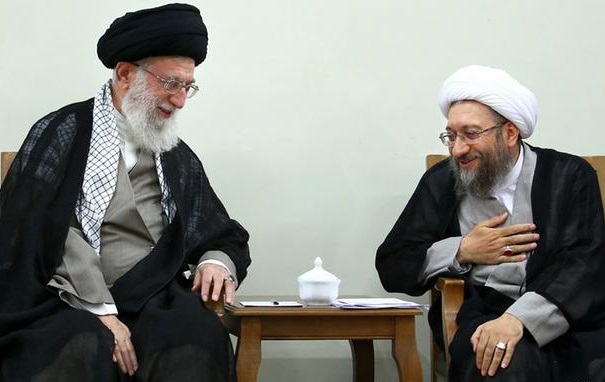
The main issue in the judicial power of the Islamic Republic of Iran is not the method of fighting or passing anti-corruption laws, but rather the issue is that every law and decision made to combat economic corruption is doomed to fail. The main issue here is the inconsistency between the claim of fighting corruption and the philosophy of the existence of the Islamic Republic of Iran. For example, in a meeting with the head and officials of the judicial power earlier this year, Mr. Khamenei said to them, “In a situation where the honor of the system is at risk, preserving the honor of the Islamic system is more important and prioritized.” This statement means that in dealing with judicial cases – which also include economic corruption – the interests of the system are placed above justice, truth, and in this case, the act of economic corruption. This means that the hands of the judicial and investigative system are open and they can, at any moment, and are obligated to, for the sake of the
The reality is that protecting the honor of the system, as Ayatollah Khomeini said, is one of the most important duties, and in this regard, even Islamic laws and regulations (whether we agree or disagree with them, whether they are good or bad) can be suspended, as they are the most essential and fundamental part of this system. This in itself gives the judiciary the power to turn a blind eye to corruption and economic corruption if it harms the honor and existence of the Islamic Republic of Iran. Or if the accused is in a position where their trial would damage the honor of the system, according to this principle, their trial must be suspended and justice and the fight against economic corruption must be put aside. The main issue here is that even a specific law with a particular clause to protect the system and its honor is not available to judges who are judging, and even the judiciary, in order to protect the existence and honor of the system, may use it. The hands of
A very important and fundamental point in the discussion of economic corruption is that most of those accused of economic corruption are themselves officials or employees of the Islamic Republic of Iran system, and firstly, their trial can easily be interpreted as a trial of the system itself. A system that is obligated to protect its honor and, according to the recommendation of the founder of the Islamic Republic, if protecting the system requires it, it can sometimes make a forbidden act permissible. In such circumstances, expecting the rule of law in the Islamic Republic shows little understanding of the ideological nature of the country’s judicial system. In other words, the judiciary, which is the main pillar of enforcing justice and combating economic corruption, is initially forced to disregard the fundamental principle of trial, which is that everyone is equal before the law, and even implementing laws that contradict reality is subject to the condition that the trial of the accused can benefit the preservation of the Islamic Republic of Iran system, and without any difference in the crime or criminal act,
The second issue is that the institution of power is inherently corrupt, and even if there are various forms of oversight by the people, non-governmental institutions, and governmental institutions, they may still participate in this corruption, even if the responsibility and duties are entrusted to innocent angels, after a short period of time. The ideological corruption and division of society into “revolutionary and pro-system” and “anti-system” causes the responsibility and control of oneself to be guaranteed, while non-self individuals do not even have the right to think about controlling their own affairs. The self is both the judge, the lawmaker, and the enforcer, and also the investigator and provider of security for capital and the people. They are the source of corruption, and corruption is essentially a privilege that is granted by the government based on their position and loyalty to the Islamic Republic of Iran, in order to reward their service. The judiciary is also the most important institution in this regard, with its primary duty being to protect the
I would like to draw the reader’s attention to the fact that in some Western countries, if someone discovers economic corruption (whether they are a journalist, private investigator, government official, or ordinary citizen), the government and judiciary are obligated to ensure the safety of the whistleblower. Additionally, a percentage of the recovered funds is often given to the whistleblower as a reward for their efforts in uncovering the corruption. However, in our country, anyone who exposes corruption must first prove that they are not against the revolution and that their intention in exposing corruption is not to bring shame to the system or give ammunition to its opponents. The reality is that proving this can be difficult for the loyal supporters of the system, as we are faced with a systematic corruption that even the term “mafia” cannot fully describe. The perpetrators of these actions are often connected to each other and support each other like a chain. In such circumstances, it is possible for the whistleblower to be silenced and fall into the depths of despair,
The judicial power in Iran, due to its strong ideological view on the concept of power and the ruling system in Iran, will never be able to take a step towards fighting corruption. In such systems, sometimes it is possible to sacrifice a baker or a butcher to pretend to the people that the government is determined to eradicate corruption. However, economic corruption cannot be eliminated by sacrificing a baker or cutting off the hands of thieves, as long as the corrupt system and its nurturers exist. Fighting this type of corruption requires at least the cooperation of the judicial system, courts, and judges, who are not concerned with anything other than discovering the truth based on evidence presented to the court, and ensuring that the complainant and the accused are treated fairly and impartially in order to determine their loyalty to the system and the government. But does the judicial power of the Islamic Republic of Iran have the potential to make judgments, especially in economic cases, based on evidence presented to the court rather than the interests of the
Sources:
Report on Iran’s ranking in the world’s economic corruption, ISNA, 18 Ordibehesht 1396.
Statement of Klaya Yashar Sultan regarding the charges leading to his arrest, ILNA, September 18, 2016.
Controversy in Tehran City Council over the arrest of Yashar Soltani, Khabar Online, 6 Mehr month 1395.
Statements of the Tehran Prosecutor General about Mahmoud Sadeghi, Tasnim News Agency, 8 December 2016.
Video of former parliament representative Elias Naderan’s statements about the country’s pharmaceutical mafia, Fars News Agency, 26 Tir 1396.
Meeting of the head and officials of the judiciary with the leader of the revolution, Ayatollah Khamenei, on the website of Ayatollah Khamenei, July 3, 2017.
Article 7 of the Universal Declaration of Human Rights, and the website of the United Nations.
Ayatollah Khomeini’s perspective for preserving the Islamic system, the website of Student Questioning (affiliated with the leadership institution).
 Created By: Ghahraman Ghanbari
 July 26, 2017
Tags
فساد corruption Judicial system Monthly Peace Line Magazine peace line Qahraman Ganbari