


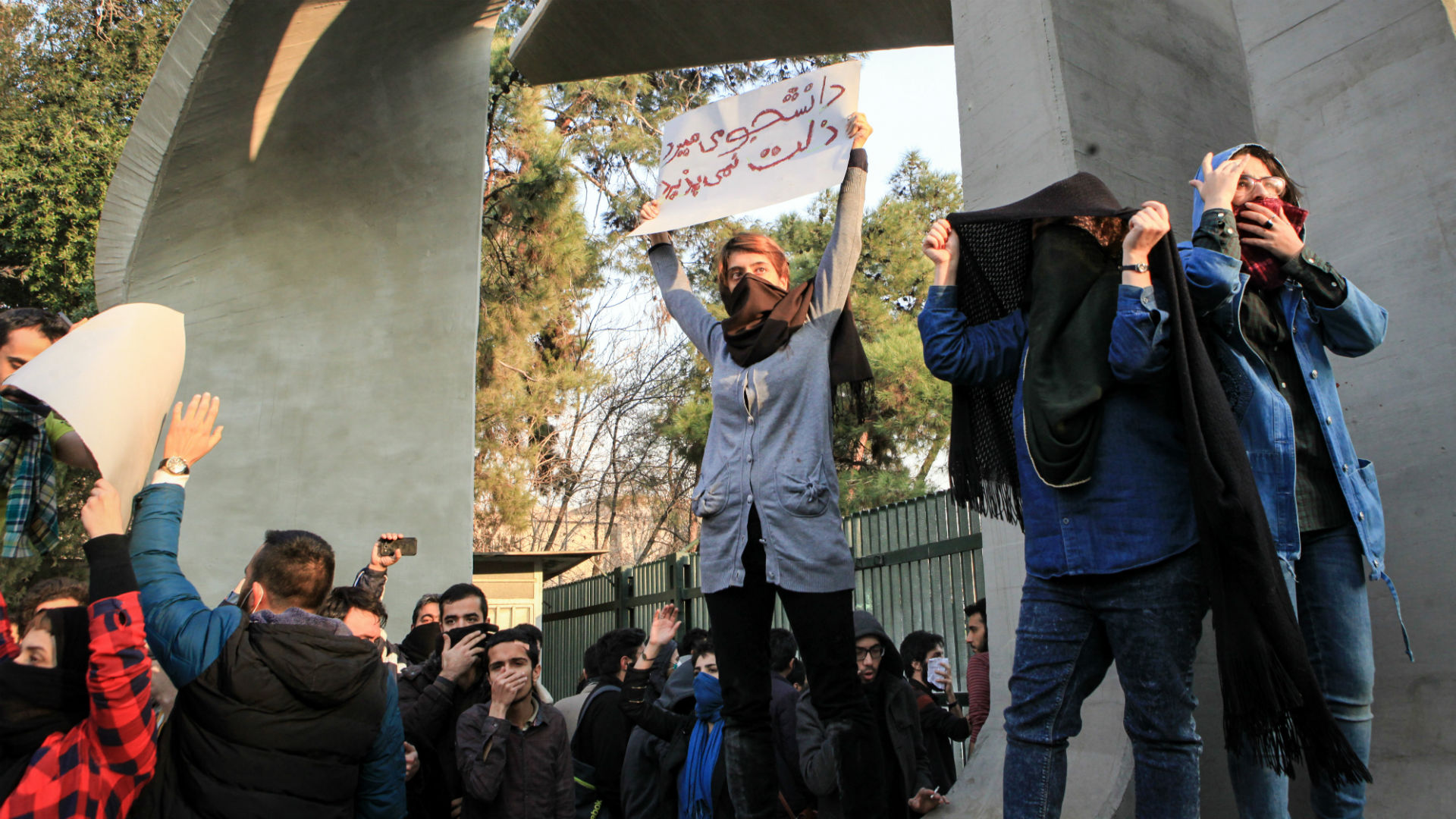
The Student Movement of the 1990s; Carrying the Giants on Their Shoulders and Learning from History in the Style of Luqman/ Ali Ajami.
“این عکس یک تصویر نمادین است.”
“This picture is a symbolic image.”
Ali Ajami
Two years ago, a young friend asked why you, as student activists of the 1980s, do not document your experiences for the current generation of the student movement. The only answer that came to my mind at that moment was that I do not know about others, but in my opinion, the current generation of activists can not only learn from us, but also from the entire history of the left, only in the manner of Luqman. And because I gave an answer in this manner, I was forced to refer to Saadi’s story in the Gulistan, which says: “They asked Luqman, from whom did you learn manners? He replied, from those who lacked manners; whatever I disliked about them, I refrained from doing.” In summary, I said that the student movement of the 1990s can learn more from the mistakes of the previous generation in a negative way and refrain from them, in order to achieve positive results.
Although this answer was not meant as a joke to avoid responsibility and end the conversation, it also had traces of reality; traces that have now become more apparent after everyone’s familiarity with the activists of this generation at the December 16th ceremony in 1396, their connection to the nationwide protests in December, and especially after their preemptive arrests during the protests.
The political tendencies of student-activists in the 1990s were very diverse and until now, they did not have any importance in defining themselves. They did not declare themselves as communist, socialist, or leftists in any media or statement – and one of their differences with their predecessors is also in this regard. However, their concerns, demands, and the outcome of their activities have clearly been leftist and in defense of the working class and the oppressed; they did not take on any slogans or ideals that they could not live up to.
One of the most important characteristics of the political activity of these students, who were often union activists, was the fact that they initiated their protests from their own tangible conditions, problems, and demands; problems that were not specific to them and this fact connected them to other groups in society. In fact, the protests of these students started from their concerns in the university environment, such as tuition increases, dormitory fees, academic years, and controlling female students, but this increasing commercialization of educational spaces was not something that only happened in universities, and its immediate result was something that had started under the name of privatization in all areas of Iranian society years ago. The capitalists of the Islamic Republic began to take back the privileges that the revolutionary vanguard had brought for the masses, in all areas including education. The acceleration of this process, which is linked to global neoliberalism on a larger scale, reached its peak in the years after the nuclear agreement and the disastrous effects became more apparent than ever.

Previous generations of left-wing activists were motivated by books more than the actual conditions of society. They were familiar with the history and tradition of the left in the world and Iran, and understood it better than the actual conditions in Iran. However, the situation was the opposite for the students of the 1990s. It wasn’t that they didn’t read books, but rather that they were more influenced by the actual conditions that led them to become involved in trade union activities. And of course, they soon realized that every issue – including trade union issues – is political, especially in Iran.
During the years when the effects of privatization were felt, students faced economic and professional problems. Alongside the inactivity and dissolution of organizations such as the Islamic Association, which were initially reformist and later supported the Rouhani government, and the lack of permission for independent organizations, the active students of the 90s turned towards trade unions. Compared to the ideological Basij and Islamic Association, which were directly elected by students, this organization had the law and, most importantly, the trust and support of the student body, and its suppression did not allow for independent political activities.
The activity of this generation started almost from 1392. Finding a starting point for a movement is usually a futile and controversial task, but my attention was drawn to the presence of strong leftist tendencies and connections with other social movements and the direct targeting of privatization in university guild councils, after the December 7th, 1394 ceremony and during the winter of 94. More than 30 university guild councils across the country issued a statement in protest of the commercialization of education, which was also published in domestic Iranian newspapers and news agencies at the time. As far as I know, the author of the statement was also one of those who were arrested during the December protests and preemptive detentions. The statement began by recalling three of the most shining and forgotten principles of the 1957 Constitution, which were completely contrary to privatization: the 19th principle regarding the elimination of any ethnic, racial, and linguistic discrimination, the 30th principle regarding free education, and the
This statement addressed not only the criticism of local selection and commercialization of universities, but also the privatization of secondary education. It pointed out that with the current situation of non-governmental schools and private institutions, the “privileged” class of society has the opportunity to enter higher levels of education, while deprived areas continue to be excluded. This reference could immediately link these students to the teachers’ movement, which has been active for a long time with similar concerns.
Trade unions in this statement protested against the warning given in a predictive manner that the continuation of these plans would lead to many cultural, political, social, and security problems for the country, which undoubtedly the first sparks of it will be seen in universities. They asked the government to start the process of eliminating deprivation from underprivileged areas instead of shirking their social responsibilities with determination and firmness, recognize the right to choose a place of study, acknowledge the eradication of concentration from educational facilities and equal educational opportunities, and consider the expansion of higher education facilities to the extent of the country’s self-sufficiency as their duty, as stated in the Constitution, and prevent this destructive wave of discrimination, privatization, and commercialization of education.

Of course, these activities did not go unnoticed by the security forces, especially in university branches. Some trade unions were dissolved or prevented from holding elections. Active students in various universities were summoned, and in fact, dealing with these students had started long before their preventive detention in December. The nationwide protests only strengthened the determination of the security forces to suppress these students with force.
The tireless activity of students, drafting regulations, resistance against commercialization of educational services, and organizing professional activities continued alongside summonses and arrests by security institutions. However, perhaps the turning point was December 16, 2016, when students across the country issued a widespread statement protesting class and gender discrimination in universities, increasing commercialization of higher education, and the security atmosphere in universities. This statement was signed by four thousand students and the guild council of over thirty universities, as well as several academic and cultural associations of universities. Half of the drafters of this statement were students who were summoned or arrested during the nationwide protests in December.
The students who emerged from these activities were the ones who organized a more political event at the university on December 7, 2017, in celebration of Student Day. They shouted slogans in solidarity with other social movements, workers, women, teachers, political prisoners, and porters. They also chanted “Worker, Student, Unity Unity” and “Bread, Work, Freedom” in front of Tehran University at the beginning of the nationwide protests. These symbolic slogans ultimately led to the security forces’ aggressive response and their determination to suppress them, resulting in preemptive arrests.
But unfortunately, for security institutions, these arrests were unable and will not be able to prevent anything. The student movement of the 90s was linked to the demands of the working class, and the historic moment when protesters in Revolution Street and students on this side of the barricades chanted “bread, work, freedom” and “worker, student, unity” was only an outward manifestation of this link. Evidence of this link was also seen in the fact that most of these student activists emerged victorious from detention and interrogation, and with the strength derived from this link and the prevailing motivation in society, they immediately returned to the field of activism as heroes after the nationwide protests.
For them, and of course all political and civil activists, workers, and women, everything has just begun. The space for activity and, inevitably, the methods of activity before and after December 1996 will be different and certainly there is room for discussion and conversation, but up until this point, these students have not only learned from the mistakes of the previous generation of the student movement, but also from the overall mistakes of the history of political activity on the left and right in Iran, whether through the method of Luqman or by standing on the shoulders of giants, which is one of my favorite phrases and I like to use it in any inappropriate or appropriate situation, especially here after talking so much about them, I have no other solution but to give some credit to our predecessors. Apparently, Hegel, Newton, or another great figure has written something along the lines of if I have seen further, it is by standing on the shoulders of giants. Perhaps this is the most important thing
 By: Ali Ajami
 March 20, 2018
Tags
Left students Nationwide protests in December peace line Preventive detention Student movement