


Struggle and Resistance; Signs of Understanding in Perseverance / Javad Lal Mohammad
This is a caption.[/caption]
این یک عنوان است.
This is a caption.
Javad Lal Mohammad
“Strike against nationalist fundamentalists”
It was predictable. This weakness of management and unorthodox and law-evading policies, which were accompanied by the cloak of leadership and the aura of holiness, provoked suspicion in the eyes of the people. If there was no disobedience, it left behind a sense of bewilderment.
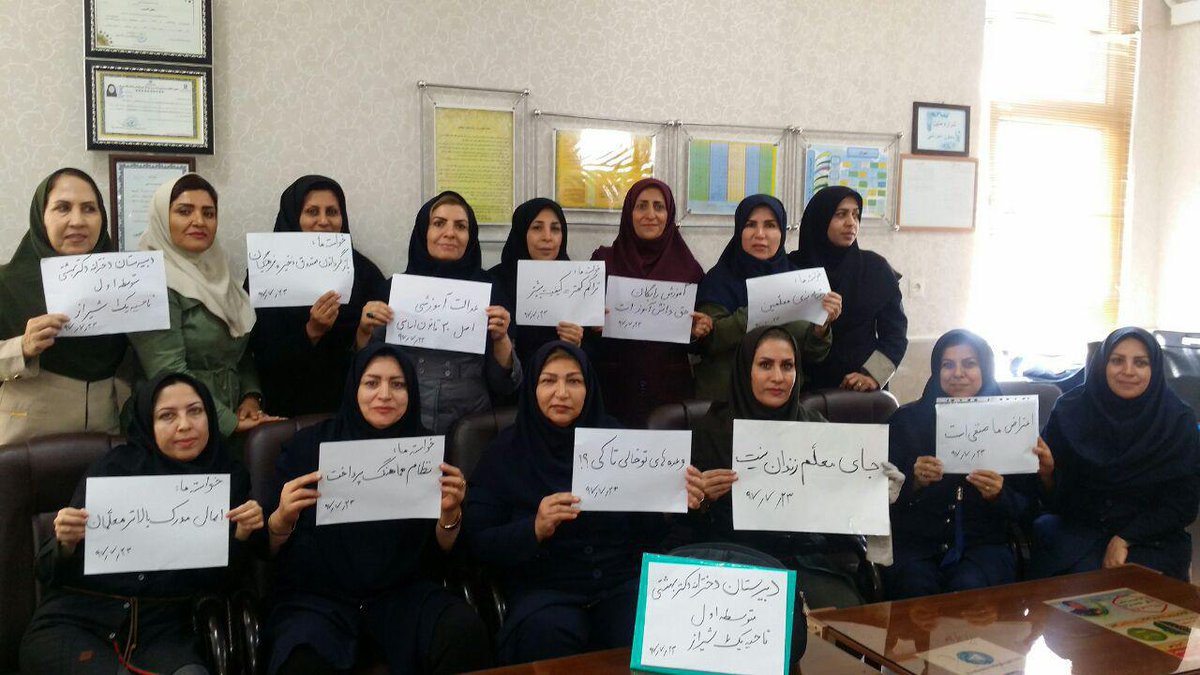
The strike of truck drivers, merchants, workers, farmers, and the protest of teachers, which became the voice of the world, was neither a riot nor a disturbance; rather, it was a reflection of the sensitivity of different social classes who, in this dusty atmosphere, with open eyes, were observing the bitter days and difficult future of their compatriots. And because their demands and democratic discussions were met with unanswered and unsatisfactory responses from the Iranian government officials, they changed their approach and directed their demands towards a general strike.
The reminder of the two-decade record of governance in Iran, is like a heavy cloud over the heart of every Iranian citizen and makes their conversation full of pain. The story of critics, interpreters, teachers, writers, journalists, beggars, environmentalists, civil activists, human rights activists, and men and women who, in protest against the lack of personal freedoms, imposition of a single belief, and mandatory dress code, opened their mouths in protest and were caught in the trap of espionage and secret writing, and experienced prison with incomplete and inadequate reports, is not just about today and yesterday.
Farmers, merchants, and workers who have been affected by sanctions, have had their production and businesses crippled, and the lack of proper diplomatic relations has paralyzed their economy and left their youth bewildered and unemployed.
Retirees and men and women who have deposited their retirement bread with the permission of the government, in the hope of creating job opportunities for the unemployed in their country, have invested in banks and private institutions, and the owners of these institutions have taken their hands to the safe box and entrusted themselves to the corridors of the judiciary.
Writers and journalists who, in a hundred languages, assist in the management and organization of the country and its system, have their news and opinions window closed by the owners of the Nasimah voice, who consider themselves the successors of this position. Their work is censored and their news distorted, and the events and incidents reported by them are turned upside down and twisted.
The brave warriors who, with the grace of Parsa, have burned their hearts, sewn their lips, shed their blood, and torn their garments, their path and truth remain unwavering and unblemished. They await the day when, in this time of injustice, their cries reach the heavens and the fire of divine retribution comes to avenge their blood.
Civil activists, human rights defenders, and environmental advocates who, in this turbulent era, open their lips to speak and talk about the right to protest, strike, criticize, social security, and environmental crisis, are accused of being spies and their burnt chests are attached to the victory of the rulers.
The demand for affordable education among the masses remains a pressing issue in universities, where neither the children of ministers, nor the elites in power under the Islamic regime, nor those who use their wealth and connections to secure their desired education, are included. Instead, it is a population from the streets, tired of the injustices of life, who have turned to the government for support in hopes of receiving free higher education as a basic right. They do not want to resort to migration in search of a better life and a peaceful future.
Or parents who are worried and, as Dr. Mohammad Fazeli says, feel that their children’s lives are being held hostage by education from the age of six or seven until halfway through their youth. They are forced to read books that do not foster creativity, do not inspire learning, and do not teach any skills for living. They have no support for their religion and no pen to write with. They do not learn a profession and their artistic abilities are destroyed. They are hostages who have no control over themselves and act under the orders of their captors, waiting helplessly for the moment of liberation and the end of this period, to be freed from all of this.
Oh God! It is through love and attachment that social movements take shape in the form of strikes, regardless of interests and conflicts between different social classes and groups. It unites teachers, students, parents, university students, workers, merchants, farmers, and truck drivers in breaking the chains of oppression and opening up a space for critical thinking. This will create a shift in power and challenge the rigid and ideological structure of the government, which seeks to exploit their resources and manipulate their beliefs.
If today we are witnessing strikes and protests, it is a sudden realization of the strangeness that people have felt in the past two decades and are now trying to stop this gradual death and create a course to prevent the pulse of society from stopping. If the teachers of the country turned their silent protests – which were the most effective language for the government – into a protest, it was not to withdraw from work, but to passively undermine the intentions of the ruling power and the fear of diseases that had affected society, economy and culture, and to adopt a solution to control the increasing social damages and prevent an epidemic from spreading, and provide the grounds for changing policies through expert decisions so that, God willing, in the near future we will witness a society where its policies are community-oriented and its leadership is civil.
Note:
Fadeli, Mahmoud, children who are taken hostage, Sarmayesh News, 7th of Dey month, 1396.
 Created By: Javad Lal Mohammadi
 October 23, 2018
Tags
"Teachers fortify" Javad Lal Mohammad Monthly Peace Line Magazine peace line Truck drivers' strike