


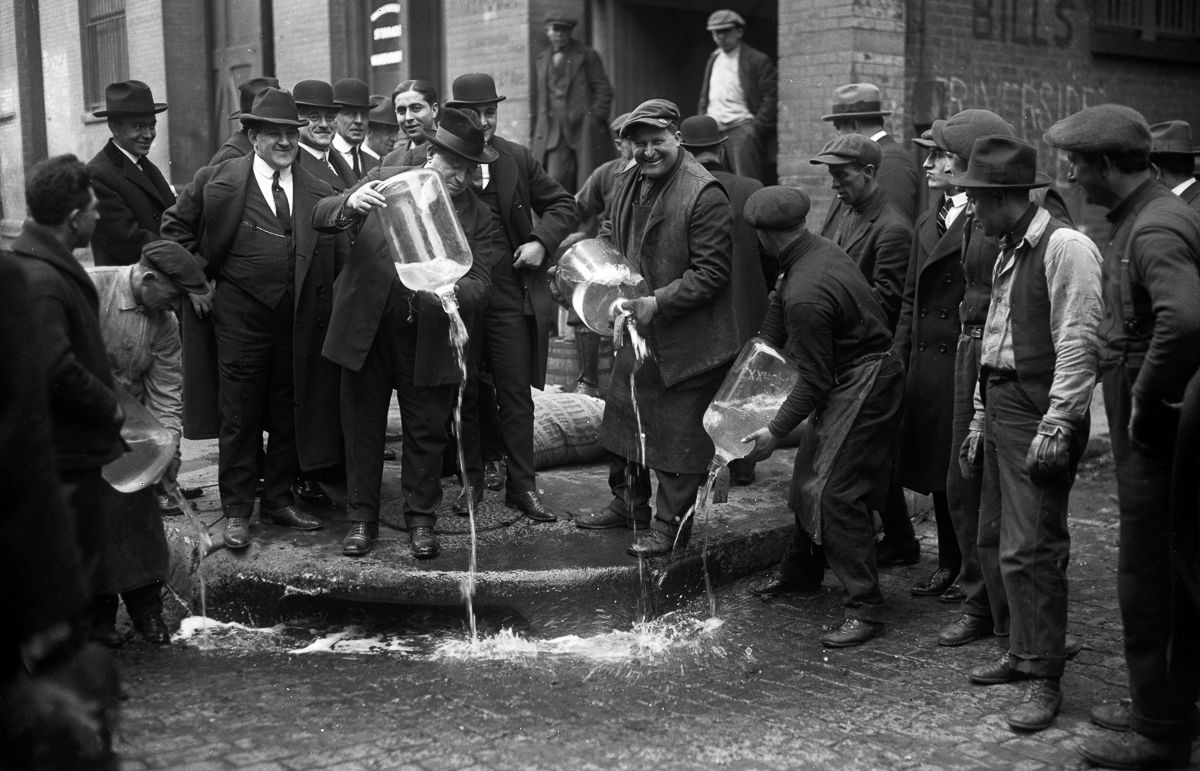
Prohibition of alcohol consumption, a danger to society/ Navid Mohabi
This is a caption
This is a caption.
Nouid Mahbobi
The prohibition movement in America began in the early 19th century, when Americans became concerned about the negative effects of alcohol consumption in society and started forming anti-alcohol movements. The “Temperance Movement,” influenced by the religious teachings of Methodism, was the first group to rise against alcohol consumption in society. After that, the “Prohibition Party” was founded with the goal of supporting candidates who were in favor of banning alcohol. Another active non-profit organization in this field was the “Anti-Saloon League,” which was able to successfully organize and gain the support of Christian religious leaders across the country. Gradually, by the end of the 19th century, these groups became a powerful political force and were able to finally pass the 18th Amendment to the US Constitution, which banned the production, sale, or transportation of alcoholic beverages. Despite the opposition of the then-president, Congress voted to establish an enforcement unit within the US Treasury Department to enforce this prohibition. In fact
After the implementation of this law, it was not long before organized crimes related to the sale and distribution of alcoholic beverages were included throughout America. Cartels and drug traffickers were able to create a vast empire in the illegal trade of alcohol and pocket immense wealth. Prior to the prohibition, the trade of selling and distributing alcohol was carried out by ordinary citizens and small retailers, but after the legal ban, a huge economic opportunity emerged in the black market for alcohol sales, which the gangsters and smugglers took full advantage of. Every major city had its own special mafia, but among the American mafia groups, Al Capone is the most famous, who was able to pocket over $100 million in just two years through the sale and distribution of alcoholic beverages by his mafia gang. Competition among mafia groups led to clashes, killings, and the elimination of rivals, which significantly reduced the level of security for citizens in cities.
Al Capone, thanks to his ill-gotten wealth, was able to bribe some local politicians and police forces, gaining their support in pursuing his illegal goals. This even led to fraud in favor of corrupt candidates, including mayors in some cities, during local elections.
Local and federal authorities quickly realized that the implementation of the alcohol ban resulted in a loss of tax revenue, which in turn fell into the hands of criminal groups who used the illicit funds for various illegal activities. Additionally, in some larger urban areas, places for consuming alcohol were established without regard for law enforcement, as the federal government was unable to address the widespread issue.
Although Article 18 of the Constitution had banned the production, sale, and transportation of alcoholic beverages, consumption of alcohol at home was not prohibited. As a result, many people started making their own drinks at home and some small shops were formed secretly by individuals, leading to the production of low-quality and unhealthy drinks. Among them, wealthier individuals could find a way to obtain higher quality drinks, but generally, people from lower classes fell victim to unhealthy and poisonous drinks. During the 13-year period of alcohol prohibition, more than 10,000 people in America lost their lives due to poisoning.
The prohibition of alcohol in the United States lasted for 13 years, from January 16, 1920 to December 5, 1933, and became one of the most famous periods in American history. While the main goal of this program was to eliminate alcohol-producing companies and stores and reduce alcohol consumption in society, it ultimately led to unforeseen social problems. Public opinion in America received that the prohibition of alcohol only allowed criminal groups to access millions of dollars in profits and increased crime and violence. The money that the federal government received from alcohol sales taxes and spent for the public welfare was now in the hands of illegal alcohol groups and sellers, with no control over the production of beverages for health and safety. Americans were forced to buy alcohol from the black market instead of legal and safe stores. Eventually, due to these problems, movements were formed in favor of lifting the alcohol prohibition, and with the election of Franklin Roosevelt – who was elected on the platform of lifting the prohibition – the
Nowadays, Americans consider this twelve-year plan as a failed social and political experiment, which, although carried out with the approval of the majority of public opinion in America, was not necessarily beneficial for the health of society. This issue also reinforced the belief that government intervention in the personal lives of citizens will have negative consequences, and if there is to be any reform in the negative effects of alcohol consumption, it must be based on non-coercion and increasing awareness and individual responsibility.
Currently, 19 countries with a majority Muslim population, including Iran, enforce a ban on alcohol. During the 1957 revolution in Iran, there were multiple attacks on liquor stores and alcohol sellers, indicating a negative view of alcohol consumption in society. Later, this issue became a law in the new government. According to Iranian laws, if a person is caught drinking alcohol for the first and second time, they will receive 80 lashes, and for the third time, they will be sentenced to death. Despite these laws, alcohol consumption among Iranians is not uncommon and occasionally, there are reports of deaths caused by alcohol consumption. In late Mehr month of this year, it was reported that more than 397 people in the Alborz province were poisoned within a month, resulting in 28 deaths, 5 cases of complete blindness, and many others suffering from kidney problems. (1) In another news, 28 people in Bandar Abbas were poisoned by unhealthy alcohol, resulting in the death
Notes:
Consumers of poisoned drinks may gradually become blind, ISNA, October 21, 2018.
Poisoning and death of 14 Bandar Abbas residents due to alcohol consumption, Khabar Online, 5 October 2018.
Picture of Getty Image
 Created By: Navid Mohebbi
 October 23, 2018
Tags
Al Capone Alcohol ban Alcoholic beverages Drinking wine Monthly Peace Line Magazine Navid Mahbobi peace line ماهنامه خط صلح ماهنامه خط صلح