


“Protest Generation; A Brief Look at the Nature and Function of the Student Movement / Mehdi Hamidi Shafiq”
This is a picture of a flower.
Mehdi Hamidi Shafiq
With the end of World War II, the dreams of intellectuals, mostly leftists, for the realization of socialism on a global level are fading. They realize that, contrary to Marx’s predictions, the working class does not possess revolutionary characteristics and cannot be relied upon. Despite relative prosperity and democratic systems, and the emergence of a “worker aristocracy,” workers have not united against the bourgeoisie but instead have become complicit and supportive of existing political systems. During this time, news coming out of the iron curtain of the Soviet Union disappoints left-leaning intellectuals even more. They come to understand that the power struggles in the Soviet Union have nothing to do with the true ideas of Marx. The news of mass killings, organized massacres of ordinary people, suppression of critics and opponents, and political purges by Stalin in show trials deals a devastating blow to the legitimacy and credibility of left-wing ideas on an international scale. Left-leaning intellectuals, who once saw the Soviet Union as the Mecca of their hopes
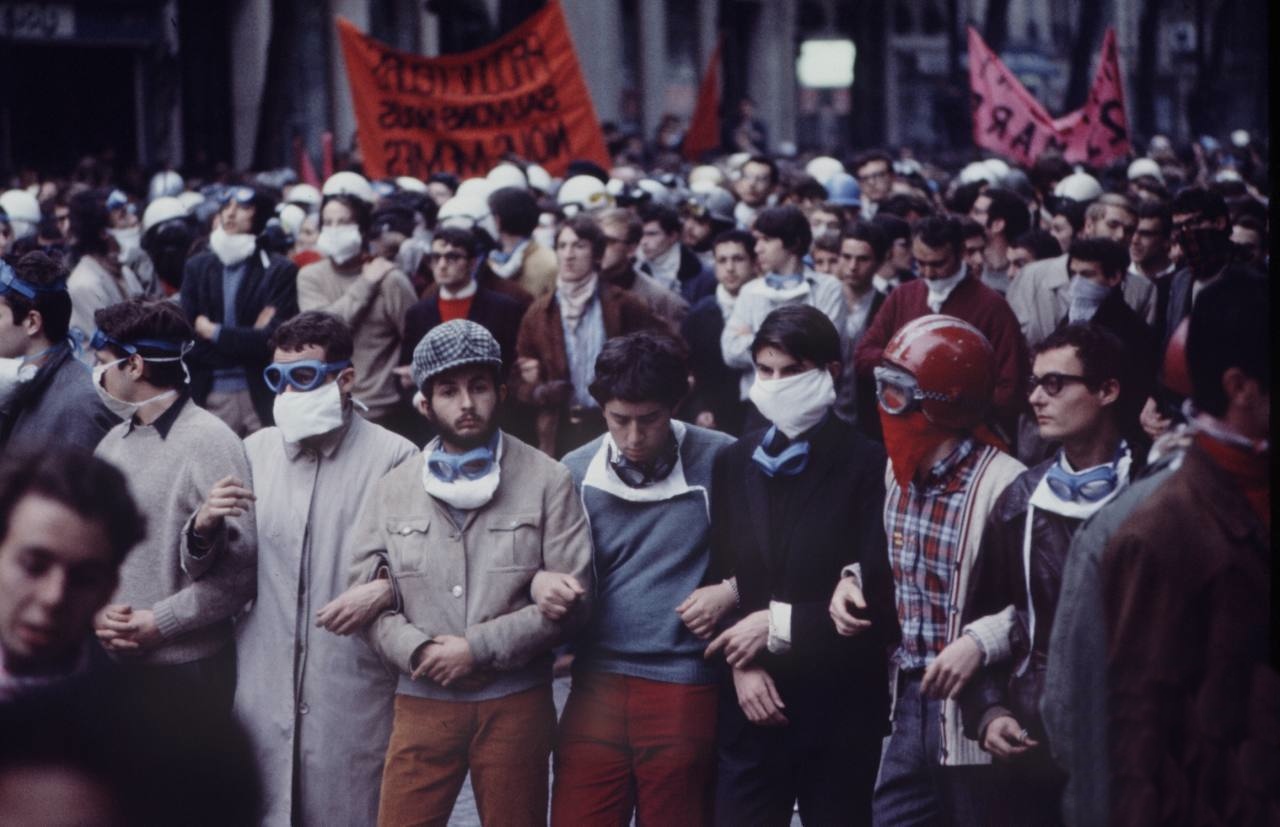
One of the most important issues in the reconstruction of Marx’s thought was the absence of the revolutionary factor. As the new social-political order weakened the power of the working class and after World War II, with the emergence of the middle class, all of Marx’s predictions were proven wrong. In these circumstances, events in France in 1968 sparked a glimmer of hope in the hearts of some of these leftist intellectuals. They witnessed a new type of uprising that could bring the left out of crisis. The French student movement of 1968 marked the beginning of new social movements that introduced the middle class as agents of change. Among the Frankfurt School intellectuals, the most optimistic view of the student movement comes from Herbert Marcuse. While Theodor Adorno and Max Horkheimer, the first generation of Frankfurt School intellectuals, criticize the young generation’s pessimism, apathy, and rebelliousness, Marcuse sees them as the catalyst and catalyst for revolution and actively participates in directing and leading
According to Habermas, students can fulfill the important duty of compensating for the suppression of critical opinions by the media, political parties, and government, due to the lack of direct influence of economic interest groups on them. In his view, the roots of the student movement are social-psychological, not economic. Contrary to past anti-authoritarian struggles, Habermas believes that the student movement is not fighting for a larger share of wealth, but rather protesting against the concept of privilege and achievements in capitalist society. The issues that concern the student movement, according to Habermas, include the decline of genuine democratic discourse and the role of monopolistic media in keeping the general public unaware and gullible, university issues and reforms, and political suppression in the Third World. In Habermas’ view, students should assert their right to participate in university administration by introducing political issues into the educational environment, while simultaneously fighting against the instrumentalization of education as a means of training social elites
Habermas refers to new methods of protest in regards to the Habermasian approach: non-violent resistance, questioning established and accepted topics through popular culture (symbolic action), and the specific behavior of a generation in attacking the established system. Habermas sees one of the tasks of the university as shaping political consciousness. He believes that in a period of numerous generations of students, without any planned political activity, studying political books, without political education, without interference in political matters, without presence or activity in student political organizations, and solely due to being present at the university, they have developed a political mindset. He also distinguishes between opinion and action, stating: “Perhaps the university is not the place for making political decisions, but in my opinion, it is a very desirable and suitable place for discussing and debating political issues and topics.” Habermas believes that there are conflicts facing the student movement, and these conflicts, in his view, include: tensions between theory and action
“When young people and students see, even in the most progressive societies, that their human dignity and freedom are in the hands of a small group of influential individuals who, against logical and scientific reasoning, are inclined to preserve outdated and successful systems in this regard, they become doubtful about the legitimacy of the previous generation’s way of thinking and acting. As a result, they feel deceived and defeated, and resort to rebellion and disobedience in order to save themselves from this situation. This is exactly what French students did in 1968 against the authoritarian and power-hungry regime of General de Gaulle, occupying the streets of France with the slogan “Be reasonable, demand the impossible.” However, in addition to this reason, we should not overlook the psychological and emotional factors that contributed to the student movement. In developed industrial societies where individuals’ success is dependent on constant competition and victory, young people experience a kind of fear and anxiety about the future, as well as feelings of loneliness and aimlessness,
The student movement in industrialized and developed countries, despite all explicit and obvious opposition to the capitalist system, was not a complete denial and rejection of this society and culture. Although it appeared to be so, in reality, the root of their rebellious and violent reactions reflected the contradictions and social conflicts, human crises, and social crises that resulted from it. Just as the psychological roots of the student movement can be justified by the pressure on this group and their rebellious spirit of youth. Therefore, student movements cannot be described based on a revolutionary ideology, but rather they should be seen as representatives of a “protesting generation”. In the rapid changes and complex contradictions of industrial societies, the power relationship with the younger generation has become crisis-ridden; therefore, the student movement in Western societies should be seen as a reaction and response to this social injustice and power.
It is possible that the critical political behavior of young people may appear fanciful, aggressive, irrational, immature, or even negative and aimless. But whatever it is, it forces the elders to reconsider their habits and ways of acting, which they personally and voluntarily never doubted their worth and credibility. Student activists, by creating awareness and a sense of duty and responsibility, pursue the realization of ideals such as justice, equality, and freedom. Despite the fact that students cannot be considered a separate class and their presence in university is temporary, they can act as a powerful movement in times of crisis; because the university is an intellectual institution and relationships and ideas spread rapidly within it. The student lifestyle also makes them receptive to anti-establishment, freedom-seeking, and justice-seeking ideas. However, the formation of a student movement requires suitable political, social, and economic conditions for social mobilization; if this platform is provided, without a doubt, the student movement will be one of the main players in the civil
Although the student movement during the 1960s and 1970s was one of the main pillars of anti-system and radical movements throughout Europe and America, this comet soon changed and disappeared from the sky of social and political developments. In Europe, especially in France, Germany, and Italy, radical and leftist student movements took steps towards armed struggle. In Italy, the group “Red Brigades,” which was a Marxist-Leninist group, emerged from the radical and leftist student movement and for decades influenced the political atmosphere of Italy with its armed operations. In Germany, the group “Red Army Faction,” also known as the Baader-Meinhof Group, was the most prominent armed militia group emerging from the radical student movements. In America, the student movement in the 1960s and 1970s collaborated with the anti-war movement, civil rights movement, and women’s movement, and although it did not resort to armed struggle, it played a significant role in radicalizing
 By: Mehdi Hamidi Shafiq
 November 22, 2018
Tags
May 68 Mehdi Hamidi Shafiq Monthly Peace Line Magazine peace line Student movement ماهنامه خط صلح