


Examining and criticizing the gender stereotype of men as providers and protectors/Mahmoud Harifi.
This is a caption.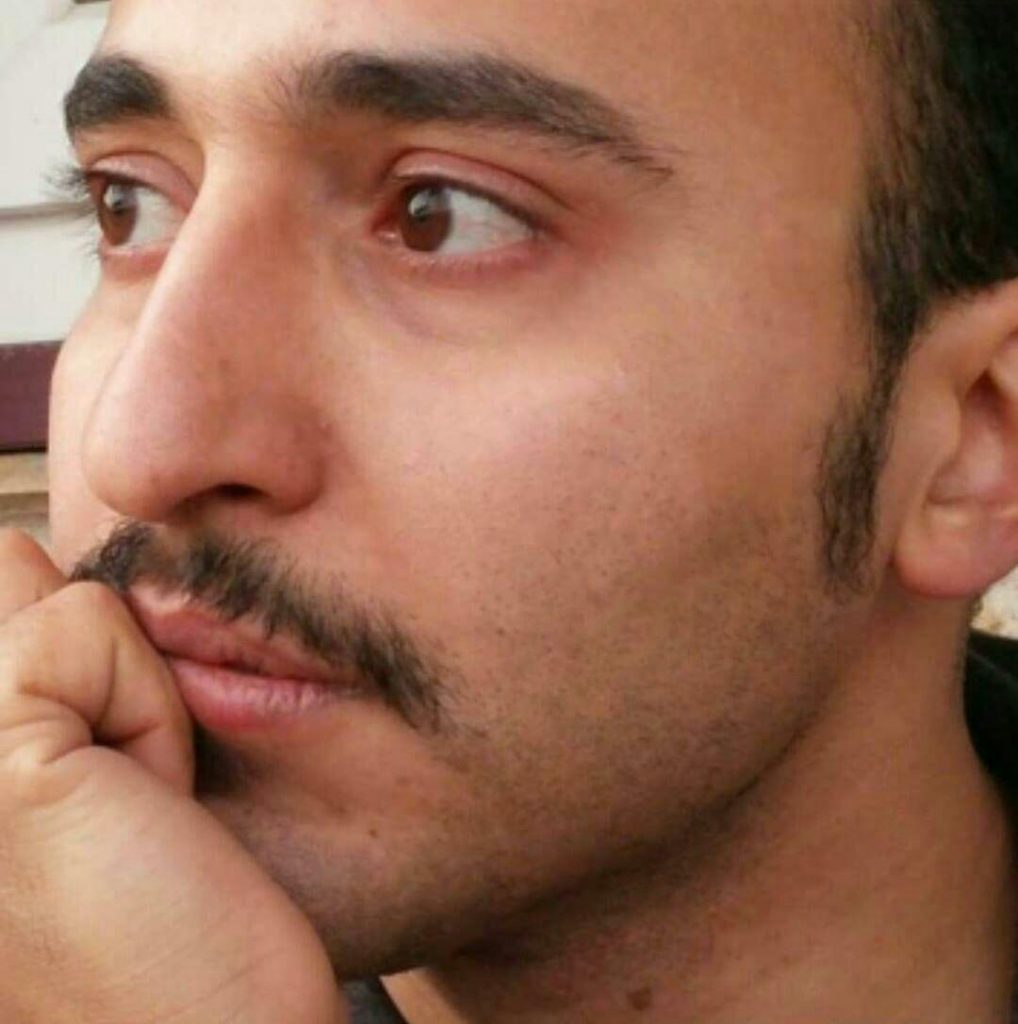 Mahmoud Harifi
One of the most important gender stereotypes that has been left to men since ancient times is that a man must always be a “provider”. A provider of money, security, and life necessities.
In previous generations and throughout history, the death and casualties of men in consecutive wars, the breaking of men’s backs under difficult occupations, and the sacrifice of men for the preservation of their families, has been a necessity. The current system of modern societies provides an important part of security for women and children and offers low-risk occupations for women, while in ancient societies, all of these roles (security and economic support) were the responsibility of men. Therefore, supporting men has been a meaningless term! Because men were supposed to be their own supporters, so who would want to support them? There was no one to fulfill this role!
In modern societies today, the role of support for men falls on the governments. Although in the same government, the primary role of protecting lives falls on the military forces, which are predominantly made up of men, and even the majority of taxes are paid by men, men do not have a direct role in protecting financial and physical security. Decision-making is the responsibility of governments and parliaments. While the role of supporting families falls on governments and women’s employment has greatly increased, the traditional view of men still remains. Men are still seen as consumers and there is no support for men who have not been able to achieve success in their careers and social lives. The fact that the majority of homeless people are men, three-quarters of those who commit suicide are men, 99% of workplace fatalities are men, etc. is not given much importance and does not create sympathy in society. The remaining view is still the traditional one that sees men as “protectors”. Meanwhile, it is the women
There are many examples in this area that can be mentioned. In Iran, boys can only use their parents’ health insurance until the end of their education, but girls are covered by health insurance until they are unmarried or until they start working. Survivors’ pensions are only given to single unemployed girls. Additionally, in marriage laws, men are obligated to provide for all expenses of their married life, regardless of whether their spouse is employed or not. In fact, a man who cannot find suitable work is considered worthless and a failure, and governments have no plans to provide him with healthcare or shelter. He was supposed to be the provider, but now that he can’t, spending money on him is considered a waste. Another example is domestic violence laws. Statistics show that in Western countries, about 40% of victims are men, but domestic violence laws, such as the Violence Against Women Act in the US and similar laws in Europe, only support female victims. Thousands of shelters for female victims have
I attract your attention to one of the results of this gender stereotype in men. In a culture where the man is responsible for providing for the expenses of life, a man must first reach a sufficient level of financial power, after which his other qualities become valuable. Knowledge, general information, literary and scientific literacy and history, physical beauty, elegance, etc. all become valuable for a man only when he has first reached a sufficient level of income! A man who does not have enough money, his good style is of no use, and his knowledge is also worthless because it is not taken seriously in any case!
On the contrary, in a culture where women are not responsible for life expenses, a woman can still be valuable and showcase her positive qualities without economic success. Beauty is the first aspect. A woman can be beautiful and desirable without achieving economic success, so women place more importance on their appearance than men. However, this issue is not limited to beauty. A woman can be well-mannered, display her social skills, and… without being judged solely based on her career success.
From around the age of 26, in fact after university and military service, this issue becomes significantly apparent for men. That nothing but money can solidify a man’s position in society. Of course, other positive qualities are also important for men, but only after achieving economic success! Suddenly, general education becomes worthless! Attention to style, appearance, and hair becomes unimportant. Even giving importance to public relations, being social, and practicing social skills becomes unimportant. What difference does it make if a man enters society with a colored jacket and unpolished shoes when he is still not seen as successful and has no social value? Why read books to talk to someone when you are still not taken seriously due to lack of economic success? If responsibilities were divided between men and women, perhaps young men would pay more attention to their other values on the path to career advancement, but for now, this change is still a long way off.
Another issue is that when the only important role for men is “provider”, alongside the growth of women, men experience a crisis of identity. In societies like America, half of the workforce is made up of women and there are plenty of employment opportunities for them. The security of society is also ensured through various laws that protect women. When these traditional roles of men, namely providing for the economy and security, are fulfilled by women and the government, the role and identity of men are in crisis. At the same time, while women have the ability to provide for the family economically, they also have the role of being a mother and caregiver. In modern countries, women have priority over men in terms of child custody. Therefore, the identity of fatherhood also becomes unstable. The image of fathers presented in the media today is that of an incompetent and comical parent. This image of fathers is seen abundantly in American cinema and TV series. Many psychologists, including Dr. Helen Smith, an American
Dr. Jordan Peterson from the University of Toronto states: “Many women between the ages of 28 and 32 experience a significant family/career crisis that they must navigate, and I believe this is partly due to the short amount of time they have to deal with it. Women must organize the majority of their lives as soon as possible. This is one of the reasons why men do not feel as much pressure to grow up.”
In these societies, on one hand, with the establishment of laws, the position of men in the family has become very unstable, and on the other hand, with the increase of women’s economic power, the role of men as providers and supporters has lost its meaning, but a new and modern role has not been defined for men! Men are still defined as providers and supporters. Many men fail to attract the attention of women who have relatively good job success, because these women can support themselves, so they do not need a man.
A similar situation has occurred in Iran.
These gender roles and stereotypes have a significant impact on sexual attractiveness and the ability to attract the opposite sex. While the sexual attractiveness of women is reflected in their appearance and behavior, a significant part of men’s sexual attractiveness has traditionally been in their power, financial ability, and supportiveness. With the disappearance of this supportive role of men in modern societies, some men resort to beautifying their appearance in order to attract the opposite sex, which is usually seen as a feminine role and cannot fulfill the traditional masculine roles for men. Research conducted at the University of Chicago has shown that American girls who attend top universities like Harvard earn more income in the future, and as a result, their likelihood of marriage decreases because their expectations for a partner increase. It has also been observed that in cases where they marry a man with a lower income than themselves, the likelihood of separation is high. This shows that in societies that claim gender equality, gender roles for men have not actually changed. A man either has to be
In response to this issue, many, including feminists, point the finger of blame towards men and claim, “You must let go of traditional definitions of masculinity and reject the stereotype of men being powerful, and redefine yourself and accept the limitations of being a man…” But the reality is that men alone cannot bring about this change. Every individual in society, even if they have revolutionary thinking, must to some extent fulfill the expectations of their community. In order for a man to take on new roles in the family, such as sharing the responsibility of breadwinning and also taking on household and childcare duties, women must also have a new perspective on men.
A similar situation is emerging in Iran. In current Iran, young girls are studying alongside boys and the employment of Iranian girls is rapidly catching up to that of boys. However, from the perspective of a traditional Iranian girl, a worthy boy is one who can support her and be her pillar of support. Therefore, the expectations from boys are quickly increasing, as they are now expected to fulfill the role of a supporter for a girl who can provide for herself. Thus, a boy must have something beyond the minimum to offer her!
Feminism is the only active movement that has introduced itself as a supporter of sexual equality. This movement has taken many important steps to support women and continues to do so. However, when it comes to discrimination against men and anti-male stereotypes, the ideological violation of this movement becomes apparent. One of the fundamental beliefs of this movement is that men are not oppressed or discriminated against because of their gender. Because of this belief, feminism has been unable to take men’s issues seriously or offer solutions for them. For example, in American universities, 60% of the student population is female and 40% is male, meaning that men are a minority. Additionally, the number of female students in engineering and technology fields is lower than that of male students, while men are a minority in humanities and social sciences. Now, thanks to the efforts of the feminist movement, various scholarships and quotas have been allocated to women in order to equalize the number of male and female students in engineering fields
According to the writer’s belief, the reason for this is that feminism believes that “men are not under oppression and injustice” and also benefits from the support of the patriarchal system, so it does not need support. Because feminism’s actions are highly ideological, it cannot help men. Exactly in no field. Because it deeply believes that men, because of being men, are not obstacles to success, so there is no reason to support and help men. Ultimately, for solving men’s problems, we cannot have hope in the existing feminist movements, with the one-sidedness they have adopted.
 Created By: Mahmoud Harifi
 July 23, 2019
Tags
Gender stereotypes Mahmoud Harifi Masculine Monthly Peace Line Magazine peace line