


Positive discrimination
In a situation where two individuals have equal qualifications and competencies for a position, how can one be chosen?
To answer this question, we must first clarify our understanding of the term “position”. A position is a job that is created for social purposes and no one owns it. There are many jobs where the person in a higher position can use it as they see fit, whether it be by auctioning it off, giving it to friends and acquaintances, or leaving it vacant. For example, it is rare for someone to say that if the owner of a shop chooses one of their relatives as a cashier, they have done something inappropriate or unfair. It is generally expected that such decisions will be made based on neighborhood and family ties. However, delegating a position by the CEO of a government agency to one of their acquaintances is difficult, even if it is done fairly, as it is often accompanied by a sense of distrust. Why is that?
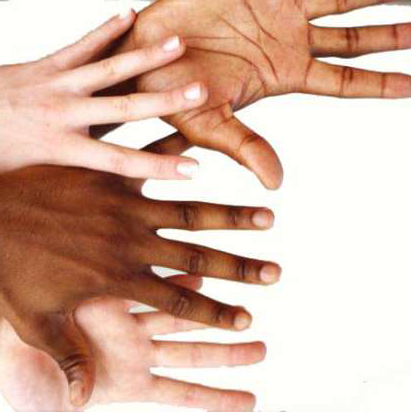
The reason for this is the difference in position as a social job compared to other types of work. The assumption is that all members of society have an equal chance of taking on any position, as long as they meet the qualifications and are eligible for appointment. This assumption is reasonable because the position itself is a social privilege. It not only serves social goals, but also becomes a type of privilege for the person who holds the position. From then on, they can benefit from the rights, benefits, and social status of that position, as well as ethical and legal uses. Therefore, individuals compete for positions and their chances of having an equal opportunity in this competition must be guaranteed.
Let’s return to our first question. Is there a situation where two people have equal qualifications and abilities for a position? It is clear that by equal qualifications and abilities, we mean a range of abilities that are relevant to the goals of that position, a range that is not precisely defined and no one can provide an exact definition of it, but its examples are reasonably identifiable. A manager who wants to appoint a position, what questions does he ask himself in front of each applicant?
Firstly, has the applicant obtained the qualifications required before taking on the position? For example, to become a surgeon in a hospital, does he have enough credentials to confirm his medical qualifications?
Secondly, is the applicant suitable for the goals of this specific position? For example, if the hospital wants to perform innovations in the field of surgery for a specific part of the human body, is the age of the applicant, their abilities, risk-taking, etc. appropriate?
The complexity lies in answering these two questions: the possibility of corruption and giving positions to those who are not deserving, or on the other hand, depriving citizens who are deserving of positions from obtaining them.
But what we want is to take a step back. To see if there is even a possibility of equal opportunities for individuals to acquire the necessary qualifications for a position and then be chosen in equal circumstances. In other words, should we look back at the lives of applicants who have applied for a position, someone who is supposed to choose among them and, away from discrimination, select one of them, is forced to observe equal conditions. But we go through these equal conditions and the level of compatibility of each applicant with the above two questions and we want to know if the applicants have equal opportunities to stand in a position of equality.
This is a critical point where the question of discrimination arises at a larger scale. How should the selection committee choose? Should it only consider the social goals of the position and therefore choose someone who currently has more qualifications? Or should it see the position as a social privilege and give more chances to individuals who have been unable to stand in an equal position due to discrimination?
Imagine in a society, a group of people have been under the burden of discrimination for years due to racism. However, the circumstances have changed and legal and political discrimination has been completely eradicated. Now, should those who have been held back for years compete on equal terms with those who have had the chance to grow? If it is decided to give more opportunities to individuals in this group, will it not be unfair to the rights of others who have not been involved in any discriminatory actions?
I am willing to express my opinion before anything else, that people should not be punished for remaining silent in the face of oppression or collective sin, or things of this nature that homogenize individuals and are very totalitarian and even fascist. Depriving individuals of holding a position is also part of the punishment.
Wherever the conversation of necessity arises, societies do not have the right to violate the fundamental rights. Unreasonable violation of rights means an action that, although it violates rights, does not fundamentally violate them (such as life, dignity, and basic freedoms) and can lead to great harm. However, this violation of rights is usually collective and no one is exempt from it. The problem of positive discrimination here is that some people’s rights (other applicants) are deducted and others’ rights are added, and it is not clear how long these “emergency conditions” will continue.
Discrimination, in any case, is a violation of equality and positive discrimination is only a more humane form of this violation. Equality is violated to the highest degree in situations of discrimination, meaning equality of individuals before the law and social positions, not wealth or social status, which is the subject of discussion.

But human societies, and of course those with high democratic indicators, have also shown that wherever the issue of emergency arises, they do not violate the rights of individuals in a reasonable manner. A reasonable violation of rights means an action that, although it violates rights, does not fundamentally violate them (life, dignity, and fundamental freedoms) and a great good is derived from this violation. For example, by reasonably violating the freedom of movement, they enforce traffic laws.
But generally, this violation of rights is collective and no one is exempt from it. The problem of discrimination here is that some people’s rights are reduced while others’ are increased, and it is not clear how long these “emergency conditions” will continue.
Another point is that discrimination in appointments distances them from their social goals. In every position, someone should be chosen who can lead its goals in the best possible way, otherwise the philosophy of its existence is questioned. Positions are not created to be given to someone, but they exist to serve their social goals. So what should be done? Should we smile and say it’s your problem to those who have been discriminated against in the past?
I believe there is a better way. Consider the post-war conditions where a country that has started a war without just cause and in an aggressive manner is obligated to pay reparations to the country that has been attacked. The first question that arises is why should individuals who had no role in starting or continuing the war, have to pay taxes for the mistakes of others, who may only be a crazy dictator? The answer is that in international relations, the components are not citizens or humans, but rather nation-states. A dictator did not initiate the attack, but a nation-state did, and reparations should be reasonably used to rebuild the damages caused by this attack, without bringing down the initiating nation-state. This same argument can be used with a little twist to address discrimination. Instead of violating the rights of applicants for a position in favor of those who have been discriminated against in the past, or giving positions to those who are not qualified, we should reasonably address discrimination for the entire nation. The
 Admin
Admin October 3, 2013