


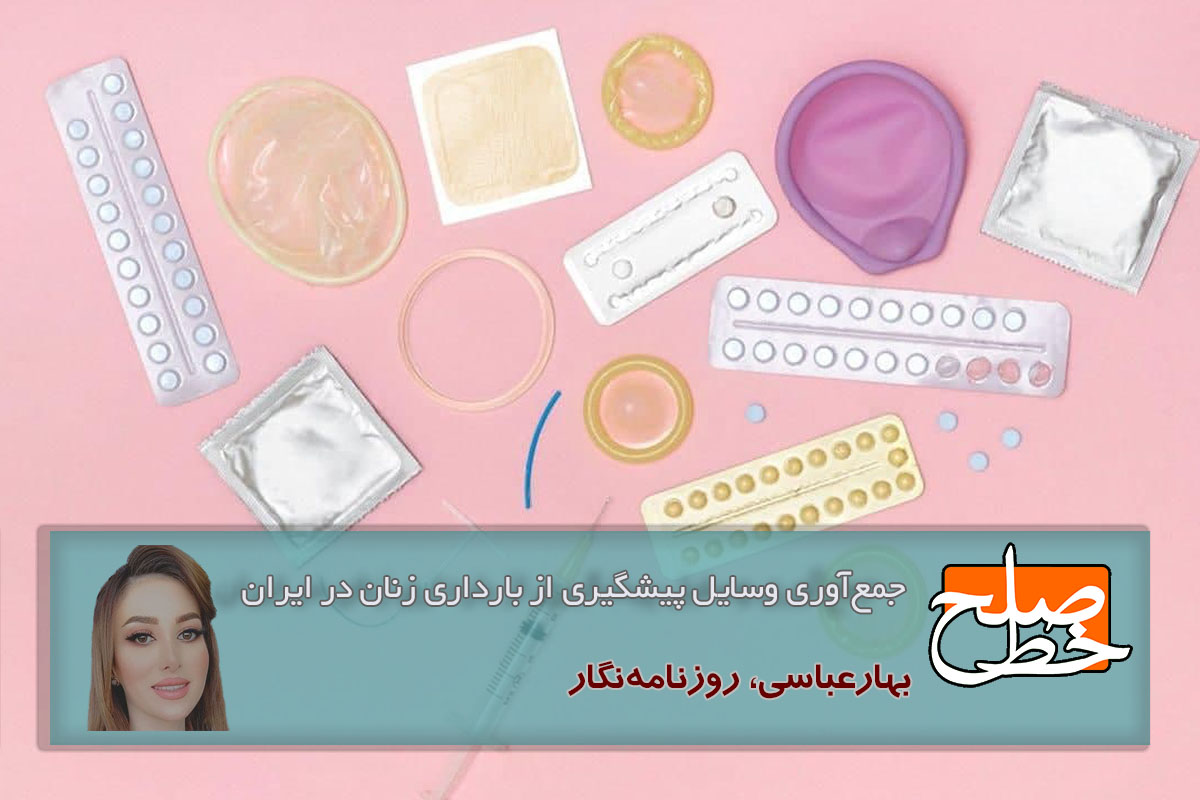
Collecting Contraceptive Materials for Women in Iran / Bahar Abbasi
Becoming a mother can be one of the most beautiful experiences that a woman can have in her life; however, this experience can also turn into a bitter one for women for various reasons. Many factors, such as maternal mortality and endangering the lives and health of mothers, can have an impact. Economic, political, social, and various forms of gender discrimination can also play a role in endangering women’s lives during pregnancy and in preventing them from receiving proper care. In some countries, women are deprived of access to contraceptive methods. According to the “Plan to Increase Fertility Rates and Prevent Population Decline” approved by the Islamic Consultative Assembly, “abortion, sterilization, vasectomy, tubectomy, and any promotion of limiting births and reducing fertility” are prohibited and carry a penalty of two to five years in prison for offenders. While women experience a loss of decision-making power over their own bodies, the involvement of men in matters related to women’s bodies has sparked a
Violation of women’s reproductive rights
In addition to violating the rights of women and men in regards to decision-making during pregnancy, its direct impact is on the mortality of women through an increase in unwanted pregnancies and abortion. According to statistics from the Ministry of Health, between one hundred and fifty to three hundred and fifty thousand abortions resulting in death are recorded in Iran every year. Due to the illegality of abortion in Iran, there is no accurate data on the number of unwanted pregnancies that result in abortion, and it is unclear how many of these abortions, which do not result in the death of the mother, have caused harm to women’s health. Human rights watchdogs have said that the criminalization of abortion and the restriction of access to contraception jeopardizes the legal and safe access to life and health for women and girls. In countries where abortion is criminalized and access to prevention is restricted, unsafe practices have put people’s lives at risk, especially for marginalized and vulnerable women, who are more likely to experience sexual and domestic violence.
General population policy
After the announcement of “Population Policies” by the leader of the Islamic Republic on 30 Ordibehesht 1393, in order to compensate for the decrease in population growth and fertility, the representatives of the parliament passed an urgent bill in August 1393 called “Increasing Fertility Rate and Preventing Population Decline”. According to its first article, all actions related to abortion and sterilization, such as vasectomy and tubectomy, were prohibited in government centers, and any promotion of birth control and reduction of fertility was also prohibited. Offenders were subject to disciplinary measures and imprisonment. The family planning course was removed from mandatory university courses, and permanent methods of birth control for the individual and the treating physician were punishable. Temporary methods of birth control were no longer available for free.
The parliament’s decision was unable to attract the attention of the Guardian Council, and after being returned by the Guardian Council, it remained silent in the parliament for about three years. In November 2017, the representatives of the tenth parliament amended it. The representatives amended the first article and its clause in order to address the shortcomings of this council, which prohibited all surgical procedures for permanent prevention of pregnancy and failure to comply with it was considered a violation by employees.
Double the amount for women.
The population law has led to women having no control over their bodies and making them powerless and without identity. Women who, due to lack of specialized female doctors, distance of tens of kilometers from medical centers, cost of doctors, tests, sonography, and inability to pay for expenses, cannot go to the doctor for check-ups, are at risk during pregnancy. These women are more likely to suffer from depression and mental pressure caused by unwanted pregnancies. This law has put a sword over the heads of housewives and “often deprived” women, who, without access to financial resources, are looking for a way to prevent unwanted pregnancies. Doctors and midwives say that many of these women are solely responsible for providing contraceptive methods and endure the side effects of hormonal methods in order to prevent consecutive pregnancies due to their husbands’ refusal to use condoms.
 By: Bahar Abbasi
 December 22, 2021
Tags
AIDS Bahar Abbasi Contraceptive methods Genitalia Increase in production Monthly Peace Line Magazine peace line Peace Line 128 Preventive measures Youth plan of the population