


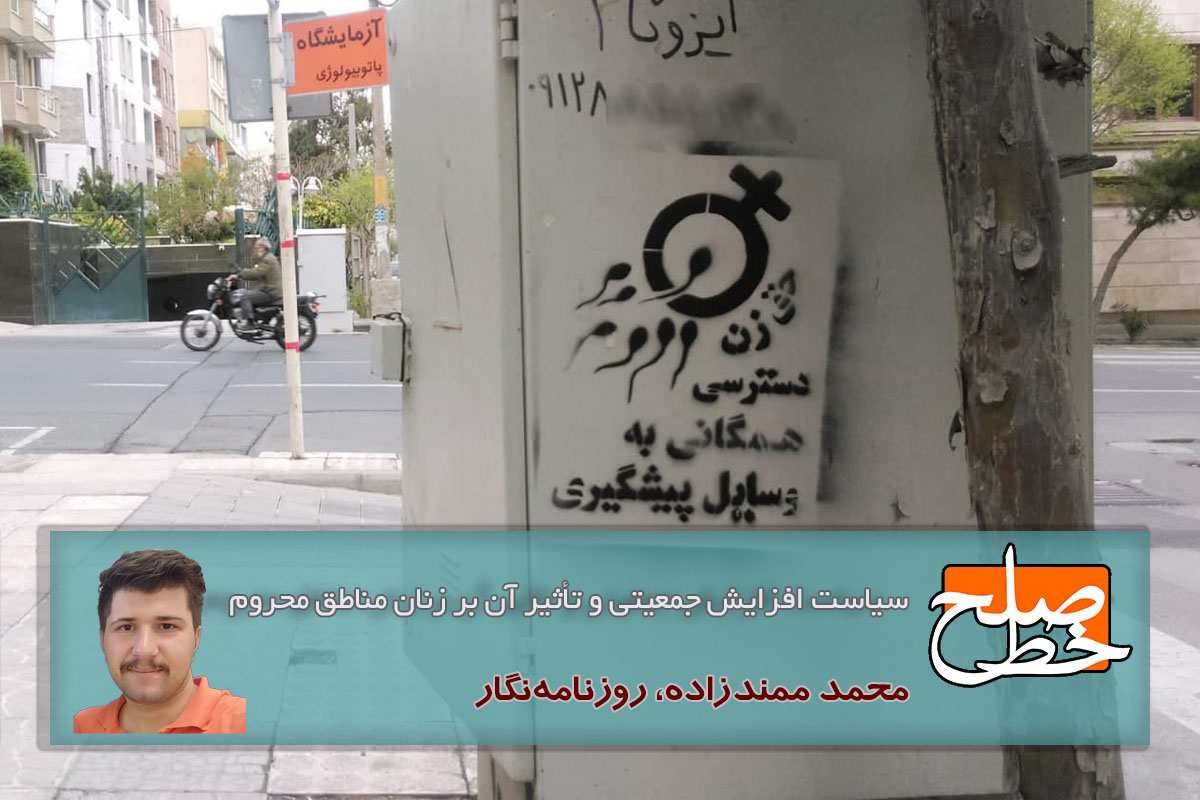
The policy of population growth and its impact on women in deprived areas / Mohammad Momenzadeh
The population increase program in the Islamic Republic of Iran is part of ideological programs and women and children are the main victims of such policies. In a country where infrastructure and economic capabilities are much lower compared to other developed countries, population growth will only add to the problems. According to studies conducted in some countries, rapid population growth is one of the main obstacles in the fight against poverty and hunger. Available information indicates that uncontrolled population growth limits the production and distribution of food, and thousands of people die every day in the world due to malnutrition and diseases caused by food shortages. On the other hand, overcrowded households and limited living space among a large number of people can lead to health and social problems, violence, overcrowding, unemployment, air pollution, and tension. This issue also increases the risk of spreading infectious diseases. Now, not only the population size of a country, but also the quality of its population is more important than ever before.
In Iran, after the revolution in the 1370s, the government took its first serious steps towards population control. The goal was to reduce fertility. In 1373, the “Association for Family Planning of the Islamic Republic of Iran” was established. The activities of this association have had a significant impact on the declining population trend. All forms of contraception were allowed, social support was provided for the implementation of the program, the government took responsibility for reducing population growth, and mass communication tools were used. The government also committed to providing free contraception and producing affordable options such as condoms and IUDs within the country. These are among the activities of this association.
The Deputy Minister of Health, Treatment, and Medical Education announced in 1377 (1998) that “Iran has been chosen as the base for education on reducing population growth rates among Islamic countries.” This policy continued until the beginning of the 1390s. In the summer of 1391, when the leader of the Islamic Republic of Iran met with a group of government officials, he emphasized that officials should abandon the population control policy after 1371 (1992). He also stated that if the population control policy continued, “we will face aging and ultimately a decrease in population,” and asked officials to remove the country from the state of each family having one or two children, so that the population of Iran would reach 150 to 200 million. One day after the remarks of Ayatollah Khamenei, representatives of the Iranian parliament collected 100 signatures to cancel the Family Planning Law with the condition of collecting two-thirds of the votes. One year later, in the
Having the right to access free preventive measures.
The right to fertility is defined based on recognizing the right of all couples and individuals to make free decisions about the number of children, having access to information and resources for sexual and reproductive health. The right to birth control, access to quality reproductive health services, education and access for free decision-making and choice are all considered part of the rights of fertility. Women in deprived areas, due to lack of awareness and limited resources, face more difficulties and limitations in accessing preventive measures compared to other urban areas, and are forced to obtain their own means of birth control.
About the elimination of subsidies and the prohibition of contraception, “Peace Line” had a conversation with a midwife in one of the health houses.
Baran Ahmadi works as a midwife in one of the villages in Sardasht. She says, “It has been almost two years since contraceptive supplies have been banned in health centers. These supplies used to be provided for free to the people, but now family planning is not being done in health centers. However, these supplies can still be obtained from pharmacies. That’s why I haven’t noticed much of a difference in the number of unintended pregnancies. The number of pregnancies and unintended pregnancies has not changed statistically, because those who do not want to get pregnant will do whatever it takes to prevent it. In 1999, when I was working in one of the villages, before the ban on contraceptive supplies, there were eighty-five to ninety-five pregnant women coming for check-ups. Even after the ban, the number of visitors remained the same, and there was no increase in unintended pregnancies.”
The spread of unwanted pregnancies, unsafe abortions.
If the policies of population growth continue, there is a possibility of an increase in unintended pregnancies. The greatest impact is on women living in deprived areas, who not only have limited access to pharmacies, but also do not have a health center in their village and only midwives visit these villages on certain days of the month. According to statistics from the World Health Organization, one hundred and seventy-five million pregnancies occur annually worldwide, forty-three percent of which are unintended, and about seven thousand mothers lose their lives due to unsafe abortions. Unintended pregnancies can lead to illegal and unsafe abortions, resulting in infections, bleeding, and unfortunate consequences such as maternal death.
Notes:
1- The history of population control in Iran, Hozeh, 6 Bahman month 1392.
2- The per capita health expenditure for each Iranian is $415 annually, Mehr, 22 Azar 1399.
3- On the occasion of World Population Day, Shiraz University of Medical Sciences and Health Services, 21 Tir month 1399.
4- The impact of population growth policies on women, women’s awakening, 20th of Mordad month, 1393.
 By: Mohammad Mamandzadeh
 December 22, 2021
Tags
Health center Increase in production Mama Miscarriage Mohammad Momenzadeh Monthly Peace Line Magazine peace line Peace Line 128 Preventing pregnancy Preventive measures Water prevention tools Youth plan of the population