


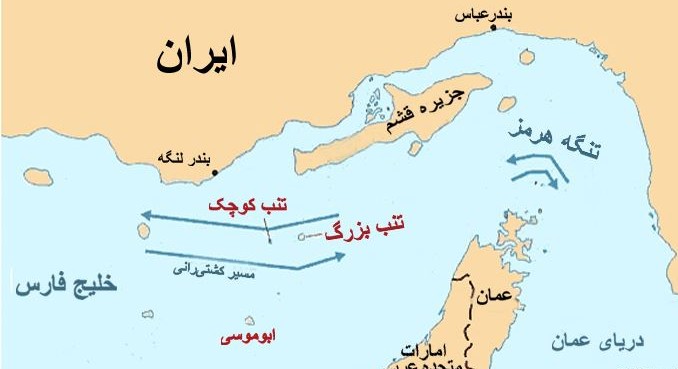
The Triple Islands and the Oppression of Deprivation in the Shadow of Political Conflicts.

On the second of Esfand month in 1991, a news was published on one of the domestic websites, which among other news, had a strange account of a disputed island in political news and Iran’s relations with its southern neighbor, the UAE. However, the news made no mention of the heated disputes over ownership of the islands; instead, it told the story of the entry of 500 luxury Porsche cars through the Abu Musa customs and their transfer into the country. The news, amidst the general unawareness of the living conditions of the people on the three Iranian islands, could have been an excuse to shed light on their situation. But as far as we search the news of these years, there have been few reports about the people living on these islands, and when we ask people and social media users, apart from emphasizing their Iranian ownership, nothing substantial is found except for one link on YouTube where “Kamran Najafi Zadeh,” a controversial reporter from the national
Perhaps these are not the only recorded images of that island by a television reporter; because in April 2012, reporters, along with the convoy carrying the head of state, traveled to this island and published controversial images of this visit that had led to insulting reactions from Emirati officials; to the extent that even the UAE had summoned its ambassador from Iran.
Of course, what has been published in the controversial discussions about the ownership of these islands – in the present report – is less of our concern. However, the trip of the highest government official of Iran in the attire of the head of state and the unfulfilled promises regarding the support of the inhabitants of this island can be considered our subject.
On the seventeenth of Azar month in 92, Hossein Khademi, the CEO of the Water and Wastewater Company of Hormozgan, announced in a news interview: “Drinking water on Abu Musa Island is provided by four desalination plants and 72,000 cubic meters of water is desalinated on the island every month. The island is also equipped with a 25-kilometer pipeline for water delivery to homes.” He even mentioned the construction of a sewage network on Abu Musa Island and stated that the sewage network and treatment plant are currently under construction and will be operational by the end of this year. However, even though there are only forty days left until the end of the year, the fact that news of the “delayed construction” of the treatment plant is only being published in 92, is a clear indication of the officials’ neglect of health matters on this remote island.
During this interview, Khademi also mentioned the situation of the large Tanb Island and said, “The drinking water on this island is also provided by three desalination plants with a capacity of 1,300 cubic meters per day.” It is worth mentioning that Tanb Island is a small uninhabited island and due to its strategic location, it is under the control of the Revolutionary Guards, and of course, the “Red Soil” mine on this island is currently being extracted and exported.
The red soil sways, which is not so barren, and one can gain a great deal of money and wealth from it, and bring prosperity to the economy of this land and its people. It is good to know that the red soil mine, which has settled in the Abumousa region, remains untouched, and by exploiting it, one can turn the economic wheel of this island and bring color to the table of its inhabitants. The main use of red soil mine products is for producing dyes and cosmetics.
This is while, according to the deputy of exploration of the Geological Survey Organization, small reserves of red soil have been seen on this island, but due to the military location of Abu Musa, it has not received much attention. Behrouz Barna, in an interview with Aseman magazine, confirms the existence of a red soil mine in Abu Musa and reminds that the Geological Survey Organization has reported the existence of a mine and reserves of red soil in this region to the government. However, due to the small volume of these mines and the lack of high economic benefits, it has been decided not to pay attention to this report! According to Barna, in southern Iran, the island of Hormuz has the highest volume of red soil reserves; to the extent that Hormuz mines are ranked highest in the world in terms of size. According to him, Hormuz red soil mines are a familiar name among miners around the world.
Although the miners of the world are familiar with the red soil mines of Hormuz, the Abu Musa red soil mine has certainly not escaped their attention. If officials pay attention to the extraction of this mine, the name of Abu Musa will not only be mentioned in political circles, but will also open the door to its economy. This is while if the red soil mine is extracted from the Persian Gulf, not only will there be opportunities for business on this island for its few inhabitants, but also with the export of products from this mine, development will also reach Abu Musa.
In the past, the annual production of red soil in Abu Musa reached about 16,000 tons, which was extracted by the Germans and then the British. However, due to the poor quality of the product and lack of suitable facilities, they abandoned the project that year.
On the day that Mahmoud Ahmadinejad, in the first round of provincial trips, ordered the Geological Survey Organization to investigate the island of Abu Musa and determine the capacity of the red soil mines on the island, he may have hoped to one day open the mine on Abu Musa Island. But this did not happen, as the people of Abu Musa continued to happily fish while having the red gold under their feet. Interestingly, during the same government, the mafia of Ahmadinejad’s associates opened the island to import 500 Porsche cars without customs formalities, using a provincial order to allow a car to enter the island without customs formalities. These luxury and expensive cars, which had been left out of the car import cycle due to their high price and high consumption, were imported into the country without anyone knowing the share of the residents of Abu Musa – whose name the car was imported under – and whether they even knew about the type of car that was imported.
Abu Musa lacks water and suitable land for agriculture; however, there are small date palm orchards in it, even though most of the native people make a living from fishing.
One of the centers for crude oil production in the country is also Abu Musa, which operates with a considerable capacity. However, it does not seem that the native residents play any role other than guarding in this industry and it is not a source of income for the people of the island. The area of Abu Musa is about 12 square kilometers, the large Tanb Island with 3.10 square kilometers and the small Tanb with 1.5 square kilometers, Sirri with 3.17 tenths of a square kilometer, Farur-e Bozorg with 2.26 square kilometers and Farur-e Kuchak with 1.5 square kilometers make up a county with Abu Musa as its center. In the southern part of the island, about five hundred people from the residents of Sheikh Nasheen Sharjah (Emirates) live in their homes, but according to documents and evidence, the administration of the islands and their ownership is in the
Dr. Pirouz Mojtahedzadeh has a lot to say about this. In an interview with ISNA, he said: “A six-article agreement was written in November 1971 between Iran and Sharjah, according to which the Iranian flag will be raised in the northern half of Abu Musa Island and Iranian military forces will be stationed there. The Sharjah flag will only be raised above the [Sharjah police headquarters in Abu Musa village], which means that only Abu Musa village will be under Sharjah’s control and the rest will belong to Iran. Unfortunately, sources have mistakenly referred to this as a joint administration of the island, when in fact, the island is completely under Iran’s strategic management.”
Iran has accepted in that agreement for the people of the village of Boumousi to be under the jurisdiction of Sharjah and for their travel to Sharjah to be unrestricted. At the same time, the Iranian Ministry of Foreign Affairs has issued an official statement that is attached and a part of this agreement. The statement says that for now, we accept this agreement, but we reserve the right to take control of the entire island at any time if strategic conditions require it.
Iran’s policy has been to not take such action from that date until now. However, it seems that the Iranian government, after the start of the dispute by the government of the Emirates – and not the Sheikh of Sharjah – has taken control of the entire island and perhaps the reason for not paying attention to the island’s mines is that, at present, until the end of the dispute, it does not consider investment to be very suitable. However, the fact that the Revolutionary Guards still have extraction and possession in their hands in the small island of Tonb rejects this option.
Ahmadinejad had promised during his trip to Abu Musa to turn the island into a tourism hub by organizing affordable tours. However, according to existing facilities, there are only small guesthouses that cater to government officials and the only reception hall on the island is a small restaurant with a capacity of about 30 people, which currently serves the locals. Another recreational space on the island is a beach and a children’s playground. The only flight to the island, which we see Kamran Najafzadeh boarding in his report, is operated by Kish Air with a capacity of 100 people and to reach the island by sea, one must go to Bandar Lengeh and take a few hours journey on speedboats. Despite all this, there are still three disputed names between the two governments and the Iranian government, despite its complete presence and control over all the islands, has not been able to find a solution for the people of these islands – just like in similar areas where
This is while the governor of Hormozgan has approved the transformation of Abu Musa Island into a model tourist destination by the government council of Hormozgan. The initial studies have been conducted and in the fourth round of the government council’s trips to Hormozgan, this plan has been approved. However, so far, no one has publicly announced the comprehensive tourism plan for Abu Musa Island! Something that should actually be made available to private investors so they can participate, but it seems that the role of investors – similar to the occupation of the small island’s rich mines by the military – is intended to be in the hands of the Revolutionary Guards.
It is necessary, with all that has been said above, to speak about the disregard for the environment when making decisions for similar areas. It is important that the government takes advantage of the potential of coastal areas and uses sustainable development methods; however, if the development of these areas is done without coordination and a joint plan with the Environmental Protection Organization, it will undoubtedly result in disasters like Lake Urmia, Bakhtegan, the Caspian Sea coast, Kish and Qeshm, and Chabahar. Any hasty actions for the exploitation of coral reefs can preserve the beauty of the coast, and we hope that amidst fruitless external conflicts and internal political disputes, forgotten islands and their inhabitants will be seen and not ignored.
 Admin
Admin March 22, 2014