


Pursuit, abduction, denial; conversation with Faraj Sarkouhi

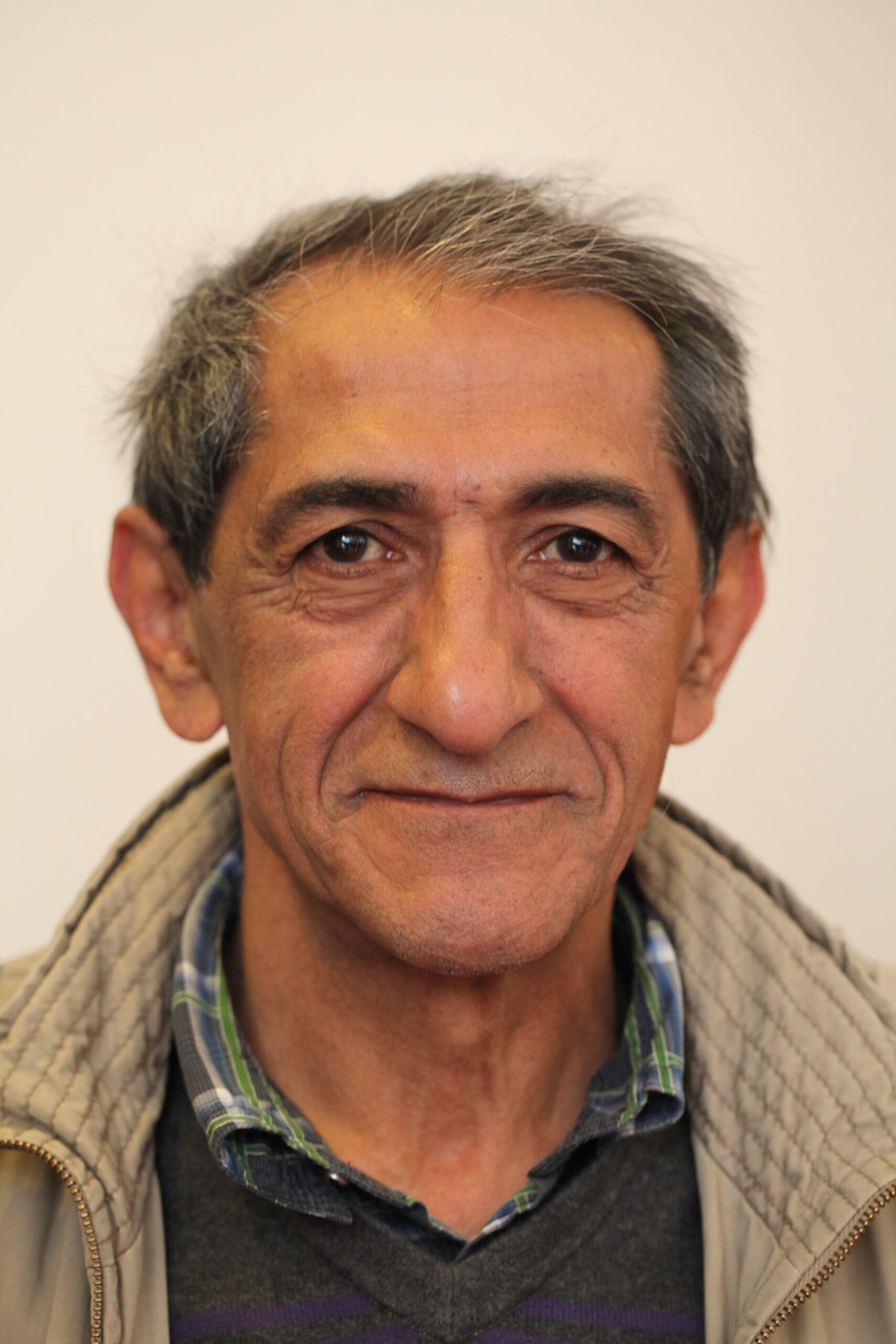
In this issue of the monthly magazine “Khat-e-Solh”, we have gone to meet Mr. Faraj Sarkouhi. Faraj Sarkouhi was born in November 1326 in Shiraz. He spent his school years in the same city and then went to Tabriz for further studies, where he studied social sciences and Persian literature at Tabriz University. Mr. Sarkouhi is a member of the Iranian Writers Association and the editor-in-chief of the literary magazine “Adineh”.
Mr. Sarkoohi, who also has a history of enduring years of imprisonment before the February 1979 revolution, was arrested at the airport in 1996 by agents of the Ministry of Intelligence. There were many protests both inside and outside the country against his arrest.
”
Faraj Sarkoohi explains the reason for his own detention (kidnapping) as follows: “After the publication of our letter with more than 60 signatures in protest against the detention of Mr. Saeedi Sirjani and especially after the publication of the text of 134 writers in protest against censorship, the Ministry of Intelligence, under the order of the National Security Council, put the program of physical elimination of critical, oppositional, and active writers in the Writers’ Association on its agenda. The National Security Council had concluded that cultural elimination through censorship, imposed censorship, and other mechanisms of cultural suppression were not enough and had failed to uproot independent intellectuals from the government. Therefore, the Ministry of Intelligence was ordered to combine physical elimination of independent intellectuals with cultural elimination.”
I was a member of the active writers’ council. I was one of the eight selected members of the council who collected signatures and published the text of 134 writers. I was also the editor-in-chief of Adineh magazine, and the increase in its circulation, influence, and credibility, which provided a space for independent intellectuals from government factions, had worried the Ministry of Intelligence. Being active in the writers’ council and editing Adineh magazine were reasons why my name was also written on the list of those who should be eliminated and killed.
Mr. Sarkoohi, referring to repeated pressure from security institutions, says: “I have been summoned and threatened several times for various reasons. One or two times, myself and several other writers were summoned and threatened by the Ministry of Intelligence. This includes the day when the news of Saeedi Sirjani’s death was announced. One time, along with 18 other writers, I was detained by the Consultative Assembly. Another time, myself and several other writers were arrested at a cultural attaché’s party at the German Embassy. In the infamous incident known as the “Armenian Bus of Death”, the Ministry of Intelligence attempted to throw me and more than 21 other writers and journalists into a ravine. Much has been written about these incidents and I have also written about them in my books “Yas and Das”… The last time was on November 13th, when I was arrested at Mehrabad Airport in Tehran while traveling to Germany for a speech. The
“I spent 45 days in one of the secret prisons of the Ministry of Intelligence in solitary confinement. At that time, Mr. Ali Fallahian was the Minister of Intelligence and Mr. Hashemi Rafsanjani was the President. The newspapers of the Islamic Republic wrote that Faraj Sarkouhi had traveled to Germany and disappeared there. Mr. Rafsanjani, the President at the time, said in a press conference in response to a European reporter that Sarkouhi was in the Netherlands or Germany. Mr. Ali Velayati, the Foreign Minister at the time, repeated Mr. Rafsanjani’s statements in an official letter to several international organizations, including the European Union.”
The Ministry of Intelligence wanted to kill me and not take responsibility for the murder. Before my arrest, they had killed Ahmad Mir Ala’i, a prominent translator and member of the Writers’ Association in Isfahan, and Saeedi Sirjani in prison in Tehran.
However, in any case, the story of the Ministry of Intelligence about my trip to Germany had faced public disbelief. The German government announced that the fugitive had not entered Germany. Iranians outside the country, Persian and non-Persian media, international human rights organizations including the Writers’ Association, Amnesty International, Reporters Without Borders, etc. launched a major campaign. Like IATA (International Air Transport Association), it announced that according to the Islamic Republic’s claim, the fugitive had traveled to Germany and according to German airport documents, the fugitive had not arrived in Germany, so he disappeared on an Iran Air flight and this company is not safe for passengers and its flights are not allowed to land at international airports.
The Ministry of Intelligence was forced to release me as a result of an extensive campaign, on the condition that I state in an interview that I have been in Germany and Turkmenistan and not disclose the story of my abduction and detention to anyone.
We ask him about the way the agents treated me: “The treatment of interrogators and torturers towards me was different from how they treated non-governmental individuals and members of left-wing and Mujahedin groups. It was the most brutal and savage physical and psychological torture. The treatment of the Ministry of Intelligence and other security institutions towards non-religious political activists or Mujahedin, differs from how they treat religious reformists or supporters of the Green Movement.
Our Islamic Republic government considered writers as the Trojan horse of Western culture. From the perspective of the Islamic Republic, cultural differences are a security issue and this government deals with them through a security approach. The government aims to impose its own monotheistic and religious culture on society and considers any other form of thought or failure to conform to the official government culture as an attack on itself, which it suppresses with violence.
We ask him to speak about the tortures during his detention: “During these 45 days, the most physical and mental tortures were inflicted upon me. I have written about the 45 days of torture in the first prison in the book “Yas and Das” and in several stories and letters published under the title “The Torture Letter of Faraj Sarkouhi” in Iran and European newspapers. During those 45 days, I was as good as dead. They showed me the news published in newspapers, claiming that I had disappeared in Germany. It was clear that they had no intention or plan other than killing me, as they had officially announced that Sarkouhi was in Germany and they could not release me.”
This former political prisoner titles his second detention as follows: “After my release, I knew that the Ministry of Intelligence would kill me because they are afraid of the truth being exposed. I wrote a letter and sent it secretly outside the country. I also gave a few copies to friends in Iran. In that letter, I wrote that it should be published 3 days after my death or return. This letter is a report of what happened to me during those 45 days and a report of the harsh treatment of the Islamic Republic towards intellectuals and writers.”
This letter was published in most European newspapers. It was also published within the country under the name “Zajrnameh-ye Faraj Sarkuhi”. Later, I found out that Mr. Pirouz Faqihaye Do’ani played a significant role in the reproduction and distribution of this letter. He reproduced the letter and wrote “Reproduction by Firouz Faqihaye Do’ani” on it. Pirouz Faqihaye Do’ani was killed in the famous chain murders a few years later, and his brave work in reproducing my letter was one of the reasons for his murder. I was arrested after the letter was published abroad. This time, after 3 days, they announced my arrest.
”
Mr. Sarkoohi continues: “I spent the first 9 months in solitary confinement in Tohid prison. Tohid prison was a temporary detention center during the reign of the Shah, and later became the Joint Anti-Espionage Committee prison. After the revolution, this prison was under the control of the Revolutionary Guards’ Intelligence Agency, and after the formation of the Ministry of Intelligence, it was handed over to this ministry under the name of Tohid prison. This time, I was tried and sentenced to “3 executions” on false charges of “anti-revolutionary activities, espionage, and illegitimate relationships.”
For 9 months, I was in solitary confinement in Tohid Prison, waiting for my execution and unaware of everything happening outside. After my release, I learned that the widespread publication of a letter inside and outside the country had strengthened the campaign against my imprisonment. The European Union and some European governments, including Germany, Sweden, Denmark, etc., were forced to intervene in my case due to public pressure and demanded that the Iranian government release me and acquit me of the charges of espionage. My case became intertwined with the departure of European ambassadors from Iran, and my release and acquittal of espionage charges were one of the conditions for their return to Iran.
After 9 months of solitary confinement and waiting for execution, I was retried and acquitted of my previous charges of “anti-revolutionary activities, espionage, and illegal relationship”. Instead, I was sentenced to one year in prison for promoting against the Islamic Republic due to writing a famous letter. I was transferred to Evin prison and after serving one year, I was released. They did not give me a passport for several months, hoping to kill me in a staged incident, but with pressure from UNESCO, they were forced to grant me permission to travel.”
Mr. Sarkouhi speaks about his staged executions as follows: “During that 45-day period, I was executed three times as a show. I believed these executions because they had announced that Sarkouhi was in Germany. Once again, after 9 months, they staged another execution and I believed it as well; because I had been sentenced to death three times.”
Given that Mr. Sarkoohi has a history of enduring prison before the February 1979 revolution, we ask him about the difference between torture and imprisonment during these two periods: “I was also imprisoned several times during the second Pahlavi dynasty and the last time was about 8 years. During that time, physical and psychological torture was also carried out, but mostly during interrogations and for the purpose of obtaining information. After the trial, physical torture was mostly stopped, except in some cases.”
The common tortures during the time of Shah Apolo included whipping on the soles of the feet, handcuffing, hanging from the hands or feet, burning the genitals and back, sleep deprivation, nail pulling, prolonged solitary confinement, and so on. During the time of the Shah, I was tortured with whipping, hanging, and prolonged sleep deprivation, and I was in solitary confinement for one year in Tehran and one and a half years in Zahedan prison. In the Islamic Republic, I was tortured with whipping, hanging, handcuffing, sleep deprivation, and psychological torture. In the Islamic Republic, the tortures of the Shah’s time were still prevalent, but they had added other tortures such as roasting chickens. Psychological torture was actually intensified in the Islamic Republic and was very common. For example, I was executed three times. But in my opinion, the effect of psychological torture is when it is accompanied by physical torture.
“One of the most effective forms of psychological torture is the use of victims’ personal information during interrogation. The tortured victim is brought to the interrogation room, beaten and sleep-deprived, and tortured with bits of personal information. For example, they had placed listening devices in my bedroom and would play recordings of my orgasms during interrogation…”
The whip increases the pain: “The most effective form of torture is whipping the soles of the feet. If, for example, they whip your back or buttocks, after a while you become numb, but your feet do not. And because they force you, you have to run, blood flows in your feet and they can whip again. Some tortures, like burning, cannot be continued for a long time, but whipping the soles of the feet can be continued every day and night for several months.”
”
“In some cases, such as with us writers, torture through physical pursuit is also common. They chase the victim in a way that the victim becomes aware before being arrested. In a situation of oppression, the victim expects any kind of violence and when they realize they are being pursued, they ask themselves why? What mistake have they made, etc. The physical pursuit turns the victim into their own interrogator. The victim is tormented for a while, chased from afar, and then arrested.”
Long-term isolation is one of the worst forms of psychological torture. In isolation, a person’s relationship with other humans, with colors and the sun, and with life itself is severed. The senses become dull and the imagination turns against the active person, and so on. But I knew how to triumph over isolation. Everyone has a way; I wrote a novel in my mind. This experience can be read in one of the stories I have written and published.
“In the first 45 days, the torture was intended to break me. They didn’t want information from me because I didn’t have any. Our activities were in the open in the center and in the evenings. We had nothing to hide. They had taken and had the minutes of the center’s negotiations months before my arrest. In addition, our activities were public in the center and in the evenings, so they didn’t want information from me, but they tortured me to break me. But in the next 9 months, the torture was retaliatory. With the publication of my letter, their lies were exposed. For the first time in Iran, a letter was published that explicitly reported the actions of the Ministry of Intelligence against the writer and intellectual activists. They were extremely angry and tortured me severely.”
Mr. Sarkoohi concludes by discussing the effects of torture: “Physical torture is painful and constant suffering, and the fear of enduring more pain. The human body is not made to withstand beatings. Some forms of torture have long-term effects. I had a heart attack in prison. One of my veins was closed and because they didn’t take me to the hospital, it remained closed. One of my kidneys failed. I had a kidney stone, but because I was not allowed to go to the bathroom more than 3 times a day, the water accumulated in my kidney and destroyed the tissue.”
The effects of physical and mental torture remain. The victim of torture never truly escapes from it. I still have nightmares and suffer from insomnia. Someone who has been tortured becomes sick, and this sickness is never cured. People like me who have experienced severe physical and mental torture are patients who suffer from the effects of torture for the rest of their lives and do not have normal behavior.
 Admin
Admin May 7, 2014