


Dr. Hassan Makaremi: Declaring and pretending to be homosexual is not a cure/ Ali Kalaei
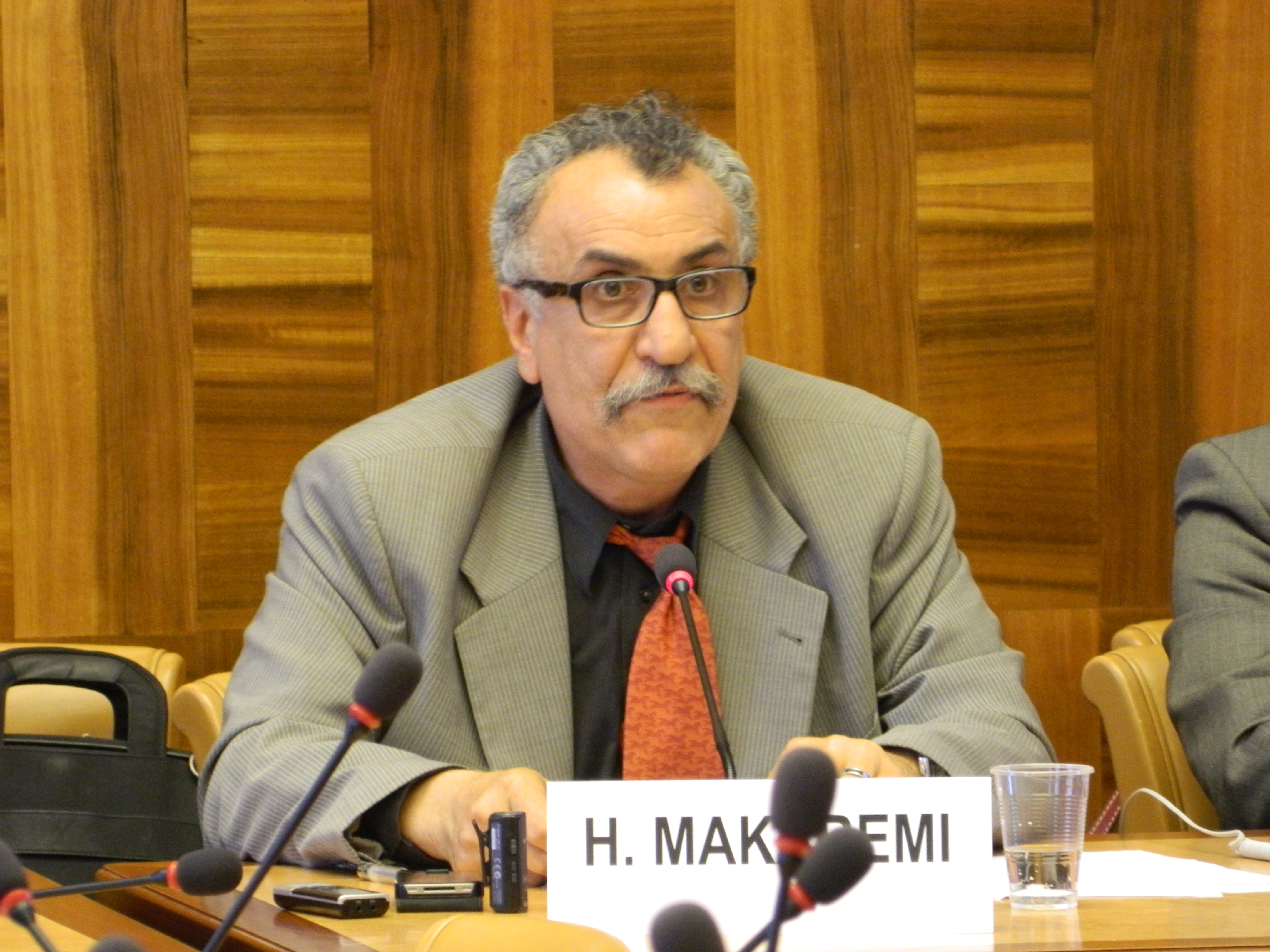
Dr. Hassan Makaremi is a psychoanalyst, artist, and researcher in cultural services and its role in strategic studies at Sorbonne University in Paris. He has published approximately 10 books and 40 articles, mostly related to strategic services and Iranian culture in the context of human rights. He has also been the treasurer of the Society for the Defense of Human Rights, affiliated with the International Federation for Human Rights, for the past 25 years.
Dr. Makaremi, at the beginning of the conversation, while emphasizing the importance of peace, believes that “the issue of homosexuality has been resolved in psychoanalysis.” He also believes that “pretending to be homosexual should be examined psychologically.”
Hassan Makaremi also says that the issue of homosexuality can take three different forms in Iran: “romantic relationships”, “sexual relationships” and “cohabitation”, all of which are excluded from the concept of family formation in Iranian culture. He believes that the only solution to this problem is “tolerance”…
Dear Dr. Makaremi, our discussion is about the issue of homosexuality. We can approach this topic from a Freudian perspective. He sees this as an involuntary issue and believes it is not something a person should be ashamed of. As a psychoanalyst, to what extent do you agree with this theory and what is your approach to this matter?
In the sweet Persian language, “grooydan” comes from thought. When I have a belief, I tend towards a certain belief and from this point on, I am against this term [homosexuality]. It is not a desire to be homosexual. I join a party. I join a belief. In my opinion, and in response to your question, this labeling is wrong. I cannot be homosexual because I do not have a tendency towards a belief, “homosexual” comes from desire and inclination.
In psychoanalysis, the foundation is based on the idea that every human being has an identity, which is formed based on their primary desire. Around this primary desire, a person constructs their own identity. Therefore, in my opinion and from a psychoanalytic perspective, being homosexual is more accurate than being homosexual.
In Persian culture, before the terms homosexual and homosexual desire, the issue of playing love games, love playing, boy playing, and child playing is discussed and this issue is associated with playing; or the Quranic term “Lut” is used. This is not actually naming, it is virtual naming.
When we talk about homosexuality, we must understand and define sexual desire. Sexual desire comes after sexual need, and sexual need is the most natural thing for a human being. A sexual desire also depends on having a gender. Therefore, a human being must have a gender in order to have a sexual desire towards their same gender. The first foundation is to have a gender; what is gender!? Until we understand this, we will not take any clear steps and my point is that until the end of our conversation, we will not solve any fundamental issues, we will only make things clearer and add another perspective to our views, and with clarity, we will reach understanding. This is also my goal; psychoanalysis, through exploring and investigating, strives to reach understanding.
For example, regarding a specific topic, the person who identifies as part of the LGBTQ+ community, the person who is not LGBTQ+, the person who is against LGBTQ+ individuals, and the person who supports LGBTQ+ individuals; we try to move towards tolerance with more understanding; human rights are also based on tolerance.
According to the perspective of psychoanalysis, a person’s identity is divided into three parts; one is a biological and physical sexual identity. Most people (except for very rare cases, which of course exist biologically, but their gender is not determined or they have both genders) are born with one gender, either male or female. This means they have either male or female genitalia and as they grow up, all their hormonal, behavioral, and physiological issues move towards being male or female. This is called physiological gender. In practice, society, family, and acquaintances give people an identity that we call social and administrative identity. It is given a name that is either masculine or feminine.
One aspect that is less focused on and your question is directed towards is that humans develop a psychological sexual identity. This is where the issue should begin and it should be said that this psychological sexual identity may not align with the biological sexual identity. In this case, the individual experiences a duality. Their administrative and social sexual identity is on one side and usually corresponds to their biological sexual identity. However, their psychological sexual identity contradicts this issue. They are a man, but psychologically a woman, or they are a woman, but psychologically a man. They are experiencing a mismatch in terms of gender and they are not in harmony; of course, this is not our topic today, but we must understand this.
Based on your explanations and your position as a psychoanalyst, is what you envision as a homosexual natural or unnatural? Please clarify.
Yes. I haven’t reached a conclusion about the issue yet; I’m saying it should have a gender and we have talked about those whose gender is consistent in all aspects. These individuals must also have sexual needs in another perspective and mostly have them. There are also those whose sexual needs are weak or non-existent due to hormonal issues. We also leave them aside. So far, we have put aside two categories.
A person is someone whose gender is clear. They are in harmony in terms of psychological, biological, and social aspects. They have sexual needs. The subject of their sexual needs is either their opposite gender or their same gender. Generally, in psychoanalysis, we do not have a concept of natural or normal. It is a psychological discussion. It is in psychology that we deal with softness. The discussion there is normative. A psychoanalyst deals with structure and generally, the question of whether something is natural or not is not raised. Some people in this world are homosexual. This is a fact. Their sexual needs are directed towards their own gender.
So we came to the point that some people have sexual desires, their sexuality is also clear. But this desire goes towards their same gender. When we talk about this, other issues such as shame and whether to announce or not, turn into a cultural discussion. So far, the perspective we have is from this angle. We are looking for reasons and clarification in order to be able to reach understanding.
The discussion starts here and the question is whether those who are homosexual are susceptible to psychological damages or not, and we must first answer this question.
See, the issue is that there is a homosexual person. It exists. Every form that you and I take is a result of three parameters. One parameter is genetic; it’s what I am. Another parameter is the primary teachings of the family that the psychoanalyst is sensitive to because the unconscious is formed in those first seven or eight years, and the other parameter is the immediate one that society transmits to me. It is the combination of these three parameters that makes each of us. And our unconscious structure is formed based on these three parameters.
So someone who becomes homosexual, like all of us, is the result of these three parameters. I read in Persian texts (not in French and English scientific texts) that it is a genetic issue. Naturally, there are genetic factors in every situation. In my case, there is also a genetic factor, but if I exercised or ate better, my height could have been taller or shorter. And if the air was healthier – for example, in the mountains – my muscles would have been stronger. In any case, whether the issue is 100% genetic or hormonal, everyone has doubts about it.
But in matters of desire, naturally the first desire is the primary one. Those who do not declare their desire and we call them homosexuals. They may be people who distance themselves from society, with the title of not having any interest in sexual relationships, usually either do not have the ability for sexual relationships or do not need it, or they face some kind of prohibition for their needs in terms of culture. But usually someone who is born into a society that is not under moral pressure, meaning that they do not face moral pressure in their culture to hide their homosexuality, usually does not hide it and there is no problem in this regard. In such conditions, the discussion is about the individual themselves, whether to directly express or hide their need for a compatible partner, and for example, express it in underground clubs. It’s like in a society where gambling is prohibited or considered taboo, someone who has a psychological need for gambling (which is a psychological harm) goes underground and does their work without declaring
Summary: Considering the social, internal, cultural, and ethical conditions of individuals, if others allow it, homosexual individuals come forward and express themselves. Here, two categories are mentioned; one that exaggerates and adds a disease to themselves, and this false declaration and pretense can even become a goal for them. There are also those who live a normal life and say “I am homosexual” and even if you are not, we are equal and live together. I don’t insist on showing you that I am homosexual and you don’t have to insist on showing me that you are not. This is called balance or moderation. However, on the other hand, a homosexual can be pushed towards exaggeration due to the conditions in society. The pretense of homosexuality should be examined psychologically in my opinion. Homosexuality is a natural human phenomenon in this spectrum, but when there is no need for it, the pretense and false declaration can be psychologically damaging.
Well, Doctor, if you please, explain about the psychoanalytic perspectives and the issue of homosexuality and transgenderism that you mentioned, so that our readers can better understand the subject.
Freud had come to believe this in the early days and had also mentioned homosexuality alongside psychological damages in some of his writings. But in Freud’s view, the psychological damage was not the same as the one we see from a distance. It means that it is actually a part of a psychological state and today, this issue has been resolved in all branches of psychoanalysis. Personally, I am a Lacanian psychoanalyst and a Lacanian. But in psychoanalysis, this issue has been resolved. It means that homosexuality exists. But when we bring this existing homosexuality into the social sphere, it becomes a shameful thing (and that is why they call it “shameful homosexuality”) and the individual cannot express themselves in society and cannot tolerate the looks of others, which still exist in all societies. To say that we have reached an ideal society that accepts and tolerates homosexuality like heterosexuality is an exaggeration.
Just a few days ago, a Catholic church conference was held with the presence of the Pope, and in this conference, they started discussing the issue of homosexuality from a family perspective. They have put it in a package and are looking at it from a family point of view. Cardinal’s discussion about it and his moderate approach towards homosexuals in the Catholic church is brought up and he says that homosexuals also have qualities that can enrich our church. In other words, they have started to realize that it is not necessary to expel them. But in reality, we know that this issue has not been addressed in an ideal way in any society…
My suggestion is that we try to understand how we view these homosexuals in every culture. For example, in French society, in terms of rights, there are only a few small steps left to be solved, so that a homosexual person can no longer say that I have a legal problem. For example, at the moment, they do not allow them as a same-sex couple who have married to have children so that they can be seen as a normal family. But even in France, the religious issue remains, which is forbidden from a religious point of view, or the issue of family, society, tradition, and the like. Homosexuality is still considered an insult for heterosexuals, just like in Iran. So, from a cultural point of view, this issue has a deep discussion, and of course, being a minority does not mean that they do not have rights.
Can you explain this a little?
This means that among humans, there are also mafias in the minority, but just because they are in the minority, we do not defend their rights. This is an important issue and we sometimes forget that we should see how being a minority gives us the right. Secondly, every person is in a minority. In terms of the majority and in terms of the minority; so this can lead us to moderation. Thirdly, not every majority is without rights. Those who are in the majority in a society cannot necessarily be said to trample on the rights of others.
As an example in this field, can we question all of humanity’s traditions and cultures – such as the family – because of defending the rights of homosexuals, whose natural right is to respond to their sexual needs, without finding proper solutions for them? By doing this, they themselves will first encounter problems. Tolerance means that when a minority issue like homosexuality is accepted, subsequently that minority issue can also tolerate what has driven human culture until now. Homosexuals cannot confront the strong human culture, which has been present for example for a hundred thousand years as Homo sapiens sapiens, and has produced families, overnight. Family means two individuals of opposite genders who reproduce and raise children together, and this chain continues.
Legal solutions must be found and guarantees must be put in place to be able to replace something. Here, as a psychoanalyst, I say that my unconscious structure has grown in this hierarchy. I cannot see anything outside of this hierarchy. I have grown up in this way and learned that I have a father and mother; my father is the representative of the law and my mother is the representative of love and affection. I have siblings who are my first connection with others and a hierarchy of this kind. This is why psychoanalysts are very sensitive to the issue of sleeping with relatives. If sleeping with relatives becomes public, the distance between generations is eliminated and language and communication are lost. And if the number of these instances increases, the diagnosis is lost…
So when I want to bring homosexuality into a culture and make it normal and ordinary and say I am homosexual and form a family and raise children, I am playing the role of a father, or both roles of two fathers, or both roles of two mothers, etc., this complexity arises against a culture that has been around for a hundred thousand years; what should we do? Here I say when a homosexual wants equal rights, they must also respond to the problems that arise. They cannot just say I am this way. This issue has some responsibility; like any other citizen. You and I as citizens have responsibility. A homosexual also has responsibility. Both in the direction of obtaining the right to sexual relations in the way they desire and in solving the cultural problems of society.
Dear Doctor, in the discussion you raised, you emphasized greatly on the element of family. Firstly, it is a topic that addresses the concept of family as a secondary and derived concept of human experience. Secondly, these same individuals who are homosexual face non-acceptance when dealing with their families, and this has significant psychological, ethical, and behavioral effects on them. If you could kindly provide some explanation on this matter…
The issue of family is not an exception. It is a phenomenon that we have gradually invented and have set rules for it. The first principle of family law is the prohibition of incest. This is to prevent siblings, parents, and children from mixing and losing their language and ultimately their humanity. Therefore, there are boundaries in place to ensure the continuation of families and generations. This is the essence of culture and what sets us apart from animals.
Homosexuality in the family, however, is a natural phenomenon and, in my opinion, in the future it will be accepted in all cultures; because it exists and is a reality, and cultures adapt themselves to realities. When the weather started to get cold fifty thousand years ago, we changed our clothes and migrated.
The question that is being raised is how can we deal with this? In any case, culture has followed a specific path with the presence of family and for now, homosexuality can only go so far before reaching a boundary with the issue of family. Look, the tradition that brings ethics into existence, or if we go a little further, the Universal Declaration of Human Rights, is based on human nature and its first principle is clear, which a psychoanalyst can understand; the other is me in a different situation and there is no difference between us. If I am free, he is also free. If I have permission, he also has permission. A person who is different, their being different is not a problem.
As I mentioned before, this issue requires thoughtful consideration from the perspective of the LGBTQ community, and they must also understand this issue. Just as a family cannot prevent someone’s sexual desires, that individual must also understand and have patience and compassion, and be able to engage in this long-term game. To some extent, it can be said that this is natural. In any case, we cannot simply generalize the issue of reproduction, child-rearing, and cultural transmission, and expect that, as a minority and beyond our control, if we become LGBTQ, you will not impose any restrictions on me and treat me the same as someone who can have a family. If the rights of LGBTQ individuals are respected, they must also respect the rights of others and work towards solving this issue. We must understand that the foundation of family, cultural transmission, and language transmission is a multi-billion dollar cycle and we must think about it; just as we all take a stance against war, homelessness, destruction, hunger,
What you emphasize on is the element of cultural identity, the possibility and potential for adaptation and the vitality of this culture and tradition. We are aware of your interest in Iranian cultural space and cultural Iran, as you have expressed. If you allow, let us guide the discussion towards Iranian cultural space. We know that the issue of homosexuality in Iran is a special issue according to Iranian tradition and culture. How do you think this issue can be understood in the Iranian cultural space? Firstly, how is it defined from a descriptive perspective and with a psychoanalytic approach, and secondly, how can this Iranian cultural psyche be associated with the issue of homosexuality according to its tradition and culture?
This is a question that I often write and others write about. The issue is placed somewhere that it can be easily discussed and is not political, but rather a traditional, religious, moral, and legal intersection. That’s why I think we need to find a key. When we find a key for a problem, we can use the same key for other problems. Because traditional, religious, and legal problems are not uncommon in our society, like the hijab which is directly at the forefront.
Regarding homosexuality, if necessary, we must say that it is something that exists. Although in Iranian culture, homosexuality among women has been denied and this denial is very clear. Due to traditional and religious beliefs, the issue, if it exists, has only been discussed in private and not in public, and there is no clear opinion about it in society and religion. I even go a step further; in traditional Iranian culture, a woman’s sexual desire is not even mentioned in such a way that it would be directed towards someone of the same sex. The main reason for this is that not only is a woman’s body covered, but also looking at a man and expressing sexual desire towards him is considered taboo. All of this is happening while we have been in a loving relationship with another man and, as we say, have rejected it culturally.
On the other hand, the issue of homosexuality has three different forms: romantic relationships, sexual relationships, and cohabitation, which are all rejected in Iranian culture as a means of forming a family.
In any case, both homosexuals, whether male or female, have the right to love each other and, if desired, have a sexual relationship, as long as it does not disrupt the order of society and is not displayed in public. This can be without any problem and gradually progress. However, the third issue, which is the family, in my opinion, is a path that must be taken in the long run, and the moderation I am talking about is exactly here, and my recommendation is to gradually move forward.
Regarding the gradual acceptance that you mentioned, but the Iranian society immediately confronts them after they want to publicly express their natural inclination, and for this reason, a large part of them leave the country. This is a reality that exists and cannot be hidden. In relation to this gradual acceptance that you mentioned, what formula should these individuals use to move towards solving the problem?
If they don’t hide themselves in today’s Iranian society, yes, this is true. In any case, there are some who face problems from the beginning and it is not possible to measure the percentage due to the problem of evaluation and lack of disclosure; they burn and build. My argument is generally that considering the fact that women are sidelined and men are in a situation where they play with boys (the issue is reduced to the subject and object or an object that is not yet mature), culture must be transformed to accept that a percentage of humans are homosexual; for example, 10 percent, and this is a completely scientific and accurate statistic in terms of population, and this acceptance can be the first step. It’s like saying that some people have less body hair and others have more. When we were able to express that homosexuality is not a disease, it is a very important issue, otherwise it may manifest as pretense or psychological harm. But we also have a lot of weakness in that
But in any case, the solution is not for someone who is homosexual to think that by declaring and pretending to be homosexual, they will be cured of the traditional illness of their society. This may even further harm that society.
As a final question, please clarify whether sexual orientation is a stable condition; meaning, can individuals have same-sex (or opposite-sex) desires in a certain period of their life and then completely change and evolve over time?
I referred to the formation of the unconscious. In this formation, there are three major and fundamental axes: genes, family, and culture, and societal events. These three shape the unconscious. This human being who has an unconscious has three sexual identities: biological sexual identity, psychological sexual identity, and administrative-social sexual identity. This sexual identity can lie to itself and say that one day it will come out. The tendency towards homosexuality that has taken shape finds the opportunity and possibility to emerge. The emergence of homosexuality differs from a change in gender. We also have this example in the case of psychotics and the issue of madness. Madness can be hidden and manifest itself at the age of ten or fifty. This issue of madness also has a root; that is, genetics plus family and social issues that ultimately lead the individual towards mental disorders. This can happen at the age of fifty. At the age of fifty, one does not become mad; their madness becomes apparent. In fact, it has been
Thank you for the time you have given us…
 Created By: Ali Kalaei
 October 24, 2014
Tags
Monthly Magazine Number 42