


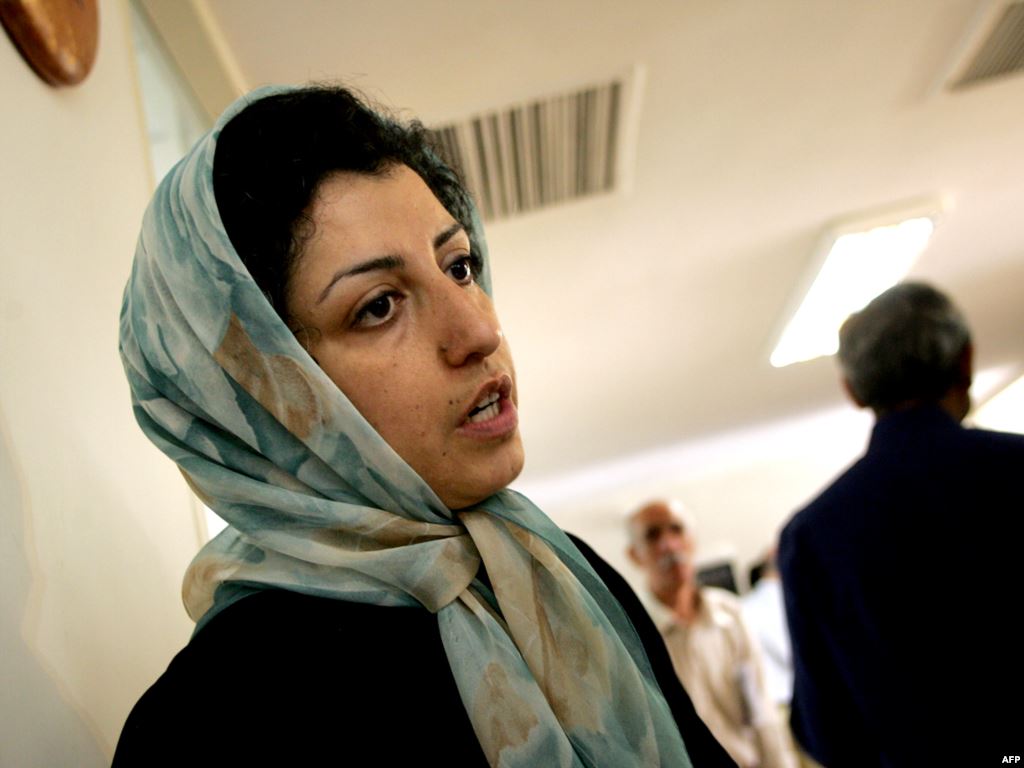
Narges Mohammadi: Drug traffickers are victims of poverty / Ali Kalaii
Prior to 1390 (2011), possession, buying, and selling of certain drugs such as hashish and industrial drugs did not carry the death penalty. However, the Expediency Discernment Council declared in a resolution that anyone carrying, buying, selling, or possessing more than 30 grams of these types of drugs would face the death penalty. This resolution led to an increase in executions in this area; according to Ahmad Shaheed, the UN Special Rapporteur on Human Rights in Iran, 753 people were executed in Iran last year, with the majority of these executions related to drug offenses. Thousands more are currently on death row in prisons across the country. Despite this, there have been recent discussions about abolishing the death penalty for drug offenses, and a bill has been sent to parliament on this matter.
In this regard and based on the special case file of your magazine, we have had a conversation with Ms. Narges Mohammadi, the deputy head and spokesperson of the Human Rights Defenders Association and a journalist.
Narges Mohammadi, in this conversation, emphasized that drug traffickers are themselves victims of poverty in society and are usually forced into such situations. She spoke of peace, saying that by executing these individuals, not only their right to life is taken away, but their family members in society are left as victims in a chain-like manner.
Mrs. Mohammadi, a former political prisoner who was incarcerated in Zanjan prison with some of these individuals and due to the lack of adherence to the principle of separating crimes, was a cellmate, expresses the painful conditions of these victims…
Mrs. Mohammadi, in your opinion, why have we seen an increase in the number of executions, especially for individuals convicted of drug-related crimes, during recent months and years?
Considering Iran’s population, which is significantly lower compared to China, we have given ourselves an excellent rank. It seems that the issue of executions in Iran has become a function of political developments in the country. In other words, looking at the issue of executions in Iran is not just a legal and judicial matter, but it becomes more serious depending on the political developments that occur in Iran. Therefore, in these power struggles and political equations, it appears that the issue of executions is used as a lever or tool by extremist groups, with the intention of intimidating society or demonstrating power. For this reason, we see an increase in executions for charges such as drug trafficking, political and religious beliefs, and even in cases of war and other issues that carry the death penalty. This increase is a result of political developments and power demonstrations by certain political factions against each other, or in some cases, in power struggles between Iran and global powers, where this tool has been used.
But in addition, considering the widespread social vulnerability in various areas, we sometimes see that the scope of accusations, if proven, may lead to the death penalty, is also expanding.
As a member of “Ligam Campaign”, please explain what social harms can be caused by executions and how they can affect society?
See, on one hand, execution is a manifestation of violence in society, and on the other hand, the harms caused by execution are no less than the crimes for which the perpetrators are executed; meaning that they still have families and, from a sociological perspective, can cause extensive damage to society, and the vulnerabilities are felt by the families of those who are executed.
Therefore, when we see that in the issue of executions, society is suffering from various serious damages, it seems that action must be taken on the issue of executions. Of course, the Lagam campaign has taken on a small part of this work. A more comprehensive work must be done regarding the issue of executions and the damages resulting from it. When we enter the cases, we see that such damages can become a major burden on society. Even if a person is not executed, considering that the damages caused by executions can affect other families as well, they have also become victims from this perspective. Therefore, it seems that this issue must be considered as an important issue by civil society, both domestically and internationally.
Regarding the discussion of abolishing the death penalty for drug-related crimes, which has recently been seriously raised by officials, what is your opinion? Do you think there is hope for such a bill to be passed in parliament and become a law?
Considering that the execution of drug smugglers in Iran has taken a significant portion of executions, and given the fact that the social damages caused by these executions are on the rise – meaning that in my opinion, if a smuggler is executed and physically eliminated, the problem may seem to be solved, but its consequences cannot be easily controlled – it is necessary for the society or a part of the government to address and resolve these damages, which also impose a heavy cost on the community.
It seems that this trend of executions, especially in the case of smugglers, is on the rise due to the institutionalization of poverty in Iranian society, which leads to a large number of people engaging in such activities. On the other hand, in the international arena, the issue of executions, which is questioned by many countries, is another point that the government and the ruling system are involved in. The increase in executions, of which a significant portion are smugglers, has put the Iranian government and even the judiciary in a challenging position in such forums, which is not easy. As a result, resolutions are issued against Iran and discussions are held against Iran in international forums. It seems that these factors have recently forced officials to consider changing the punishment for smugglers to something other than execution.
Considering that this issue has been seriously raised and I have seen in news sources that it has also been brought to the attention of the judiciary and parliament, and the Human Rights Headquarters of the judiciary has also expressed its opinion on this matter, it may be possible to consider the execution of smugglers after this discussion. However, I have not seen much opposition in this regard…
Do you think that the Anti-Drug Headquarters and powerful and influential sections of the judiciary agree with the removal of the death penalty in relation to these crimes?
I do not have accurate information about these types of government institutions, but from the news that has been published in this regard, it seems that the groundwork for this issue is being laid; now it is not clear how seriously this issue will be pursued.
As you know, according to a recent regulation titled “Criminal Procedure Law” approved by the Islamic Consultative Assembly and enforceable since July 2015, execution can only be carried out with the approval of at least three judges and confirmation from the Administrative Justice Court. In your opinion, to what extent do you think this law can be effective in reducing the issuance of death sentences for drug-related crimes?
This issue, or even the issue of executing children under 18 years old, which is being discussed in the Judiciary Committee of the Parliament, and a few weeks ago, one of the representatives of this committee expressed their opinion that even the execution of children under 18 should be stopped, and even regulations have been put in place that are currently in the court and based on which they intend to stop the execution of children under 18, and at least some activities are aimed at not fully approving it, etc.; all of these are actually a series of strict laws to reduce this increasing statistic, and some parts of the government are thinking about reducing this trend. If they cannot eliminate executions in some areas, they at least want to automatically reduce it by implementing a series of strict laws. However, it seems that these are temporary solutions and in my opinion, the issue of execution should be taken much more seriously.
In fact, the issue of increasing executions in Iran, which has had a negative impact both globally and on the society of Iran, especially in promoting violence in the country, has caused certain parts of the government and system to consider dealing with this phenomenon. If they do not have the ability to completely eliminate it, especially for certain crimes, they can at least create some strict regulations or measures to slow down or prevent it.
Recently, an issue has emerged regarding the influx of money from drug trafficking into the election cycle and on the other hand, some are protesting against the financial aid being given to Iran in the fight against drugs, demanding that this aid not be paid to Iran because our country has attributed this high execution rate in this area to itself. What is your opinion on these matters?
Yes, recently it was mentioned by the Minister of Government, Mr. Rouhani, that some individuals have funded part of their election expenses through transit or smuggling of drugs, etc. Today, I also read in the newspapers that the Minister of Interior and the Minister of Justice, Mr. Rouhani, have followed up on this issue again. It seems that they intend to address this issue – if not in society – at least in certain layers of the government and insist and put pressure on this situation at any level they deem necessary.
If such issues exist – which, of course, they do as they have been raised by officials of the Islamic Republic system and the matter is not just a rumor – the reality is that the issue of executing drug smugglers is called into question. It seems that when such hands get involved in drug trafficking, many of those who are executed or will be executed for these crimes are victims of this heinous phenomenon. This raises serious doubts and questions as to whether a portion of the election expenses, which in Iran are exorbitant and involve billions of tomans, are being funded through drug trafficking. This shows that many issues need to be reconsidered, including the execution of drug smugglers, who in my opinion, are mostly small-time smugglers and victims of this system, while the real profits are being made at higher levels and in more important matters such as the election phenomenon, causing them to lose their lives.
When issues like this are raised, doubts and questions arise for human rights, political, and civil activists in Iran. But what mechanism should be used in relation to drug trafficking in Iran, whether through the policies of the Islamic Republic system or through pursuing officials in Iran or international institutions, requires a review and new strategic policies. Of course, I cannot express an opinion on this issue because I do not have much knowledge about it, but at least I can say that this issue of dirty and tainted money entering the election through drug trafficking is one of the issues that can undermine this action by the Islamic Republic.
As a final question, please consider that if execution is removed for drug-related crimes, especially considering that those considered first-hand offenders receive less punishment and are not executed while the small fish are executed – as you also mentioned – what should be said to those who have been executed so far and their families!?
Undoubtedly, this can be a fundamental question. Unfortunately, in Iranian society, there are some individuals who become victims multiple times. See, the issue of drug trafficking is said to be caused by poverty in many cases; meaning when the head of a family cannot provide for the family’s livelihood and expenses, given that we share borders with countries like Afghanistan and Pakistan, it can easily become a victim of this heinous phenomenon; meaning that for meeting basic needs and necessities, many of them become victims and the reason is that these individuals are living in poverty.
When I was in the women’s prison in Zanjan, I saw 80-170 female prisoners, none of whom were political, and the majority of them were drug smugglers and even sentenced to death. Among these people were those whose children were also in prison; meaning the child was born in prison and was growing up there. Imagine that these children’s fathers, uncles, and other family members were executed and they only had a mother left, who was also under a death sentence, and you don’t know what kind of heartbreaking scenes this mother and child had to endure every moment, knowing that the mother’s execution could happen at any moment. When we looked at the lives of these people from the inside, we realized that they were truly victims, and when we talked to them, we could see that they were forced and compelled – or whatever else you want to call it – and only resorted to these things for the necessities of their lives, and of course, they became
Or there was another woman who herself and her husband were in prison for smuggling and their couple was also under the death sentence. They had two young sons who grew up outside of prison without parents or a guardian and one of them, who was also addicted, died. Meaning, these children became victims of this terrible social harm in a society where risky behaviors are very common.
I want to say that unfortunately, in Iranian society, layers of society who are victims of poverty, sometimes become involved in these terrible phenomena and become victims again. It is very likely that those who are victims of poverty will turn to addiction and trafficking and be sentenced to death, and then their families will once again become victims when their parents fall into prison and lose their lives. Of course, in my opinion, those who die are very lucky; for example, of the two brothers who were outside and I mentioned, the one who survived is condemned to live with absolute poverty, without parents and with the grief of losing his mother, father, and brother, and I really don’t know what will happen to him in this society.
In fact, these vulnerable individuals become victims of these phenomena multiple times; victims of poverty, trafficking, parents being imprisoned, losing their loved ones, and this cycle of victimization continues and it is truly heartbreaking.
I wish instead of investing all this capital on execution and dealing with smuggling and smugglers, we could solve this issue at its root in society and eradicate it. In my opinion, as long as poverty is institutionalized in our society, it is natural for its victims to be involved in issues such as smuggling, addiction, and other social harms, and this is very painful.
Thank you for the opportunity that you have given us in the Khatt-e-Solh magazine…
 By: Ali Kalaei
 April 25, 2015
Tags
Ali Kala'i Execution Magazine number 48 Monthly Peace Line Magazine Narcotics Narges Mohammadi Zanjan Prison ماهنامه خط صلح ماهنامه خط صلح