


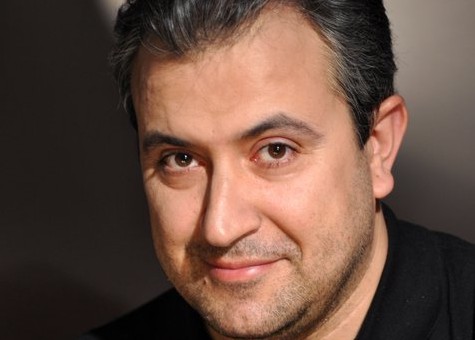
Good Song of Koosar: We are entering a mystical world/ Siavash Khorramgah
The issue of controlling virtual activities and eavesdropping on conversations by intelligence-security devices is an important topic that has been occupying minds for some time now. However, the existing effective solutions proposed are not taken seriously by ordinary people or even many political-civil activists, and this has become the basis for irreparable security damages.
Recently, a newspaper has published a report titled “Human Trafficking SIM Cards!” in which the author claims that personal information will be accessible to others through SIM cards without the owner’s knowledge and has warned against it. The emergence of this issue, along with the approaching implementation of the second phase of intelligent filtering, has caused concerns about digital security within the country to increase.
Based on this, in this issue of the monthly magazine “Peace Line”, we have gone to visit Nik Ahang Kousar, an Iranian musician, cartoonist, journalist, and blogger living in the United States with over a decade of experience in the media industry in his home country. Nik Ahang Kousar is currently the editor-in-chief and managing editor of his self-written website, which is considered a citizen journalism media outlet. He has recently launched a new section on censorship and cyber security, in addition to his regular articles.
The Minister of Communications of the government, Mr. Rouhani, has recently announced that the second phase of intelligent filtering will be implemented in the next two months. How much will this intelligent filtering, which apparently aims to control social networks and mobile messaging, endanger activists and ordinary people?
One point should not be forgotten, that Mr. Rouhani and his team have a security background and when the Ministry of Communications says they are concerned about “the widespread dissemination of offensive content through some social networks such as WhatsApp, Viber, and Tango,” it means they will definitely go after some of those considered “red lines.”
When they implement the “headlines” information, they always go to those who have had more contact with these individuals. Many political activists do not know that they have been victims for years…
It seems that the plan for intelligent filtering has been discussed in previous governments, but has been silent for a while. How do you evaluate the reason for this?
As far as I know, the team formed during Ahmadinejad’s government spent a lot of money but disagreements resulted in no outcome. However, my information is based on the words of two internal sources and I have not been able to investigate further.
Perhaps the technical facilities were not available at that time and due to the connections of individuals in the Rouhani government with brokers in Europe, a new path may have been opened.
Dear Kowsar, after three years of launching your personal website, you have also started a new project called “Taknavis”. What activities do you do in Taknavis regarding censorship or security in the cyber space?
The single-column format was essentially a change in the layout of the technology and science section. My colleagues and I were interested in being able to focus on our shared concerns with our audience, who may have been affected by filtering or lack of security, alongside serious political and social news. For me and my colleagues, this was a special experience and my colleagues agreed to provide many short but useful news or lessons for non-technical audiences.
Based on the feedback you have received, how effective do you consider your solo activities to have been during this period?
The articles that geeks published about gadgets, applications, security issues, and notes received appropriate feedback. In my opinion, it was a new movement in online journalism for Persian media to also pay attention to these topics. It was because of this experience that we have now organized the “Filternet” cartoon competition, where enthusiasts can create cartoons using online tools on this website and follow the event through the address “filternet.cc” and participate in the competition.
Recently, the newspaper “Law Report” has published an article titled “Selling People’s SIM Cards!” in which the author warns about the availability of personal information to others through SIM cards without the owner’s knowledge. What is your opinion on this matter? Can such claims, that certain software is installed by some active operators in Iran after inserting the SIM card into the phone, be true?
You should ask Mr. Snowden about this! Just a few months ago, it was said that with the hacking of mobile network SIM cards, it was possible to track and monitor conversations. And also, if for example an application could be installed on a smartphone that would send the recorded information to another center, would anyone notice?
For more information in this field, I will introduce two articles that can be referred to. (1) and (2)
In this report, it has even been mentioned that this program allows you to take photos and videos with your camera at any time, or have access to your phone’s audio recording. Do you think such claims can cause fear and panic among smartphone owners?
“When I was in Iran, one of the editors who had been arrested in 1976 and was even close to being executed, said that many of his conversations or words were being listened to at home or at work, and the only means that made this possible was his mobile phone. They put recorded tapes for him and he realized that when his mobile phone was next to the TV turned on, the “crackle” sound made it impossible for the interrogators to decipher the tape and they would leave the tape in his cell for hours so he could fill in the blanks for the interrogators.”
Now imagine that at that time, the facilities were not as advanced. Now hackers can turn on your laptop camera without you noticing. In this very Washington, I have seen government employees covering their laptop cameras with tape, and it should be a standard protocol. Now imagine everything being under the control of security institutions, with a lot of experience and resources.
In my opinion, instead of people being afraid, they should know that we are entering an Orwellian world (based on George Orwell’s books) and we must learn ways to protect our privacy and teach others as well.
In those years when I was a secretary for one of the newspapers, in some meetings, the editor-in-chief who was a representative of the parliament would ask us to bring our mobile phone batteries. This is a story from 17 years ago, now that the conditions have become more complicated.
In general, among the possibilities of listening and monitoring conversations, written messages (SMS), visual messages (MMS), and internet communication (GPRS) that are received on it, which one do you consider to be stronger?
If it is discovered that the possibility of converting conversation to text and text to exist (3) and (4), then the ability to monitor and monitor the rest will not have any effect. Suppose Iran’s telecommunications systems have access to “cloud” keys.
If Americans were able to monitor Al-Qaeda and ISIS forces in Iraq through GPRS communication, why shouldn’t this possibility be available to Iranian security forces?
In any case, they have shown that with the help of foreign companies and experts, they have learned many ways to monitor individuals, but how they use them may depend on the individual’s behavior that is under surveillance. Imagine I use a simple non-smartphone; naturally, the target agent will go back to old experiences. Those years, maybe cell phones did not have GPS. Those who have been under surveillance remember that they may have seen someone in several places in one day by chance.
Now imagine the circumstances have changed. The other party is using their smartphone in a way that many of us in America do, where the SIM card is inside the phone and cannot be changed. Even worse!
I don’t want to be the cause of anyone’s unnecessary worry, we just need to know that if there is a possibility of being monitored, it is better to learn how to behave accordingly.
Is excessive concern about the digital security of the people of Iran justified?
See, when I hear that someone in a store in Iran is giving their PIN to the cashier and not taking care of this one thing, when many of my compatriots don’t have a proper password and use their children’s names or even simple numbers, well, I definitely get worried.
When many political and social activists were arrested because of the possibility of automatic tracking on their mobile phones, why shouldn’t they be worried?
Overall, in my opinion, there has been a decrease in work in this path…
Thank you for the time you have given us.
For more information, refer to the following articles on the First Look website.
1- Eskahil, Jeremy; Baghli, Jush, “How Do Spies Steal the Encrypted Castle Key?”
“The Great SIM Heist: How Spies Stole the Keys to the Encryption Castle”
2- Golgar, Ryan, “The program of the United States National Security Agency for stealing the Google Store application for hacking smartphones.”“NSA and Five Eyes Use Google and Samsung App Stores to Install Spyware”
3- Fromkin, Dan, “How can we prevent the computers of the National Security Agency of the United States of America from converting our phone conversations into searchable text?”
“Keep NSA Computers Turning Phone Conversations into Searchable Text”
4- Fromkin, Dan “How does the National Security Agency of the United States of America convert spoken words into searchable texts?”
“NSA’s Speech Recognition Program Revealed by Snowden, Making Text Searchable”
 By: Siavash Khoramgah
 May 26, 2015
Tags
Digital security George Orwell Good song of Kowsar Magazine Number 49 Monotype Monthly Peace Line Magazine ماهنامه خط صلح