


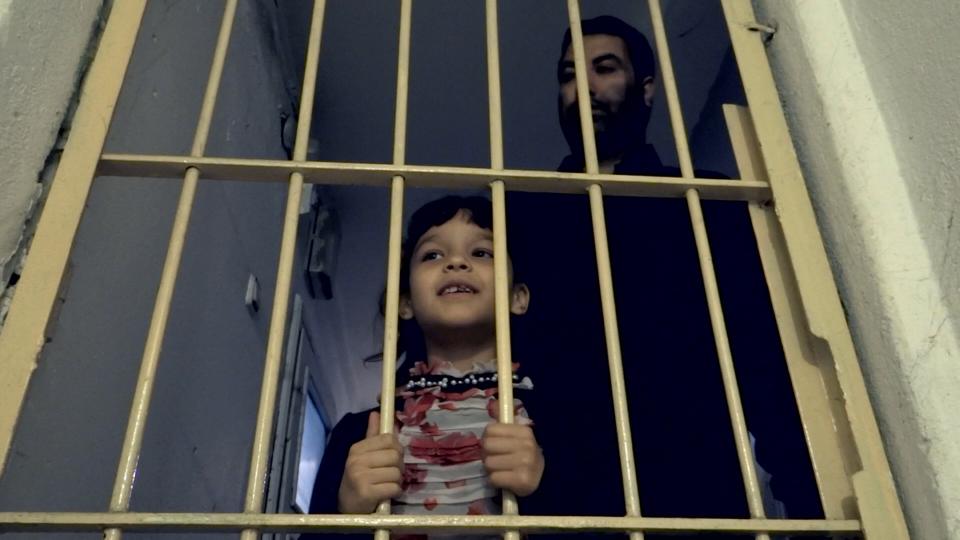
The story of the white torture in the film “Confession” by Siavash Khorramshahi.

Conversation with Siavash Khoramgah
The film “Confessions”, based on a true story, is about the white torture and forced confessions in Iranian prisons. It will soon be broadcasted on one of the satellite networks in Persian language, on the occasion of the anniversary of July 18th, 1978. This documentary was produced in Turkey and many of its actors are themselves victims of white torture in Iranian detention centers.
In this issue of the monthly magazine “Peace Line”, we had a conversation with Payman Bahoudi, the director of this film that is coming soon.
We have heard the news that a film directed by you, Mr. Bahboudi, called “Confession” has been made in Turkey. Please explain a little about it for us…
Yes, I can almost say that it took about a year from pre-production to the making of this film, and finally we were able to start filming in the city of Ankara last month. And today, as I am serving you, we are finishing the final stages of the work, or the stages of editing and sound design.
Was this your first experience with this film?
Good; I have been a director and producer at the Islamic Republic of Iran Broadcasting for over a decade. This is my second experience working outside of the country and perhaps the fiftieth project in my career.
What was your motivation for making this film and what ultimately led you to decide to create it?
As a civil and human rights activist, when you see things in the country that are considered a red line for the government, it is natural that there are limitations in Iran and you cannot depict the issues that you see in their true form for others to see. But when you step beyond the borders of your country, you gain the freedom to show things that people have not seen or are not allowed to see. On the other hand, it must be said that artists often see things that ordinary people cannot see.
The story that we depicted in the film “Confession to the Image” was one of my inner concerns; in fact, it was a true story that had been in my mind for a long time and with the collaboration of Ms. Poneh Lotfi, it turned into a screenplay.
What kind of film is this? Is it more focused on the story or did you also try to maintain visual aspects of the work?
This documentary film is not just a documentary, it is a documentary-narrative film and we tried to also consider the visual aspect of the work.
What is the subject of confession and what issues does it address?
The focus of the film is on the subject of white or sepideh torture, which the Iranian government has been using for years to suppress opponents. In this film, you see a person named “Payam Bahrami” who has launched an NGO and works around the axis of human rights; for example, in one part of the story, it is mentioned that this NGO helps Afghans who have entered Iran illegally and have been arrested by the government, and defends their rights. Therefore, the security system identifies this group, which is carrying out remarkable activities, as crossing the red lines of the system and becomes a target. In their interpretation, they burn this group and Payam Bahrami, who is responsible for this group, is arrested and subjected to white torture, and they take him to a place where he confesses to things he did not do.
Is the spatial pattern of this film a specific and reconstructed place, or did you consider a fictional location?
As the story is a true story, you cannot deviate too much from reality. This story takes place in Gilan province and the spatial pattern of its prison is also the detention center of the Gilan Province Intelligence Agency. We tried to reconstruct this space as much as possible.
Did you encounter any specific obstacles in the process of making the film Confession?
Yes, we would finish the pre-production stages over and over again and get ready for filming, but suddenly we were faced with the departure of some crew members and even actors, who seemed to be under pressure from somewhere. Recently, for security reasons, we invited some of our friends from inside the country who had collaborated with us, so that they wouldn’t face any problems being identified in Iran. In any case, we were questioning a system that had shown over the course of more than three decades that it couldn’t handle criticism; so it’s natural for you to see any practical action from them.
Did the actors in this film have any experience with prison or civil activities in their resume that could relate to the film?
Fortunately, I must say that all the actors in this film are political prisoners, especially those who were imprisoned after the events of the 88 presidential election. As they had previously experienced the government’s detention centers up close, they were able to establish a good connection with the script.
As a final question, please specify which network the film will be broadcasted on after being prepared.
Yes, the discussions have been completed and we are in the process of finalizing agreements with a highly popular Persian-language network. In the future, updates will be provided in this regard.
Thank you for the time you have given us.
 Created By: Siavash Khoramgah
 June 27, 2015
Tags
Confession Monthly Peace Line Magazine New movies Turkey White torture