


Naghbi on the story of the deprived lives of the messengers/ Amir Chamani.
This is a caption
“This is a caption”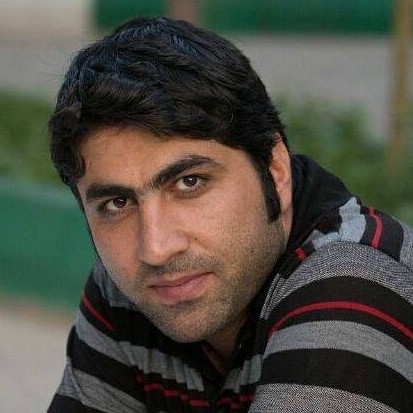
Amir Chamani
His name is Rasoul. He is a villager whose fate is like the fate of all villagers, the underprivileged, and the hardworking who have been pushed to the margins. It seems that the history of these people is a history of suffering, hardship, poverty, deprivation, and class oppression. Rasoul was born in a year when the slogan of contemporary Iran was the elimination of deprivation and the government was that of the oppressors and the tormentors. It was the year of revolution, the year fifty-seven. Now, thirty-seven years have passed since those days and Rasoul, with a severed finger from his work in the factory, has returned to the village with his two children, aged eight and two, leaving behind his life as a single worker in the city. He spends his retirement in a village in the suburbs of Ahar (in East Azerbaijan province).
When Rasoul was a teenager, he migrated from his village to the city of Ahar with a thousand hopes and dreams to continue his education. Don’t get me wrong; by education, I don’t mean university. In the village school, only up to middle school was available, and those who wanted to continue to high school had to go to the city. He spent a few years and a lot of money from his family’s hands, working part-time and doing summer farming in the village, and got his diploma. He thought it was a step forward and had his diploma in hand, and if he also had military service, he could definitely get a job somewhere and escape the fate of deprivation in the village and become someone who didn’t have the bitterness of his father’s life. He immediately went to military service. He had gone from one deprivation to another. He didn’t know anyone to order his service to be in a suitable place. Like all the deprived, he was sent to
After completing his service, with a high school diploma and the end of his service, after a few months of searching for a job, he returned to the village to be the inheritor of his father’s fate. He worked in agriculture for a few years until he got married. The income from agriculture, which had declined, was not enough to meet the needs of his family. The traditional farming methods and the drought and drying up of wells, rivers, and springs had left them with no solution. Like other young people in the village, he had to go to the city to work. He started working in a bakery and for years, he would travel from one city to another, away from his family, and work in bakeries. Until one day, upon the request of an old friend, he returned to Ahar and started working in a private water management company, with a salary according to labor laws but without insurance. After a few years, when he complained to his employer about not
He returns to the village and uses one year of unemployment insurance. Until three years ago, he finds a job in a small brick and block workshop. This time with the approved salary of the labor law and insurance deposit. He says that this small workshop was completely non-standard and the issue of work safety there was almost like a joke. There wasn’t even a simple first aid box there. Production was done in a primitive and traditional way and most of the machines were outdated. Nevertheless, there was no other solution but to work and receive a meager salary to feed his wife and child and cover their living expenses. About three months ago, while working on the hydraulic oil machine used for block making, the hose of the machine gets punctured due to decay and Rasoul, without knowing that the pressure of the oil can cause serious harm to his body, puts his finger on the hole to prevent the oil from spilling and causing a mess. A tragedy happens. The pressure of the oil punct
Up to this point, the situation has been completely disastrous. But there are other tragedies as well. This workshop was not covered by accident insurance and the workers were only covered by social security insurance. They say that for the past two years, we have repeatedly told the employer that accident insurance is a major issue and the workshop must be covered by this insurance. But there is not enough supervision over these types of workshops and accident insurance is not mandatory. On the other hand, the employer, in this state of economic recession and reduced production capacity, has no desire to incur additional expenses; therefore, he has refrained from taking this action. As for Rasoul, the insurance has only paid for a portion of his medical expenses and rest period salary. According to insurance experts, if the workshop had been covered by accident insurance, they would have paid him approximately twenty million tomans as compensation for his severed limb. But he has been deprived of this right as well. The only solution is to file a
 Amir Chamani
 January 25, 2016