


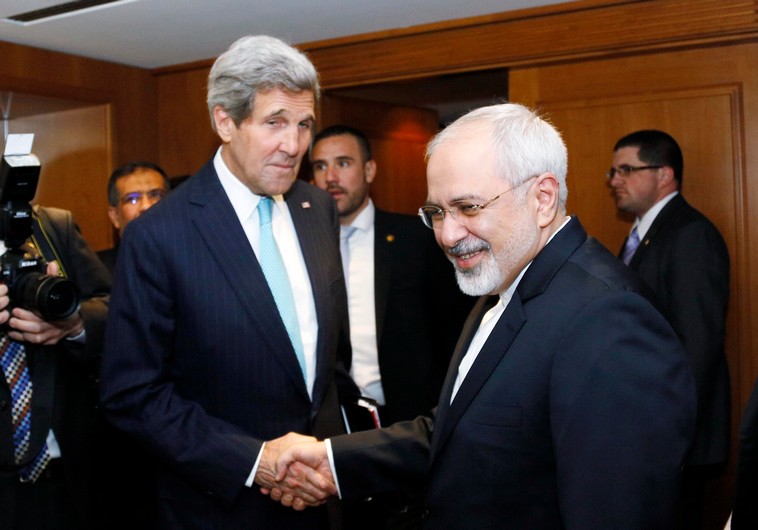
Negotiations and human rights activists/ Amin Qazaei
[/caption]
No text provided. Please provide text to be translated.
Amin Ghazaei
When in early April of this year, the Islamic Republic, along with the negotiating team of the 5+1 countries, read a framework or draft of a possible agreement in the future (and with different readings!), some inside Iran, especially those who are supportive of the so-called reform movement in Iran, considered it as a definite victory for the reformist government over the principlists. These individuals simply ignored the statement that clearly stated “until everything is agreed upon, nothing is agreed upon.” It only took a short time for this wishful thinking to be shattered. Some Iranian military officials declared that contrary to the terms of the agreement, they will not allow any inspections of Iranian military facilities (1) and even Hassan Rouhani claimed that the day after the agreement, all sanctions should be lifted at once (2); something that is both impossible and against the terms of this statement. The more interesting issue is that there are clear contradictions between the published terms of the agreement by the Western negotiators
This agreement, whether it happens or not, has no relation to the Rouhani government, as we all know that the negotiations, even if indirect, are under the supervision of the leader of the Islamic Republic and no agreement will be reached without his prior approval. Therefore, the result of the negotiations, whatever it may be, should not be attributed to the Rouhani government. This conclusion is important for the future of human rights, as it shows that the Rouhani government and its representative, Zarif, are not the ultimate decision-makers and even if they have good intentions, they will not have the power to influence the issue of human rights. The nuclear agreement is a decision made at the leadership level and should not be seen as the result of government efforts, which can or want to negotiate on human rights. It is wishful thinking to assume that the Rouhani government has the will or good intentions to improve the human rights situation in Iran; as statistics also show an increase in human rights violations
However, some may argue that the resolution of the Iranian nuclear issue will shift the focus of media and reports towards human rights issues in Iran. In other words, the Iranian nuclear crisis has shed light on the human rights situation in Iran and resolving this issue could potentially lead to international pressure on human rights in Iran. To reject this notion, we must once again refer to the contents of the statement. In most clauses, it is stated that:
The IAEA will have regular access to all nuclear facilities in Iran, including the facilities in Natanz and the former enrichment center in Fordow, and will use the most modern and up-to-date inspection technologies.
The specified time period in this statement is ten to fifteen years for these inspections and fulfilling Iran’s commitments. Therefore, it is highly likely that media attention will continue to focus on these inspections, delays, and potential restrictions, as well as reports from sending bodies, potential violations, and suspicious activities of the Islamic Republic and others. It is certain that the Iranian nuclear crisis will not be resolved by any agreement and will not be archived. Even with Iran’s closer approach to the ability to produce nuclear fuel, there is a high probability that Western reactions to these violations and lack of cooperation will become more severe.
It is also a naive thought to believe that with the signing of an agreement, Iran will return to the international community, as Obama’s propaganda phrase after reading the agreement in Lausanne suggests, normalize relations with the West, and the Islamic Republic, in order to maintain this new position, will show a stronger reaction and sensitivity towards human rights conditions in Iran.
Both lifting the sanctions to have an impact on the economy of this country will take time and re-imposing them. It has been mentioned in the statement:
“Sanctions by America and Europe against the nuclear issue will be lifted after the IAEA confirms that Iran has taken key steps towards its nuclear rights. However, if Iran fails to fulfill its commitments, these sanctions will be reinstated.”
These statements are also ambiguous and impractical. First of all, it is not clear what the key steps are. How is it possible that while Iran has less than a year to produce fuel for building a bomb, the lifting and then re-imposition of sanctions can force them to retreat? Also, how can companies and economic enterprises open accounts and invest in Iran or engage in economic transactions with Iranian authorities under such uncertain conditions that can be lifted or re-imposed at any time? Under such an unbalanced political situation that can change with an IAEA report at any moment, Iran’s economy will be completely insecure for foreign companies. Contrary to the statement, sanctions do not have buttons that can be turned on and off at will. Considering that the imposition of sanctions and observing their impact on the behavior of the Islamic Republic took at least two years, it is impossible for the West to suddenly or gradually lift the sanctions and thus disarm itself for negotiations and pressure on Iran.
With the complicated situation of Iran’s nuclear crisis, it is completely wrong to assume that any future agreement will open the way for pressuring the Islamic Republic towards violating human rights. There will be no definite agreement, sanctions will not be lifted all at once, and even in the short term, tensions between the Islamic Republic and Western countries will not disappear.
After all these years, it must be clear to everyone that international pressure (which usually remains at the level of rhetoric and condemnation) has had and will not have any effect on the behavior of this government towards human rights. The problem with those who hold these views is that they do not want to accept two simple and obvious realities:
The violation of human rights has been institutionalized in the Constitution of the Islamic Republic.
The laws of Shariah mean the foundation and basis of the judicial laws of the Islamic Republic, which inherently conflict with the most fundamental human rights.
Therefore, it is better not to pretend that the violation of human rights in Iran is solely due to the extremism or reactionary beliefs of certain groups (such as fundamentalists) within the Islamic Republic. The contradiction between the laws and actions of the Islamic Republic and human rights is inherent in its nature and will not be resolved by simply shifting positions or changing policies. As I have shown, not only will the (unlikely) resolution of the nuclear crisis not lead to a change in the behavior of the Islamic Republic towards human rights, but fundamentally, the violation of human rights in Iran is rooted in Islamic law, the constitution, and the nature of this regime, and will not change with a change in behavior or political stance. It is very regrettable that a human rights activist would be pleased that the Islamic Republic, solely for the sake of maintaining its relations (or credibility) with the international community, would show respect for human rights or align its laws with them. The attempt to gain points or appease
I’m sorry, there is no Farsi text provided. Please provide the text to be translated.
Sources.
We will respond to the request for a visit to Iranian military centers with “hot lead”, choice, 30 Farvardin 1394.
Rouhani: We will not sign any agreement unless all sanctions are lifted, handwritten, 20 Farvardin 1394.
3- According to the annual report of 2014, the status of human rights in Iran, Harana News Agency, 9 Bahman month 1393.
 Amin Ghazaie
 November 21, 2016