


Journalist or political activist? Who justifies the subtle lie? / Kambeez Ghafori
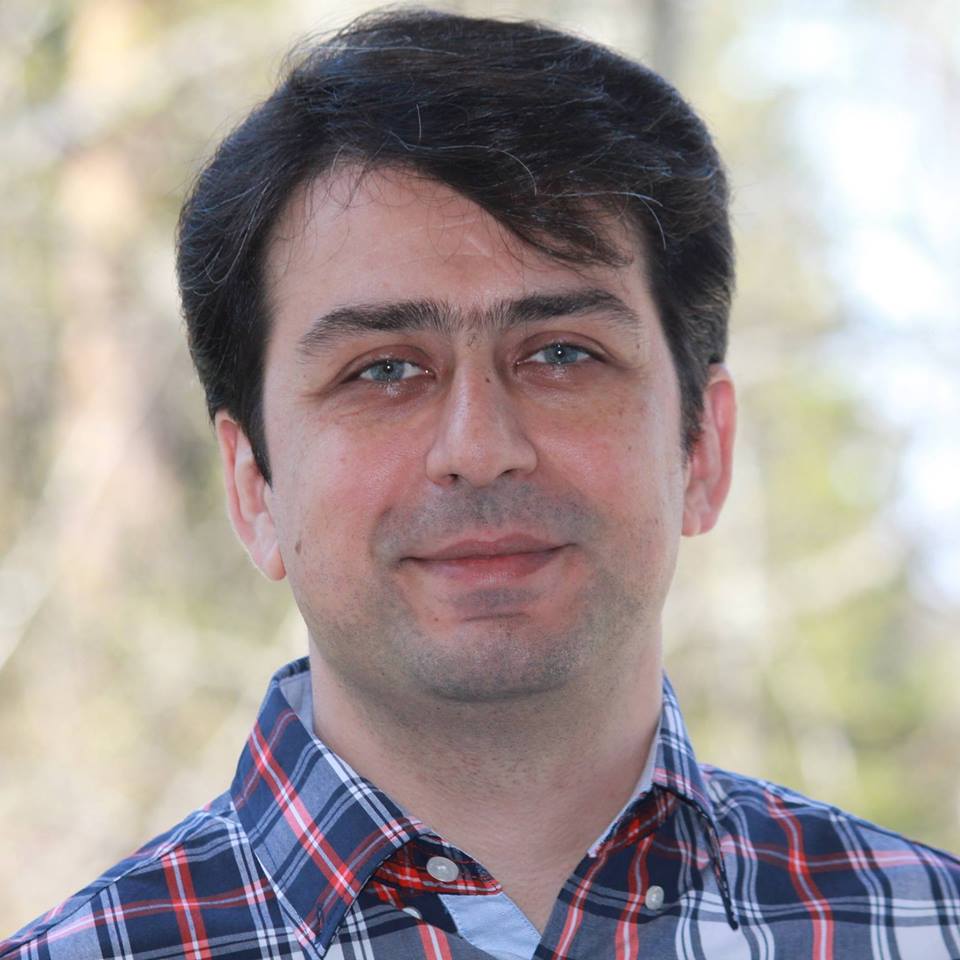
Kambiz Ghafori
Charlie Rose has been the host of a television program called “Charlie Rose” on the PBS network in America since the early 1990s. He has personally produced and hosted the show. His guests include a wide range of influential people such as writers, artists, politicians, scientists, and athletes.
Despite having a history of interviews with politicians such as Barack Obama, George W. Bush, George H.W. Bush, Nancy Pelosi, Hillary Clinton, Bill Clinton, and even Mahmoud Ahmadinejad, Charlie Rose’s name became more well-known among Iranian audiences through an interview that was broadcast on April 29th, with Mohammad Javad Zarif as his guest. However, it was not Charlie Rose who was the center of attention for Iranians, but rather a few sentences from their country’s foreign minister in response to him.
What did Zarif say?
When faced with a question about imprisoning journalists, Mohammad Javad Zarif said: “We do not imprison people for their beliefs.” He continued: “Individuals who commit crimes or violate the laws of the country cannot hide behind being a journalist or political activist.”
“Do not challenge Charlie Rose, the Minister of Foreign Affairs of the Islamic Republic of Iran. Whether he did not have the mental readiness to bring up dozens of cases of journalists and political prisoners or did not want to put Mr. Minister in a difficult position, is a matter that needs to be discussed separately. Perhaps Rose did not want to lose the opportunity for future interviews with Iranian officials (in which case, he would have to face criticism himself), but journalists – and of course Iranian political activists – have been divided in their reactions to such statements.”
What do the objectors say about Zarif’s statements?
Arman Mostofi, the manager of Radio Farda, in a Facebook post, which is not clear why, after being taken off the Facebook page, referred to Zarif’s conversation with Rose and wrote: “I kindly request you to clarify to the people and audience and avoid any misunderstandings, if journalists, students, poets, writers, lawyers and human rights defenders, defenders of workers’ rights and ethnic minorities, as well as religious minorities such as Baha’is, Christian converts, and even Shia Twelver Muslims (Gonabadi Dervishes) who are currently imprisoned in your government’s prisons, have not been imprisoned solely for expressing a different belief than what the government wants, what is their crime?
If you wish, we can provide you with a list of prisoners from each of the mentioned groups.
Your response, Mr. Minister, whatever it may be, we will publish.”
Behman Ahmadi Amoui, a journalist who has tasted the bitterness of arrest, torture, and imprisonment and was recently released, wrote on his blog: “As one of the prisoners who have been interrogated and subjected to mental and physical torture for my beliefs and the articles I have written in various legal newspapers of the country, and have spent several years in prison, I testify that, just like before, Ahmadinejad and other judicial and political authorities of the country have lied about this, and the Rouhani government and its foreign minister are also lying about it.”
He continued, “For the sake of truth, I also suggest to Mr. Zarif, the Minister of Foreign Affairs, that with the possibility of access and assistance they can receive from judicial authorities, they publish all the pages and documents of my case and the issued verdict in Branch 28 of the Revolutionary Court, which was issued by Judge Pirabbas. In this way, it will become clear who is lying and other authorities of the Islamic Republic will not have trouble finding suitable words and phrases in such cases. In this way, it will become clear who and under what titles they are hiding themselves.”
Several other journalists, such as Shahram Rafizadeh, Farshad Ghaazi, Siamak Ghaderi, Fariba Davoudi Mohajer, Nik-Ahang Kousar, and many other colleagues whose names make up a not-so-short list, also protested against these statements.
The main focus of all these protests was almost one thing: the statements of the Minister of Foreign Affairs of the Islamic Republic, which are contrary to reality, with reference to dozens of examples and live witnesses!
The words of the defenders are clever.
The website “Kalameh” published an article titled “Did Zarif Lie?” by an individual named “Bamdad Rad”, in which the author accuses the “Enlightened Thinkers” of taking a “superficial” stance and launching their own “cannon” against Zarif. He attempts to use examples from “Immanuel Kant’s” words to the “Monica Lewinsky” incident and even resorts to quoting a professor of justice at Harvard, saying “The slippery slope respects the duty of honesty, but does not hold respect for blatant lies.”
In the morning, Rad, whose real or alias name I do not know, continues, “Subtle behavior can also be analyzed in this regard; he has not really lied: in Iran, no one is imprisoned solely for their beliefs; although some behaviors related to this matter are punishable.”
The author of the word says: “Surely, Zarif is aware of the disgraceful situation of the judicial system, but in those circumstances, he logically could not appear as an opposition to the Islamic Republic; he is a lawyer, and in such situations, he must think about pursuing national interests, while also considering honesty, even if it is risky, and truly, as he says, “water should not be poured into the mills of foreign warmongers.”
In the morning, Rad and his companions, in agreement with him, say that Ahmadinejad “told exact lies in many cases” but Zarif “skillfully went towards telling the truth.”
Pouyan Fakhraei, in a written interview with the website Didegah-e No, in response to the accusation of lying against Zarif, wrote: “The personal ethics in which lying is defined is different from the ethics of the public sphere. From this perspective, his words should be judged regardless of personal ethics.”
He called the reaction of the civil society, journalists, and victims of security actions “angry” and “rightfully so”, but emphasized that “these reactions should not lead to weakening the government, whose goals overlap with the demands of this group.”
“Fakhrayi concluded his writing by stating, “While it is true that complete disclosure does not create a difference in the situation of political and ideological prisoners, in the end, from an independent moral perspective, if the expression of truth (whether complete or partial) jeopardizes the duty that is in the interest of the community, it becomes an unethical act.”
Kambiz Norouzi wrote in a note in Shargh newspaper: “The issue of ethics in international relations, although bitter and unpleasant, is the eternal reality and certainty of international relations that they are designed, regulated and implemented based on power, not ethics. In many cases, ethics have no place in international relations. Lying in international relations is not only rare, but also prevalent wherever the national interests of governments require it. We can be opposed and disgusted by this reality and regret it, but we cannot ignore this hidden and unspoken policy in international relations in practice.”
Noroozi continues: “Let us not forget the difficult situation and position that Mohammad Javad Zarif is in today, especially in negotiations with the 1+5. He must manage and navigate a risky and perilous process, a process in which the national interests of Iran are at the core.”
He says the issue is not defending Zarif, but he emphasizes: “I don’t care if what Zarif said in response to the interviewer is a lie, unless it is in the realm of international relations, the mosque, church and temple, and the holy places of the pure? Are they all telling the truth? Did the United States of America tell the truth in its claim of the existence of nuclear weapons in Iraq to justify its military invasion of the country, and after it was revealed that the US claim was a lie, did any American diplomatic officials admit to this deception? Morality is a great virtue, but wisdom and reason are also great virtues.”
Lie; Politician and Journalist
A common saying among Iranians is that politics has no parents! Politics is a field of lies and deception, and a skilled politician is a master of deception.
Perhaps in our troubled country, this statement may be close to reality. Iran has never been able to break free from the yoke of tyranny, except for a few brief moments, but the main tragedy, in my opinion, is that the journalist, as the vigilant eye of society, has “selective blindness”.
When a journalist is “political,” it means that if they don’t like a government, for example, they will condemn the execution of Farzad Kamangar and four other prisoners in that government with a loud voice. But when their beloved government comes to power, they will dismiss the execution of Habibollah Golparipour with the same charge from the government and say it’s the work of the judiciary, not the beloved government! Or even earlier, they will say this person was a terrorist and not a political activist, so we shouldn’t protest against their execution. (Note that the charge for both of these individuals was the same, but a group of journalists and political activists who support the current government had a completely different reaction to their execution compared to the executions in the Rouhani and Ahmadinejad governments.)
“When a journalist, instead of fulfilling their duty of discovering and presenting the truth, seeks to justify lies in the international arena in order to conclude that these relationships are based on “power” rather than “morality”, it is inevitable that they should not protest against becoming a victim of the iron fist of power, because the nature of a tyrannical government is also power, not morality!”
If we accept lying in politics to protect what they call national interests and benefits, we must also accept that politicians in other countries may also lie for their own interests and if they are better liars, they will trample on our rights. This perspective should make journalists in every country aware that if this were the case, there would probably be no such thing as democracy in any part of the world today and, to the strong suspicion of the world, it would still be in a situation similar to the Middle Ages.
In my opinion, it is better for journalists to leave the work of politicians to them and see their mission not in being in a public relations position, but in providing accurate information.
The cost of lying for any political figure, whether it be Mohammad Javad Zarif, John Kerry, Hassan Rouhani, Francois Hollande, Mahmoud Ahmadinejad, or Barack Obama, should be so high that none of them would attempt to deceive the people in any part of the world. But if someone is involved in politics, it would be better if they declare their position and continue their political activities with dignity, without hiding behind the guise of a journalist. Of course, if someone believes in the dignity of lying, we cannot expect anything else from them.
When someone seeks righteousness / Art must be present, along with shame and dignity.
Language should not be more agile than art / Do not count lies as art.
Ferdowsi
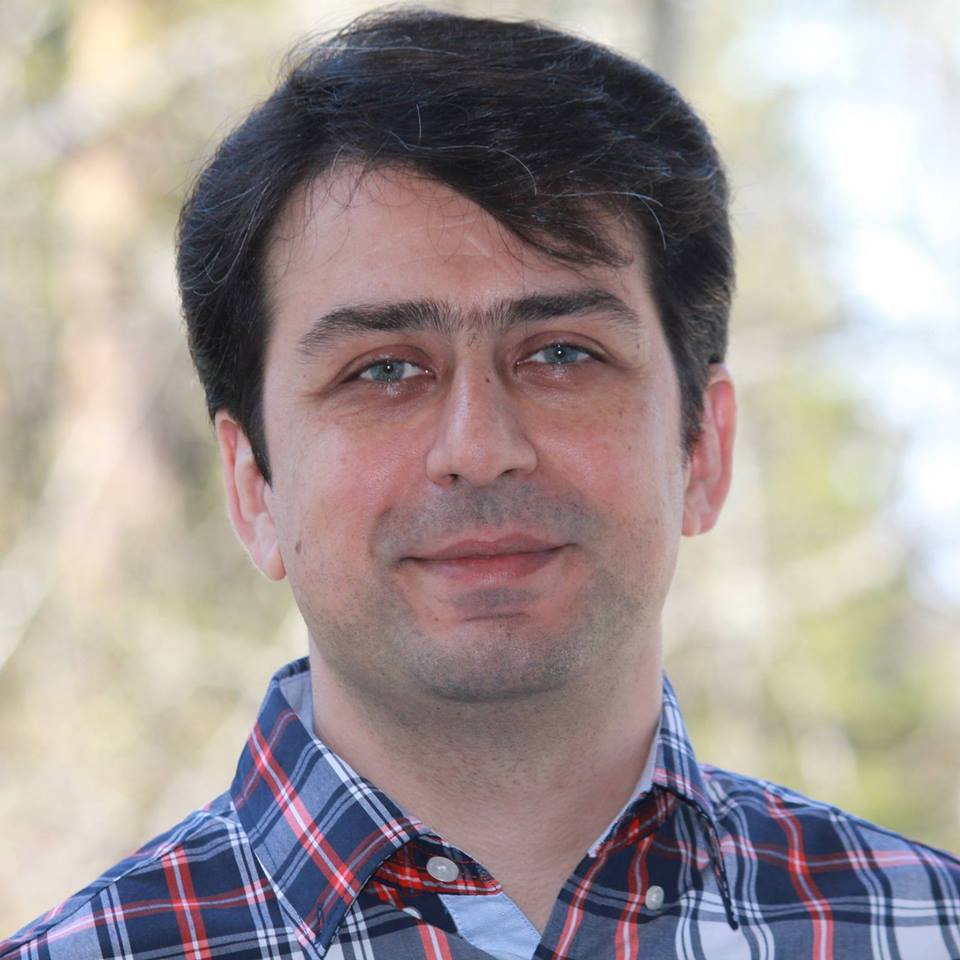 Kambiz Ghafouri
 June 28, 2015