Border City – A Poem by Shahriar Behrouz

Last updated:

March 24, 2026

Border City – A Poem by Shahriar Behrouz

What is the weight of a gun? I’m afraid it will dislocate your shoulder. بگردان

And the blood that has a red smile on its face, turn your neck around.

“Kissed before I pick the thorny wires” شتر

“And let us come to the forefront of freedom, I fear you more.” من

The reason I lost it.   The woven hair in my clothes. می‌دهد؟

Does the scent of bird’s wings give you courage? Does your loneliness guide you through the ruins? ش را بر روی کیبورد می‌گذارد

He goes and sings “Bazi Kobani”. In the room, he puts his hands on the keyboard. می‌کشند

You pull your hair over your shoulders, bombs are being dropped, and missiles are whistling. نمی‌کند

They are killing and this commotion does not diminish your loneliness. بگذار

I am afraid, I am afraid that you have gone and left your loneliness with yourself. ، تصمیم گرفته‌ایم که همیشه برده باشی

“Be a servant. My dear, we have decided that before we are born, you will always be a servant.”

We have been shot and our heads are like heavy stones of prisoners on the borders.

She spins and remembers the blood-red smile on her face.

I am afraid, I am afraid my hands will be late to hold your hands.
And my trembling knees cannot dance on your grave. تو

The clothes you are wearing have the scent of gunpowder and are on your body.

It is beautiful, only silence knows about tanks and guns. است

Don’t worry if the clothes are empty and the blood is a red smile.

On his face, he will have blood and will cry. I feel like a turtle.

It is me who rings the bells.

And from the heights of the roofs and minarets, it comes towards you.

I have seen a woman in my dream who is strangely similar to you. اون

He was digging a well as tall as me, I’m scared, he.

I am afraid that I will die before I see you.

Death cannot give me comfort. I must bring out my sorrows from the treasure.

Let me say goodbye to my mother with fear and come towards you. آن برایم بشنود

We must come and I am so afraid to hear the red voice for me. هنوز بیدار نیستی

Be calm, for it is late and you are still not awake.

I cannot find my way back behind any of the barriers.

“Rang 2 – A poem by Reza Ekwaniyan”

They want me to tell enchanting poems, but they don’t know that the one who

In the pain of a broken bone, the tongue that opens the bud. آن بگویم

It dries on the branch. They want me to speak of it in my poems.

I will tell you about the train and the lost lovers, of the broken-hearted lovers who…

They are sitting on a bench at the station; they want them with their eyes.

I accept that I have fallen behind in this society, my old age is catching up with me.

I fall and let them deny me. Who am I?

I am not the one who is left behind from the metro every morning and…

Is it crowded from all sides in the bus? Squeezed and pushed?

The wrinkles of its essence give the taste of anise and old sorrows.

I pour myself into a disposable cup; my only companions are my trains.

My beautiful and sad love is far away, the power of this enchanting potion. این نبود

If I were to kill myself that day, it wouldn’t be for this reason alone.

It was a simple trick! This city has suddenly become organized. خالی وجود نداشت

The trains arrived on time and there was no empty seat on the bus.

I got my share.

A machine for killing – a poem by Reza Ekvanian

A wild, forest river dancing in the wind, in a painful waterfall, in the mountains;

What are you watching! It’s a childish game of death!

Come back, for giving one’s life is not something that humans can easily watch. ه

This waterfall and river with the sound of motherly voice. بلند

The children have become wild. They dance in the wind; with tall trees.

The forest mourns, pulling the dried up roots; pull the roots. تو

Pull the rope, pull the rope. Oh mothers, a dead child because of you. کشید

“The bloody savage sword is sharper; it will bring you down.” کرد

He will greet death with a smile and introduce himself to you.

Did.

Tribal conflicts, the effects of pre-modern era sedimentations / Mohammad Mohabi

This is not a valid Farsi text. Please provide a valid Farsi text for translation.
Mohammad Mohabbie

In ancient Greece, approximately 2400 years ago, Aristotle, the great Greek philosopher, made an interesting statement about the conflict between tribal, clan, and similar societies and citizenship, civilization, and the formation of a political community.

The establishment of a police force (meaning a city or civilization) is only possible when all concepts based on nature, such as φράτρη (tribe) and φυλή (clan), and in other words, all identities based on kinship and blood ties, fade away and disappear.

In many societies, the tribal system has disappeared, but in Iran, all three systems – urban, rural, and tribal – still exist and in some cases, they do not follow any rules or laws except their own and promote prejudice. When this prejudice is combined with traditional economic interests, it creates terrifying violence, as Dr. Taghi Azad Armaki, a renowned sociologist at the University of Tehran, says, “The two main factors for creating war and violence, especially tribal violence, are common material interests and tribal emotions and prejudices. When both factors are present, we will witness an increase in violence.” Unfortunately, in different ethnicities, there are no proper ways to acquire wealth and, for example, the issue of water can be a factor in poverty or wealth of individuals. In these tribes, the fear of poverty and water scarcity will have serious consequences and in the absence of strong laws within the tribes, it will lead to severe violence.

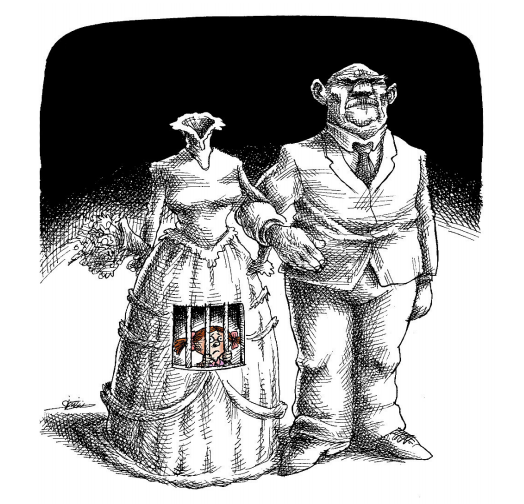
In this culture and order, there is another prominent feature which is the patriarchal nature. In this culture, a man must be tough, resolute, and have a dry and authoritative behavior, always standing up for his rights. In the culture of tribes and clans, in addition to all the bitter issues, women’s rights are also widely violated.

On the other hand, there is a strong sense of national solidarity among members of the tribe. They are committed to each other and in the face of difficulties, act as a collective, neutralizing any external threats. Therefore, in case of a dispute or conflict between two members of the group, the rest of the individuals also get involved and the conflict between two individuals turns into a conflict between two groups.

Tribal or clan conflicts in the past were mainly carried out with cold weapons and relying on the strength of individuals, but in the modern world with the spread of firearms and easy access of tribes to advanced weapons, the situation becomes dangerous. In these conflicts, firearms have a significant impact as they increase the intensity of damage and casualties. The governing institutions in Iran have also lost their former power and solving problems has become very difficult. On the other hand, in the past, animosities would disappear through intermarriage after conflicts, but now the mediating institutions have lost their power and have not been replaced by a new institution, which causes animosities to remain and with just a spark, war and conflict can start again. It is clear that the high unemployment rate and lack of welfare in areas where these conflicts occur have a significant impact on increasing the number of conflicts. Conflicts over resources such as land, water, agricultural products, livestock, etc. or disputes that are only about

The escalation of tribal conflicts in some regions, especially in southern Iran.

A few months ago, news was published in the media about 23 people from two tribes, “Mohammadsaies” and “Mohammadiha”, being killed in the village of “Petk Jalali” in Baghmalek county in Khuzestan province due to tribal conflicts. The incident began in Khordad 94 (May/June 2015) with some disputes, including telephone harassment, theft of livestock, and objections to irrigation of land, leading to the first clash. Stones were thrown between the two tribes in the village, leaving dozens severely injured. Due to their skill in throwing stones, the injuries and damages from this clash were very severe. Two days later, one of the Mohammadsaies shot and seriously wounded one of the Mohammadiha. As it was certain that this incident would not go unanswered by the other tribe, a 120-member peace council was formed with the presence of the governor of Ramhormoz and

There is an old tradition among tribes and clans that whenever a clan sheds blood, they must leave their home and life behind and never return. After this very distressing and upsetting incident, a 300-member council consisting of Ayatollah Musavi Jazayeri, representative of the Supreme Leader in Khuzestan, Ayatollah Malekzadeh, representative of the Supreme Leader in Kohgiluyeh and Boyer-Ahmad, elders of the Bakhtiari and Bahmai tribes, Arab-speaking sheikhs, and many other leaders of the province, took action. However, the elders of the Mohammadmosayi clan stated that the spiritual conditions of their tribe are not suitable. The fighting and bloodshed between the two tribes continues and as of the latest report until July 2017, a total of 23 people have been killed in the conflict between these two clans.

But the problem is not just bloodshed and bleeding; animosity and revenge-seeking from both sides and the recklessness of some young people who do not listen to the words of their elders, leads to other events. Burning each other’s homes, looting and damaging them, setting fire to agricultural lands, shooting at power transformers, destroying street lights, destroying water wells, blocking roads and attacking each other are among the problems that ultimately led to the order of the prosecutor, forcing the Mohammadmosai and Mohammadis tribes from the villages of Petak Jalali, Kal Jahān, Darreh Qir, and Sorkhar to migrate. This order is to protect their own lives and restore their peace, and to monitor its proper implementation, hundreds of police and special units are present in these areas.

The roots of tribal conflicts.

Bloody conflicts between tribal and clan groups, including the events that took place in Ramhormoz and Baghmalek in Khuzestan province, have affected every Iranian. The fact that two tribes, for various reasons, engage in conflict with each other and in the span of two years, 23 people are killed and a large number are injured, and two villages are completely evacuated, is unacceptable in the 21st century. Especially in a country with a strong central government that is capable of neutralizing any anti-security behaviors. Unfortunately, this is the reality that exists. In such conditions, where unemployment and production shortages are our problems, a village with a population of two thousand, whose lands are linguistically valuable in the region, is now deserted. For the past two years, due to these conflicts, its lands have been turned into wasteland.

Let’s put aside these differences alongside the report of the Gallup polling institute, which was published in June 2017 and introduced Iranians as one of the angriest people in the world. This anger naturally reflects in our behaviors and one of its most important reflections is personal or collective conflicts. The tragic incident in Bahmanmolk is divided under the title of collective conflicts. Medical and judicial statistics also indicate an increase in personal and group conflicts, which have various reasons; including:

A- Numerous economic problems in Iran.

B- The cultural issues of the diverse Iranian society, which have not yet been properly integrated in the process of nation-building, have caused more divergence than convergence among the different components of Iranian society.

Cultural and social policies of the reactionary and demagogic system that are far from the current cultural discourse in society.

D- The continuous struggle for reform and change in Iran over the past century has led to a dead end.

In summary, the society and government institutions in Iran, each in their own way, for various reasons including inherent and historical factors, have not fully adapted to the requirements of the modern era. As sociologists say, Iranian society is an anomic (disorganized) society. On the surface, many aspects of modernity have entered Iran. However, remnants of the pre-modern era still exist and manifest themselves in various social crises.

The only way out of this situation is education on citizenship and human rights. In Iranian society, it is not acceptable to discriminate based on ethnicity, as it is very dangerous. There is another reason as well; ethnicity itself is not the basis of discrimination in Iran, but factors such as religion, gender, ideology, distance from the center, and climate are the basis of discrimination and oppression. Focusing on ethnicity not only does not solve any problems, but it also adds to them, spreading ethnic and tribal tensions in Iran that benefit no one. Without a doubt, the majority of people in Iran are deprived of fundamental rights (such as welfare and freedom) and only a minority dependent on the government hold all political positions, political opportunities, and a large portion of wealth. This minority, dependent on the government, does not belong to a specific ethnicity. Minority rights (especially linguistic, racial, ethnic, and religious) are guaranteed in a democratic and free structure. Let us not forget that the modern


Sources:

  1. A narrative of the reasons and victims of the bloody conflict of a tribe, Fararu, on June 20, 2017.

  2. Abdi, Abbas, political tension and personal anger, Shahrivar newspaper, issue 1157, July 4th, 2017.

  3. Sajadian, Nahid, and colleagues, “Evaluating the Role of Tribalism in the Sense of Social Security,” Scientific-Research Journal of Geographic Information, Vol. 24, No. 94, Summer 1394, pp. 76-59.

Violence in Myanmar and the necessity of amending the Constitution of the Islamic Republic of Iran / Farshid Rafogaran

This is not a complete sentence, so it cannot be accurately translated. It appears to be a caption for an image, but without context it is impossible to provide an accurate translation. Please provide the full text for an accurate translation.
Farshid Rafougaran

Burning, beating, torture, rape and widespread massacre of men, women, children, elderly and youth from the defenseless and oppressed Muslim minority by the Buddhists residing in the country of Myanmar, also known as Burma, and the publication of some of the most shocking and mind-boggling images, brings tears to the eyes, worry to the hearts, and tremors to the bodies of humans today. And once again, this simple yet unanswerable question arises in the tired minds of civilized humanity: why can’t and why doesn’t it become possible to live in peace, security and comfort in the vast and beautiful land of the earth, and why does the savagery and ignorance prevail over the pure conscience and conscious being of man, and reign over the innocent and aware mind?

It is obvious that social events, like natural phenomena and accidental occurrences, are subject to causal and causal relationships; meaning that the reason for every phenomenon and effect must be found in the source and cause of its emergence. If we want to examine and investigate the root of all disasters, crimes, and injustices in human history, especially the tragedies of the present era, we will not be faced with just one cause and a few limited reasons, but rather a collection of multiple causes and important factors that, in a chain, lead to the occurrence and realization of the aforementioned regrettable consequences. And until the issues and challenges that have arisen in the field of physical and mental security of national and global society are properly understood and investigated, efforts to solve them or even present solutions in this regard will be futile and merely slogans. Although research and effort in this field require a strong national and international determination from all experts, including sociologists, politicians, lawyers, and religious scholars, and it is certainly not possible

At first glance, it is clear that the root of all these crimes and other similar atrocities in different parts of the world is rooted in the barren desert of anger, aggression, and violence, and their source is the selfishness, pride, and discrimination arising from cultural, religious, ethnic, and racial differences. In other words, when a person becomes an ideologue and believer in a tradition, custom, or religion, they reject and condemn anything that goes against it as absolutely wrong, and give sanctity to their own beliefs and convictions, considering them as the ultimate truth, regardless of whether they are right or wrong. This leads to the belief that they are entitled to better rights and privileges, while the other is deserving of restrictions and threats. This is the starting point of the concept of “self” and “other” on our small planet, which has resulted in wars and crimes. Because in the pursuit of their own rights and fulfilling their duties, the one who considers themselves holy demands more

But the main point is.

Before discussing the main topic, it is necessary to mention that the writer of these lines is an Iranian and a Muslim, and a follower of the Twelver Shia religion. He is committed to the principles and beliefs of his religion to the best of his ability, not blindly but through research. Therefore, what is presented in my perspective does not contradict the fundamental beliefs and principles of my religion, and I deeply believe in it.

Several months had passed since the revolution of fifty-seven and the change in the country’s political system, but despite expectations for forgiveness, mercy, and kindness to prevail as the high standards of Islam and the noble teachings of the Prophet and the essence of the revolution, in my hometown of Shiraz, events occurred that, despite my young age at the time (eight years old) and my weakened memory (forty-seven years old), I still vividly remember the disturbing scenes. For years, different ethnicities, religions, and sects (official or unofficial) had peacefully coexisted in Shiraz, like many other parts of the country. But suddenly, the hidden feeling of superiority and sanctity emerged, aided by the side effects of the change in the political system, and a group of innocent fellow citizens were subjected to severe harassment and violence by extremist and self-appointed individuals, resulting in the burning of residential homes and especially the shops and businesses of the Baha’i community and physical and mental

Let’s forget… about those bitter days, years have passed. Our grandparents, late father, and most of the residents of our old town have also departed to the land of truth. I am also in the midst of completing my fifth decade of life and it is uncertain how many more mornings I will be caught in the midst of the turbulent times. But unfortunately, what remains unchanged and hidden under the ashes of self-interest and ignorance, are the same causes and reasons for unjust discrimination and its accompanying violence.

We must accept that within our public mindset, the same weak and one-sided logic has been hidden, which the Myanmar criminals use both as an excuse and motivation, and also as justification and purification. They consider themselves superior to the followers of the Prophet of Islam and believe they are justified in their persecution, harassment, exploitation, murder, and looting of them. This tragedy becomes even more heartbreaking when it is justified and supported by the ruling powers and legal institutions.

What is happening today in Myanmar and what happened yesterday in the Safavid court regarding the crimes against Sunnis and the Baha’i community, and the thousands of regrettable and dangerous incidents that have affected my fellow Baha’is, is leading us to not fall into the trap of Satan’s negative politics, and to encourage and persuade the leaders and intellectuals of the nation to accept the truth and present useful and appropriate solutions, and to promote culture and continuous education for all, in order to establish and solidify human rights and promote moral values, regardless of national, racial, and religious affiliations, so that there will be no room for creating feelings of difference, discrimination, hatred, revenge, and violence. One of the most important solutions is to change and reform the discriminatory laws that have been a major factor in creating distance between different social and religious classes, both before and after the revolution. It seems that the most important of these reforms should be in the twelfth and thirteenth principles

The Twelfth Origin.

The official religion of Iran is Islam and the Ja’fari branch is the official sect, and this principle is unchangeable forever. Other Islamic sects, such as Hanafi, Shafi’i, Maliki, Hanbali, and Zaidi, are fully respected and followers of these sects are free to practice their religious ceremonies according to their own jurisprudence. They also have the right to teach and educate in religious matters, as well as personal affairs (marriage, divorce, inheritance, and wills), and their related disputes are recognized in official courts. In any region where the majority of followers belong to one of these sects, local regulations will be based on the authority of their respective councils, while preserving the rights of followers of other sects..

Thirteenth origin.:

Zoroastrians, Jews, and Christians are the only recognized religious minorities who are free to practice their religious ceremonies within the limits of the law and follow their own traditions in personal matters and religious teachings..

Fourteenth origin.:

According to the noble verse “God does not forbid you from being kind and just to those who have not fought against you because of your religion or driven you out of your homes. God loves those who are just.” The Islamic Republic of Iran and Muslims are obligated to treat non-Muslims with good morals and Islamic justice, and to respect their human rights. This principle applies to those who do not conspire or act against Islam and the Islamic Republic of Iran..”

As it is observed, the only official religion of the country is Islam and other divine religions are also respected and their followers are allowed to practice their religious duties within the limits of the law. The opposite concept of these principles is the lack of recognition of followers of other sects and beliefs (such as Baha’is and Mandaeans) in the constitution and lack of support for them, which can undoubtedly lead to unfair discrimination and cause thousands of social damages and internal and international security and political risks. Unfortunately, there is a paradox between the fourteenth principle and the twelfth and thirteenth principles of the constitution on one hand, and a practical paradox between the fourteenth principle of the constitution and what is actually happening on the other hand. According to this principle, Baha’i citizens and Iranians are entitled to all human and social rights and also to encounter Islamic justice and good morals. Undoubtedly, one of the most fundamental human rights is the right to education, learning, and employment

It is hoped that readers of this article, regardless of their religious affiliation, will make every effort to denounce the actions of extremist groups such as Daesh, the Taliban, Myanmar, etc. solely based on the principles of humanity and human rights, which are undoubtedly among the most fundamental and important teachings of Islam. Let us not forget the pure conscience, sharp vision, and compassionate hearts that condemn and denounce the direct and clear crimes committed by Buddhists against Muslims, Israel against Palestinians, Hitler against Jews, and Daesh against Shiites, etc., and do not accept their justifications. They will not accept discrimination, violence, and violation of basic and human rights against any nation, religious followers, or sect, under any pretext or purification.

A comparative look at child marriage and its processes in violation of children’s human rights / Elaheh Amani

This is a caption in Farsi.
Goddess Amani

69 years ago, the Universal Declaration of Human Rights declared that all human beings are born free and equal in dignity and rights. Over the past 69 years, various international and regional agreements have been made to ensure the equal rights and dignity of all human beings. The Convention on the Elimination of All Forms of Discrimination against Women (CEDAW) in 1979 and the Fourth World Conference on Women in Beijing in 1995, which was signed by 189 countries (some countries, including Iran, the Vatican, and several others, did not endorse the platform on women’s rights regarding their responsibility and right to their own bodies and abortion), provide specific strategies to overcome the challenges of promoting equal rights for women and girls. In fact, for the first time, the term “girl child” was used as one of the 12 global challenges for women’s and girls’ human rights. In the Beijing Platform, governments committed to enacting and enforcing laws on minimum legal age for marriage and

Child marriage, which mostly affects young girls, is defined by the global community as marriage under the age of 18. Child marriage has negative and long-term effects on these children. According to UNICEF, girls are five times more likely to be married under the age of 18 compared to boys. As of 2015, 720 million women who are currently alive were married during their childhood. Out of this number, 250 million were married under the age of 15.

  • Early marriage and at a young age puts their physical, sexual, and mental health at risk, increases the level of domestic violence, and due to power dynamics in such relationships, limits the control over their body and decisions regarding pregnancy. In the case of girls, lack of access to prenatal care, early pregnancy and childbirth seriously jeopardizes their health.

  • Girls who marry before the age of 18 are three times more likely to experience domestic violence compared to women who marry after the age of 21.

  • The mortality rate for girls between the ages of 19-15 during childbirth is twice as high as women who give birth at the age of 20. The mortality rate for girls under the age of 15 giving birth is, on average, 5 times higher than women who give birth after the age of 20.

  • More than 15 million girls aged 15-19 in low- and middle-income countries (LMICs) become mothers. Of this number, 90% are married.

  • Children of mothers who are considered children themselves and are under the age of 18 have twice the chance of dying in their first year of life compared to mothers who are over 20 years old. Young mothers who survive childbirth may also suffer from various diseases throughout their lives due to excessive work or other illnesses, including childbirth fistulas.

  • Cultural, economic, legal, and family barriers often lead to educational interruptions for married girls, and in many countries, especially in Africa and South America, between 12 and 22 percent of these girls will drop out of school.

  • Until 2015, 88% of countries in the world had approved a minimum legal age of 18 for marriage, but legal loopholes and gaps have led to the failure of implementing and enforcing this agreement effectively.

  • Of the countries that have set the legal age at 18, 52% have considered the marriage of girls with the consent of their parents, father, or grandfather as an exception to the rule of law – which is 18 years old. These “exceptions” have created numerous challenges in implementing the minimum age of 18, under the titles of customary and religious laws. Considering these “exceptions” which include permission from parents and customary and religious laws, in 58% of countries, girls under 18 can get married and in 31% of countries, even marriage under the age of 15 is possible.

  • Lack of equal support for the rights of girls and boys regarding early marriages has resulted in one-third of countries having a difference in the minimum age for marriage between girls and boys. In 27% of countries around the world, the legal age for girls is 4-2 years younger than the legal age for boys.

  • Some countries – including the Philippines – have different minimum ages for religious minorities. The legal minimum age for marriage in the Philippines is 21, but Muslim boys can marry at 15 and Muslim girls can marry after puberty.

  • Even in Western countries, in some cases the minimum age for marriage is disregarded, and for example in some Eastern European countries like Albania, Bulgaria, and Ukraine, Roma girls often get married under the legal age of 18. In Pakistan and other South Asian countries, forced marriage is very common. On a global level, African and South Asian countries have the highest rates of child marriage. In Nepal, which is the third country with the highest rate of child marriage in South Asia, 37% of children under the age of 18 and 10% under the age of 15 get married.

Due to the numerous harms that child marriage, especially for girls, entails, these types of marriages are considered as a form of violence that has a sexual-gender aspect.

The study of literature related to child marriage, especially girls under the age of 18, shows that social and economic harms such as poverty in rural areas and on the outskirts of large cities, armed conflicts, ethnic tensions, lack of access to education facilities, lack of access to education and health facilities, the gap between primary and secondary education among girls and boys, limited job opportunities and income for girls, forced marriages, customary and religious laws are infrastructures and factors that create encouraging conditions for child marriage. In child marriages, the relationship between young girls and adult men – who often have a significant age difference – is more unequal, violent and sexually charged. These children are more likely to experience sexual abuse in their marital relationships and suffer more harm than other women, including suicide, depression, death during childbirth, and other physical and psychological damages.

Child marriage in America

While discussions about child marriage of girls on a global level have been the main focus outside of the borders of America, and we have heard less about child marriage in America, laws regarding marriage and the minimum legal age for marriage are one of the issues that have not been thoroughly reviewed and have not received serious attention and have been forgotten. However, in recent years, this issue has been brought to the forefront.

250,000 girls under the age of 18 have gotten married in America during the years 2010-2000. Statistics show that even 12-year-old girls have gotten married in Louisiana, Alaska, and South Carolina.

In August 2017, the Tahirih Justice Center, an organization that advocates for women and girls’ rights, particularly in the area of ending gender-based violence, conducted research and estimated that in Texas – which ranks second in the United States for child marriage – nearly 40,000 children under the age of 18 were married between the years 2014-2010.

In 27 states of America, there is no minimum age for marriage. In March 2017, New York raised the minimum age for marriage from 14 to 17 years old, and in Texas in May 2017, 18 years old was approved as the legal minimum age. In this state (Texas), if a child is deemed capable and responsible enough to make decisions as an adult by a court, the court also allows them to make the decision to get married (in America, with court approval and in exceptional cases, children can be “emancipated” and become responsible for their own lives). Religious beliefs and also arguments for those who join the army are among the exceptions recognized by the governor who also participated in the past US elections, Chris Christie. Although in New Jersey, where he is the governor, the minimum age is considered to be 18 years old.

Child marriage, which is currently being discussed by human rights organizations and some women’s organizations, including the majority of feminists (Feminist Majority), faces numerous challenges in terms of interpreting laws. Some civil society organizations argue that in a society where relationships between girls and boys under the age of 18 are free and teenage pregnancy is considered a social problem, setting a minimum age can create other challenges for the healthy lives of girls who become pregnant outside of marriage and live in states where abortion is not allowed. It is also argued that the decision to marry should be free and that if a girl and boy under the age of 18 want to marry of their own free will, they should have the right to do so. These debates and discussions have led to the fact that in California, despite the efforts of many civil society organizations, feminists, and human rights advocates, the legal age has not yet been set at 18, and children can still be married with the consent of their parents and the court

It is interesting that in 2016, the US Department of State referred to child marriage as a “violation of human rights” and stated that it has “terrible consequences and marks the end of childhood”. It seems that children’s rights can only be addressed outside the borders of America!

“این عکس یک منظره زیبا از کوهستان است که در آن آسمان آبی و ابرهای سفید به طور طبیعی ترکیب شده اند.”

This photo is a beautiful landscape of a mountain where the blue sky and white clouds are naturally combined.
Photo of a capable person.

Child marriage in Iran

In Iran, the legal age for marriage is 13 for girls and 15 for boys, and there are no accurate statistics on child marriage, especially for girls. According to UNICEF estimates, about 17% of girls under the age of 18 and 3% under the age of 15 are married. According to statistics from the Children’s Rights Institute, the number of married girls has increased from 33,383 in 2006 to 43,459 in 2009. This 30% increase is considered a warning sign for the violation of children’s human rights.

Zahra Kheram, the secretary of the Child Marriage Seminar in marginalized areas in the year 1395 at the University of Science and Industry, stated that “since 2013, specialized seminars on various topics such as child labor, street children, child addiction, etc. have been held by Imam Ali Population Center and today another issue that we, as social activists, deal with every day and should not remain silent about, is the concerning and bitter issue of child marriage in our country.”

He stated, “A large number of marriages that occur at a young age are never registered and as a result, the children born from these marriages do not have birth certificates and ultimately contribute to the hidden population of the country.” He continued that according to official statistics, the highest rates of child marriages and divorces are in the provinces of Sistan and Baluchestan, Khuzestan, Khorasan, East and West Azerbaijan, Fars, Zanjan, Tehran, Hamadan, and Mazandaran. Regarding child marriages in Iran, he stated based on research that “traditional and religious values in preserving honor and family dignity, and in the cultural aspect of the patriarchal system, are influential factors in child marriages in Iran.”

The marital status of children from married couples, according to Kheiram’s statements, is 82% married, 5% divorced, 5% widowed, 4% abandoned by spouse, 2% with a spouse who is unemployed, and 2% with a spouse who is in prison.

In terms of age, 25.5% are between 11 and 13 years old, 55% are between 14 and 16 years old, 18% are between 17 and 18 years old, and 2% are under 10 years old and have married.

Furthermore, regarding addiction among children of divorced parents, it has been stated that 78% of these individuals have an addicted father, 16% have an addicted mother, and 6% have addicted parents.

Regarding the experience of child marriage, Zahra Kheram stated, “47% of these individuals have experienced physical abuse, 21% have suffered injuries, 53% have experienced fractures, and 3% have had disabilities. This is while 5% of them have experienced an age difference of 15 to 40 years, 10% have experienced an age difference of 10 to 15 years, and 85% have experienced an age difference of less than 10 years.”

The reality is that although Iran is not among the 20 countries with the highest rates of child marriage, the violation of children’s rights, forced and imposed marriages based on cultural and religious beliefs, crippling economic poverty, and extreme social class differences have robbed the childhood of these girls, burying their hopes and dreams in unequal and violent relationships, making even one case unacceptable.

Despite the legal measures known as “parental consent”, even if the legal age of marriage is raised from 13 and 15 to 18 – as recommended by the United Nations – there is still a long way to go to end child marriages. Cultural awareness and political will of the government to support children’s rights are the solutions to ending the violation of children’s rights.

Iran has several notable characteristics that are worth considering:

  • Despite the fact that the legal age for marriage in Iran is one of the lowest in the world according to Islamic laws, Iran is not among the countries that rank high in comparison to other countries in terms of child marriage. The reason for this is that the general attitude of society is ahead of the laws, especially family laws, and particularly in cities, it is not socially acceptable for girls aged 13 and boys aged 15 to get married.

  • Iran, due to its immense class, cultural, and social divisions, is one of the countries where the average age of child marriage reflects the existing realities and the danger of the growth of child marriage for girls cannot be ignored. On one hand, we witness a rising trend of delayed marriage for both women and men, and on the other hand, we see a growth in child marriage, especially in the marginalized regions and provinces of Iran. This divide is one of the processes of the vast gap between poverty and wealth in Iranian society; a society that not only has paradoxes in terms of economy, but also in terms of culture and society.

Ali Akbar Mahzoon, the Director General of Information, Statistics and Migration Registration, stated in an interview with Mehr on September 30, 2017 that “the average age of marriage varies in different provinces, and in Tehran it is 30 for men and 26 for women, which is higher than other provinces.” He also continued to say that “the index of delayed marriage in women has increased by more than twice in less than 10 years.” And “the national average age of marriage is reported to be 27.8 for men and 23.1 for women.”

The violation of children’s rights in Iran has terrifying aspects, one of which is early marriages of children – especially girls. Civil society in Iran and abroad makes positive efforts in providing economic support for children’s education and supporting families struggling with poverty. However, raising awareness about children’s rights, creating a platform for social changes, reviewing laws, and promoting collective consciousness in a society to hold those in power accountable are of utmost importance.

History has shown that while charitable efforts can provide short-term relief for those in need, they do not address the root causes of social issues. The cycle of poverty, violence, and neglect will continue to grow for those who are trapped in its grasp. Social activism for social change, from the fight against polio to the civil rights movement for people of color in America, to the fight for gender equality, has demonstrated that while charitable aid may provide temporary relief, true change and the defense of human rights and the establishment of a society free from violence and with economic and social justice can only be achieved through collaboration and support from grassroots organizations within social movements.

Sources:

A Look at the History of Activities of Mohammad Ali Taheri and Erfan Circle/ Sara Saeei

This is a caption.
Sara Saee

Mohammad Ali Taheri was born on the first of Farvardin month in the year 1335. He holds a bachelor’s degree in mechanical engineering from Turkey and has been presenting theories on mysticism, self-awareness, consciousness, anti-consciousness, and complementary medicine since the early 1960s – approximately 40 years ago.

They initially and until the year 1380, presented their teachings in homes and in completely private sessions. From the years 80 to 84, Mr. Taheri held classes in Karaj, and later on in Jamalzadeh-Enghelab Street in Tehran, with a limited number of participants. He also held classes in the city of Tabriz at the same time.

Erfan Circle began its official activities in 1384 (2005) and as a non-governmental legal organization, under the license of the National Youth Organization, on Sattarkhan Street. Its activities included holding Erfani (self-awareness) classes and treating patients. The license from the National Youth Organization was valid for one year and was renewed for two consecutive years.

In the year 1385, due to an increase in the number of participants and lack of space, classes were relocated to a building in Gandhi. The number of participants had increased to about 500 per session by the year 1386 and classes were suspended.

As the number of participants increased, concerns and sensitivities of the government began. In 2007, the security police summoned and interrogated Mohammad Ali Taheri, based on a written complaint from one of the former participants of his courses – who had significant influence in security institutions. The complainant claimed that attending these classes had caused family disputes for them. However, after the court proceedings, it was revealed that these individuals had conflicts even before being introduced to these teachings and their problems had no connection to these classes. Mohammad Ali Taheri was released on bail after a few hours of detention, but he promised to suspend his classes. As a result, Gandhi classes were forced to shut down in the winter of 2007 under pressure.

Despite the closure of Mr. Taheri’s classes, educational activities continued. Since late 2005, while Mr. Taheri’s classes were being held, students who had completed the relevant courses and become “Erfan Halqeh coaches” or “Masters” were also teaching and holding Erfan Halqeh classes. After the mandatory closure of Mr. Taheri’s classes in February 2008, the coaches’ classes continued. On the other hand, Erfan Halqeh activities continued at an office on Saadat Abad street. The activities of this office were limited to registering for Erfan Halqeh distance learning classes, distributing Mr. Taheri’s books and educational products such as CDs, etc.

With the closing of Gandhi classes, clinics (places where patients were treated) were also closed. The history of the formation of clinics dates back to the summer of 1384. In this year, the first clinic was opened on Takt-e Tavous Street by Mr. Taheri with the aim of providing free treatment for patients. Until the closure of Mr. Taheri’s classes, this clinic was still in operation.

In the year 1385, in a self-initiated action and upon the suggestion of some of Mohammad Ali Taheri’s students, a number of other alternative medicine centers were also established in different parts of Tehran and dedicated to treating patients. All of these centers operated as charities and provided free alternative treatments and care to patients. In the fall of 1386, on the brink of mandatory class closures, the police suddenly demanded the closure of all alternative medicine centers, citing a lack of permission from the Ministry of Health. As a result, upon Mr. Taheri’s request, all alternative medicine centers were closed.

After the closure of classes, a case was filed against Mohammad Ali Taheri at the Ministry Court due to his personal complaint and influence which led to the closure of classes. The commander of the Niloufar Security Police Station announced that they did not have jurisdiction over this case and sent it to Commander Ali Pour of the Tehran Security Police for investigation. After summoning Mr. Taheri and his appointment as the leader by him, upon the recommendation of Commander Ali Pour and his deputy, Commander Jorkesh, it was decided that Mr. Taheri would continue his activities using a cultural permit from NAJA (Law Enforcement Force) in the form of a charity. As a result, in November 2007, an institution called “Yas Paradise Charity Institute” was registered under the management of Commander Jorkesh. Although the purpose of the institution was not to teach cosmic mysticism, a number of activities were mentioned that within the framework of these activities, instructors were given permission to teach cosmic myst

According to clause 4 of the disciplinary regulations, which was specifically drafted for instructors of educational units under the coverage of the Yas Paradise Charity Institute, it is explicitly stated that: “Instructors are obligated to teach the provided course materials accurately for various courses of the Mystic Cultural and Artistic Institute of the Cosmic Mysticism and must refrain from presenting any additional or irrelevant topics.” Clause 5 of this regulation also states: “Charity instructors must strictly avoid engaging in political discussions.”

In this way, the activities of the mystical group have been legal and authorized by official authorities until the classes are open. Sardar Alipour – who was the commander of Tehran security at the time – Sardar Jorkesh, and Judge Lahrasi and some members of their families founded this institution.

Mystical Circles Committees.

The formation of the Sufi committees began from the time of Gandhi’s classes, and the first committee was called “The Committee for Reflecting on the Past and Future of Medicine”. The purpose of its formation was to collect medical documents and evidence from treatments performed by alternative medicine practitioners, in order to present them to the Ministry of Health to prove the scientific validity of alternative medicine.

Alongside the Medical Committee, other committees were also formed, all consisting of specialists who, after completing courses in mysticism, were willing to collaborate and align teachings with science, philosophy, religion, etc. Among these committees, the Quranic Studies Committee, Scientific Committee, Physics Committee, Law Committee, and Public Relations Committee can be mentioned.

Books by Mohammad Ali Taheri.

The first book by Mr. Taheri was published in 1384. Dr. Esmaeil Mansouri Larijani, a professor of Islamic mysticism, became familiar with Mr. Taheri’s discussions and classes through his students and held several face-to-face meetings with him for further criticism and research. This ultimately led to the writing of an introduction to the book “Halkh-e Erfan (Cosmic Mysticism)”. This book was published in 84 as Mr. Taheri’s first book, with an introduction by Dr. Esmaeil Mansouri Larijani.

In the year 1385, the second book, titled “Man from Another Perspective”, was also published with an introduction by Dr. Larijani and with the official permission of the Ministry of Culture and Islamic Guidance. However, after the arrest of Mohammad Ali Taheri in 1390, Mr. Larijani came under pressure from the Revolutionary Guards and cut off his collaboration. He also requested in writing to have his footnote removed from the book “Man from Another Perspective”.

The third licensed book by Mr. Taheri is called “Human Insight”. In 1389, during Mr. Taheri’s 67-day detention, this book was also published with the official permission of the Ministry of Culture and Islamic Guidance under the Ahmadinejad government.

After that, two other books titled “Several Essays” and “Human and Knowledge” were published in Armenia.

Other books published after Mr. Taheri’s arrest have not been approved by him and have been printed by his students. During the six-day Norooz holiday in 1391, Mr. Taheri did not approve the new books due to the lack of writing and final version approval.

In addition to published books, in the years 1385-1386, the results of scientific research by doctors and psychiatrists on the effects of two complementary medicines, “Faradarmani” and “Saimentology”, on physical, mental and psychological illnesses were published in nine special issues of “Medical Science” magazine. The supervision of this was under the responsibility of Dr. Seyed Shahabeddin Sadr, the former head of the Medical System of the country and the head of the Health Commission of the Parliament (who was previously the Deputy Minister of Health). Seven specialized issues have also been published in medical news publications, “Tab Kol Negar” and “Medical Science” (under the editor-in-chief, Seyed Shahabeddin Sadr), in order to disseminate the results of medical research on Faradarmani and Saimentology.

Also, several articles by Mohammad Ali Taheri were published in official newspapers of the country, including in Hamshahri newspaper (2009 and 2008), Resalat newspaper (2009), Sobh-e Eghtesad newspaper (2010), Arman newspaper (2010), and Ebtakar newspaper (2009).

Activities.

Scientific.

And.

Academic.

During Mohammad Ali Taheri’s legal activities, several official agreements were made with several domestic universities and foreign institutions, which resulted in the issuance of certificates for participation in free courses in two fields of psychosomatic therapy and psychosomatics. In these centers, certificates were issued for both in-person and online participants. All of these classes were closed down before or after Mr. Taheri’s arrest, with negative propaganda from security institutions and threats and intimidation from university officials.

  • University.

    Science.

    Medicine 1388:

    Classes were held in two groups of 1100 people. The second session coincided with the controversial presidential election and the university’s announcement of its commitment to avoiding any group meetings as an excuse to cancel university classes. However, with the efforts and intervention of Dr. Tavakolian (Deputy of Iran’s University of Medical Sciences), the seminars on Scientology continued to be held remotely for a long time.

  • Notebook.

    Education.

    Hi.

    Free.

    University.

    Tehran.

    1387: This is a year in the Persian calendar, equivalent to the years 2008-2009 in the Gregorian calendar.

    These courses were held in person in several sessions (eight sessions) for different groups including doctors, paramedics, and regular individuals, and then continued remotely. The total number of participants was approximately six thousand.

  • Academy.

    Between.

    The international.

    Echo.

    Energy.

    Republic.

    Azerbaijan:

    This academy, which awarded honorary doctorates in mysticism and healing to Mohammad Ali Taheri, entered into an agreement with the Institute of Mysticism to pursue research collaborations and ultimately issue academic degrees in various fields, according to the terms of this agreement.

  • University.

    Medical.

    My age.

    Armenia:

    The Traditional Medicine University of Armenia awarded an honorary doctorate to Mohammad Ali Taheri in the paradise of Ardibehesht in the year 1390. Just a few days before his arrest, the president of the Traditional Medicine University of Armenia, along with a delegation, had come to Tehran to award an honorary doctorate to Mohammad Ali Taheri, the founder of Iranian complementary medicine (Faradarmani and Saimentology). According to Aftab News, this was the second time in 22 years since its establishment that the Traditional Medicine University of Armenia had awarded an honorary doctorate to a researcher. The Islamic Republic of Iran’s national television also broadcasted and announced the news of the honorary doctorate from the Armenian university on their Channel 2.

67-day detention in 1389.

In the year 1389, just a few months before Mr. Taheri’s second arrest, the “Taher Addiction Recovery Project” was successfully carried out in eight addiction recovery camps in the city of Isfahan under the supervision of doctors and psychiatrists. It was also broadcasted on the documentary channel of Sima. After witnessing these successes, the addiction recovery camps were targeted by the forces of the Sepah-e Pasdaran-e Enghelab-e Eslami (Islamic Revolutionary Guard Corps) and were destroyed and shut down.

Mohammad Ali Taheri was arrested on April 18, 2010. According to Mashregh News Agency, he was arrested on charges of “acting against national security.” It was also announced that his detention was due to the establishment of illegal organizations. Mohammad Ali Taheri was imprisoned for 67 days in solitary confinement in Evin Prison, Section 2A, and was then released on bail.

During his arrest, Mr. Taheri was promised that he could only focus on conducting scientific research in the field of psychotherapy and psychosomatics. However, security forces secretly went to various universities and hospitals and threatened them; in fact, contrary to their false promises, an order was issued to stop all research. At the same time, information was sent to officials at the University of Tehran, including Dr. Mansouri Larijani, Sardar Jorkesh, Sardar Alipour, and Judge Lohrasbi, from the Legal Committee, and even Judge Lohrasbi was demoted. As a result of this pressure, officials at the University of Tehran denied the cooperation agreement that had been signed between the university and the Erfan Halqeh Institute.

In the year 1389, research projects at the doctoral level were carried out extensively at the National Police University, but these projects and the results of their scientific research were never published in the media.

Year 1390.

“Taheri was arrested again on the 14th of Ordibehesht month in 1390 (May 2011). In the first nine months of his detention, he was subjected to severe psychological torture by the interrogators and investigators, who presented a forged execution order on one hand and threatened his family and students on the other. He was forced to confess without any possibility of contacting his family or lawyer. The security forces also used the tactic of broadcasting his confessions on television. However, Mohammad Ali Taheri had anticipated this and had prepared a video beforehand, in which he mentions that any confessions made during his detention were a result of the pressures put on him. This video was immediately released on social media after the broadcast of his confessions on television.”

After nine months of solitary confinement, Mr. Taheri finally learned in court that the accusations made by the interrogators and interrogator (Mr. Asadi) were false. He was informed about the case-making and the creation of security shoes and baseless charges, including “interference in medical affairs”, “insulting sacred beliefs”, and “contact with an unrelated woman (based on a video clip of him trying to control a woman in an unbalanced state in a class of 300 students by holding her wrist)” – without being given the opportunity to defend himself in court – and was sentenced by Judge Pirabbasi in Branch 26 of the Revolutionary Court to five years of imprisonment, a fine of 900 million tomans, and 74 lashes. The appeals court also upheld this sentence without considering any of the written works of Mr. Taheri that were present in the case and the defenses that were added to it.

Letter to Ahmad Shahid in 1391.

After a conditional six-day leave, a letter was published by Mohammad Ali Taheri (in spring of 1391). In this letter, which was published on the fifth of Farvardin of that year, Mr. Taheri explicitly listed the violations of human rights and misconduct of judges, courts, interrogators, and other relevant individuals regarding himself and other prisoners. He also declared his readiness to testify and provide a report on the human rights violations of the Intelligence Organization of the Revolutionary Guards, interrogators, and investigators in Iranian prisons to Ahmad Shahid.

“Anthem of the Captive Women – A Poem by Hojjat Badaghi”

تو می افتم

I solved the crescent of your eyebrow in the arch of my stature, I fall for you.

Hafez said, “Don’t act crazy, man. We are older than foolishness,” he replied.

That companion who became his head… was right, not foolish. کن

Open the window and let the sun shine in.

I went to see the passing of time, as fast as light, in a flowerpot.

The small tree became silent, opened its mouth wide.

Takfir, the deep-rooted problem, became a contentious issue. I told Hafez.

I am capable of measuring, not just shouting in the cave.

No, the snake spoke of the apple and the woman’s thoughts.

The error did not go away from the pen… Count and remember the needle.

Fire of consciousness, anthem of chained minds, literacy of blind speeches in memory. ه‌های مختلف

The rise of baseless generations has led to the growth of different sects in the roots of knowledge. آزادی

“Days darker than any night, democracy’s branches, the withered grass, the trees of freedom.” ایی ترجمه این متن را ندارم

Rashid impartially remembers… I told Hafez that I am not capable of translating this text.

Human is measurable, the ability of human is measurable. It can be said that the sky could not bear the trust.

“Pull… a wisdom of stone and cross into flowing waters.” ترس آواز خود را نداد

The mountain shuddered from the unseen disaster and the forest remained silent from excessive fear.

The sun’s bias reached the desert, its path flowing through living veins.

The dead body writhed on the ground, what red days they were. تو

I told Hafez, “I saw the arch of your stature and the crescent of your eyebrows.”

“Just leave these two sentences for me.”

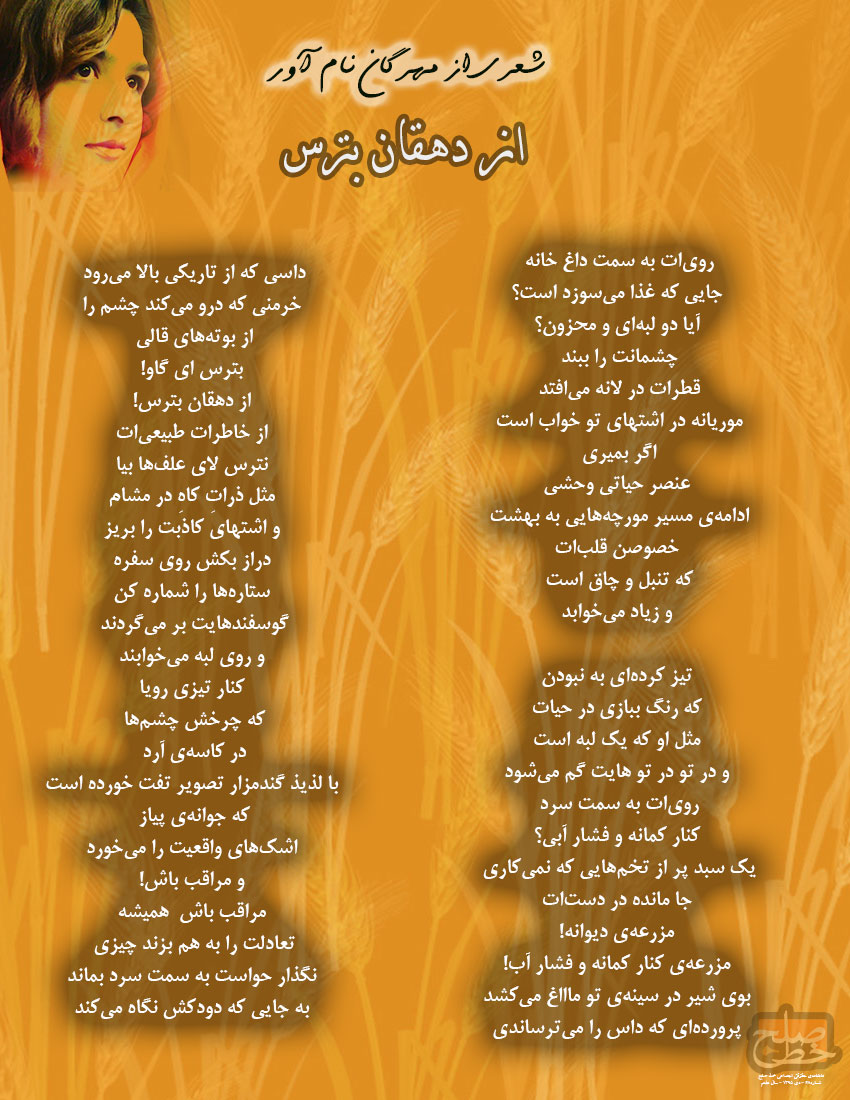
“Be afraid of the farmer – a poem by Mehragan the renowned”

Is your face towards the hot place where the food is cooking? انتظارت

Are you two-faced and sorrowful? Close your eyes, drops are waiting for you.

Because the nightingale falls asleep in your longing, if you die.

A vital element of wild life is the continuation of the path of ants to your heart, especially to your paradise.

He is lazy and overweight and sleeps a lot.

You have made it a habit to not show your true colors in life, just like him.

“That is one edge, and in your layers”

Your face gets lost towards the cold side of the bow and pressure.

Blue? A basket full of eggs that you don’t need left behind.

In your hands is a crazy farm! A farm next to the canal and water pressure! ش را به دست می‌آوری

The scent of a lion is carried in your chest, a cub that you hold in your hands.

You used to scare me with the thought of a ladder rising from the darkness, a rope that…

You used to frighten me with the image of a ladder ascending from the darkness, a rope that…

The cow is afraid of the carpet bushes, close your eyes!

“Be afraid of the farmer! Don’t be afraid of your natural memories, come among the weeds.”

“Like straw particles in the nose, it will scatter false desires.” ای تو می‌خوانند

Stretch out on the table and count the stars, your sheep are singing for you. می‌کنند

They wander and sleep on the edge next to the sharpness of the dream that they rotate.

Eyes in the bowl of flour with the delicious image of toasted wheat. باشد

It is the young onion sprout that consumes the tears of reality and should be careful. نیست

Be careful! Always be mindful not to lose your balance. There’s nothing to it. برای تو می‌وزد

Don’t let your attention stay towards the cold, to a place where the chimney is blowing for you.

He/She is looking.

Sleepiness from the throat – a poem by Mohammad Mehdi Pour

خواب

This means “To wake up from sleep by punching the pillow.”

“I want to swallow this sleeping pill and fall asleep, so I can forget everything.”

I have to tighten my waist and hips so I can’t sleep. جا

“Escape from sleeping and let me sleep here.” دهم

I will raise myself from the middle and show my height. بنشینم

I will open my tenth and index finger and sit calmly by your ear.

Let me tell you, my dear, I love you. Episode one, listen carefully.

He was jumping and flying, catching arrows from the corner of his eye.

The egg was cracked and spilled from my hand. شده است

The fist that is hanging from your spine, which has been severed from me.

It was getting further and further away from me.

My feet are my beloved spinal cord, my beloved spinal cord is above my feet.

The eater’s mouth, filled with saliva from between the teeth. کرده

Caught by the hand that has jumped and embraced the neck.

He has done it by hand, pulling the air pressure tightly.

Softly and slowly, your hands sway back and forth on your feet. ه

Going up, going up… Episode two: Corner. ‌زد

I was cut, lying on the gear and making noise.

He took a bite of the meat and put his hand on his teeth.

Sitting, clinging, dried, on the tip of my fingers, cut off, mine.

He understands the air, the focus of language from the hole. تنم از شوق تکان می خورد

My hands tremble with excitement and my body shivers with desire when I kiss you. من

This fluttering is a fresh language between my fingers. ی

I am dried up, my cracked fingers are rubbed from the blueness.

“And the pain has twisted in my ear, from the twisting pain of my finger.”

Are we still waiting for eight more to break?