Iranian Jews: “Iran is a country that we love.”

Last updated:

April 21, 2026

Iranian Jews: “Iran is a country that we love.”

The Prime Minister of Israel, Benjamin Netanyahu, said in his recent speech at the United Nations General Assembly: “Iran threatens the existence of its own country.” He accused Iran of being organized against Jews and referred to the new President of Iran as a “wolf in sheep’s clothing.”

But one of the groups that rejects such claims is the large community of Iranian Jews; a reminder of the long-standing relationship between Iranian culture and Judaism, which has become more complicated alongside the intensification of tensions between the Iranian government and the Jewish community.

Nowadays, less than 70,000 Jews live in Iran compared to the 1940s when their population was over 100,000. However, alongside a significant period of migration after the revolution and the establishment of the Islamic Republic in Iran, their numbers have remained stable and they still make up the largest Jewish community outside of Israel in the Middle East.

The report of the US Department of State on religious freedom in the world, recently published, states: “The anti-Semitic statements of some Iranian government officials have caused the Jewish community in this country to be in a hostile environment.” However, the report adds: “With the exception of a few cases, the Iranian government does not interfere or impose restrictions on Jewish religious affairs; although the Iranian Jewish community experiences official discrimination.”

These references usually include the prohibition of Jews from government jobs or their exclusion from entering state universities. However, Jews here have the freedom to practice their religious rituals and can also leave Iran. Therefore, those who remain do so by their own choice, not because they are forced to. In fact, those who leave Iran do so voluntarily and there is no coercion involved in this matter.

Some Iranian Jews who have mainly immigrated to the United States or Israel, talk about the pressures they face during their stay in the country to convert to Islam or other forms of harassment or mistreatment. They also complain that they are unable to see their relatives outside of the country, especially in Israel.

“However, several Jewish activists were executed in the days following the revolution in Iran, and in several cases, Iranian Jews were arrested on charges of spying for Israel; nevertheless, such incidents have gradually decreased.”

DSC_0764

Annoyance from words.

Netanyahu.

Members of the Iranian Jewish community say that Israel’s accusations, such as the recent claim of thwarting an Iranian terrorist plot in Tel Aviv and the claim that Iran is seeking to build nuclear weapons to use against Israel, are damaging the relationship between the Islamic Republic and Judaism and the Jewish population.

Netanyahu’s warnings and constant questioning about whether the Iranian government recognizes the Holocaust cast a negative shadow over Iran, especially just a few days after the historic phone conversation between Hassan Rouhani, the new president of Iran, and President Obama as signs of a new chapter in relations between Tehran and Washington.

Israeli leaders are practically opposed to the warming of relations between America and Iran, but the Jews here, along with the majority of Iranians, believe that improving relations with America can lead to the lifting of international sanctions and a reduction of pressure on this country, which is being accused of trying to acquire nuclear weapons.

Homaion Samieh, the head of the Iranian Kameelian Association, said in an interview: “The congratulations for the Hebrew New Year by President Rouhani and Javad Zarif, the Minister of Foreign Affairs, which were posted on Facebook and Twitter last month, showed a more friendly interaction with Jews around the world from a part of Iran’s leadership.” He noted the difference between Rouhani’s approach and that of former President Mahmoud Ahmadinejad.

Samia said, “During the Ahmadinejad era, due to the denial of the Holocaust, some Jewish activists had problems here and now we see that Rouhani’s perspective is different. We hope that we have overcome the previous difficulties.”

For over a century, since the Qajar dynasty in the 19th century, Jews have had representatives in the Iranian parliament. However, Iranian Jews have rarely entered politics, even when their government did not prohibit them from doing so.

Siamak Moreh Sedgh, the only Jewish representative in the Iranian Parliament, has said: “We are not tenants in this country, we are Iranians and we have been here for more than a century.” Moreh Sedgh, as a member of President Rouhani’s entourage, recently traveled with him to the United Nations.

Marah Sadeq, in his diary at Dr. Sapir Hospital, one of the oldest medical centers in Tehran, criticized the Israeli government and others for claiming that his presence in the Iranian delegation to New York was only a display of the anti-Semitic nature of Iran’s political system. He said, “As a member of parliament, it is my duty to consider the interests of all Iranians, not just the Jews.”

 3

Support for their homeland.

Community leaders say that Jews here have become more religious after the revolution; they have sixty active synagogues in different parts of Iran, twelve of which are only active in Tehran, and their sermons and religious study classes are accompanied by active participation. However, religious tendencies mentioned do not include accepting Zionism or immigrating to Israel.

Haroun Saketi, owner of a clothing store in Isfahan, said: “There is a difference between us as Jews and Israel.” He continued: “We consider ourselves Iranian Jews and this has nothing to do with the issue of Israel; it is a country that we love.”

Iranian Jews usually point out that, aside from their religious beliefs, there is no significant cultural difference between them and other Iranians; for example, at Tappo, one of the three Jewish restaurants in Tehran, lunch is served with traditional Iranian dishes such as kabab koobideh and ghormeh sabzi.

David Shomer, the person who manages this restaurant during the day, says: “Our food is exactly what other Iranians eat, there is no special difference except that our meat is kosher.”

Development of underprivileged areas, pushing back the mindset of violence-centered thinking.

On the evening of Friday, the third of Aban month, various state news agencies reported the killing of 14 Iranian border guards by an armed group opposed to the government. The armed group, known as “Jaish al-Adl,” launched a surprise attack during an armed clash with the border forces in the city of Saravan, killing 14 border guards who were claimed by state media to be on duty, and injuring several others. They also took some people hostage.

Twelve hours after the incident, the public prosecutor of Sistan and Baluchestan province announced the execution of 16 individuals immediately after the attack, in response to the killing and injury of 17 border guards in the Saravan region. He explicitly stated that these executions were in retaliation for the incident and “an eye for an eye.” One week after the prosecutor’s statements, forces affiliated with “Jaish al-Adl” carried out another attack, assassinating the prosecutor of Zabol and offering aKapar1
At the same time as these executions and in the midst of scattered clashes between the Revolutionary Guards in the western border areas of the country and anti-government forces, two prisoners accused of being members of the Kurdish opposition party “PJAK”, named Habibollah Golparipour and Reza Esmaeili Mamdi, were executed in Urmia and Salmas prisons respectively. Following these executions, the mentioned party announced in a statement that they will take retaliatory actions.
As evident from the reactions of these groups, the hasty and retaliatory actions of the judicial system in executing Baloch and Kurdish prisoners have been met with violent reactions from these groups, and in at least one case, a response has been given, which seems to have long-term consequences. The violent actions of both sides are in no way justifiable and are always condemned, but the emotional statements of the judiciary as a judicial authority not only call into question the fair trial of these prisoners, but also strengthen suspicions about theKapar2

Examples of structural violence include inequality in access to healthcare, education, benefits, and power in society. This type of violence stems from unequal distribution of power in society, which has a direct relationship with development in the region and can expose individuals to various forms of violence or make them victims of it.

Development inequalities between central and peripheral regions can deepen political divisions. This issue is of greater importance in countries like Iran, which have ethnic and religious diversity in the periphery. Sistan and Baluchestan province is classified as a permanently crisis-prone region. Factors contributing to this divergence in the region include linguistic, ethnic, and religious heterogeneity with the central region, as well as its geographical isolation. The emergence of groups such as “Jundallah” and “Jaish al-Adl” has taken advantage of existing political divisions, which have been created due to these inequalities. According to geopolitical research, Sistan and Baluchestan province is among the 30 least developed provinces in

1- Sources:
1. Obedience, Javad and Mousavi, Zahra, The Interrelationship between Regional Security and Development of Political Spaces with Emphasis on Sistan and Baluchestan, International Quarterly of Geopolitics, Year 7, Number 1 (Issue 21)
2. Ebrahimzadeh, Eisa and Raeespour, Koohezad, Investigating the Trend of Changes in the Development Level of Rural Areas in Sistan and Baluchestan Using Numerical Taxonomy during the Decades of 1385 and 1375, Geography and Development, Autumn 1390, Number 9 (Issue 24)

Leaving the homeland; reasons and extent.

Iran is considered a diverse country in terms of ethnicity and religion, with a colorful political and economic structure that is heavily influenced by its religious ideology. The Jewish community in Iran is one of these minorities, who have faced many ups and downs during their presence in the country for thousands of years. The political and social changes throughout Iran’s history have had a significant impact on the quality of life and security of these citizens.

danial

The history of Jews’ arrival to Iran.

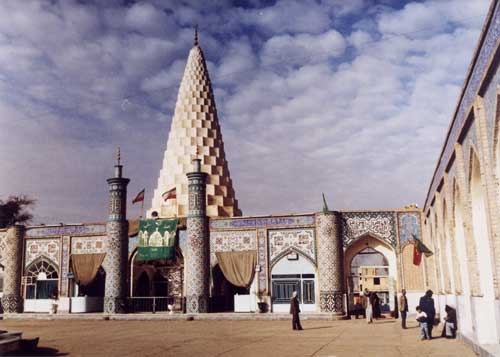
The history of the arrival of Jews to the land of Iran, who are known as the Kalimians, dates back to before the birth of Christ; according to historical documents and accounts, for the first time around 8 centuries before Christ, sixty thousand Jews who had been captured by the Assyrian king were relocated to the western and northwestern regions of the Iranian plateau, specifically in Jelalabad (present-day Damavand). In fact, the settlement of Jews in Iran has a history of nearly three thousand years, and during this time, their lives have been filled with many ups and downs; from living in peace and security to experiencing insecurity and forced migration.

The ups and downs of Jewish life in Iran.

During the reign of King Xerxes, who was from the Achaemenid dynasty, the Jews of Iran sought to escape a widespread massacre that had been planned for them, known in Jewish history as the “Purim Incident”. According to existing accounts, this event led to the slaughter of many Jewish plotters during the time of King Xerxes.

Now, the tombs of some of the religious figures of the Jewish people are also located in cities such as Kashan, Shush, Hamadan, and Touiserkan; although the border between reality and myth is not clear in historical stories, historical evidence supports the continuous presence of Jews in some regions of Iran. However, political developments have always caused instability in the situation of Jews in Iran. For example, after the death of Khosrow II, the Jews were forced to migrate from Shush to Hamadan.

On the other hand, the establishment of religious governments in the history of Iran has been a significant factor in the quality of life for Jews. Apart from the pressures that Jews endured during the rule of the Sasanian dynasty, when Zoroastrianism was the official religion, they also faced many pressures afterwards. During the Islamic era, Jews, like Zoroastrians in Iran, faced many difficulties in continuing their normal lives. Although the negative perceptions of Jews among Arab Muslims could have exacerbated the problems of Iranian Jews, it did not lead to their departure from Iran. Perhaps this was because Iranians and Jews were always seen as opponents of the caliphate and Arab rule, and therefore had many shared experiences. Additionally, during the early Islamic period, Jews were able to withstand the intensification of their problems by paying taxes under the leadership of Jewish political leaders known as “Ras Jalut” and approved by the caliphate. Timely payment of taxes by Jews throughout Iranian history has

This situation continued during the Ghaznavid and Seljuk periods, and some Jews were able to attain important government positions in Iran, which itself is a sign of the acceptance of Jewish security by the governments of that time in Iran. With the invasion of the Mongols and the disappearance of religious and geographical boundaries conquered by the invaders, this opportunity was provided for Jews to actively participate in Iranian government affairs, based on their experiences and economic capabilities.

After this period and with the emergence of the Safavids, Shia religion was chosen as the official religion of the country by this dynasty as a unifying factor for Iranians, and religion once again became the forefront of political affairs. The problems of the Jews resurfaced (4) and their persecution and harassment continued until the rise of the Afsharid dynasty. During this time, the persecution of Jews was so severe that many of them were forced to leave Iran and go to the Ottoman Empire. At that time, Jews were not allowed to leave their homes during rainfall or move around in society as usual.

This situation continued with the rise of the Qajar dynasty (5) and during this period, many Jews were pressured by the government to convert to another religion. At this time, most Jews were engaged in occupations related to trade and commerce and were considered part of the wealthy class in Iranian society. According to available statistics, the Jewish population in Iran in the early 13th century AH was around 45,000 people. However, with the downfall of the Qajar dynasty and the establishment of Reza Shah’s government, the situation of Jews in Iran improved somewhat. One of the most important actions during Reza Shah’s reign was the abolition of a law that classified Jews as unclean and forced them to endure difficult and humiliating conditions to live among Muslims. He also declared the forced conversion of Jews to Islam illegal. For the first time during this period, the teaching of Hebrew and the ability to hold religious ceremonies and activities were allowed, and Jewish and Hebrew newspapers and books were published. However

After the coup of August 19 and the overthrow of Mossadegh’s government and the rise of Mohammad Reza Shah, the Jews experienced the most prosperous period of their lives in Iran, to the extent that in the 1970s, more than 90% of them were among the affluent classes of the country. In 1978, two members out of 18 members of the Iranian Academy of Sciences, 80 out of 4,000 university professors, and 600 out of 10,000 Iranian doctors were Jewish. Before the revolution in Iran, approximately 100,000 of the population were Jews, mainly living in the cities of Tehran, Shiraz, Kermanshah, Isfahan, and also in the cities of Khuzestan, Kashan, Tabriz, and Hamadan.

However, another factor that caused turmoil in the lives of Jews during the Pahlavi era was the formation of the state of Israel and the opposition of Muslim authorities to that state, which led to a mixture of anti-Israeli and anti-Jewish sentiments and created problems for them.

The sharp decline in the Jewish population of Iran.

With the victory of the Islamic Revolution, the process of Jewish migration took on a group and widespread form, to the extent that today the population of Jews in Iran is estimated to be around 20,000 or even less than that, compared to 100,000 before the revolution. Many Jews have migrated to countries such as Israel, America, and some European countries during these years. This issue can be influenced by a combination of political, cultural, and social reasons. Currently, the majority of the Jewish population in Iran live in cities such as Tehran, Shiraz, Isfahan, Yazd, Hamadan, and Kermanshah.

The fundamental and intense conflict between the Islamic government of Iran and the government of Israel has caused difficulties for Iranian Jews in establishing relationships with their fellow Jews living in other parts of the world. This is because any suspicion of their support or relationship with the Israeli government can jeopardize their safety.

Sources:

Louie, my love, History of Iranian Jews, Volume 3, page 192.

2- Vahidmanesh, Parvaneh, The Story of Iranian Jews in Ancient Times, Website of the Kalimian Society of Iran, Esfand 1386 (February/March 2008)

3- Anvari, Mostafa, Jews at the forefront of Islam, their firmness, September 2010.

4- Khosrowshahi, Seyed Hadi, Iran and the Zionist regime during the second Pahlavi era, the website of Seyed Hadi Khosrowshahi.

5- Noghayan, Hossein, Jews in Islamic Lands, Quarterly Journal of Religious Knowledge, Issue 5

Karun, a half-dead river that flows to Isfahan with its remaining life.

“We need Karun water to revive the Zayandeh Rud. Everything from this conversation and interview with the new governor of Isfahan, Rasoul Zargarpour, published by Iran’s Water News Network, and his 9-hour visit to the ongoing project of the third Koohrang tunnel to transfer water from Karun tributaries to Isfahan, sparked a debate and argument between Isfahanis and Khuzestanis on social media.”

How can we sit and watch as our beloved Isfahanis suffer from the plunder and death of Karun, filled with anger and memories, while their fellow citizens, who couldn’t even bring a few small pipes to transfer water to the farmers of Yazd, responded with bulldozers and hammers? How long will the statesmen and people of Isfahan continue to beat the drums of their greed on the resources of the Iranian people? How long must the people of our land be sacrificed for the political games that only benefit a few cities and provinces, while our hero Khorramshahr, with its martyrs and fortresses, still lacks drinking water? How long must the citizens of Khuzestan, deprived of even the most basic necessities of life, bear the burden of the wealthy cities and statesmen? This is the same Khuzestan that is a part of Iran, and from this part, its people are only given wounds, pain, and pollution from

Kaaroun3

This is only a part of the sharp response and open letter of 155 artists, political, social, civil and environmental activists from Khuzestan to Mr. Hassan Rouhani, the President of Iran, and Masoumeh Ebtekar, the head of the Environmental Protection Organization. It was published in less than a few hours after Mr. Zargarpoor’s statements, the governor of Isfahan, were released in news agencies and quickly spread in Ahvaz market and received strong support. Abdul Hussein Mokhtadi, the new governor of Khuzestan, was also put in the spotlight, to the point that Ms. Masoumeh Ebtekar quickly announced her opposition to this transfer during a short trip to Khuzestan and added: “Despite the political pressure groups that enter for their own interests, the decision to build a dam and transfer water is not solely within the authority of the Environmental Protection Organization.”

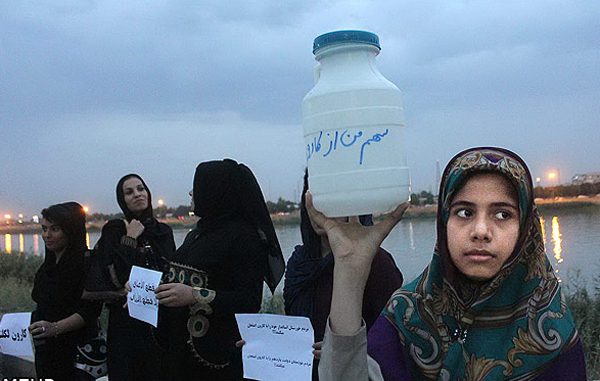
The story did not end here and environmental activist groups in Khuzestan, with the release of a statement, invited people to participate in a human chain called “Karun Rescue Chain”. The Khuzestan Governor’s Office also showed its full support for this gathering by publishing an interview with Abdolhossein Moqtadayi, the governor of Khuzestan, on Fars News Agency.

The first gathering of Ahvazis was held on the second Friday of Aban month, with the presence of more than ten thousand people on the banks of Karun river. The participants, in complete calmness and holding placards in both Persian and Arabic, chanted slogans such as “We are all for Karun”, “Take the air from me, not Karun”, “Karun is the red line” and “We will save Karun”, showing their opposition to the transfer of Karun river water. In response to the environmental movement in Ahvaz, both domestic and international media, including Iran’s national broadcasting, covered the news of this gathering. However, the plan for the third tunnel in Kuhrang and the construction of dams on the branches of Karun river still had the support of the Ministry of Energy and the Isfahan governorate on the government’s agenda…

“Strongly worded speech by Seyyed Sharif Hosseini, representative of the people of Ahvaz in the parliament, and the news of the mass resignation of 18 representatives of Khuzestan, which was withdrawn through the mediation of other representatives, laid the foundation for the next gathering and chain of support for Karoun. On November 9th, with the presence of over 20,000 people from Ahvaz and cities such as Abadan, Khorramshahr, Bandar Mahshahr, and Shadegan, as well as prominent artistic and sports figures from Khuzestan, including Seyyed Sharif Hosseini, representative of the parliament, Abdulhossein Moqtadaei, governor of Khuzestan, and members of the Ahvaz City Council, the gathering was held. The protesters once again demanded the complete halt of the plan to transfer Karoun water to Zayandeh Rud, chanting the same

But a few days later, Masoud Asadi, the head of the Agricultural Trade Organization of Khuzestan province, in a letter to Ayatollah Mousavi Jazayeri, the Friday prayer leader of Ahvaz, and Ayatollah Shafiei, published on the Khuznews website, revealed more behind-the-scenes details of this incident and the biased dismissals and appointments in the Water and Power Deputy of the Ministry of Energy, governorships, and water resource management of the country.

Kaaroun2

Dr. Ghomshi, a professor at Ahvaz University and an advisor to the governorate of Khuzestan, also spoke out against this water transfer in an interview with the mentioned news agency, saying: “First, the Karun River can fully meet the agricultural needs of Khuzestan. Second, the transfer from the Karun River will affect the energy production of five large power plants located along the route and will cause major damage to national interests. Additionally, the cost of transfer is extremely high. For example, in a case where a 60-kilometer tunnel must be built at depths ranging from 300 to 1200 meters, a minimum cost of seven trillion tomans must be spent, while with this investment, nearly one million hectares of land in Khuzestan can be irrigated, using pressurized irrigation methods. On the other hand, reducing the flow of the river creates serious environmental problems and issues downstream, in Khuzestan.

The Karun River is the only river in Iran that connects to international waters and the ocean. It is also the only navigable river in Iran. In the past, the name Karun was associated with joy and life in Khuzestan. However, due to incorrect environmental policies and multiple non-standard dam constructions at the source of the river, it has now become a low-water river that is slowly dying. In 2009, due to the transfer of over 100 cubic meters per second, the source of the Gotvand Dam was diverted to Isfahan, resulting in a drastic decrease in water flow and an increase in salinity levels, reaching more than 30 units above the standard level for several months. This has caused a major environmental disaster for the ecosystem of the riverbed in Ahvaz. Ismail Kahrarm, an environmental expert in Tehran, stated in an interview with Radio Farda: “The Gotvand Dam has caused the Karun River to

And now, from the Karun River, which was once a symbol of life in a land where summers reach over 60 degrees and severe air pollution caused by local dust storms, and the normality of oil and petrochemical pollution from Iraq, nothing remains but a half-dead corpse whose transfer of its remaining life to Isfahan can forever extinguish the light of life in the hot and war-torn homes of Ahvaz, Mahshahr, Abadan, and Khorramshahr. The remaining joy of the dusty streets of the oil and gas-less people of a land whose homes are built on oil barrels and memories of eight years of war, and who still lack access to city drinking water.

Gender segregation or discrimination!?

manifetudiant

Since the time when in Iran, the traditional schools gave way to modern schools and the clergy, who were the administrators of these centers, lost one of their important bases and intellectuals became their successors in the educational institutions, a historical conflict between the seminaries and modernism and the university as a modern institution began. Intellectual opposition is one of the main characteristics of seminaries and since the clergy saw the university as a factory for producing intellectuals from its inception, it was natural that after the victory of the 1979 Revolution, they would not allow the university to continue its natural course. At the same time as the Cultural Revolution, which was nothing but an effort to eliminate the brain of this modern institution, the long-term project of gender segregation was initiated by separating girls’ and boys’ schools and its implementation in universities aimed to turn this modern institution into one of the subordinates of the seminaries. Recently, a new phase of segregation in the educational space has begun under the banner of

After thirty-some years since the day Ayatollah Khomeini struck the “will of integrity” with his cane and declared, “If we had broken the corrupt regime from the beginning… if we had broken the pen of all the media… if we had raised the sticks in the big squares… this effort would not have been necessary” (1); discriminatory behaviors continue, with recent examples including separating textbooks by gender, segregating some girls’ schools by creating inner courtyards, cutting off the heads and breasts of female mannequins, prohibiting women from sitting in a row of seats behind the bus driver, banning women from entering stadiums, and approving a bill in support of polygamy.

A brief look at history shows that traditional clergy has always been in conflict with the education of girls, and although it was defeated in this battle after the Constitutional Revolution and was pushed to the sidelines until the 1979 Revolution, with the return of religious fundamentalists to the scene of power, we are witnessing a gradual regression of women in society and the implementation of reactionary programs, such as gender segregation, which has another goal besides confining women to domestic imprisonment. This is the final phase of attacks that have been designed against them in the past thirty years and aim to isolate women in the university, the last remaining stronghold outside the home. Unfortunately, the university is the only place where Iranian women can connect with the outside world and now, by dividing it in two, at least half of their facilities have been lost and they are truly under attack. Undoubtedly, with the full implementation of gender segregation, the academic level of female students will decrease.

Currently, educational spaces are suffering greatly from the lack of specialized teachers and educational facilities. The implementation of this plan will only widen the gap of this scientific and material poverty, and it is not unlikely that female students will also be deprived of these limited facilities. Considering the dominance of male culture in the job market, women have a small share in it and undoubtedly, the full realization of the gender segregation plan will eliminate this narrow waterway, and the share of women in the job market will decrease while the number of them becoming housewives will increase.

The first vice president of the Islamic Consultative Assembly says: “If someone enters our house now, there is no veil between them and our family, and our schools must have both external and internal divisions.” (2) This division of society into internal-external (or masculine-feminine) will only lead to the consolidation of male dominance and the obligation of women to perform repetitive and remedial tasks.

A few days ago, in line with completing the project of control and discrimination, Mohsen Gharaiati, the head of the National Prayer Headquarters, addressed the university presidents, saying: “Create an environment where student marriages and temporary marriages can be facilitated, and create a space in universities where girls and boys are separated from each other to reduce millions of sins.” (3).

In recent years, the gender equality movement has been very active in universities and undoubtedly its implementation will eliminate it from within and the separation of male and female students will destroy the unity that has been achieved after years and there will be no more cooperation in work. In other words, gender segregation has become the Islamic name for the same gender discrimination that has prevented the powerless sexual class from creativity and has veiled it.

Resources.

1- Speech by Ruhollah Khomeini on 18 August 1979, at the Islamic Center of Washington.

2- Speech by Mohammad Hassan Abuturabi Fard, 17 Esfand 1387, Jamjam.

3- Mohsen Ghorbani’s Speech, September 11th, 2012, Hamshahri Online.

Legal issues of the Jewish community in Iran.

With the occurrence of the revolution in Iran and the establishment of a government based solely on religious ideology, specifically of the Islamic type, and the emphasis of the new rulers on laws being based on Islamic law and the Shia religion, one of the ongoing challenges in the behavior of Islamic rulers towards minorities is evident in the issue of legislation. The rights of minorities have been one of the sensitive topics in the field of legislation in the post-revolution era.

The way the government treats religious minorities and their rights and access to basic – and sometimes not even equal – rights and their human dignity, has been and continues to be one of the challenges of recent decades and a constant demand of minority groups living in Iran. Among them, followers of Judaism in Iran, who are referred to as “Kalimi” in the constitution, have faced sensitive and complex issues due to the special view that Shia jurisprudence, especially in the past, had towards Jews, as well as government policies towards Israel as a Jewish state.

Although in principle, the thirteenth article of the Iranian Constitution recognizes the rights of many religious minorities and considers them free to practice their ceremonies and duties, when it comes to performing Jewish religious ceremonies, the issue becomes a bit sensitive. Although they do not actively promote their religion or try to convert followers among other people, due to their religious beliefs, they are always accused of collaborating with their fellow Jews in Israel and, consequently, with the Israeli government.

Also in Article 20 of the Constitution: “All individuals of the nation, regardless of gender, are equal in the eyes of the law and are entitled to all human, political, economic, social, and cultural rights, in accordance with Islamic standards.” Although this article mentions the equality of rights for all men and women, the important and noteworthy point in this article is the final section, which emphasizes the adherence to equality and legal protection for Iranians in accordance with Islamic laws, regardless of the minorities living in Iran, which is interesting and worthy of consideration.

On the other hand, according to Article 14 of the Constitution: “By the order of the noble verse ‘Allah does not forbid you from those who do not fight you because of religion and do not expel you from your homes – from being righteous toward them and acting justly toward them. Indeed, Allah loves those who act justly.’ The Islamic Republic of Iran and Muslims are obliged to act with good morals, fairness, and Islamic justice towards non-Muslim individuals and respect their human rights. This principle applies to those who do not conspire or act against Islam and the Islamic Republic of Iran.” It is so excessive that any form of government can label the actions of minorities, including the Baha’is, as conspiring against the system and Islam, and carry out certain actions such as arrest and trial under the jurisdiction of this constitutional principle, which is a clear violation of human security and is emphasized in the Universal Declaration of Human Rights.

Jews in Iran have a representative in the Islamic Consultative Assembly (parliament) from a legal standpoint, but since the number of minority representatives is very small and they have almost no role in legislation, and the government itself has a specific policy towards minorities, which is to gain international recognition through minorities, usually representatives from minorities who are advocates of this thinking and policy are able to enter the parliament.

According to Article 382 of the Islamic Penal Code: “If a Muslim woman is intentionally killed, the right to retribution is established. However, if the killer is a Muslim man, he must pay half of the full blood money before retribution. If the killer is a non-Muslim man, no payment is required for retribution. In the case of a non-Muslim man killing a non-Muslim woman, the payment of their respective blood money is necessary.”

Yes, there is a great disparity between the rights of minorities and Muslims, and it is evident in the fact that if a Muslim woman is murdered by a Christian or Zoroastrian, the death penalty and retribution will be carried out; but if the killer is a Muslim man, he must first pay half of the man’s blood money to the victim’s family. The latest example of this is the case of a young man who killed his Christian friend on Farshat Street by shooting him, and after being tried in criminal

law2

According to article 177 of the new Islamic Penal Code, one of the conditions for being a witness is “faith”, and according to valid and explicit texts of Shia jurisprudence, faith refers to being a “Twelver Shia Muslim”. Therefore, Baha’is, like other religious minorities in Iran, are deprived of the right to testify, or according to what is stated in paragraph P of article 224 and footnote 1 of article 234 and footnote of article 236 of the new Islamic Penal Code, in cases where in adultery (unlawful sexual relationship between a man and a woman), the man is the adulterer and in homosexuality (sexual relationship between a man and another man), the man is the homosexual, and in sodomy (placing the male genitalia between the thighs of another man), the man is the sodomizer, if he is non-Muslim, his punishment is execution; so if a Jew has sexual relations with a Muslim, which for a Muslim

On the other hand, Article 310 mentions another issue, according to which “if a non-Muslim commits a deliberate crime against a Muslim, dhimmi, protected or treaty person, the right to retribution is established. In this matter, there is no difference between religions, sects, and ideological tendencies. If a Muslim, dhimmi, protected or treaty person commits a crime against a non-Muslim who is not a dhimmi, protected or treaty person, retribution will not be carried out. In this case, the perpetrator will be sentenced to disciplinary punishment as prescribed in Book Five, “Punishments”.” This means that if a Muslim commits a crime against a Jew, according to the text of this law, they will be punished, but if the opposite happens, the Jew will be subject to retribution.

It is also necessary to mention that the new punishment law considers the blood money of religious minorities equal to that of Muslims.

One of the other issues that can be mentioned in regards to the violation of minority rights in Iran and consequently the rights of Baha’is, is the issue of marriage. According to the Universal Declaration of Human Rights, marriage is a human right and everyone has the freedom to marry anyone they choose. According to Article 16 of the Universal Declaration of Human Rights, “Men and women of full age, without any limitation due to race, nationality or religion, have the right to marry and to found a family. They are entitled to equal rights as to marriage, during marriage and at its dissolution.” However, according to Article 1059 of the Civil Code, “A Muslim woman cannot marry a non-Muslim man.” This means that if a Jewish man sincerely and emotionally desires to marry a Muslim woman and the Muslim woman also agrees, their marriage is prohibited.

There are other cases in which Jews are deprived of, for example, a Jew does not have the right to hold important positions such as military and national positions, or to run for presidency. Of course, these cases come with justifications, such as these conditions being determined by the constitution and it is natural that in a country where the basis of its constitution is Islamic law, according to the “rule of negation of superiority”, a non-Muslim can never dominate and rule over Muslims.

There are also unofficial reports that indicate that Hebrew language education, which is the religious and official language of the Kalimian community, is also facing restrictions and difficulties, and in addition, in Kalimian schools and educational centers, Muslim administrators and officials are appointed.

Based on real social evidence, today’s Iran and what the Jewish community itself secretly and ultimately conservatively expresses, the Jews of Iran are not in a desirable situation and it can almost be said that they are experiencing the most difficult conditions in at least a hundred years; to the extent that many of them have taken the path of migration and the population of Iranian Jews has decreased to the point that marriages rarely take place, or the few synagogues that remain have been maintained by the efforts of a number of religious Jews as a religious duty.

Sources:

The Law Newspaper, Monday, 26th of Aban month, 1392.

Jewish organizations in Iran and human rights expectations.

kermanian

Sam Kermanian is currently the senior advisor of the Federation of Iranian Jews, having previously served as its president. The Federation of Iranian Jews was formed in America shortly after the February 1979 revolution and the beginning of pressure on this religious minority.

We asked Mr. Kermanian about the history of the federation and the relationship between the Jewish community and human rights organizations…

Please briefly define the nature and goals of the Iranian Jewish Federation at the beginning.

The Iranian Jewish Federation was formed in 1980 in Los Angeles, and the circumstances that led to its formation were the execution of the then-leader of the community, Habibollah Elghanian, by the new regime. This was a warning sign for all Iranian Jews, as Elghanian had truly dedicated his life to serving the Iranian people and the perception that arose in the Iranian Jewish community was that the Islamic Republic was an anti-Jewish regime and therefore Jews in Iran were in danger. At that time, a few months after the revolution, a group of activists and leaders of the Iranian Jewish community who had left Iran and were living abroad, came together to address this issue and the only conclusion they reached was to draw the attention of the international community to the situation of Iranian Jews. This became a common ground for other Iranian Jewish organizations (at that time there were only one or two small organizations in Los Angeles) to come together and establish a central organization. At that time, the

The population of Iranian Jews inside the country is estimated to be around twenty thousand, do you have any statistics on the population of Jews outside the country as well?

There is no accurate statistics available, neither for inside Iran nor for outside. Especially outside, because when you want to gather statistics from a society, you first have to define that society. For example, let’s assume that there are people in our society who were born in America and have four or five-year-old children who are considered the second generation of Americans, and in fact, they were born to an Iranian-Jewish father and mother. Now, when it comes to statistics, should we count them or not? If we want to gather statistics in this way, we have to call it the Iranian-born community, who consider themselves Iranian in terms of culture or history, but in reality, they have never seen Iran and are not born in Iran, and some of them can’t even speak Persian. In Iran, there is also no accurate statistics because even though religion is asked in some official surveys, some people either don’t want to reveal their religion or are afraid to say it and mention the

Mr. Kermanian; it seems that we cannot deny the deprivation and problems of the Jewish community in Iran, especially within the country; however, why do we hear less about this issue?

This matter of hearing voices is like a double-edged sword; deprivation and problems must be examined in a relative manner. For example, we know that other minorities are also oppressed in the country and perhaps Jews, as fellow citizens, are more harassed and abused, so they are less likely to speak up. But this is an issue; in Iran, apart from the issues of deprivation related to religious minorities, unfortunately, human rights issues exist at all levels of society. Now we hear that even in the past three or four months, more than a hundred people have been executed. When one talks about deprivation, one must measure oneself in relation to the society in which one lives. Aside from these issues, if one wants to speak up about any issue, after a while, it becomes the case that those communities that you want to draw their attention to, lose their interest. Therefore, for any issue, speaking up is a double-edged sword, one must know when to use this sword and when

To what extent can we consider the statements of individuals such as Mr. Mareh Sadegh, who is the representative of Kalimian in the Islamic Consultative Assembly, as reflecting the views of Kalimian inside Iran? Is the process of these elections transparent and acceptable?

In this regard, I must explain a few points: Mr. Mareh Sedaghat does not have credibility outside of Iran and among Jewish communities outside of Iran. They were chosen by the community inside Iran, but if I’m not mistaken, they were the only candidates allowed to receive votes from the community and, like other elections that take place inside Iran, the candidates have already been determined and not everyone can run, including the Iranian Jewish community. On the other hand, both he and a large part of the leadership of the Iranian Jewish community are individuals who have been approved by the regime and can act within the framework set by the regime.

Is the Federation of Iranian Jews willing to cooperate with human rights activists and organizations? Is there any limitation in this regard?

There is no restriction whatsoever, but any kind of cooperation must be within the framework of bilateral policies; for example, human rights organizations may want to do a lot of advertising in a certain case, but the federation may not be ready for it. In any case, there are issues that are a cause for concern for us, or vice versa; there are issues that we are interested in raising, but you may not be interested in. For example, in the past few decades, especially in the past ten to fifteen years, there have been countless cultural products such as television programs, films, newspapers, and books that have a clear anti-Semitic aspect and are regularly published with the approval of the regime in Iran. These are truly worrying and frightening for us, and issues that we discuss with our friends abroad and inform the US government and other European governments, as far as we have access. From your perspective, this may not directly relate to human rights, but for the Jewish community as a whole,

We thank you for the opportunity you have given us to be featured in the monthly magazine, “Line of Peace”.

Thank you for your love and I am grateful for the activities you do. I truly appreciate your efforts. The work you do is not easy, it requires a lot of honesty, which I am sure you possess. I wish you success.

A Look at the Phenomenon of Anti-Semitism in Iran

Explanation: This text is simply an introduction to the topic by an Iranian Jewish social activist. For a detailed discussion on this subject, there is a need for multiple articles and even books.

015

One of the significant outcomes of the change in government in Iran during these hundred and twenty years has been that Iranians, as intellectuals and politicians, have been compelled to review and question their own perspectives and beliefs. The contemporary and even past history of Iran must be reconsidered and beliefs that have never been questioned before must be seriously examined. In any case, a dynamic and progressive society must be able to criticize itself and if this criticism is present, it is in the position of improving itself.

One of the taboos that is less openly discussed in Iran compared to Western societies is the issue of anti-Semitism. This is a topic that has wide dimensions due to the historical and long-standing presence of Jews in Iran and the current issue of Iran-Israel relations. It is necessary for those interested in democratic Iran to know, talk about, and listen to this issue.

From the perspective of the writer of these lines, the Iranian Jewish community, especially those who are living abroad and could speak more freely, should have dealt more decisively with such an issue. Perhaps historical considerations have played a role in the negligence of Iranian statesmen who have always used our vulnerable community as a propaganda tool and have not hesitated to harm them in the past.

It is also necessary to mention that there are among Iranian intellectuals who always deny the existence of “antisemitism” among Iranian politicians and consider it a purely Western phenomenon specific to Christian societies. This claim is based on ignoring the realities of Iranian society and its past history. There are certainly differences between the anti-Jewish sentiments in Iran and Europe, but one cannot deny the existence of this social illness.


Definition of anti-Semitism

Anti-Semitism means harassment, persecution, and false and unfair propaganda against Jews, solely because of their religion.

Undoubtedly, the emergence and influence of Islam as the dominant culture in Iranian society, especially after the Safavid’s rise to power and the recognition of Twelver Shiism as the official religion of the country, marks a turning point in the situation of Jews in Iran. Although there were instances of mistreatment towards Jews before the reign of Shah Ismail and the elimination of his opponents, it is during this time that the fatwas of Shia clerics are declared against non-Muslims and they are required to pay jizya (tax) and are subject to laws of diya (blood money) and qisas (retaliation), which have their roots in this era. During this time, those who did not accept the Prophet of Islam as the messenger of God were considered enemies of Islam and were forced to live under the banner of Islam. Negative propaganda began in Iran, and false claims such as not allowing Jews to enter public places on rainy days due to their supposed impurity became

A part of Shia clerics who have always been a center of political and social power among Iranians, have advocated for the restriction of Jews in their list of orders to their followers in opposition to the central or local government. In important documents during the Qajar era, European travelers’ travelogues were used to better understand the situation in Iran, where they wrote about their observations of the conditions of Iranians. In these notes, Iranian Jews in the 18th and 19th centuries were considered the weakest social class at the time. During this period, reports from international representatives such as England, Russia, Ottoman, Germany, as well as memoirs of those involved in Iranian political affairs confirm this reality.

The novel “Jahud Kushan”, considered the oldest Persian novel, and its handwritten version found in the Marashi Library in Qom, depicts the period before the Constitutional Revolution in detail. It shows the abnormal treatment of Jews by both government officials and clergy, including the planning to incite unaware masses to attack the Jewish neighborhood, looting their homes, and taking their daughters and women.

Perhaps the most famous example of anti-Semitism in Iranian religious and political culture can be found in the famous speech of Mr. Khomeini in Khordad 1342. In his protest against Mohammad Reza Shah, he asks him: “Are you a Jew?” Meaning, because you are a Jew, you are causing these troubles for the people of Iran. Let us not forget that just a few years ago, during the presidency of Mahmoud Ahmadinejad, someone raised the baseless issue of Ahmadinejad being of Jewish origin, purely for the sake of promoting himself among the reformist spectrum. It’s as if among all the damage and harm that Ahmadinejad has caused to the Iranian nation, whether economically, politically, or in terms of civil liberties, it is his Jewish origin that has caused these issues.

Nowadays, anti-Semitic remarks are easily made by many officials of the Islamic Republic, television series in the media of the Islamic Republic that are made in opposition to Jews, are no longer a coincidence and have been repeated many times; and with an empty apology and sometimes nothing, the issue has been resolved.

What is mentionable is the change in the attitude towards Jews in Iran; meaning that if in the dominant Islamic culture, a Jew, like other non-believers, had to endure difficulties and pay jizya (a tax), now with the influence of European anti-Semitism in Iran, we are witnessing a different form of anti-Semitism, which is showing a distorted and false image of our compatriots as conspirators and greedy creatures who have a plan to control the world; he is essentially leading imperialism and world domination and starting wars and crises to seize the wealth of third world countries. The same Jew who was supposed to be silent and accept restrictions to “stay” in this country, has now changed his status and is ruling over the entire Western world, its politicians, banking system, and culture with a special and hidden conspiracy. The widespread printing and distribution of the book “The Protocols of the Elders of Zion” by the Islamic Republic must be seen in this context. A book

Another example of the manifestation of anti-Semitic thoughts and consequently, behavior of the government or semi-governmental entities, is the promotion of the historic tomb of “Esther and Mordechai” in Hamedan. This site, which reflects the long presence of Jews and their close relationship with Iranians, as stated in historical writings, has been introduced and advertised as a symbol of “Jewish enmity towards Iranians” by some opportunistic individuals; to the extent that it has incited a group to take action and cause damage to this historic site.

In Iran, what has caused thousands of people from this society not to immigrate is the boundless love for Iran and Iranians, and the pride of being Iranian, which may have never been worthy of attention, but it is hoped that it will be in the future. Iranian Jews are the oldest, most law-abiding, and most friendly towards Iran and it is good to allow them to live in peace and tranquility. The issue of Jews in Iran is not separate from the desire for democracy and respect for the rights of all individuals. When tolerance and acceptance of diversity is accepted as the norm in society, then the elimination of any discrimination and the establishment of understanding among all members of the nation will become possible.

A Look at the History of Jews in Iran

This is a picture of a beautiful sunset.[/caption]

این عکسی از غروب زیبا است.

This is a picture of a beautiful sunset.Ettefagh 15
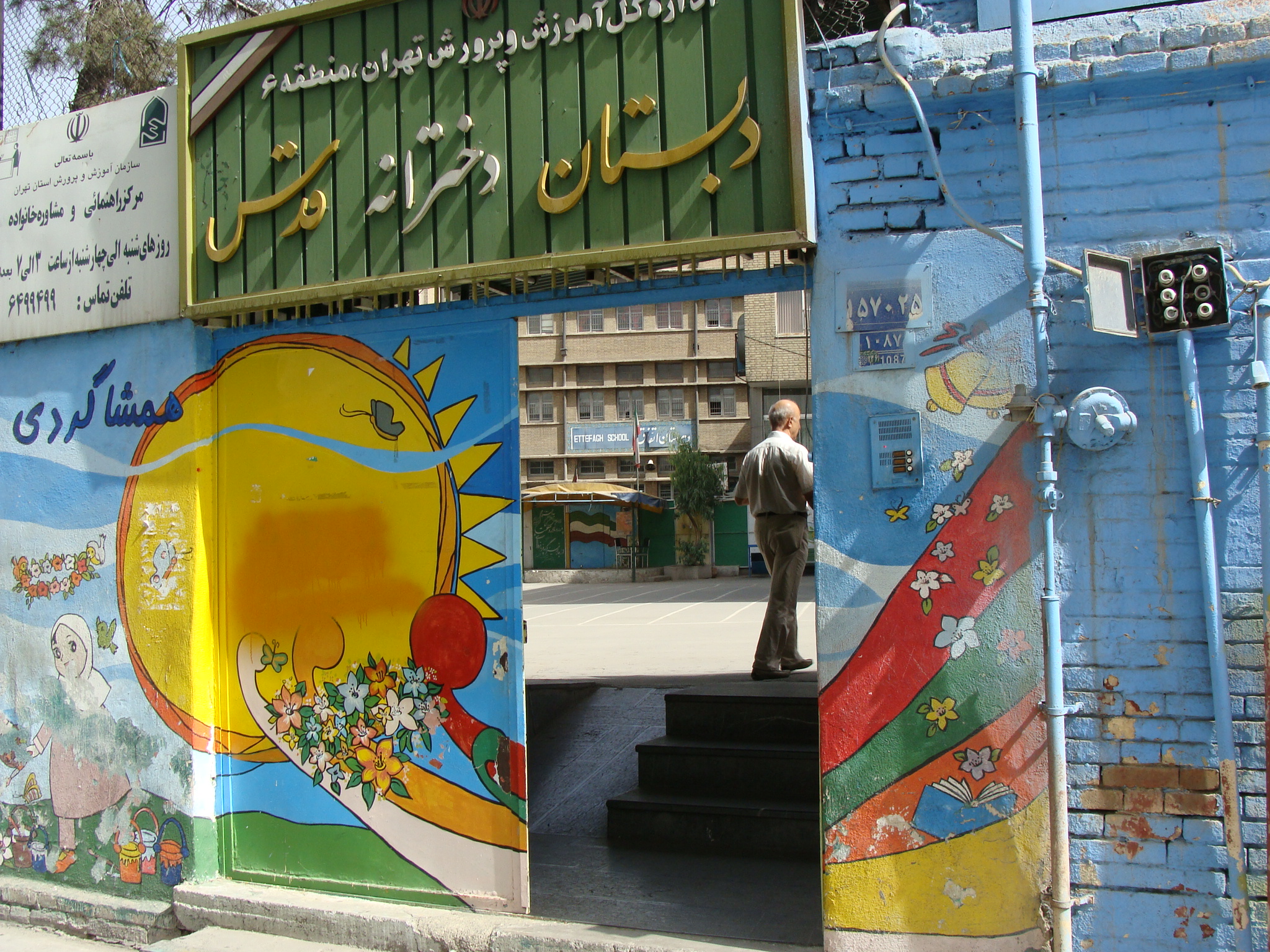
Changing the name of Atfagh High School to Ghods Elementary School.

Throughout the thousands of years of civilization, the land of Iran has been a station and origin for many tribes, followers of religions, and various customs. Their descendants include the current people of Iran and diverse populations in other parts of the world who have been scattered far and wide due to the separation of lands or the escape and migration of certain groups of Iranians.

Jews have also been one of the ancient peoples of the region, with many of them residing in the land of Iran. They have maintained their religion and ancient culture, and have influenced millions of Iranians in the present time, alongside other powerful religions and cultures, both in preserving their own identity and in assimilating with other ethnic groups.

The young generation of our country, due to living under the control of an ideological and strict government that has presented them with a one-sided and fabricated version of Iranian religion through propaganda and uniform historical narratives, has remained unaware of the social and cultural history of their land. Iranian youth, due to the majority of non-Muslims fleeing and immigrating from their ancient homeland in the decades after the Islamic Revolution, rarely interact and have familiarity with non-Muslim Iranians, and may not know that Iranian identity has no inherent connection to religious beliefs. Throughout history, whenever the rights and respect of other human beings and their beliefs have been upheld, our land has also blossomed like a garden in spring.

Studying the history of the people of Iran will undoubtedly be beneficial for our young generation. In this regard, the three-volume book “The History of Iranian Jews” written by the late Habib Levy in the 1930s, which has faced neglect and unofficial government censorship in both the Pahlavi and Islamic eras, is recommended.

The first major migration of the “Children of Israel” tribes to the vicinity of Iranian lands took place 2700 years ago during the time of the Assyrians. After invading their ancient land and destroying one of their two kingdoms known as “Israel”, the majority of these people, 10 out of 12 tribes, were forced to migrate to nomadic areas in present-day Kurdistan. They later became a part of Iranian lands for thousands of years. These tribes gradually settled in the regions of Kurdistan, northern and western Iran, between the rivers and the Caucasus, and became an integral part of the local population. Some groups among them, while preserving their religion and culture, have had a prominent presence in these lands up to the present day. The language of these tribes is still a mixture of Assyrian Aramaic and Hebrew words, at least among the Jews of Urmia and some areas of Kurdistan.

The second major migration of the Israelites to the region of Iran took place when Cyrus conquered Babylon and expanded the Achaemenid Empire. A large group of them, who had been taken captive by the Babylonians after the destruction of their kingdom known as “Judah” and were settled in Jerusalem and had their religious center destroyed by the Babylonians, were freed.

This population, which was mainly dependent on the tribe of “Judah” and were descendants of the Jewish monarchy, has been known in history as “Jewish”.

A part of the Jews, with the permission and guidance of the Achaemenids during the time of Darius, returned to their homeland and, with the revival of the rule of Judah and the construction of their religious center, remained as military allies and border guards of the Achaemenid and Parthian empires, in alliance with the ancient Iranians for centuries. Another part of them remained in Babylon until just 50 years ago, and a large part settled in the heart of Iranian lands in regions such as Susa, Hamedan, Kermanshah, Kurdistan, Fars, Shiraz, and Isfahan, and were recognized as one of the oldest Iranian tribes.

Iranian Jews have been a civilized and cultured people throughout the millennia, as well as brave warriors, whether as powerful satraps, defenders of the borders of Iran, or as scribes and statesmen. They have always been an integral part of the Iranian nation. Under the tolerant rule of Iranian governments, the religious Jews have produced their greatest religious and legal work, the “Babylonian Talmud,” in their universities in Tisphon. They have also provided mutual services to the Iranian governments, to the extent that one of the common lines of government in Iran during the Achaemenid era was a branch of Hebrew. The Achaemenids, Jewish commanders stationed in Babylon, and the independence-seeking Jews had common interests and sometimes fought together against the Greeks and Romans.

In general, the revered and ancient Jewish cemeteries throughout the Iranian lands, which have mostly been turned into buildings, streets, parks, and parking lots due to plunder and seizure, are evidence of the presence and economic and cultural activities of this group of Iranians in the main centers of Iranian civilization. Some of the Sasanian kings were born to Jewish mothers and some of the Sasanian queens were Jewish.

In general, except for the periods when religion was intertwined with the Sassanid government, Jews were not subjected to harassment and persecution, and alongside their compatriots, actively defended the authority of Iran. Even among those who rebelled against the invasion and occupation of the Arab invaders, there was a Jewish commander who, for clear reasons, has been erased from the history of the resilient and combative Iranians.

The first inhabitants and builders of the ancient city of Isfahan were Jews, and the majority of the population in that region, including villages and surrounding cities, were Jews until the rise of the Safavid dynasty, which converted most of the people of Iran to their own religion in a short period of time.
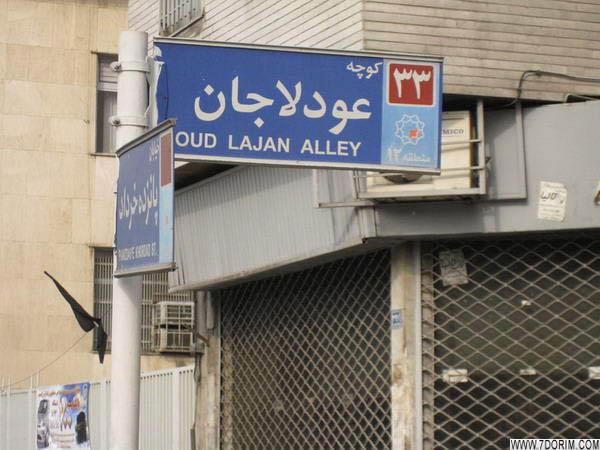
oud-lajan

After the establishment of Islamic rule in the history of Iran, Jews emerged as a prominent and active ethnic-religious group and settled throughout the greater region of Iran, from Baghdad to Balkh and Herat, Kabul to Bukhara, Nishapur to Bushehr, Shiraz to Rey, Rasht to Tabriz, Urmia to Hamadan, Kurdistan to Kermanshah, and Badkoubeh to Transcaucasia and Georgia. However, due to specific religious laws that were put in place to prevent the progress and superiority of non-Muslims, known as “dhimmi laws,” and the continuous effort to gradually assimilate non-Muslims, Jews, like many other Iranians, were pushed to the margins of society.

After the arrival of Islam, the language of the Jews in Iran was mostly a mixture of Iranian languages from before the Arab invasion, known as “Pahlavi language”, with Hebrew words and metaphors. This was the mother tongue of most Iranian Jews until a few decades ago. While speaking their local languages such as Persian, Turkish, and Kurdish, Jews often used the Hebrew script, which was also used to write Persian texts and other languages. Some of the oldest Persian texts discovered were written in this Hebrew script. Another characteristic of Iranian Jews was their preservation and promotion of the music of this land, which was practiced as a semi-hidden art among Jews due to the prohibition of music in Islam. They also had skills in making and producing musical instruments.

One of the services of the Jews in recent centuries, which may be considered their greatest service in the history of Iran, has been the revival of civilization and economy in Iranian lands after the invasion of the genocidal and destructive Mongols. This was carried out by recognized ministers such as Saad al-Dawla and Rashid al-Din Fazlullah, and the third generation of Mongol kings organized the country and revived its economic and productive life, saving them from mass murder and destruction by their predecessors.

The number of Jews in ancient Iran, before the emergence of the Safavid dynasty, is estimated to be around 400,000, which on the other hand indicates the intensity of religious and ideological oppression in the last five hundred years; because the current number of Jews in this land barely reaches 20,000.

At the end of the Qajar period, the Jews of Iran were a largely impoverished community on the verge of decline. This was due to their exclusion from participating in major economic activities such as land ownership, agriculture, and government and military positions, as well as professions such as writing and judging. As a result, they were often engaged in smaller trades, traditional medicine, alcohol production, jewelry sales, and music.

The Constitutional Revolution and the subsequent rapid growth of civic thought in Iran marked a turning point in the revival of Iranian society, including the revival of non-Muslim communities. The Pahlavi monarchy, with its modernizing and Westernizing tendencies, established a level of secularism in Iran that disregarded discriminatory laws against “dhimmi” minorities and promoted equal rights for Iranians regardless of their religious beliefs. As a result, the suppressed talents of minorities were able to flourish. Young Iranians, in the midst of modernization and continuous development, blended with their fellow countrymen in their work and daily lives. With the significant reduction of discriminatory laws from the past, minorities, including Jews, were able to achieve a considerable level of education, culture, and prosperity, and after centuries, they were able to regain their sense of usefulness, Iranian identity, humanity, and dignity, and confidently engage in social activities.

During the 20th century, after the establishment of French and Jewish schools, known as the “Alliance”, which transformed a generation of Jews into educated and capable youth, Iranian Jewish schools were also allowed to be founded one after another and Jews were accepted into both public and private non-Jewish schools. Until the Islamic Revolution, most of the 100,000 Iranian Jews were literate in Persian and a significant portion of them had achieved relative prosperity. The Jewish youth during the late Pahlavi era were mostly engaged in higher education, both domestically and abroad, and their level of patriotism and sense of Iranian identity was likely higher than others. Thousands of Jewish doctors and engineers were working in Iran, and many were employed in government offices. Dozens of Jews had reached the elite class of society by establishing modern and large industries. They were pioneers in industries such as plastic, aluminum, agriculture, and modern poultry farming, and many others were involved in smaller production industries. Some Jews also achieved great

Gradually, young Jews began to participate in scientific, artistic, sports, and film fields, and some of them even had a prominent presence in political affairs, including among intellectuals, leftists, and freedom-seekers. Several educated Jews held positions as university professors, prominent scientists of modern Iran, and renowned journalists, while Jewish doctors were seen providing healthcare services in villages and holding high positions in hospitals both in Iran and abroad. Some Jews also participated in road construction, dam building, and city planning and have been successful in these endeavors.

Jews in Iran were also very active in charitable work and, in addition to participating with others in supporting earthquake victims and the oppressed, they have set examples such as the “Dr. Sapir Charity Hospital”, which is still active and deliberately serving the Muslim community in southern Tehran, and the “Ort Industrial High School”, which has delivered thousands of Iranian technologies to the community. There is no doubt that the continuous presence of the Jewish community in the Iranian society could have brought thousands of times more benefits than looting their properties and establishments, while also ensuring that their rights as citizens are not neglected or trampled upon.

The Islamic Revolution of Iran was another turning point in the history of the Jews, this ancient people of Iran. Following the declaration that Iran sees itself at war with Israel, by Ayatollah Khomeini in Paris, which was reflected on the front page of Kayhan newspaper on January 16, 1979 in Tehran, and with the emergence of a great social and religious transformation in Iran after the revolution, many Jews decided to leave their homeland.

A short time after the revolution and the establishment of the Islamic system, discriminatory actions began against Jewish leaders and prominent members of the community, including executions, confiscation of property, and both overt and covert threats. Jews were experiencing issues that their predecessors had only feared. The revival of discriminatory laws against “dhimmis” (non-Muslims) that were designed to humiliate and pressure them, along with the gradual dissolution of their rights, was accompanied by a constant atmosphere of fear and the constant danger of being accused of being a “Zionist.” This led to the majority of Jews, like other non-Muslims, leaving their homeland in the years following the revolution. Currently, the estimated population of Jews living in Iran is around 20,000, and emigration continues. Jews living in Iran still hope for their safety as long as they fulfill their duties as agents of foreign propaganda for the Iranian regime. They remain in their country, caught between hope and fear, longing for a better

Among the thousands of Iranian Jews who migrated to Israel in the mid-20th century, or the tens of thousands who were forced to flee to Israel, America, and other countries after the restrictions following the Islamic Revolution, and even among the tens of thousands of Jews expelled from Iraq, who considered Iran their homeland for decades, we find thousands of the most successful experts, doctors, scientists, industrialists, politicians, and intellectuals who still hold Iran, its memories, and its culture dear in their hearts and are saddened by their distance from their homeland. Without a doubt, the removal of these people from the Iranian society, along with the removal of many other elements of the Iranian nation, has caused severe damage to the country that may be difficult and perhaps impossible to repair from a historical perspective.

The historical experience of the small Jewish community in Iran is a great lesson for the larger Iranian society. This experience shows that eliminating discrimination, promoting tolerance and accepting the participation of all individuals in a larger society in social, economic, scientific, artistic, human and other aspects, is capable of elevating a developing and progressive country to a level of power and respect within less than a century. This is the aspiration of every Iranian and is in line with the wishes of our ancient and historic nation.

Rebirth 209

IMG_5224

In the last five issues of the monthly magazine “Khat-e-Solh”, we focused on interviews and memoirs of victims of torture in the 1950s and 1960s. Hossein Ghobrayi, Simin Dabiri, Faran Ferdousi, Javid Tahmasebi, and Manouchehr Kuhne were former prisoners who were featured in these issues, and their experiences of torture, especially white torture, were described.

In this issue of the monthly magazine and considering the course of history, we went to the 1970s and Behrouz Javid Tehrani.

Behrouz Javid Tehrani was born on January 25, 1979. His father’s name is Parviz and he was born in Tehran. He and his family relocated to the northern part of the country during the war and missile attacks, and returned to Tehran after the war ended.

I ask from the person who has a record of multiple arrests and imprisonment in the decades of the 70s and 80s, and is considered one of the detainees of the events of July 9, 1999, how did the motivation for political activism arise in him: “In 1997, there was a lot of hope for Khatami and a wave had formed. Of course, I was very young at that time and I was following the current events in the country through free newspapers. My father, who had a political background before the revolution and had a large library in our house, also had an influence on shaping my thoughts.”

I ask Behrouz to describe how he was arrested in 1378: “On the fourth of Khordad in 1378, I went with some of my friends to a speech by Hashemollah Tabarzadi. During the speech, we got into a fight with the anti-riot guards and plainclothes forces and were attacked. After the fight and being beaten, we left the park and I was arrested by plainclothes forces on Keshavarz Boulevard. I was alone at the time of my arrest, having been separated from my friends for a while. I was then handed over to the security forces and taken to the Palestine Square police station, but that same night, after a lot of delay, I was released with my phone number and address taken and a promise to appear.”

“After being detained for several hours, I was arrested following the events of July 9th. I joined the crowded and student protests on Sunday, July 10th. On July 12th, when I left my house and went towards Vali Asr Square, I had to go down Zartosht Street because the main streets were closed. There, a confrontation occurred which resulted in me getting injured in the face. I immediately took refuge in a restaurant to clean my wound and wash my face. When I came back up the stairs of the restaurant, two officers from the police force saw me, but I didn’t pay attention and just put the scarf I had with me and my Kurdish headband around my neck and started walking. When I reached the intersection of Keshavarz Boulevard, someone from behind me called out to me, and at first I thought it was one of my friends joking with me. When I turned around and looked behind me, I saw a few plain

He continues like this: “We went to the artillery field and they blindfolded me, maybe as revenge for my escape. When I was going down the stairs, they didn’t guide me so I fell down several steps and then they took me to a room and started beating me. Then they took me to a solitary cell and after 30 minutes or an hour, they took me to the upper floor and into a big room that was very cold. It sounded like a management room and there were three or four people sitting there. They started asking me questions like, ‘What do you do and why did you have a Kurdish scarf?’ After that, they asked me to sit-stand up, which was very difficult for me because of my height. After I refused, they made me undress. After I was undressed, they suspected the scar on my body from my childhood was a bullet wound. Then they forced me to swim, which was even more difficult for me. While

Mr. Javid Tehrani says: “After that, they put me in a cell for a few hours. There was also a pilot there who had been arrested for defending a girl against Basij forces. He had been severely beaten and injured. We slept for a while until 1 am when they took us all in a minibus and brought us to Evin Prison. From the intersection of Park Way onwards, they blindfolded us and we couldn’t see anything. Only when we entered the prison, I lifted my blindfold a little and saw that we were in a place that had “Women’s Tailoring” written on top. I was the first one to enter there. They took off my blindfold and took a photo of my face and then said, “From now on, your number is one, you have no father or mother!” They took me to corridor 209 and pushed me against the wall. Every time someone passed by, they would ask, “

I asked him when he was transferred to the cell: “It was 3 am when they threw me into a very dirty cell. The cells had just been sprayed and were full of dead cockroaches and half-dead bugs. The cell had a piece of blue carpet with a large blood stain in the middle, and all the notes on the wall were from the 60s. One of the guards told me that this place had been abandoned since 1970 and you are the first group of prisoners to be brought back here. With this information, I realized that they had put up the women’s tailoring sign during this time. My number, which was “one”, indicated that I was actually the first person to return to 209 after several years. Also, we were not given any food during the first 24 hours…”

IMG_5234

This former political prisoner recounts his interrogations as follows: “At the beginning of the interrogations, they first accused us and said we were charged with “actions against national security” and issued a detention order for us. After that, the interrogations began. The first interrogator, in my opinion, was a new person who had no specific information and even had the questions written down for him. I did not reveal my real name. Before and after the interrogations, they kept us standing in the hallway for hours and if we sat down, they would kick and curse at us. They wouldn’t let us go to the bathroom. They would also play the sound of other people crying and sometimes play Quran recordings. They even brought a few people to interrogate me face to face to identify me. On Thursday, they played the famous speech of Mr. Khamenei about the events of July 9th at a loud volume for us. This move was threatening and they wanted to

Behrouz Javid Tehrani says that if bad luck doesn’t come, he would be released: “After about a week, they came and told me to inform my family to come and bail me out. During the delivery of my belongings, they became suspicious of my previously unchecked wallet and when they found the phone number of one of our relatives who was abroad, their opinion suddenly changed and they said we had to go and search your house at night. During the search of my house, which they had taken me with them, they found a fax machine and some papers, etc. and realized that I was active and for this reason, I was not released and we returned to prison again.”

Just one week after my arrest, Band 209, which was actually abandoned, had become so crowded that not a single cell was left empty and many were sleeping in the corridors. As a result, I was transferred to 240 by force. There, not only in the corridors but even on the stairs between floors, people were sleeping. The next morning, we were taken to the famous Evin Hosseiniyeh. They had put up pictures all around the walls and were asking, “Do you know any of these people?” After looking for an hour, I said I didn’t know anyone. That same day, they took me out of Evin and transferred me to another location. Because they forced me to sleep on the floor of the car, I didn’t realize where we were going; although later I found out it was Tohid Prison.

Mr. Javid Tehrani describes Tohid Prison as follows: “Tohid had a terrifying atmosphere. I can say that it truly resembled a white torture chamber. The silence was overwhelming and no one had the right to make any noise. If someone even cried, they would do something to make them regret it. Sometimes, a bell-like sound, similar to a church bell, would ring and I don’t know what the reason was. Even worse, there were screams and the sound of whipping, which I believe was a recording, although I’m not sure. In any case, the atmosphere was so heavy that I didn’t even have the courage to make any noise, let alone do anything else! In that place, the cells didn’t have toilets and we had to use paper for that purpose. We were taken to the toilet three times a day, and if we had any other problems, there was no access to the toilet. They didn’t allow us to have any books or

Regarding interrogations, I can say that all stages of it were accompanied by insults, beatings, and humiliation. I remember in one of the interrogations, the interrogator told me, “Because your mother gave you money to do these things, we have arrested her,” and other similar statements about arresting my family, etc. We were also constantly threatened with execution. Another very painful issue was that in the beginning, I was kept in isolation for 10 days without anyone coming to see me. It was a very frustrating situation; being locked in a cell for 10 days with nothing to do and not knowing what was going to happen to me. It was a form of psychological torture, and even when the interrogator asked me a question and I didn’t answer, they would threaten me by saying they would keep me in isolation for another 10 days. The interrogation questions were all repetitive and not relevant to me. Apart from political interrogations, I was also subjected to religious interrogations

This arrest is related to the events of July 9, 1999 and adds: “After the end of this period, because I was under 25 years old, at the order of the judge in court, I was transferred to the Evin Youth Ward. There was a special room for political prisoners called Room 5, and 45 of the July 18th youth were sent there. The room was very dirty and full of lice. About 20 of us had to sleep on the floor. Due to the high population, we were constantly sent to forced ventilation. In my opinion, the worst torture that affects prisoners in the public ward is overcrowding and environmental pollution… 6 months later, I was sentenced to 8 years in prison and exile to Rajai Shahr prison in Karaj; 2 years for insulting the leadership and another 6 years for alleged connections with anti-government groups. This sentence was finalized after that year’s Eid. Of course, in

Behrouz Javid Tehrani, talks about the effects of psychological torture: “Stress is the worst effect of prison. Throughout this time, both during the time I served and during my subsequent detention in 1984, stress was something that tortured me. There was not a day that I was in prison without stress and nightmares, and this state continued in a different form outside. When I was released, I felt like I was being followed and watched. In this regard, my sleep became very light and I would constantly wake up, feeling like at any moment, the authorities could storm into my house. These issues still haunt me.”