


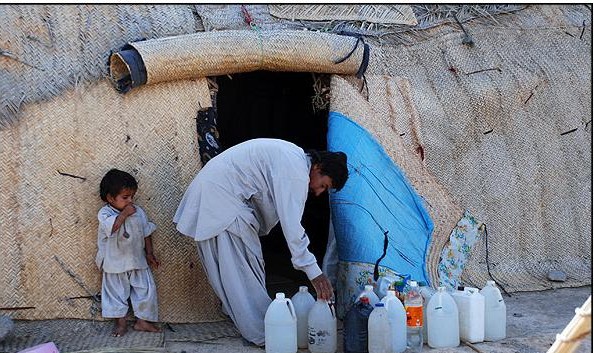
Development of underprivileged areas, pushing back the mindset of violence-centered thinking.
On the evening of Friday, the third of Aban month, various state news agencies reported the killing of 14 Iranian border guards by an armed group opposed to the government. The armed group, known as “Jaish al-Adl,” launched a surprise attack during an armed clash with the border forces in the city of Saravan, killing 14 border guards who were claimed by state media to be on duty, and injuring several others. They also took some people hostage.
Twelve hours after the incident, the public prosecutor of Sistan and Baluchestan province announced the execution of 16 individuals immediately after the attack, in response to the killing and injury of 17 border guards in the Saravan region. He explicitly stated that these executions were in retaliation for the incident and “an eye for an eye.” One week after the prosecutor’s statements, forces affiliated with “Jaish al-Adl” carried out another attack, assassinating the prosecutor of Zabol and offering a
At the same time as these executions and in the midst of scattered clashes between the Revolutionary Guards in the western border areas of the country and anti-government forces, two prisoners accused of being members of the Kurdish opposition party “PJAK”, named Habibollah Golparipour and Reza Esmaeili Mamdi, were executed in Urmia and Salmas prisons respectively. Following these executions, the mentioned party announced in a statement that they will take retaliatory actions.
As evident from the reactions of these groups, the hasty and retaliatory actions of the judicial system in executing Baloch and Kurdish prisoners have been met with violent reactions from these groups, and in at least one case, a response has been given, which seems to have long-term consequences. The violent actions of both sides are in no way justifiable and are always condemned, but the emotional statements of the judiciary as a judicial authority not only call into question the fair trial of these prisoners, but also strengthen suspicions about the
Examples of structural violence include inequality in access to healthcare, education, benefits, and power in society. This type of violence stems from unequal distribution of power in society, which has a direct relationship with development in the region and can expose individuals to various forms of violence or make them victims of it.
Development inequalities between central and peripheral regions can deepen political divisions. This issue is of greater importance in countries like Iran, which have ethnic and religious diversity in the periphery. Sistan and Baluchestan province is classified as a permanently crisis-prone region. Factors contributing to this divergence in the region include linguistic, ethnic, and religious heterogeneity with the central region, as well as its geographical isolation. The emergence of groups such as “Jundallah” and “Jaish al-Adl” has taken advantage of existing political divisions, which have been created due to these inequalities. According to geopolitical research, Sistan and Baluchestan province is among the 30 least developed provinces in
1- Sources:
1. Obedience, Javad and Mousavi, Zahra, The Interrelationship between Regional Security and Development of Political Spaces with Emphasis on Sistan and Baluchestan, International Quarterly of Geopolitics, Year 7, Number 1 (Issue 21)
2. Ebrahimzadeh, Eisa and Raeespour, Koohezad, Investigating the Trend of Changes in the Development Level of Rural Areas in Sistan and Baluchestan Using Numerical Taxonomy during the Decades of 1385 and 1375, Geography and Development, Autumn 1390, Number 9 (Issue 24)
 Admin
Admin December 26, 2013