


Twelve-day war
The gap between legal obligations and the reality of prisons during times of conflict/ Sina Yousefi
In contemporary international law, the situation of prisoners in situations of armed conflict is one of the areas that is particularly sensitive in international legal systems. This sensitivity stems from the fact that prisoners, as individuals who are completely at the disposal and control of governmental institutions, practically lack the ability to effectively protect their […]...
Read More Created By:
Sina Yousefi
Created By:
Sina Yousefi March 21, 2026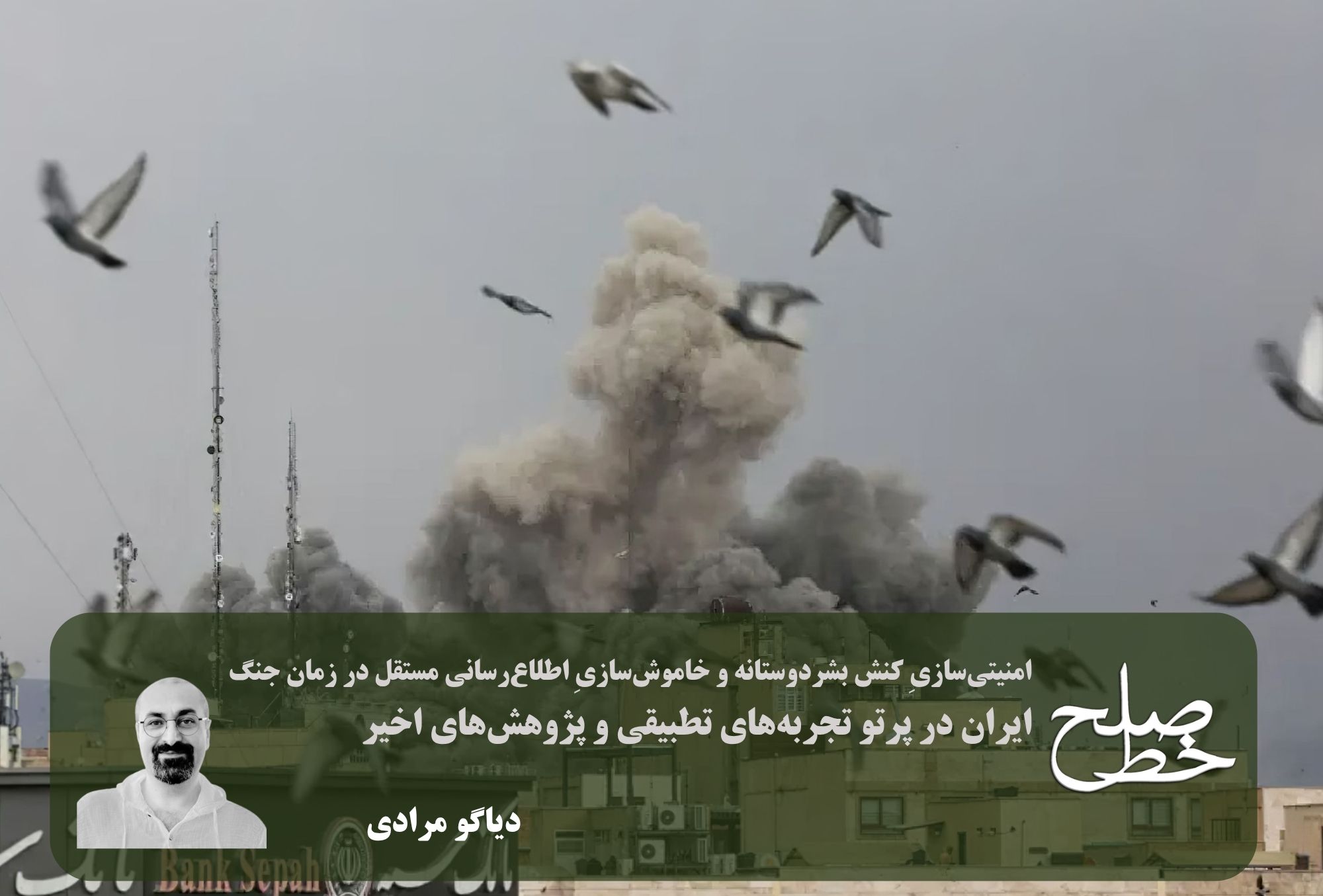
Securitizing Humanitarian Action and Silencing Independent Reporting in Times of War/Diako Moradi
This article attempts to show that in contemporary wars, the battlefield is no longer limited to the military arena, but that the humanitarian, media, communication, and legal spheres are increasingly integrated into the logic of war. In such a situation, war is waged not only through weapons, bombing, and the destruction of physical infrastructure, but […]...
Read More
Created By:
Diako Moradi March 21, 2026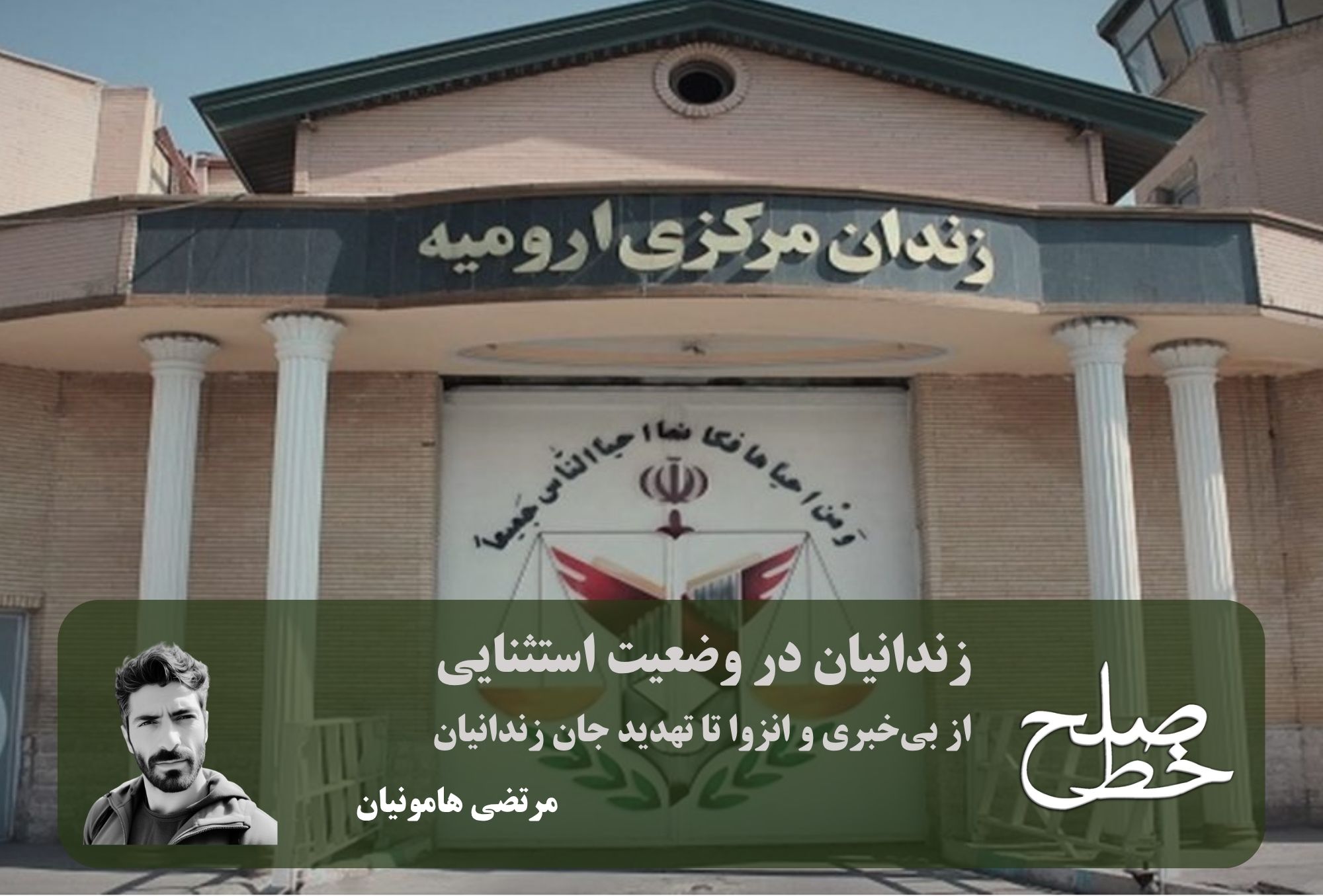
Prisoners in a State of Exception/ Morteza Hamounian
There is an uproar outside. Voices echo and the roar of shouting can be heard. Among the guards and in the corridors, there is constant whispering. But no one tells the prisoner anything. The prisoner is treated as an outsider. From time to time, from near and far, the sound of explosions reaches the ear. […]...
Read More
Created By:
Morteza Hamounian March 21, 2026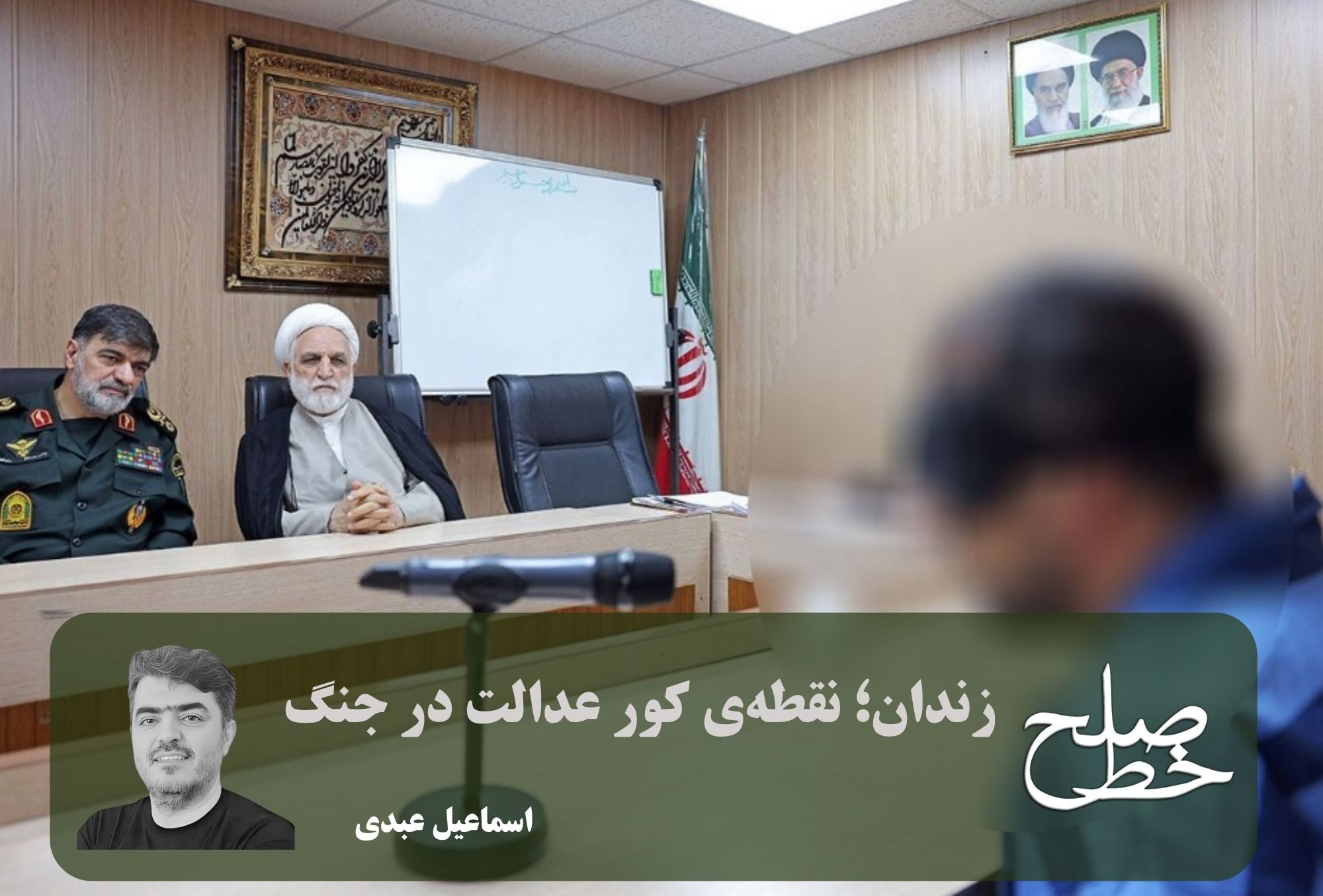
Prison: The Blind Spot of Justice in War/ Esmail Abdi
Based on nearly nine years of my own lived experience in four prisons—Evin, Rajai Shahr, Nadamatgah, and Kachouii in Karaj—I can say with certainty that the system of the Islamic Republic of Iran, despite the existence of domestic laws and its human rights claims, has consistently shown that preserving the human dignity of prisoners and […]...
Read More
Created By:
Ismail Abdi March 21, 2026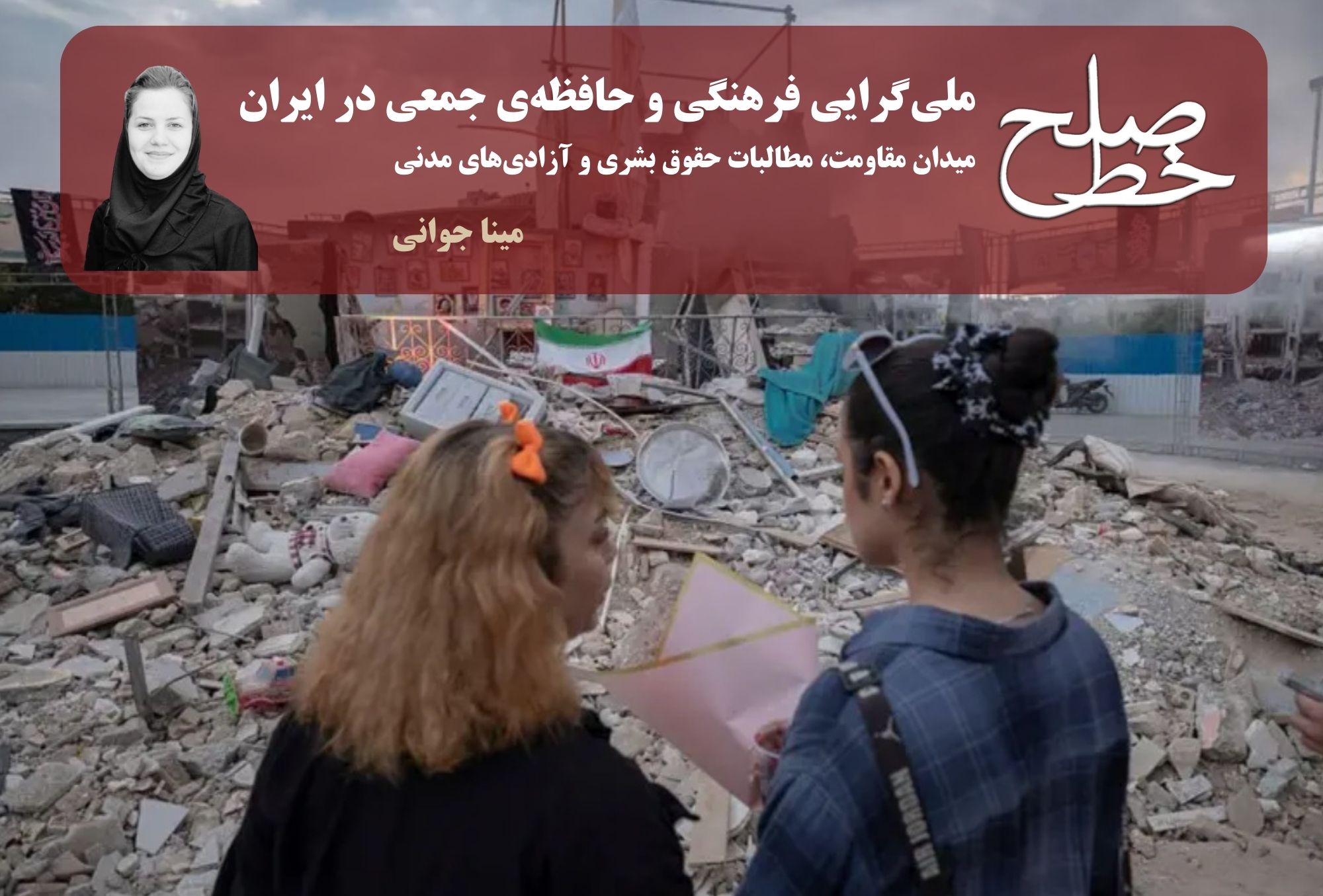
Cultural Nationalism and Collective Memory in Iran/ Mina Javani
Collective memory in societies grappling with political crises and repressive structures functions not merely as a recollection of the past, but as a space for cultural resistance, redefinition of social identity, and advocacy for human rights. In contemporary Iran, the representation of national symbols—ranging from flags and cultural rituals to patriotic poetry and music—has taken […]...
Read More
Created By:
Mina Javani September 23, 2025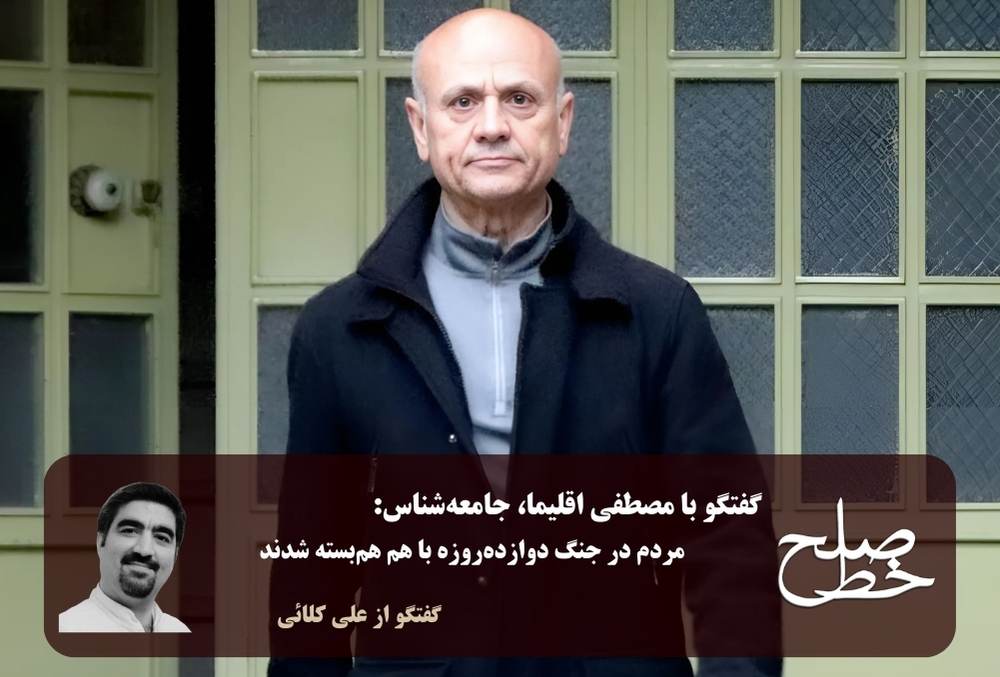
Mustafa Eghlima: People united during the 12-day war/ Ali Kalaei
The twelve-day war between Iran and Israel left deep and lasting consequences in Iran, bringing to light issues that are not only undeniable but also vital for understanding the social and political conditions of the country. This event, like a mirror, revealed hidden layers of inequalities, social divides, and structural challenges. In this conversation with […]...
Read More
Created By:
Ali Kalaei August 23, 2025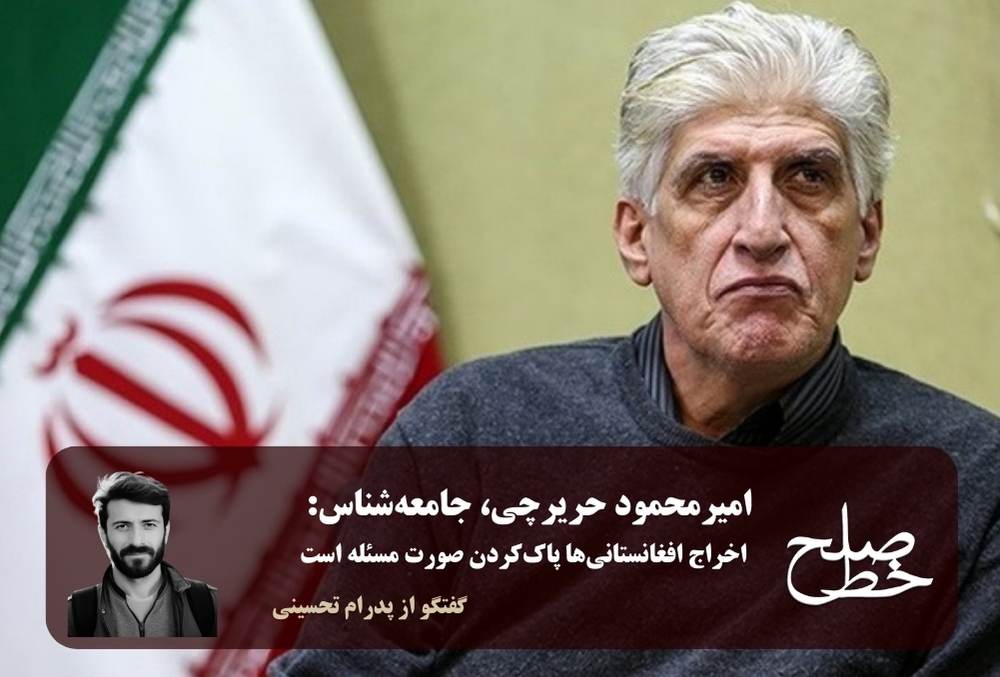
Amir Mahmoud Harirchi: Deporting Afghans is just sweeping the problem under the rug/ Pedram Tahsini
Migration is not a new story; it is an ancient narrative embedded in the annals of every nation’s history — filled with tales both great and small, of triumphs and defeats. But for the people of Afghanistan, this narrative is steeped in sorrow. It is a historical pain for our eastern neighbor, who also happens […]...
Read More
Created By:
Padram Tahsini August 23, 2025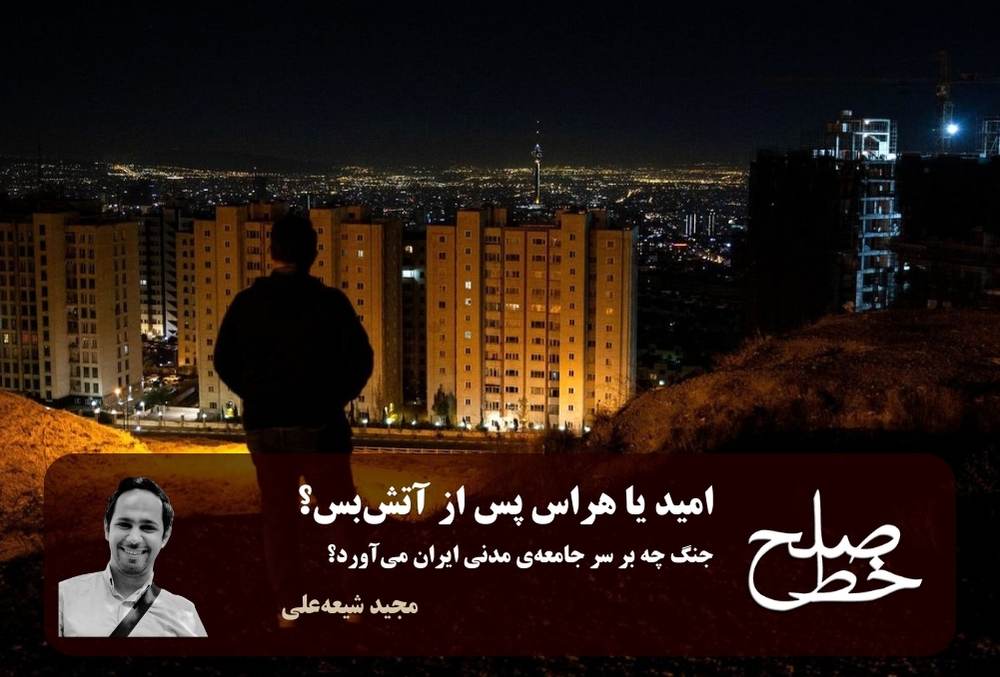
Hope or fear after the ceasefire?/ Majid Shia Ali
The twelve-day war has ended, but the war conditions have not ended. The shadow of war still looms over Iranian society. The threat of war, missile attacks, explosions, assassinations, and Israeli security operations in Iran are still serious. The continuation of the war situation, the inability of the government to take action to address […]...
Read More
Created By:
Majid Shia’ali August 23, 2025
Cold peace as a model of governance in the post-crisis era/ Mina Javani
After the end of the twelve-day war, the situation in Iran has seemingly entered a phase of stability; a phase that in political discourse is referred to as “mutual restraint” or “controlled tension”, but at a structural level, it is not only a sign of a return to normalcy, but also a continuation of the […]...
Read More
Created By:
Mina Javani August 23, 2025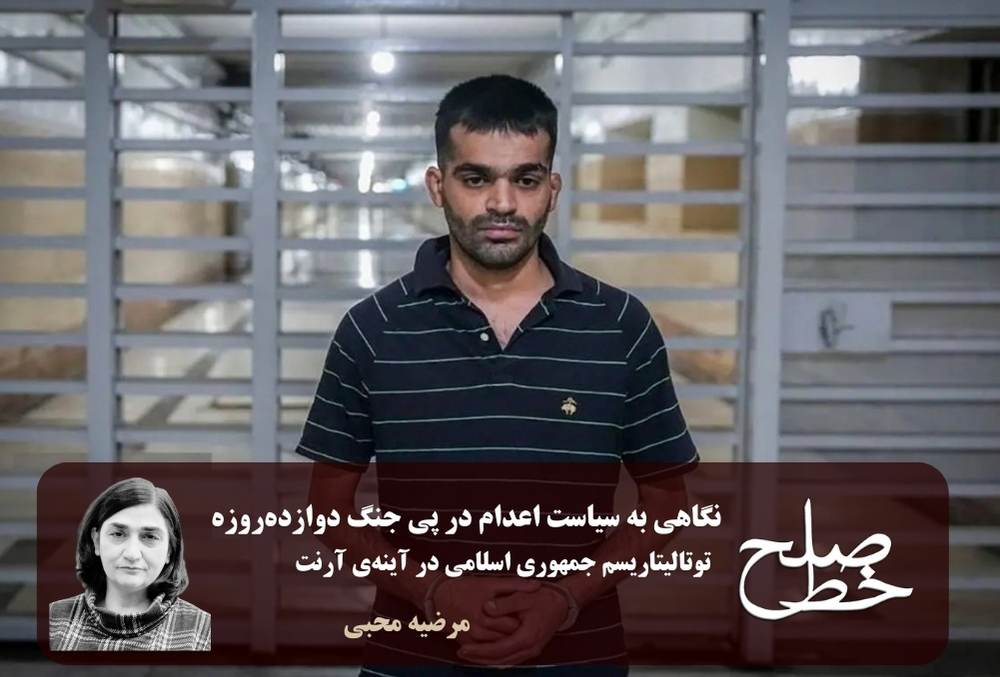
A look at the execution policy following the twelve-day war / Marzieh Mohabi
The 12-day war between Iran and Israel was one of the most intense military conflicts in the region in recent decades and marked the end of a dream for the leaders of the Islamic Republic to eliminate Israel from existence. This conflict began with Israel’s surprise attacks on nuclear facilities, military bases, and the assassination […]...
Read More
Created By:
Marziye Mohebbi August 23, 2025
The Social Massacre of Afghan Immigrants / Amin Ghazaei
After the 12-day war between Iran and Israel, the Iranian government, which saw its security structure collapse, resorted to blind arrests and expulsions of over half a million Afghan nationals in just sixteen days. The Islamic Republic claimed that these unauthorized individuals were acting against national security and in favor of Israel. It is not […]...
Read More
Created By:
Amin Ghazaie August 23, 2025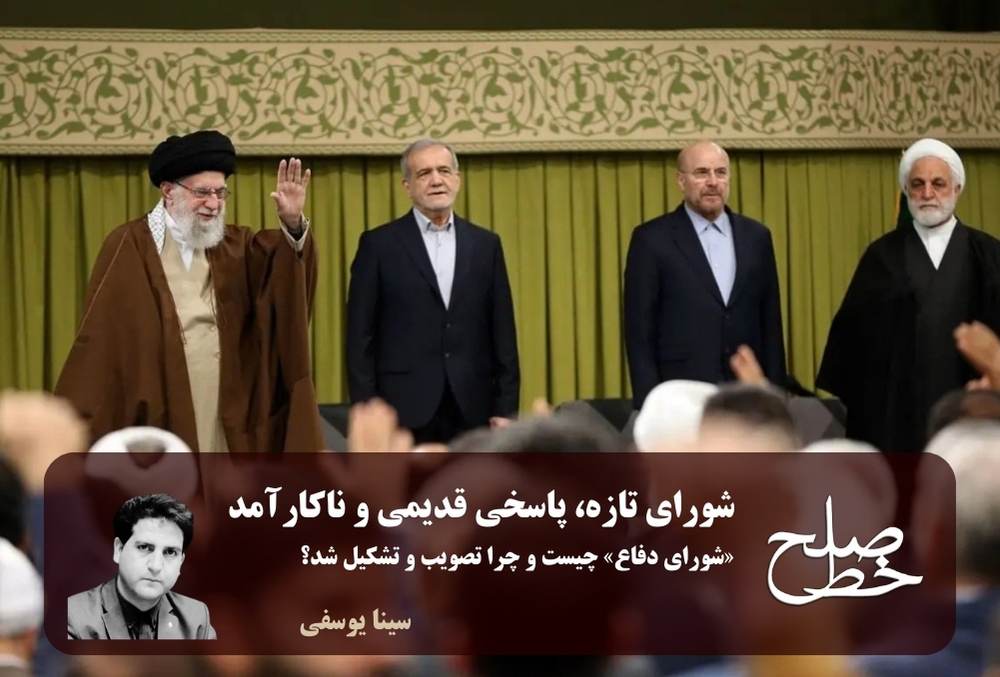
What is the ‘Defense Council’ and why was it approved and formed? / Sina Yousefi
In the month of Khordad of this year, Iran witnessed one of the shortest and most expensive military confrontations, known as the 12-day war. This war not only targeted vital infrastructure of Iran, including sensitive nuclear facilities and defense systems, but also exposed deep-rooted weaknesses in the structure of the Islamic Republic’s defense and security. […]...
Read More
Created By:
Sina Yousefi August 23, 2025
