


The war between Iran and Israel.

The Social Massacre of Afghan Immigrants / Amin Ghazaei
After the 12-day war between Iran and Israel, the Iranian government, which saw its security structure collapse, resorted to blind arrests and expulsions of over half a million Afghan nationals in just sixteen days. The Islamic Republic claimed that these unauthorized individuals were acting against national security and in favor of Israel. It is not […]...
Read More Created By:
Amin Ghazaie
Created By:
Amin Ghazaie August 23, 2025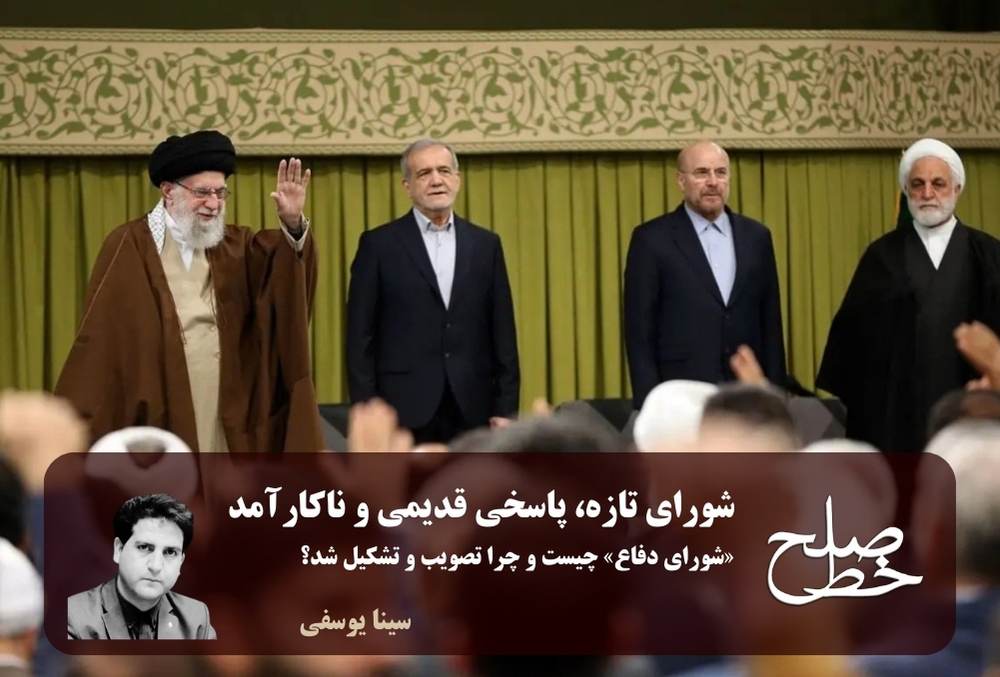
What is the ‘Defense Council’ and why was it approved and formed? / Sina Yousefi
In the month of Khordad of this year, Iran witnessed one of the shortest and most expensive military confrontations, known as the 12-day war. This war not only targeted vital infrastructure of Iran, including sensitive nuclear facilities and defense systems, but also exposed deep-rooted weaknesses in the structure of the Islamic Republic’s defense and security. […]...
Read More
Created By:
Sina Yousefi August 23, 2025
New Control Tool: Critics’ SIM Card Disconnect/ Fereshteh Goli
Nowadays, having a SIM card is one of the necessities of life in the digital and virtual world, and any deprivation of this right for anyone can be considered a tragedy. The International Telecommunication Union (ITU) has emphasized the importance of access to communication tools as a human right in several official documents, especially in […]...
Read More
Created By:
Fereshteh Goli August 23, 2025
The right to access the internet is suspended/ Mohammad Hadi Jafarpour
A few days before the start of the twelve-day war, the issue of internet classification caused some political and civil activists to criticize the decision, referring to the president’s promise to remove filtering. Such restrictions on citizens’ rights are being imposed while in the country’s political-judicial structure, various rules and laws have been formulated and […]...
Read More
Created By:
Mohammad Hadi Jafarpour August 23, 2025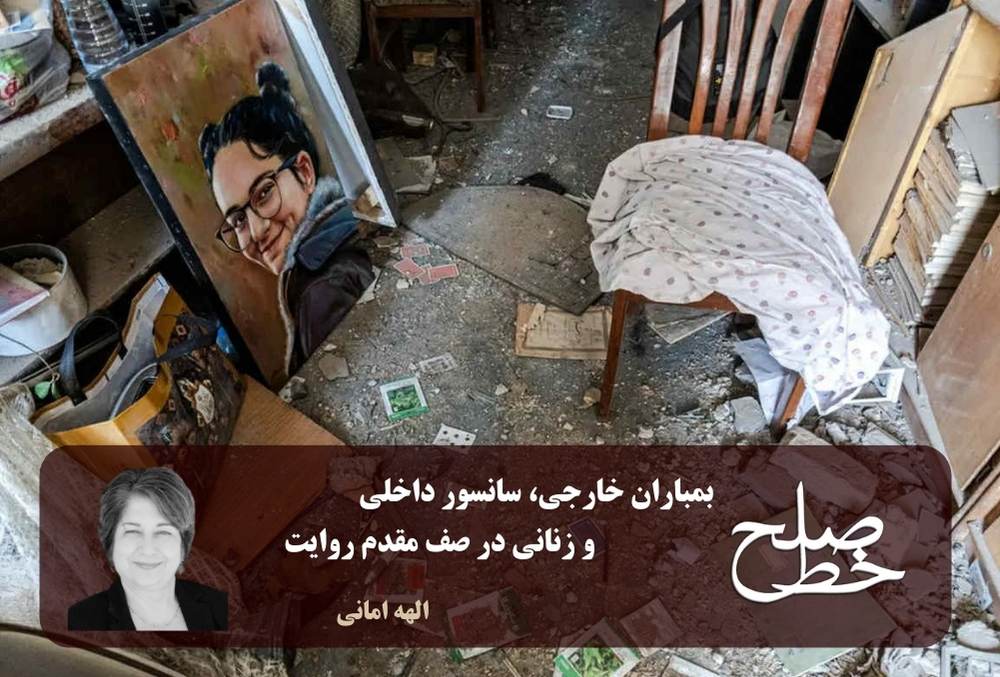
During the external bombardment, internal censorship and women in the forefront of the narrative / Elaheh Amani
“In war, women and children are the first victims, even before the conflicts begin seriously.”.* War is gendered, not neutral. The wounds of war are not only on bodies, but also in lives that are forever changed, and it is women who carry these wounds silently. The costs and consequences of war disproportionately burden […]...
Read More
Created By:
Elahe Amani August 23, 2025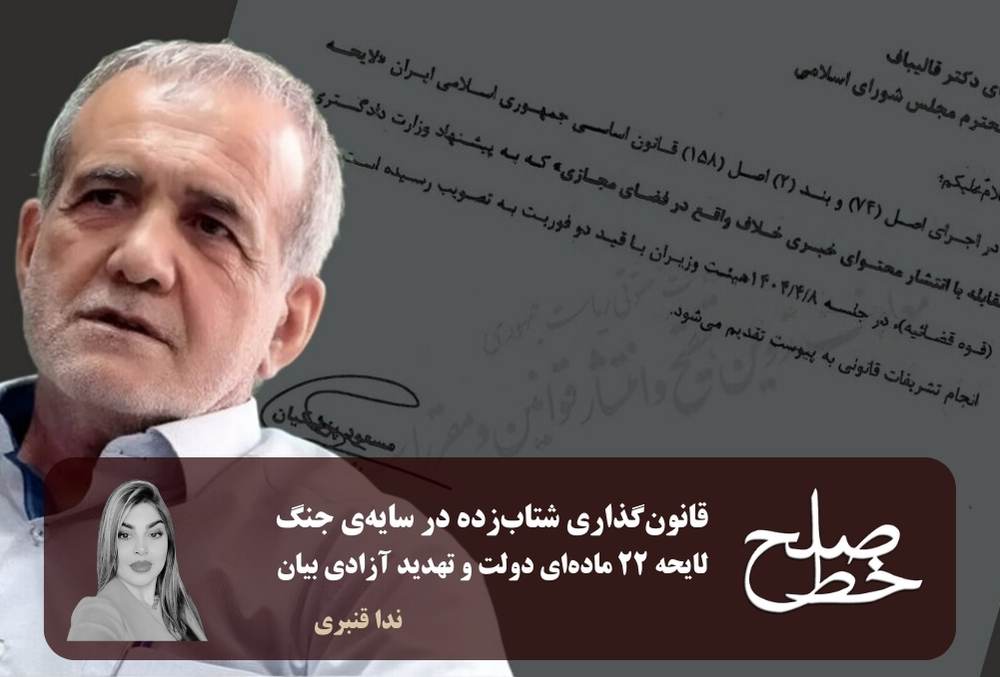
Legislating in the Shadow of War / Neda Qanbari
When asked about the 12-day war and its consequences, my mind doesn’t go to anything but images of destruction and the sound of bomb explosions. I think more about the days when “silence” after the war was heavier than any explosion, engulfing the entire country. In those moments, just when we expected peace after the […]...
Read More
Created By:
Neda Ghanbari August 23, 2025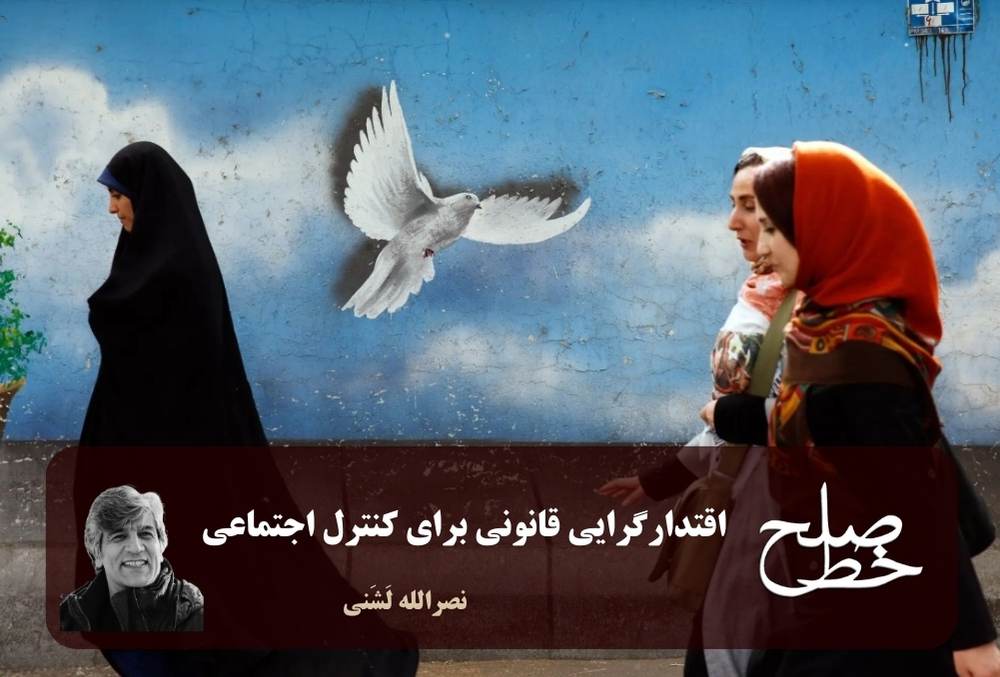
Legal Authoritarianism for Social Control/ Nasrollah Lashani
The importance of the constitution in establishing and solidifying democracy is a legacy of the American Revolution. After the victory of the American Revolution and the independence of this country from British monarchy, the revolutionaries emphasized and focused on the drafting and regulation of the constitution, striving to carefully and skillfully design a national covenant […]...
Read More
Created By:
Nasrollah Lashni August 23, 2025
Parvaneh Salahshouri: If This Stubbornness Toward the People Continues, Predicting the Future Will Be Difficult / Ali Kalaei
In the aftermath of the twelve-day war and the suspension that has cast a shadow over Iranian society and daily life, we spoke with Dr. Parvaneh Salahshouri—sociologist and former member of the Iranian Parliament—to ask her about the government’s handling of the war, her analysis of Iranian society—often regarded by many sociologists as a movement-oriented […]...
Read More
Created By:
Ali Kalaei July 23, 2025
Mohammad Hossein Saket, Former Supreme Court Judge and Justice: “You Cannot Defend Justice with an Axe”/ Pedram Tahsini
Mohammad Hossein Saket is a retired judge, former justice of the Supreme Court of Iran, university professor, and practicing attorney. He has authored works in the fields of law and Islamic studies, including books and articles on legal procedures in Islamic law, a historical perspective on the philosophy of law, legal theory, legal advocacy, and […]...
Read More
Created By:
Padram Tahsini July 23, 2025
Attack on Prisons During Wartime: Solution or Tragedy?/ Majid Shia Ali
There is precedent in modern military history for air assaults on prisons. In some cases, such incidents result from operational errors or misfires during broader military campaigns. One of the most tragic examples occurred in May 1999, when NATO launched strikes in response to the Serbian army’s ethnic repression of Kosovar Albanians. Among the multiple […]...
Read More
Created By:
Majid Shia’ali July 23, 2025
Espionage: The Regime’s Worn-Out Tool to Silence Dissent/ Reza Alijani
Onstage and Behind the Scenes of the Ratification of Article Nine of the Constitution Article 9 of the Constitution of the Islamic Republic of Iran states: “In the Islamic Republic of Iran, freedom, independence, unity, and the territorial integrity of the country are inseparable, and preserving them is the duty of the government and all […]...
Read More
Created By:
Reza Alijani July 23, 2025
Revisiting the Role of the Media in the Twelve-Day War/ Mina Javani
In times of crisis—particularly within the context of military conflicts—the media move beyond their conventional role as mere transmitters of information. They become active agents in shaping public opinion, constructing dominant narratives, and organizing collective emotions. The twelve-day war between Iran and Israel once again demonstrated that the battlefield is not confined to weaponry and […]...
Read More
Created By:
Mina Javani July 23, 2025
