


Suppression
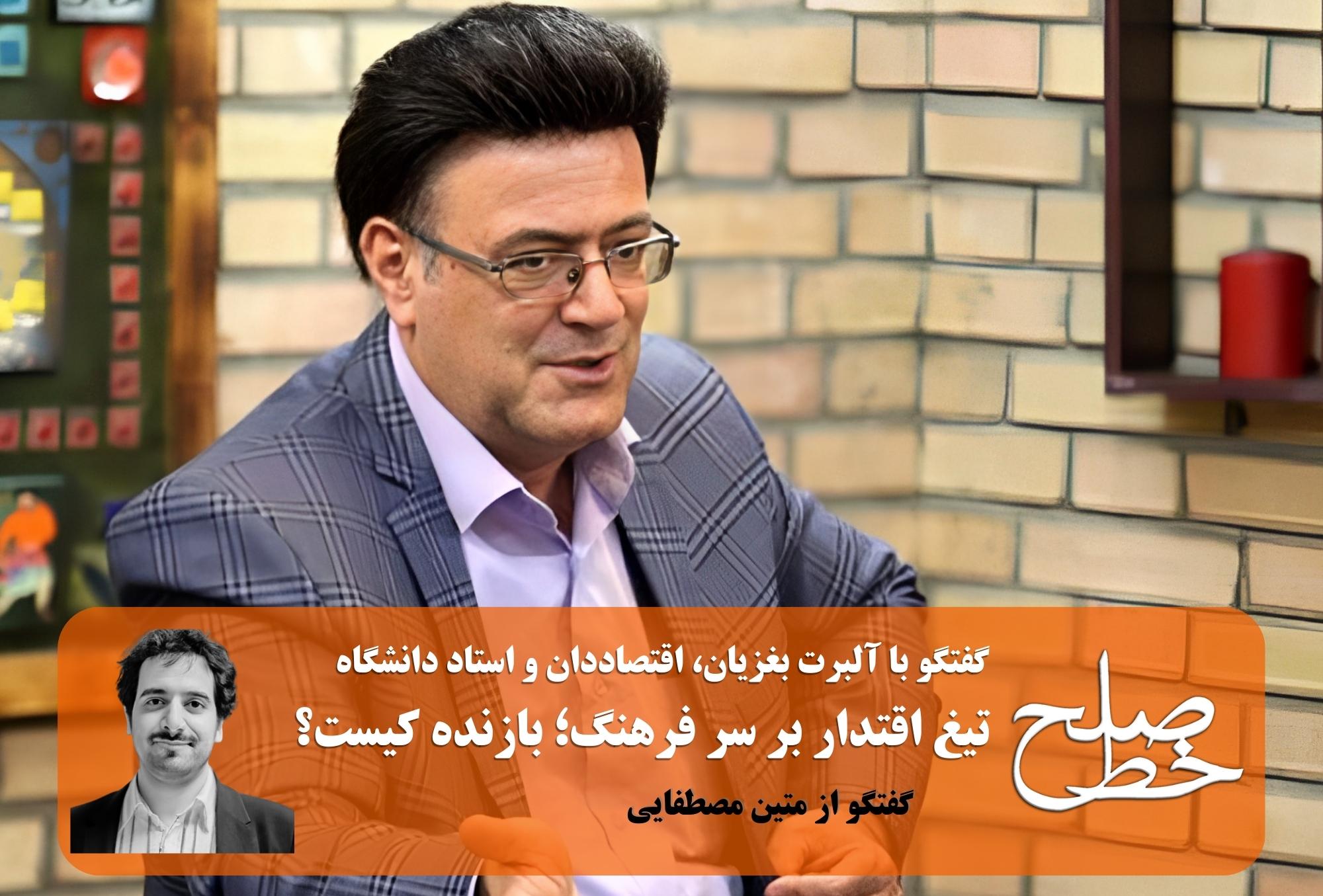
“The sword of power over culture; who is the loser? A conversation with Albert Bghzian/Matin Mostafai”
According to the recent decision of the Supreme Council of the Cultural Revolution, which was approved in the afternoon session on Wednesday, 30 Khordad, under the leadership of Ebrahim Raisi, the responsibility of monitoring the areas of audio and video platforms and the “Home Display” network will now be under the responsibility of the Islamic […]...
Read More Created By:
Matin Mostafaei
Created By:
Matin Mostafaei July 23, 2023
Support for Home Viewing Network: People’s Need and Time; Two Wings of One Flight / Saeed Maleki
Alvin Toffler, the theorist of the “Third Wave”, believes that after the two agricultural and industrial revolutions, humans have now entered the third revolution; the electronic revolution. He says that the emergence of phenomena has caused chaos and the only way to escape it is to choose a strategy of knowledge against these phenomena. Based […]...
Read More
Created By:
Saeed Maleki July 23, 2023
A Critique of “Ouj Media Organization” / Ali Kalai
From the very first months after the leadership of Ayatollah Khamenei, he tried to implant a concept called “cultural invasion” in people’s minds. A concept that reflected his way of thinking and his approach towards modern human lifestyle. In Azar 1368 (November/December 1989), he stated in a speech, “Now in our schools, streets, frontlines, and […]...
Read More
Created By:
Ali Kalaei July 23, 2023
The home viewing network, the latest victim of suppression / Marzieh Mohabbey.
In Iran, when television was under the monopoly of the government, all windows of critical thinking were closed and all avenues of influence for thoughts, beliefs, and existing discourses were obsessively blocked. As an arm of the security apparatus, it also took on the mission of suppressing the government’s opposition. Some speakers and journalists were […]...
Read More
Created By:
Marziye Mohebbi July 23, 2023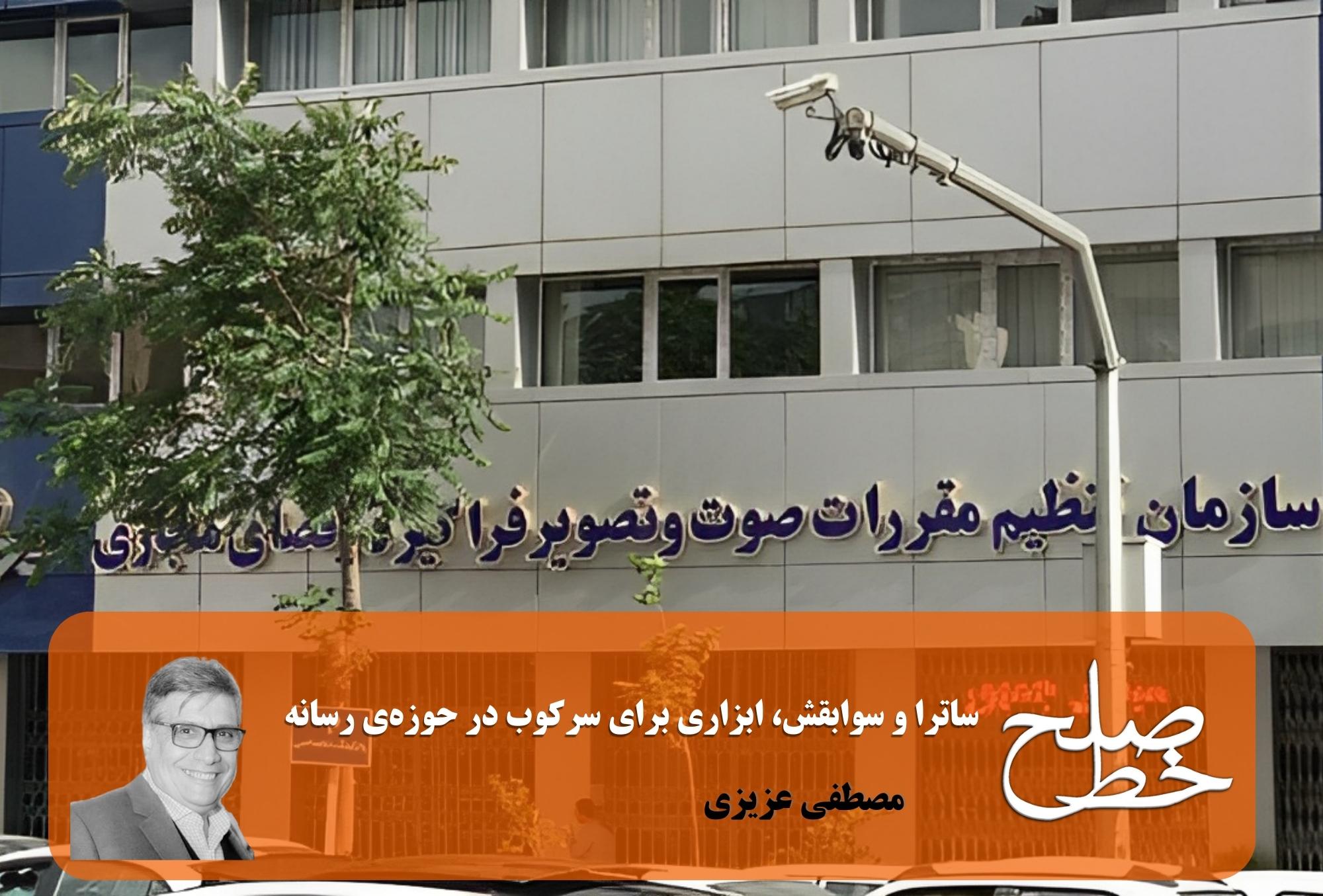
“Satra and its history, a tool for suppression in the media sphere/ Mostafa Azizi”
To suppress visual media, the Islamic Republic has taken different approaches. They used to think that their control over the radio and television would be permanent and all they needed was to have control over it and exercise complete supervision, and even if they loosened restrictions in cinemas, suppression would still be carried out. At […]...
Read More
Created By:
Mustafa Azizi July 23, 2023
Implementation of Articles 19 and 20 of the Universal Declaration of Human Rights in the country / Abdullah Bai Lashki.
Freedom of expression and assembly play a fundamental role in any society and are considered essential pillars of a democratic society. They are also a necessary prerequisite for ensuring support for other fundamental rights of individuals. The freedom of citizens to hold protest gatherings and freely express their opinions nourishes dialogue that ultimately serves the […]...
Read More
Created By:
Abdullah Bai Lashaki February 20, 2023
Created By:
Amir Aghayi November 22, 2022
Corruption, a motivation for more suppression/ Abbas Dehghani
Khosrow. Budget. State. Sure. Bar. Shower. Nation. Members of the Islamic Consultative Assembly agreed in an open session on Monday, 8 Aban 1401, after a month of suppression and severe crackdown by the government on Iranian protesters, to increase the salaries of law enforcement and armed forces personnel by twenty percent through the amendment of […]...
Read More
Created By:
Abbas Dehghani November 22, 2022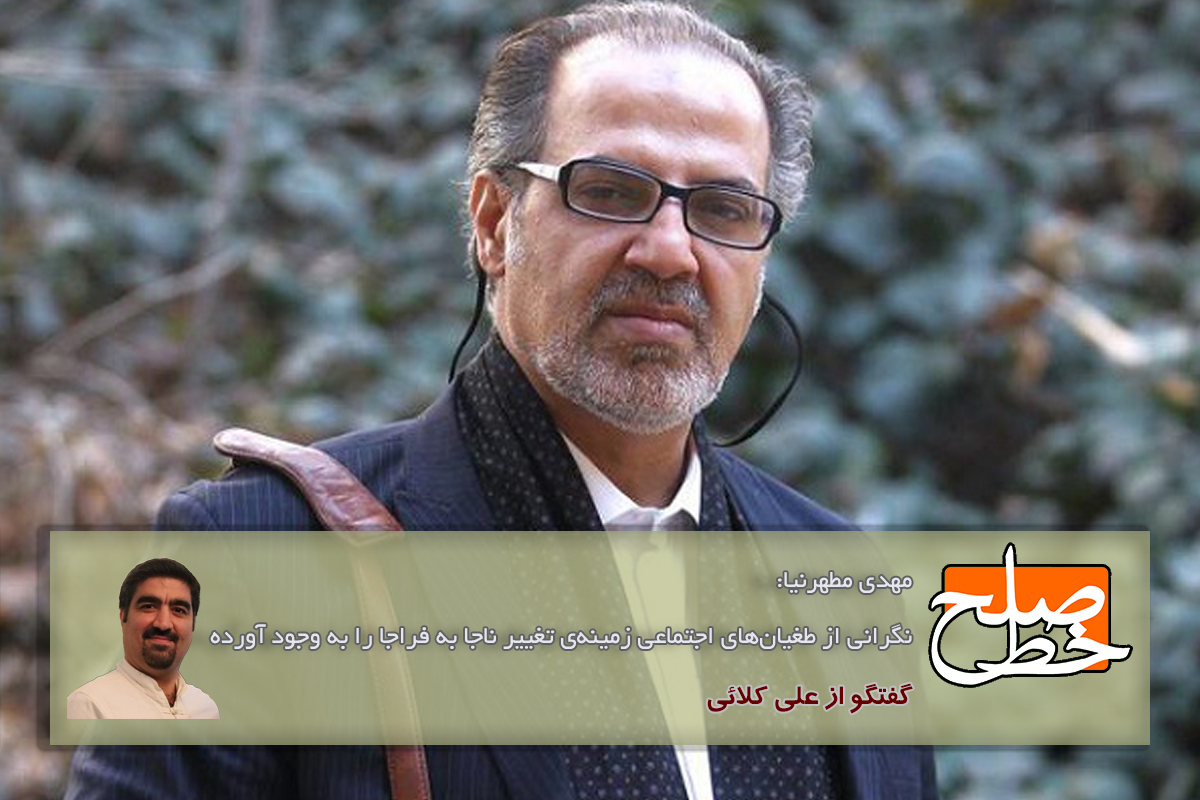
Mehdi Motaharnia: Concerns about social upheavals have created the grounds for the transition from injustice to justice / Ali Kalai
“Concerns about social upheavals on one hand, and the way in which forces deal with these social upheavals on the other hand, have created the grounds for a change and transformation. According to Dr. Mehdi Motaharnia, this could be a reason for the promotion of the police or law enforcement in Iran from within the […]...
Read More
Created By:
Ali Kalaei September 23, 2022
Babak Paknia: The existence of guidance does not coincide with moral, rational, and historical rules/ Roshanak Mehrayin.
In the last week of Shahrivar 1401 (September 2022), Mahsa (Jina) Amini, a young woman who was arrested by the Guidance Patrol in Tehran under the pretext of improper hijab, was transferred to the hospital and a few days later news of her death was announced. Following this incident, which many have called a state-sanctioned […]...
Read More
Created By:
Roshanak Mehrayin September 23, 2022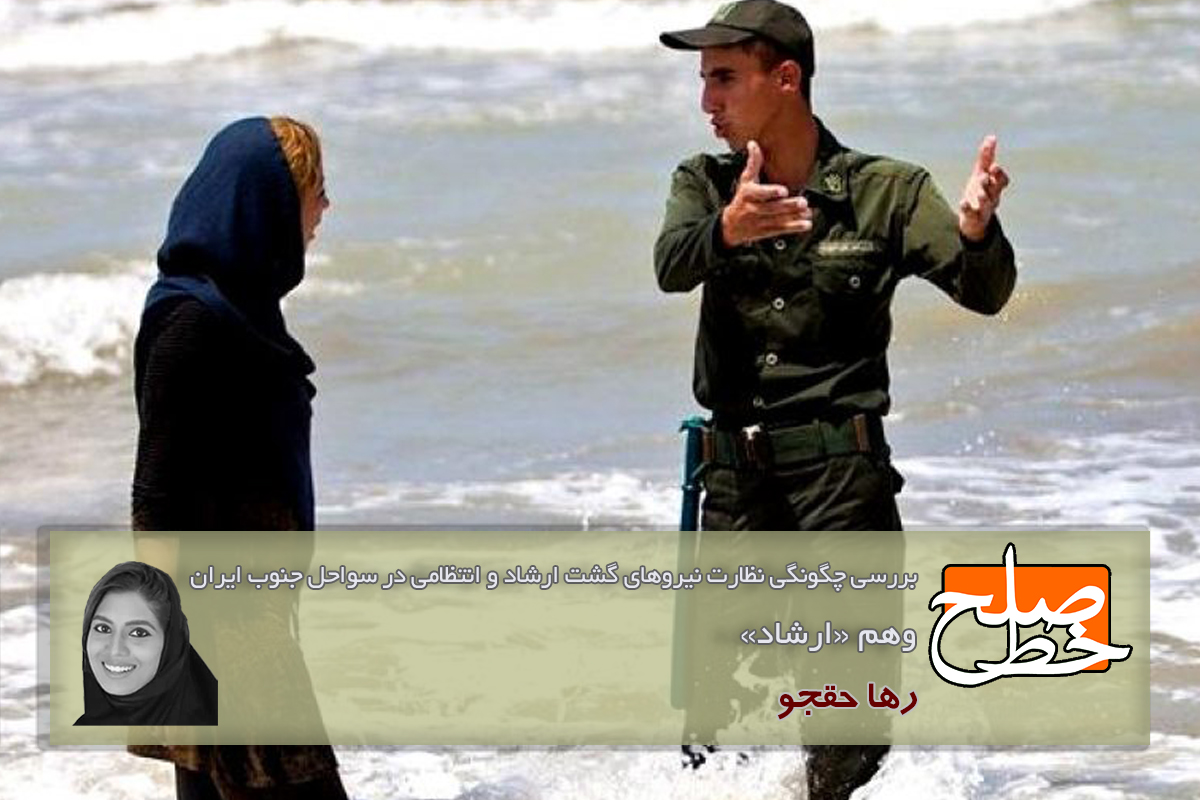
The illusion of “guidance” / Raha Haghdoust
“Mahsa Amini,” a 22-year-old Kurdish girl from Saqqez, lost her life after being arrested by the Basij forces. She and her brother had traveled to Tehran, and on September 15, 2022, she was detained near Shahid Haghani metro station. After being transferred to the Basij’s “moral-educational” class, she was taken to the hospital due to […]...
Read More
Created By:
Raha Haghighi September 23, 2022
Special Police Unit; from the alleys of Mashhad’s seminary to the gardens of Mahshahr/ Maryam Dehkordi
The first time that Iranian citizens heard the name of the special unit may go back to the early 1970s; when one of the first street protests after the revolution took place in Mashhad, one of the most religious cities in Iran, in Bahman 1357. In 1970, the government of Iran merged the city police, […]...
Read More
Created By:
Maryam Dehkordi September 23, 2022
