


Prisoners
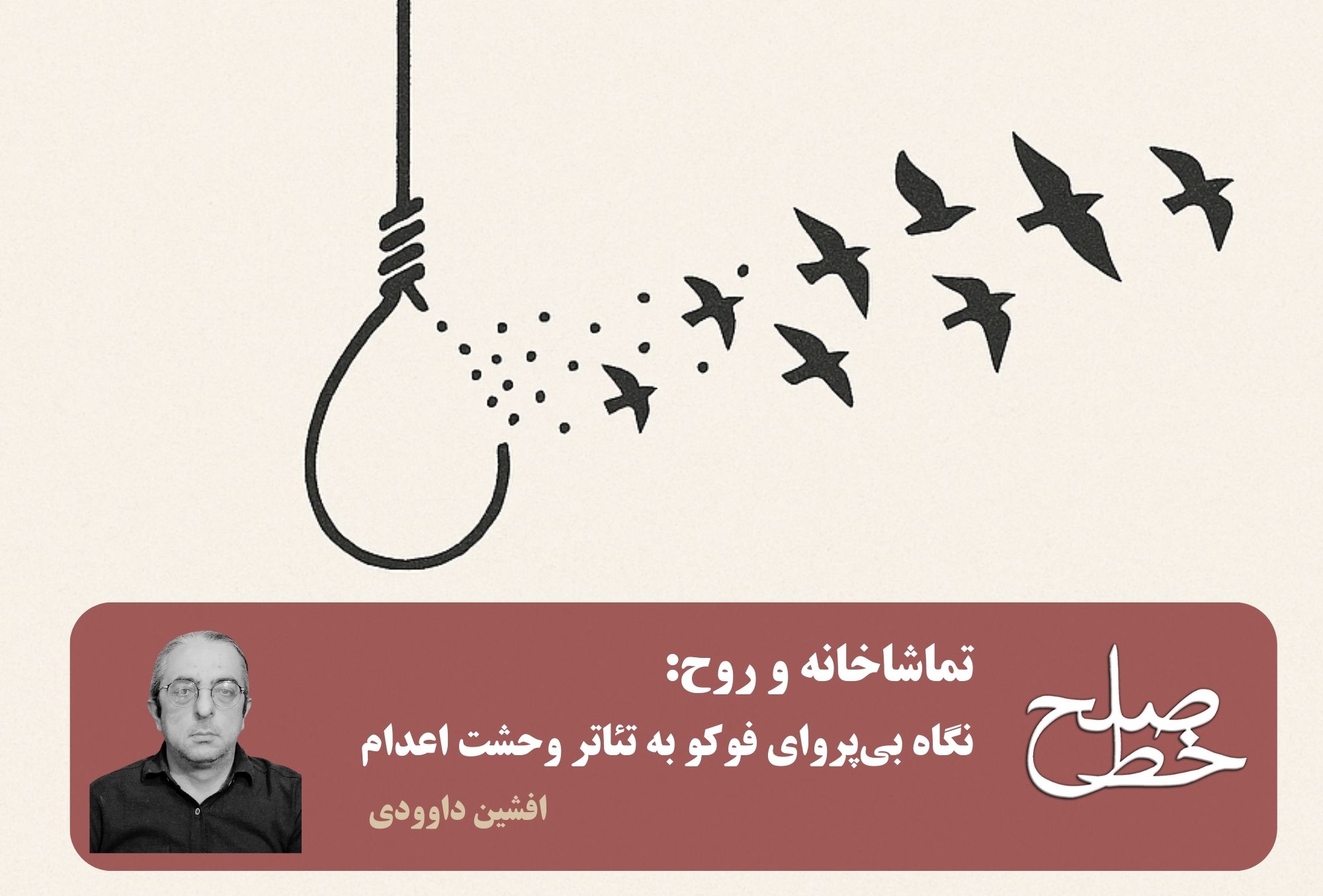
The Theater and the Soul: Foucault’s Unflinching Gaze at the Spectacle of Execution/ Afshin Davoudi
Speaking of public executions evokes a primal image: a crowd gathered in a square, a platform bathed in sunlight or shadow, and the haunting silhouette of the condemned. A scene that feels both ancient and profoundly disturbing. Most modern objections to this practice are based on human rights principles, empathy, and a deep revulsion triggered […]...
Read More Created By:
Afshin Davoudi
Created By:
Afshin Davoudi September 23, 2025
From Cheap Death to Contemporary Scaffolds/ Reza Harisi
Public execution—a phenomenon in which the final moments of a human being’s life are put on public display—goes beyond mere punishment and, in Marcel Mauss’s terms, constitutes a “total social fact” that encompasses all dimensions of a society’s life (legal, political, religious, economic, ethical, and cultural). While the global trend in the modern era has […]...
Read More
Created By:
Reza Harisi September 23, 2025
Attack on Prisons During Wartime: Solution or Tragedy?/ Majid Shia Ali
There is precedent in modern military history for air assaults on prisons. In some cases, such incidents result from operational errors or misfires during broader military campaigns. One of the most tragic examples occurred in May 1999, when NATO launched strikes in response to the Serbian army’s ethnic repression of Kosovar Albanians. Among the multiple […]...
Read More
Created By:
Majid Shia’ali July 23, 2025
“Intervention of repentance in judicial matters and reminding of repentance; conversation with Sadegheh Vasemghi/ Ali Kalaii”
In the first half of Tir month 1403, in the aftermath of the helicopter crash of Ebrahim Raisi and preparations for the election of the 14th government of the Islamic Republic, the head of the judiciary announced a set of guidelines that, if discussed in a different context, could have sparked many debates and opinions. […]...
Read More
Created By:
Ali Kalaei July 22, 2024
The struggles of “Javad Roohi” and the responsibility of humanity/ Marzieh Mohabbey
The judicial system of the Islamic Republic, from its early days until now, has prioritized security and maintaining the status quo, making it a tool for all kinds of oppression and widespread human rights violations. In Iran, we do not have an independent judicial system. Article 57 of the Constitution states, “The governing powers in […]...
Read More
Created By:
Marziye Mohebbi September 23, 2023
Not responding is equal to the continuation of torture and inhumane behavior / Raha Sabzestani remains steadfast.
Responsiveness of officials to the people demonstrates the demands of citizens at the forefront of governance and introduces leaders as servants of the people in action. Through the principle of accountability, not only can the demands of citizens be obtained in a desirable manner, but the legitimacy of the political system will also significantly face […]...
Read More
Created By:
Admin September 23, 2023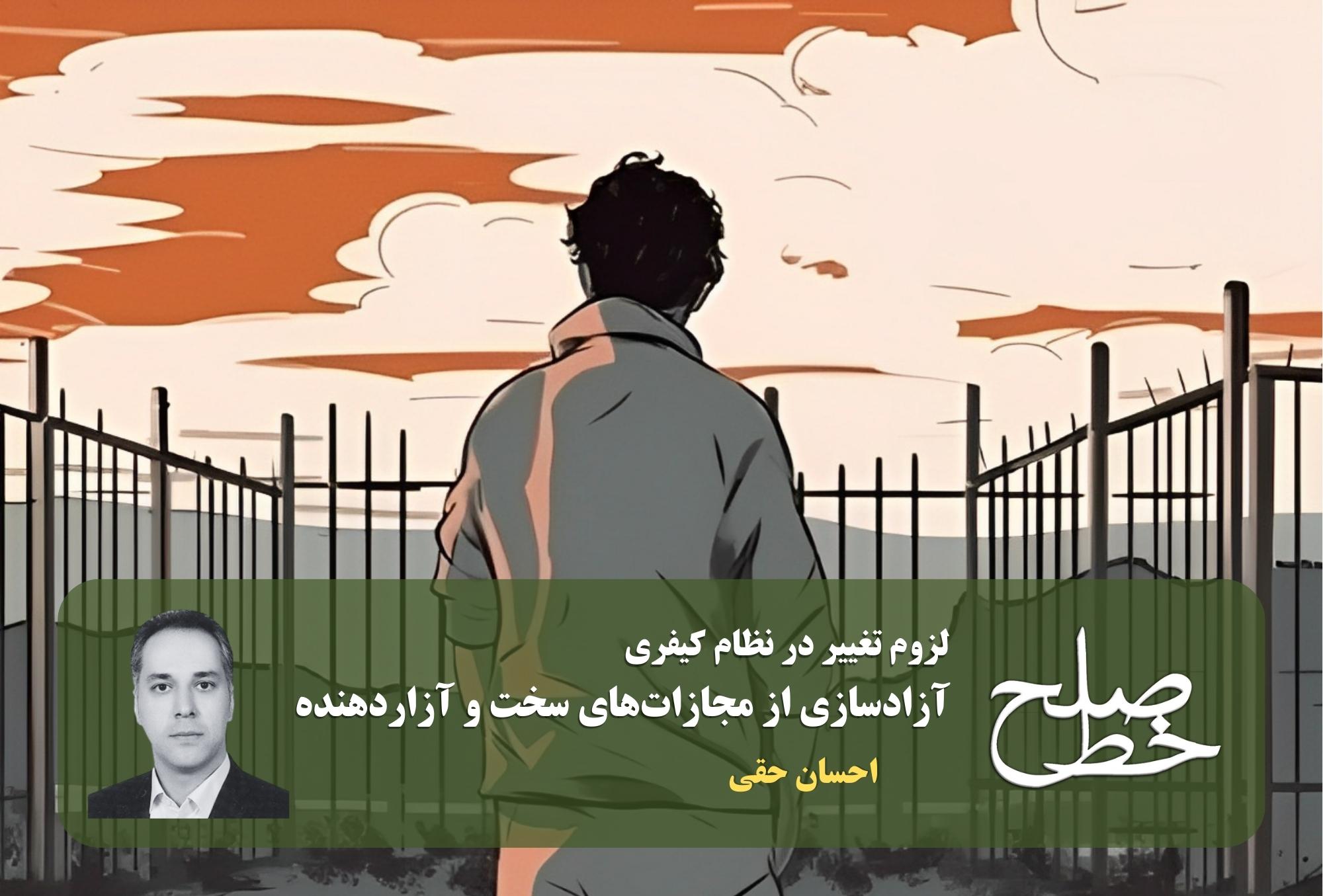
Liberation from harsh and oppressive punishments / Ehsan Haghani
One of the punitive reactions that currently exists in all criminal systems as a legal punishment is deprivation of freedom or imprisonment. This punishment is accompanied by harsh conditions for prisoners and these harsh conditions are considered part of the legal punishment. For example, the legislator has prescribed “imprisonment with hard labor” in the General […]...
Read More
Created By:
Ehsan Haghi June 22, 2023
Islamic Republic and the High Walls of Prison Relocation / Marzieh Mohabi
We must think that prisons and punishments, in general, are not intended to eliminate crimes; they are mostly intended to differentiate crimes and to distribute and use them. Prisons and punishments do not only aim to discipline violators of the law, but they also aim to control violations of the law through a general tactic, […]...
Read More
Created By:
Marziye Mohebbi May 22, 2023
The wall surrounding the Islamic Republic in the garden of the Qasr Museum/ Barbad Golshiri.
It is rare for powers to build a memorial in condemnation or even criticism of their own actions. It is a dream if they even whisper a hidden line on a stone in the Vatican. My fault “But is there a small sign of the centuries of crimes of the Catholic Church? Is there a […]...
Read More
Created By:
Barbod Golshiri May 22, 2023
یIs preserving the historical memory of committed crimes a part of human rights? / Mahnaz Sharayati
Definition of historical memory and its difference from history. If we study “history” officially and systematically through sources and remnants left by people in the past, the “historical memory” is that part of history which is transmitted socially, culturally, and politically through a group or community of people. Two features are mentioned to know the […]...
Read More
Created By:
Mahnaz Shariati May 22, 2023
The prison under the microscope shows the state of a society / Kaveh Shirzad
If we want to understand what goes on beneath the surface of a society and what the social, political, and cultural realities of a society are, we can look at its prisons. Prisons are a reflection of the entire society. The behavior that is exhibited in prisons with an inmate deprived of freedom can also […]...
Read More
Created By:
Kaveh Shirzad May 22, 2023
Changing prisons and the right to a healthy environment for prisoners/ Abdullah Bai Lashki
“Gholamhossein Mohseni Ejei, the head of the judiciary, recently mentioned in a meeting of the administrative council of Alborz province that the judiciary and specifically the prison organization suffer greatly from overcrowding in prisons. With the high density in prisons, it is no longer possible to carry out effective cultural activities to socialize prisoners. However, […]...
Read More
Created By:
Abdullah Bai Lashaki May 22, 2023
