


Peace Treaty 162

The Responsibilities of the Ministry of Industry and the Ministry of Labor in the Tabas Mine Tragedy/ Mousa Barzin
The Tabas mine disaster, which resulted in the deaths and injuries of dozens of workers, was not the first such incident and, unfortunately, is unlikely to be the last. It is clear that the safety of the country’s mines is not a priority for either employers or relevant government bodies. Determining which safety standards should […]...
Read More Created By:
Mousa Barzin
Created By:
Mousa Barzin October 22, 2024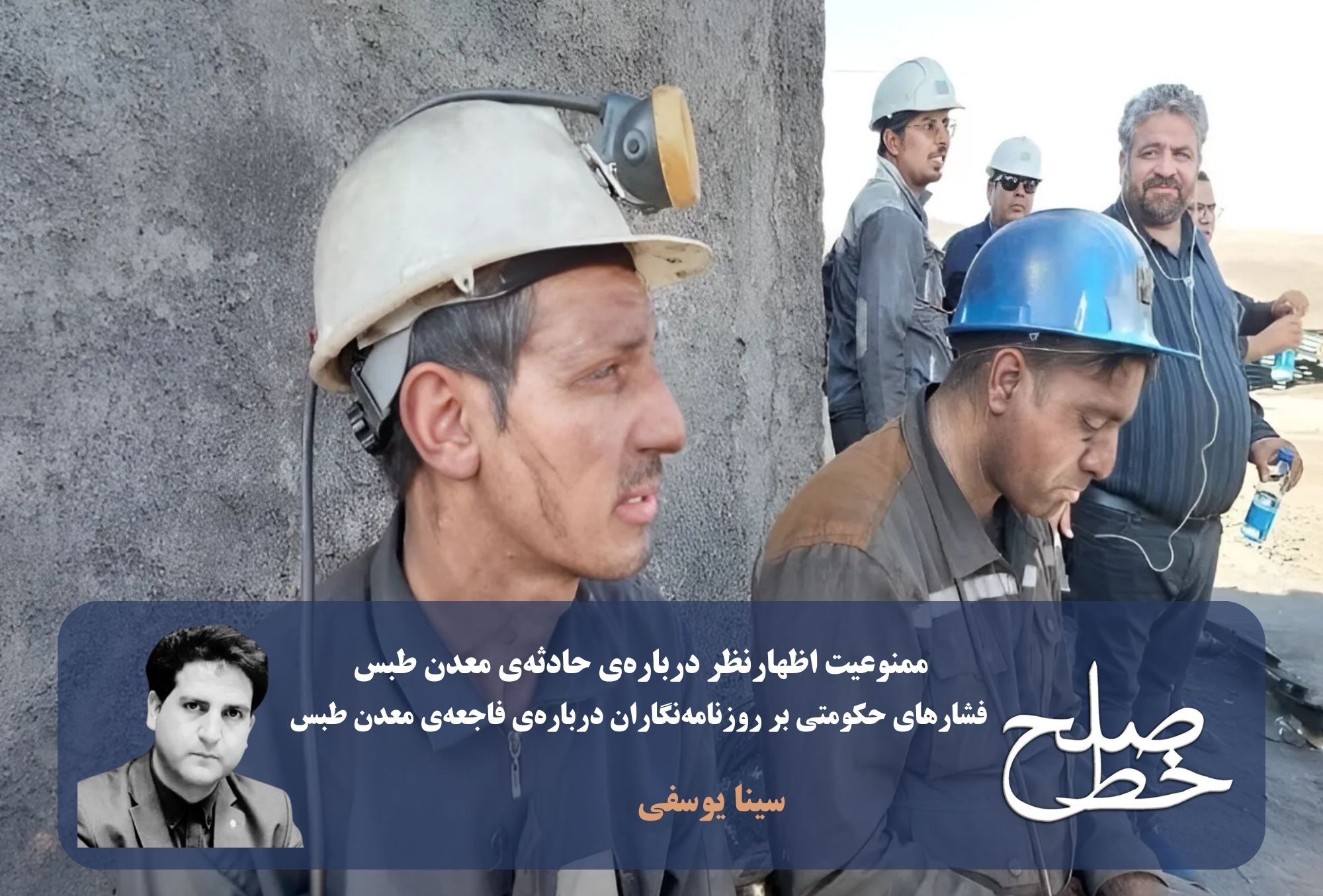
Government Pressure on Journalists Regarding the Tabas Mine Tragedy/ Sina Yousefi
The tragic “Tabas Mine” incident, which involved an explosion or collapse in one of the coal mines in the region, claimed the lives of several workers and left many families mourning. This incident is one of those bitter events that once again highlights the fundamental problems in the field of workplace safety and the lack […]...
Read More
Created By:
Sina Yousefi October 22, 2024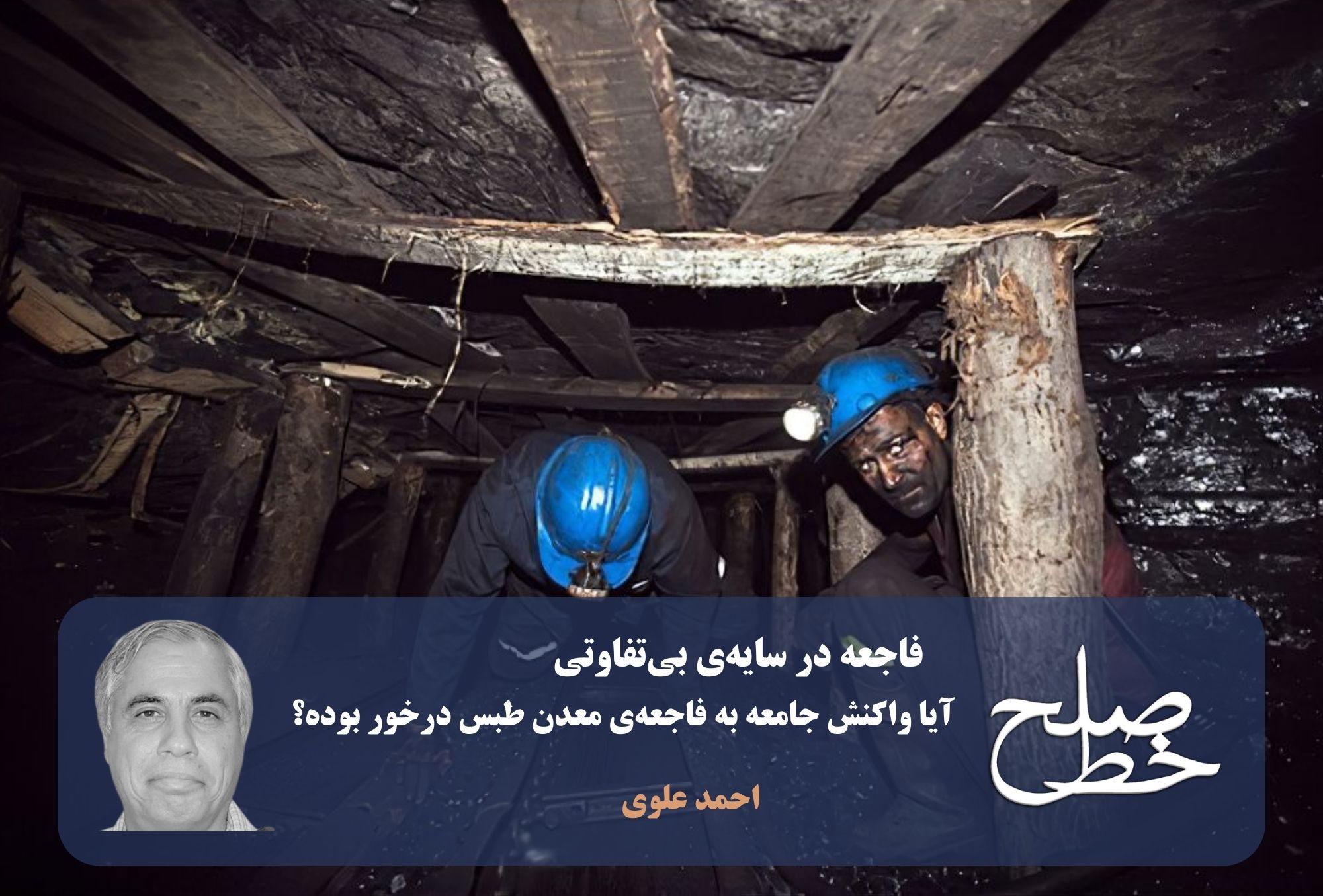
Has Society’s Response to the Tabas Mine Disaster Been Adequate?/ Ahmad Alavi
According to official reports, Iran experiences dozens of fatal mining accidents annually. The exact number of victims is unclear due to underreporting of incidents, but some estimates suggest that more than 100 serious accidents occur in Iran’s mines each year, many of which result in the death of workers (see Table 1). The International Labour […]...
Read More
Created By:
Ahmad Alavi October 22, 2024
“Convention on Safety and Health in Mines”: A Law Gathering Dust/ Ehsan Haqi
Mining has long been one of the most difficult and hazardous jobs, and due to this reality, it is traditionally recognized as a clear example of hard and harmful work. Over time, the dangerous nature of this profession and the people involved in it have come under increasing legal scrutiny, leading to significant national and […]...
Read More
Created By:
Ehsan Haghi October 22, 2024
Workers Who Stayed, Worked, and Died/ Fereshteh Goli
Who could have known that day, and its sunset, would be the last for 52 workers at the Tabas coal mine? Who could have predicted that an explosion would turn the Tabas mine disaster into one of the deadliest mining accidents in Iranian history? You might say no one, but many lived in fear of […]...
Read More
Created By:
Fereshteh Goli October 22, 2024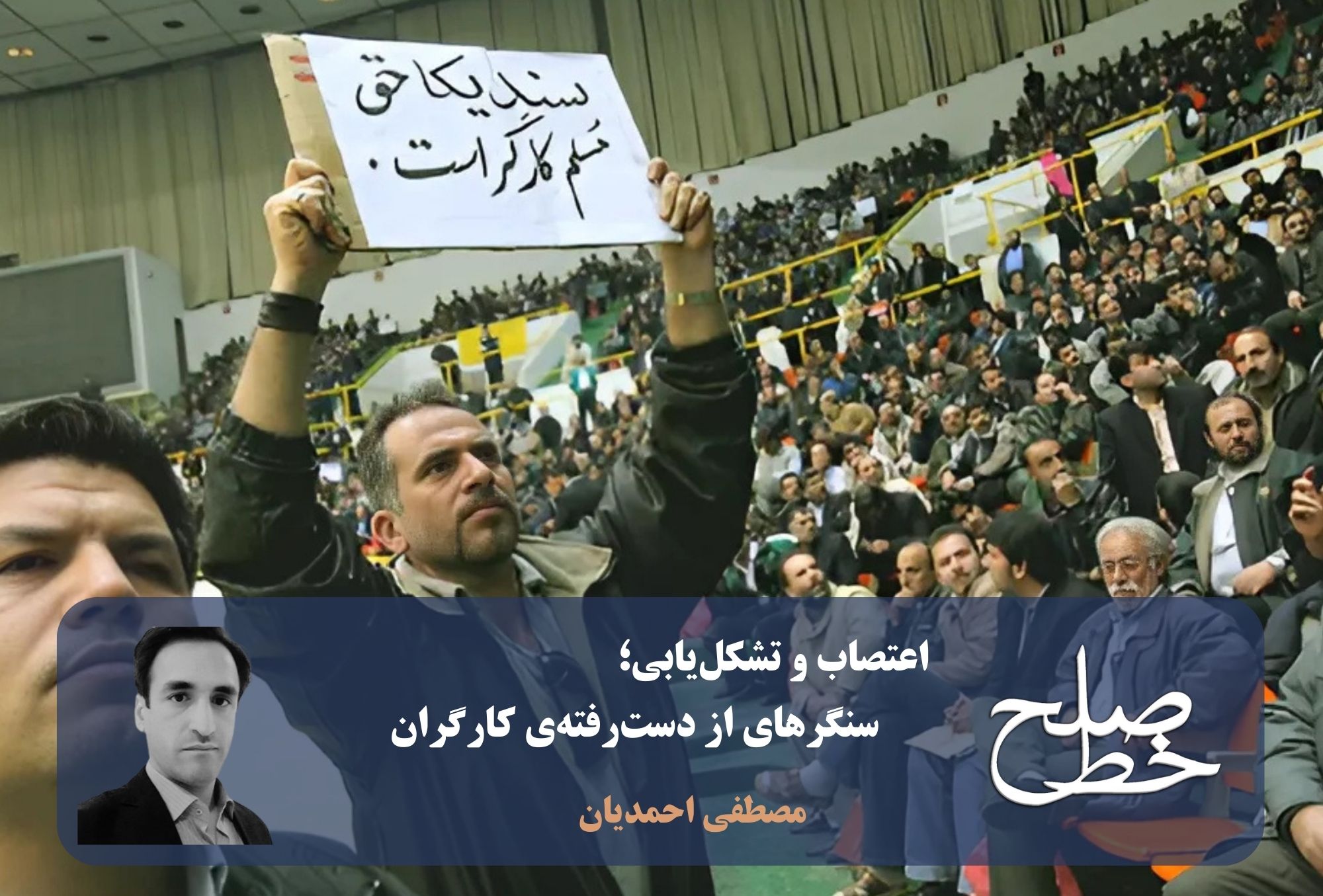
Strikes and Organizing; The Lost Fortresses of Workers / Mustafa Ahmadian
Nearly a century has passed since the fourteen-day nationwide strike of printing workers and the prolonged strike of oil industry workers in Abadan between 1300 and 1404 (1921-1925). These were the first genuine and official strikes in the labor movement in Iran. Subsequently, between 1304 and 1320 (1925-1941), widespread strikes occurred, which faced the harshest […]...
Read More
Created By:
Mustafa Ahmadian October 22, 2024
Rethinking the Role and Structure of Unions in Confronting Job Insecurity/ Mehrnaz Razaghi
The effects of “neoliberalism” on the world of work and labor unions are topics of contemporary debate in most countries. According to David Harvey, neoliberalism can be understood as a theory of political economy practices that seeks to enhance human well-being by maximizing entrepreneurial freedoms within an institutional framework characterized by the protection of private […]...
Read More
Created By:
Mehrnaz Razaghi October 22, 2024
The Tabas Mine Resumes Operations Without Changes/ Morteza Hamounian
In 2010, the San Jose mine in Chile collapsed. Thirty-three miners were trapped 700 meters underground and five kilometers from the main entrance. As in most mining accidents around the world, the employer’s failure to reinforce the mine’s ceiling was the main cause. Rescue teams arrived on site from the early hours. Alongside the miners’ […]...
Read More
Created By:
Morteza Hamounian October 22, 2024
“Tabas” in a Grief That Went Unseen/ Hormoz Sharifian
It seems that the painful events stemming from inefficiency, lack of modernization, negligence, and irresponsibility will not release the long-suffering people of Iran from their grip. It feels like we are condemned to witness devastating disasters every few years, events that inflict deep wounds on the soul and psyche of Iranians, leaving scars that remain […]...
Read More
Created By:
Hormoz Sharifian October 22, 2024
Unequal Education: A Threat to Democratization in Iran?/ Majid Shia’ali
The Iranian Parliament Research Center recently published a study indicating that nearly 55% of students ranked in the top 3,000 in the national university entrance exam come from the top two economic deciles. The study warns that access to higher education in Iran, both in terms of quantity and quality, is significantly unequal. One major […]...
Read More
Created By:
Majid Shia’ali October 22, 2024
Sara Siyahpoor, activist: Iranian women have learned the correct language and behavior of struggle/ Reza Dehlavi.
Since the beginning of the trade unions’ activities, there have been women activists who, alongside men, have fought for the rights of teachers and students. However, the presence of “women” in the teachers’ union movement has become more prominent since 2013 (1392). Their participation has significantly strengthened the teachers’ ability to pursue their union goals. […]...
Read More
Created By:
Reza Dehlavi October 22, 2024
The Feminization of Aging Alongside the Feminization of Poverty/ Elahe Amani
The feminization of aging has presented major challenges for the global community, and Iran is no exception. While other countries have adopted effective strategies to address the feminization of aging and manage this crisis, in Iran, this crisis reveals its grim face in the increasing number of elderly people “abandoned” in parks, streets, and addiction […]...
Read More
Created By:
Elahe Amani October 22, 2024
