


Monthly Peace Line Magazine

Street vendors and wanderers; employed or hidden unemployed?/ Keyumars Karimi
False occupations, whose main cause is chronic unemployment and deep-rooted poverty in underdeveloped countries (third world), have been plaguing our society for years; pseudo-employment that is neither a legitimate job nor has the support of organizations such as associations, unions, syndicates, etc. that can defend its members. It is neither a job with sufficient income […]...
Read More Created By:
Kiomars Karimi
Created By:
Kiomars Karimi January 21, 2022
False occupation, another bread for validating government officials/ Fariborz Kalantari
False occupation is one of those attractive titles that many presidential and parliamentary candidates have sought to benefit from by showing their concern for it. These days, the situation of unemployment and lack of job has reached a point where people turn to fake jobs to escape unemployment. In other words, unemployment has reached such […]...
Read More
Created By:
Fariborz Kalantari January 21, 2022
The relationship between hidden unemployment and the illegitimacy of the political system / Akbar Zarei Nezhad.
Understanding the scientific perspective on sociological issues is difficult for the general public; because social scientists are unable to properly explain the social issues of a society while also connecting with the public. One of the concepts that is particularly difficult for the public to define in Iranian society is unemployment and who is considered […]...
Read More
Created By:
Akbar Zarein Rizi January 21, 2022
Review of the first draft of the main government budget; against the people, in favor of special institutions/ Masoud Kazemi.
“We must make tough and courageous decisions.” This sentence was expressed by Mohammad Bagher Ghalibaf, the Speaker of Parliament, in a joint session between the Parliament and the government regarding the budget for the year 1401. The decisions that Ghalibaf refers to and some other officials also call “economic surgery” seem inevitable given the economic […]...
Read More
Created By:
Admin January 21, 2022
Gender equality advancements in 2021 / Elaheh Amani
The year 2021 was one of the most challenging years for women around the world. The COVID-19 pandemic exacerbated the vulnerability of women and deepened economic and social disparities. Globally, the work conditions for women became more limited due to the economic downturn. Women’s jobs in the service sector, along with a sharp decline in […]...
Read More
Created By:
Elahe Amani January 21, 2022
“Remaining toxins in products, a warning for consumption inside/Mohammad Memandzadeh”
Iranian agricultural products, after being exported to several regional countries, were returned to Iran. According to activists and experts in this field, the reason for the return of these products was the presence of remaining pesticides and heavy metals. The consequences of this return have affected both domestic farmers and exporters, which could lead to […]...
Read More
Created By:
Mohammad Mamandzadeh January 21, 2022
Book Introduction: Women’s Lived Experience in False Professions/ Sharif Hassanzadeh
When talking about women’s work and employment, inequality against women and any topic related to gender becomes a dominant perspective, and a cliché view of how much we should talk about women and how much their situation has improved today is taken into account. Today, perhaps in comparison to a hundred years ago, the situation […]...
Read More
Created By:
Sharif HassanZadeh January 21, 2022
Comedy-Tragedy of Power Struggle; People’s Reaction to the Approval of the “Youth Population” Plan in an Interview with Saeed Ma’eedfar, Sociologist/ Mehrnoush No’edoust
The youth population plan, as a legal document with negative content or perhaps something similar to a government decree from a few years ago, was approved in parliament and announced by the president. Like many other laws in the Islamic Republic, this plan has been put on the agenda without any study and solely based […]...
Read More
Created By:
Mehrnoush Noudoust December 22, 2021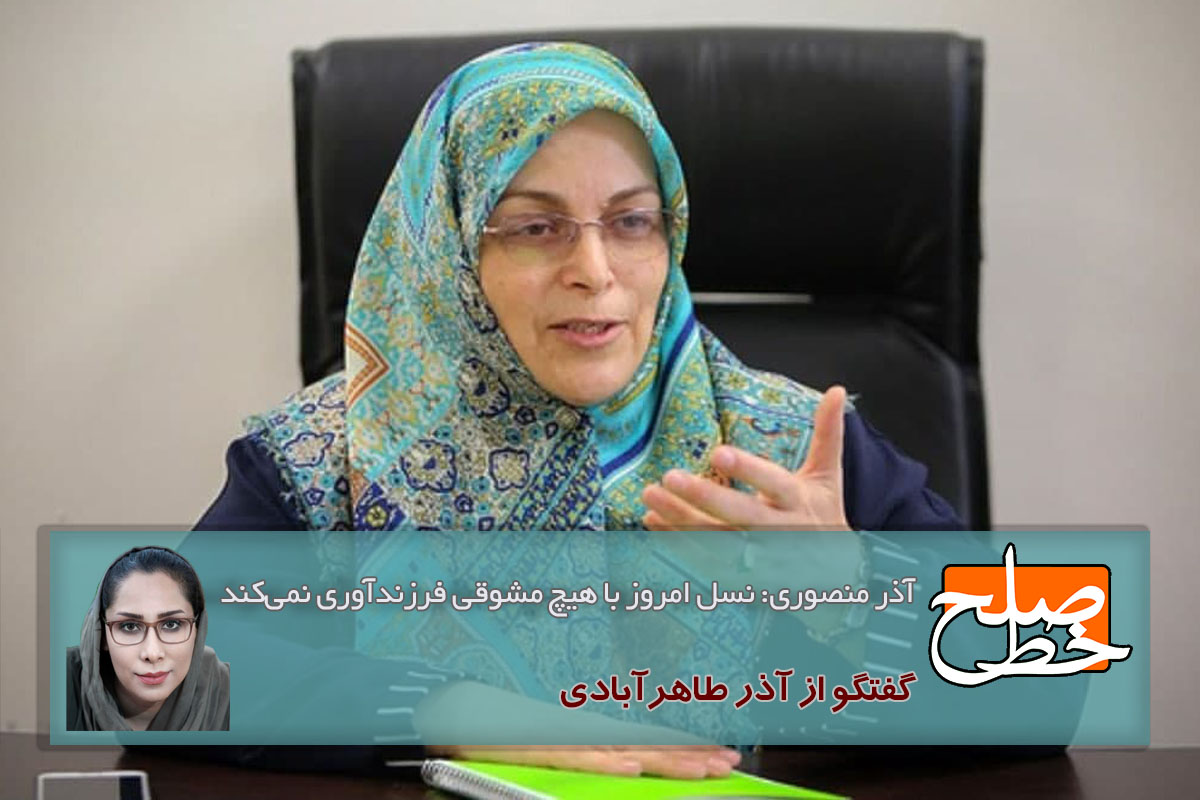
Azar Mansouri: Today’s generation does not have any motivation for having children / Azar Taherabad
The topic of youth and population policies in Iran has been a subject of discussion in society for some time now. The implementation of these policies, although it may seem politically or even economically reasonable to some, will create many social and economic challenges for both the community and the youth, as well as for […]...
Read More
Created By:
Azar Taherabad December 22, 2021
Gholamreza Montazeri, a representative of the parliament, claimed: There is no relationship between childbearing and privacy / Ali Kalai.
He considers the law of youth population as “one of the most progressive and valuable decisions of the eleventh parliament” and a response to our fundamental cultural and social needs in the present era, and apparently is not willing to accept any criticism of it. He says that “all the predicted cases have been taken […]...
Read More
Created By:
Ali Kalaei December 22, 2021
The roots of population growth policies in Iran: religious, political, or security? / Reza Alijani
An Overview of Population Policies in Iran in the Past Half Century The first population control program in Iran was implemented in 1337 at the recommendation of the United Nations, but coordinated population control programs began in 1348. In the years before the 1357 revolution, the growth of Iran’s population decreased from 1.3% to 1.2% […]...
Read More
Created By:
Reza Alijani December 22, 2021
A Brief Look at Population Growth Policies from a Psychological Perspective / Mehdi Amberi
“Population” is a keyword that greatly influences economic, cultural, social, and political relationships. Currently, when talking about population, the general public sees it as a political statement; however, the increase or decrease in population directly affects livelihood, economy, security, and of course the future of a society, and the government of any country can use […]...
Read More
Created By:
Mehdi Anbari December 22, 2021
