


Monthly magazine number 33

Shirin Ebadi: The seminary does not have the competence to handle student affairs/ Panteha Bahrami
Shirin Ebadi is one of the first female judges in Iran who, after the February 1979 revolution and the changes in the country’s political and social laws, was unable to continue her career as a judge. She is also the first and only Iranian to have received the Nobel Peace Prize. She is also known […]...
Read More Created By:
Panteh’a Bahrami
Created By:
Panteh’a Bahrami October 15, 2015
Ismaeil Abdi: The continuous presence of clerics in schools is an insult to teachers.
The education system in Iran is facing serious problems such as budget shortages and a lack of health and sports instructors; however, according to a recent agreement between the Tehran Education Department and the Tehran Seminary, the education system has committed to accepting the costs of religious instructors in schools and allocating a separate budget […]...
Read More
Created By:
Admin February 21, 2014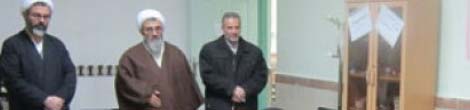
Religious seminaries do not trust education and training.
Amin schools, pre-seminary schools, and Sadra schools are new types of schools that have been established in recent years. The common feature of these schools is the direct involvement of clergy in management and administration. In addition, a large number of clergy are sent to schools in various capacities, such as leading prayers and answering […]...
Read More
Created By:
Admin February 21, 2014
The separation of religion from schools in the West, why and how?
With the beginning of the Renaissance, humanity reaches civilization and turns to sciences, arts, aesthetics, and other scientific subjects. Scientists, philosophers, and writers have played a significant role in this. Scientists, through their research in new sciences, achieve new accomplishments. In this way, the Renaissance becomes a leap for the people of Europe to advance […]...
Read More
Created By:
Admin February 21, 2014
Reflection on the agreement between education and training with the seminary sector.
With the arrival of Ahmadinejad’s government and the selection of Mahmoud Farshidi as the Minister of Education, the livelihood and economic demands of teachers were pushed aside and the needs and priorities of this ministry were determined by Farshidi and his accompanying group. Farshidi and his deputies believed that “the majority of the current teachers […]...
Read More
Created By:
Admin February 21, 2014
From criticism of the humanities, to supervision of schools.
The conversion of government schools in Tehran to schools affiliated with the seminary was not a new development; by looking at the activities of the seminary, it can be seen that since the late 1970s, the seminary has focused on infiltrating and utilizing educational facilities. But the main question is, what is the purpose of […]...
Read More
Created By:
Admin February 21, 2014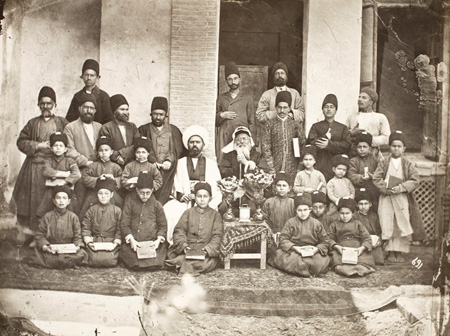
In an attempt to return to the era of traditional schools.
The story of the agreement between the Tehran Department of Education and the seminary to affiliate a certain number of public schools with the seminary is probably not in need of reminding, and esteemed readers may have already read about it in other publications or at least in this issue of the peace journal. Based […]...
Read More
Created By:
Admin February 21, 2014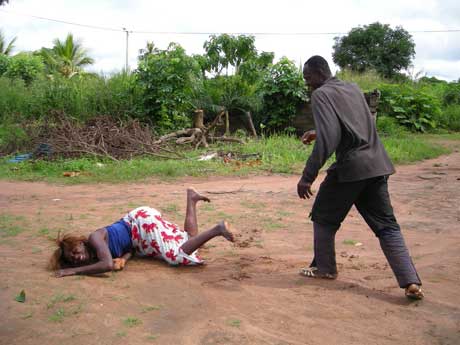
Do not remain silent about violence against women.
Violence against women is always talked about and how much they endure difficulties and abnormalities. Is this really the case? Are these really only women’s problems? What is the role of men? Are women’s problems not men’s problems? Why do we automatically think of “gender inequality” as “inequality against women” and not “inequality against men”? […]...
Read More
Created By:
Admin February 21, 2014
Teaching Human Rights and Obligations of the Iranian Education System
As it is evident from his fame and greatness, the concept of human rights is not well-known among the general public. Although nowadays, with the advancement of global communication tools, group media, and virtual space of the internet, there are fewer people who have not at least heard or read about human rights, but human […]...
Read More
Created By:
Admin February 21, 2014
Exile Letter; On the pretext of the intensified suffering of political prisoners.
In Iranian laws, there is no punishment of imprisonment in exile, but unfortunately a large number of prisoners in Iran are forced to endure this punishment. Prisoners in exile have been sentenced to endure this punishment in two ways: 1- Judging in the matter of combat based on a fatwa, in practice contrary to the […]...
Read More
Created By:
Admin February 21, 2014
Execution of a child, mother’s suicide in a conversation with one of the relatives.
Unfortunately, since the legal fight against supply, demand (consumption), and the harms caused by drugs began in Iran, this problem has always been viewed from a one-dimensional perspective and without investigating and searching for the factors and roots of its commission, it has only been addressed by fighting the disabled through punishments such as execution, […]...
Read More
Created By:
Admin February 21, 2014
“Manifested spirit, manifestation of different perspectives on the concept of citizenship.”
The most important and sensitive part of citizenship rights is political rights, which the Charter of Citizenship has remained silent about. If such silence is intentional, which is likely the case, it indicates deep disagreements about political rights such as freedom of expression, freedom of religion, free and fair elections, unlawful arrests and detention centers, […]...
Read More
Created By:
Admin February 21, 2014
