


ماهنامه خط صلح

Stress and Psychological Impacts of Communication Restrictions on Users/ Alireza Goodarzi
To have a simple voice or video call with friends living outside Iran, I sometimes have to open and close several apps before one finally connects us for a few minutes. They can’t access domestic platforms, and we can’t use most international apps. I have to try multiple VPNs to find one that works. One […]...
Read More Created By:
Alireza Goodarzi
Created By:
Alireza Goodarzi January 20, 2025
Why Insist on Maintaining Filtering?/ Majid Shia’ali
One of the main promises of the Pezeshkian administration was to lift the filtering of social media platforms. In recent months, reformists have tried to achieve a symbolic success for the unsupported Pezeshkian administration by lifting the ban on some social networks amidst the current crises. However, despite all these efforts, the administration’s achievements have […]...
Read More
Created By:
Majid Shia’ali January 20, 2025
The Digital Economy in the Cage of Filtering/ Ahmad Alavi
According to the fourth report by the Tehran E-Commerce Association, Iran ranks 98th among 100 countries in terms of internet quality. In this ranking, Iran is third from the bottom, following Cuba and Turkmenistan. Furthermore, Iran and China are at the top of the list for the highest number of filtered domains. Social media filtering […]...
Read More
Created By:
Ahmad Alavi January 20, 2025
Examining the Impact of Filtering on Iranian Families: Challenges, Consequences, and Solutions/ Mehdi Anbari
The digital space has become an inseparable part of the lives of Iranian children, teenagers, and families. However, it appears that filtering policies in Iran over the past decades have created challenges for families rather than supporting them. The internet is now a core pillar of daily life, particularly for children and teenagers. It provides […]...
Read More
Created By:
Mehdi Anbari January 20, 2025
The Internet in Iran Has No Meaning Without VPNs/ Soroush Ahmadi
The issue of filtering in Iran is as complex as it is straightforward. If we set aside the question of why filtering occurs in Iran and why we are the second-most restricted country for internet access after China, we can discuss the surrounding issues. The internet, the most modern method of communication in the world, […]...
Read More
Created By:
Soroush Ahmadi January 20, 2025
The Right to Internet Access from the Perspective of International and Iranian Laws/ Abouzar Zaman
Human rights, along with the enactment of laws to recognize these rights, establish mechanisms to ensure their realization, and define their limitations, have always evolved in response to changing human needs, societal developments, and advancements in science and technology. Many emerging legal issues, while interpretable and inferable from previously recognized principles and laws, require new […]...
Read More
Created By:
Abouzar Zaman January 20, 2025
Human Rights in the Grip of Internet Filtering/ Sina Yousefi
Filtering, as a tool for controlling and restricting access to information, has always been a controversial issue in the realm of cybersecurity and human rights violations. This policy, often justified by concepts such as national security, territorial integrity, public order, and the system’s interests, can, in practice, lead to serious violations of freedom of expression, […]...
Read More
Created By:
Sina Yousefi January 20, 2025
Fundamental Freedoms of the Nation in the Hands of Quasi-Legislative Authorities/ Ehsan Haghi
One of the most fundamental and prominent indicators of civil societies is the reliance on “law” in the administration of affairs, relationships, and personal and social interactions—a principle often referred to as the rule of law. Accordingly, in the relationship between the government and citizens, as well as among citizens themselves, it is the law […]...
Read More
Created By:
Ehsan Haghi January 20, 2025
Controversy and Clamor Against Stratified Internet Access/ Parvaneh Ahmadi
The idea of stratified internet access, introduced after the unblocking of WhatsApp, signaled stricter governmental control over the internet and was met with opposition from various groups. This idea was initially proposed before WhatsApp was unblocked by a representative advocating for governance of cyberspace. In December 2024 (Azar 1403), Hossein Ali Haji Deligani, Vice Chairman […]...
Read More
Created By:
Parvaneh Ahmadi January 20, 2025
Gendered Impacts of Internet Filtering/ Elahe Amani
The phenomenon of internet filtering in Iran is far from new, with a history spanning nearly two decades. Internet restrictions are implemented in various countries for reasons ranging from internal security to external pressures. Governments worldwide apply varying degrees of censorship to filter the internet. Some nations, like China, North Korea, and Iran, enforce the […]...
Read More
Created By:
Elahe Amani January 20, 2025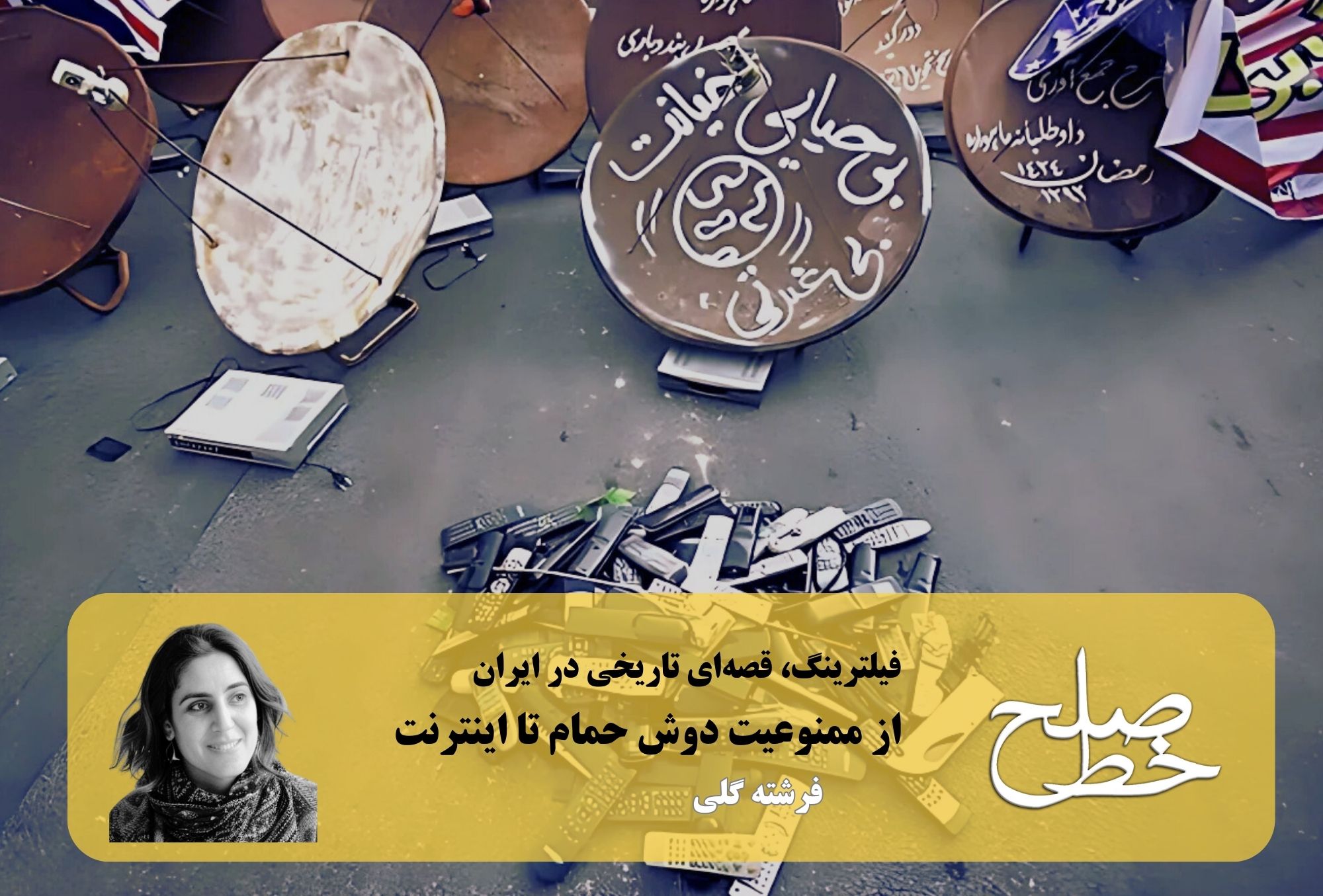
From the Ban on Showerheads to Internet Filtering / Fereshteh Goli
To understand the history of internet filtering in Iran, we need to go back to the early years following the victory of the February 1979 Revolution. As soon as the Islamic Republic was established, it declared many cultural topics—and generally anything that carried the scent of technology—either forbidden or subject to bizarre restrictions and censorship […]...
Read More
Created By:
Fereshteh Goli January 20, 2025
Historical Evolution and Contemporary Challenges of Qisas in Law/ Mostafa Ahmadian
The essence of qisas (retributive justice) has long been based on a natural law: “You kill, you are killed; an eye for an eye, and a tooth for a tooth.” This well-known principle existed long before the emergence of Abrahamic religions. Historical stone carvings—including the Code of Hammurabi, which dates back to 1800 BCE and […]...
Read More
Created By:
Mustafa Ahmadian January 20, 2025
