


ماهنامه خط صلح

Espionage: The Regime’s Worn-Out Tool to Silence Dissent/ Reza Alijani
Onstage and Behind the Scenes of the Ratification of Article Nine of the Constitution Article 9 of the Constitution of the Islamic Republic of Iran states: “In the Islamic Republic of Iran, freedom, independence, unity, and the territorial integrity of the country are inseparable, and preserving them is the duty of the government and all […]...
Read More Created By:
Reza Alijani
Created By:
Reza Alijani July 23, 2025
Checkpoint or Deathtrap? A Dark Account from Tarik-Darreh, Hamedan After the Twelve-Day War / Reza Harisi
The end of the twelve-day war between Iran and Israel, contrary to public expectations, did not result in a fragile peace but rather ushered in a disturbing and unstable state within the country. During the war and immediately following the announcement of the ceasefire, security and military forces of the Islamic Republic established hundreds of […]...
Read More
Created By:
Reza Harisi July 23, 2025
Children’s Rights in Armed Conflicts: An Examination of the Twelve-Day War Between Iran and Israel/ Abouzar Zaman
The twelve-day war between Iran and Israel was a short-term armed conflict that caused devastating physical, psychological, and financial harm to civilians. Of particular importance is an examination of the rights of children—the most vulnerable group in society—who were directly affected by this war, as well as the responsibilities of governments in this regard. These […]...
Read More
Created By:
Abouzar Zaman July 23, 2025
Lived Experience of Iranians During the Twelve-Day War/ Pardis Parsa
In the early hours of June 12, 2025 (23 Khordad 1404), with the launch of Israeli airstrikes on Iranian soil, a new chapter in Iran’s contemporary history was opened. The deafening sounds of explosions and reports of military commanders and nuclear scientists being killed were the signs of a war that quickly surpassed military confrontation, […]...
Read More
Created By:
Pardis Parsa July 23, 2025
The Illusion of War’s End and Security: Citizens Still on the Battlefield/ Elaheh Amani
The devastating twelve-day war, which temporarily ended after claiming the lives of 1,190 people and injuring more than 4,475 in Iran (1), once again brings to mind a quote often attributed to Plato: in societies where political power rests in the hands of authoritarian rulers, even after a military war ends, the living continue to […]...
Read More
Created By:
Elahe Amani July 23, 2025
A Report on the Destruction of Hospitals in the Twelve-Day War/ Azar Taherabadi
In the gray and devastated grounds of Farabi Neuropsychiatric Hospital in Kermanshah, the marks of explosions still remain on the walls. The smell of burned medications, broken equipment, and the vague, constant sound of silence envelop the atmosphere of this medical center. Three days after the war between Iran and Israel began, on June 15 […]...
Read More
Created By:
Azar Taherabad July 23, 2025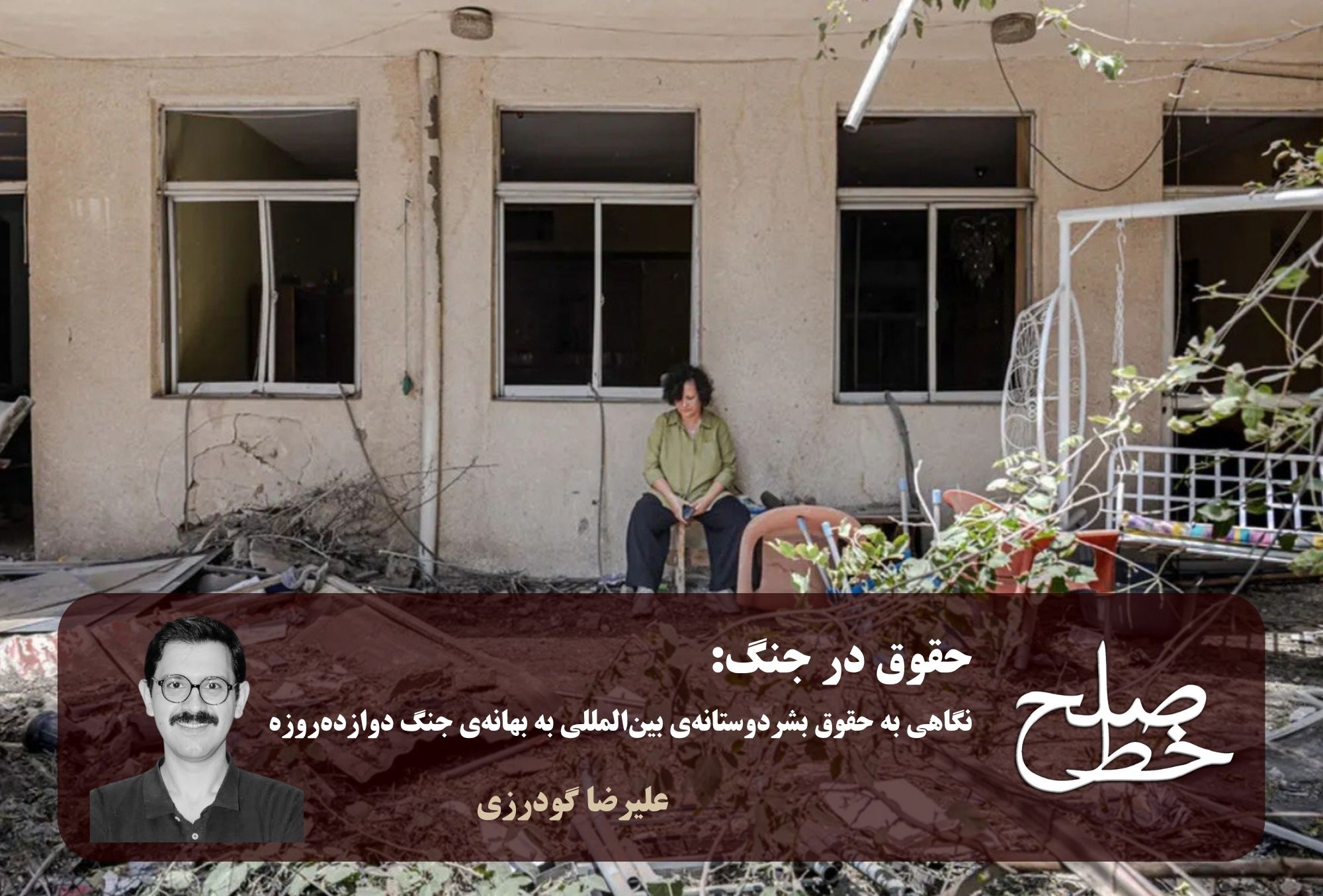
A Look at International Humanitarian Law on the Occasion of the Twelve-Day War/ Alireza Goodarzi
War begins when law ends. The epitome of lawlessness is the killing of another human being, and that is the goal of war. If legal solutions worked, there would be no need for war. Yet for centuries we have tried to regulate even this unlawful phenomenon. Examples of wartime restrictions can be seen throughout history. […]...
Read More
Created By:
Alireza Goodarzi July 23, 2025
In Praise of Peace: A Journalist’s Account from a Bombarded Tehran/ Hossein Yazdi
War—this word has become entangled with our lives in the Middle East, as though the region has no other identity without it. At the time of my birth, the 1979 Revolution had just happened, and by the time I entered elementary school, I was fully experiencing war—red sirens and teachers who would take us under […]...
Read More
Created By:
Hossein Yazdi July 23, 2025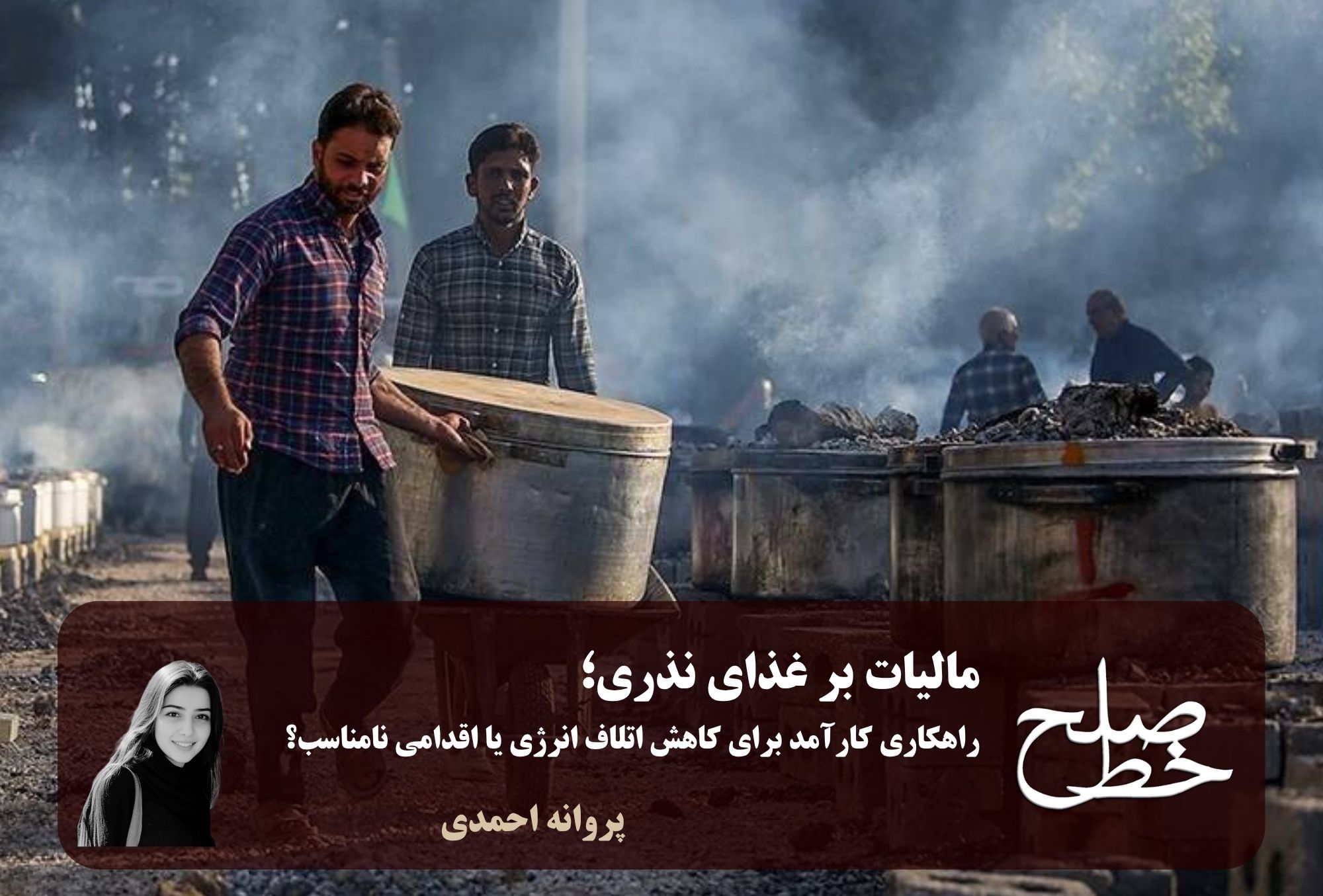
Taxing Nazri Food: An Efficient Strategy for Reducing Energy Waste or an Inappropriate Measure? / Parvaneh Ahmadi
Mourning ceremonies and Nazri offerings are an inseparable part of the religious and social culture in certain communities, particularly in Iran. In these occasions, the long-standing tradition of preparing and distributing food as Nazri takes on a prominent role. These offerings, beyond their spiritual and religious aspects, are widely distributed among the general public, the […]...
Read More
Created By:
Parvaneh Ahmadi July 23, 2025 Created By:
Admin July 23, 2025
Created By:
Admin July 23, 2025
Iman Soleymani: Whether the Dowry Is a Thousand Coins or Fourteen, It Won’t Solve Family Problems/ Ali Kalaei
Dowry has always been a contentious issue in Iran, both legally and socially. In recent years, with the worsening economic situation, it has become even more important and complex. Rooted in religious and historical traditions, dowry has now—amid social changes and economic crises in Iran—turned into a legal battleground and sometimes a source of tension […]...
Read More
Created By:
Ali Kalaei June 22, 2025
Exclusive Report by Peace Mark Monthly Magazine on Poppy Cultivation in Iran/ Azar Taherabadi
In a forgotten corner of Iran—where development plans have long been abandoned—deep within the harsh mountains of the Zagros, among cracked soil and rains that no longer come, live villagers and farmers whose choices oscillate between death and destitution. For these people, cultivating poppies is not an act of greed but one of desperation—an agonizing […]...
Read More
Created By:
Azar Taherabad June 22, 2025
